eBook - ePub
Pathology of Wildlife and Zoo Animals
- 1,136 pages
- English
- ePUB (mobile friendly)
- Available on iOS & Android
eBook - ePub
Pathology of Wildlife and Zoo Animals
About this book
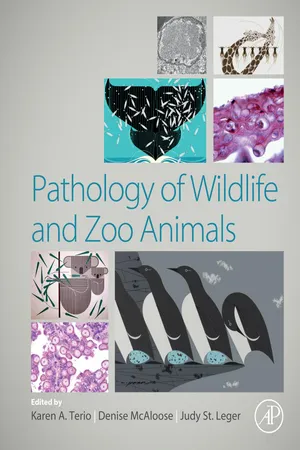
Pathology of Wildlife and Zoo Animals is a comprehensive resource that covers the pathology of wildlife and zoo species, including a wide scope of animals, disease types and geographic regions. It is the definitive book for students, biologists, scientists, physicians, veterinary clinicians and pathologists working with non-domestic species in a variety of settings. General chapters include information on performing necropsies, proper techniques to meet the specialized needs of forensic cases, laboratory diagnostics, and an introduction into basic principles of comparative clinical pathology. The taxon-based chapters provide information about disease in related groups of animals and include descriptions of gross and histologic lesions, pathogenesis and diagnostics. For each group of animals, notable, unique gross and microscopic anatomical features are provided to further assist the reader in deciding whether differences from the domestic animal paradigm are "normal." Additional online content, which includes text, images, and whole scanned glass slides of selected conditions, expands the published material resulting in a comprehensive approach to the topic.
- 2019 PROSE Awards - Winner: Category: Textbook/Biological and Life Sciences: Association of American Publishers
- Presents a single resource for performing necropsies on a variety of taxa, including terrestrial and aquatic vertebrates and invertebrates
- Describes notable, unique gross and microscopic anatomical variations among species/taxa to assist in understanding normal features, in particular those that can be mistaken as being abnormal
- Provides consistent organization of chapters with descriptions of unique anatomic features, common non-infectious and infectious diseases following brief overviews of the taxonomic group
- Contains full-color, high quality illustrations of diseases
- Links to a large online library of scanned slides related to topics in the book that illustrate important histologic findings
Information
Subtopic
Veterinary MedicineIndex
Biological SciencesTable of contents
- Cover
- Title page
- Table of Contents
- Copyright
- Dedication
- Contributors
- Foreword
- Preface
- Chapter 1: Wildlife Necropsy
- Chapter 2: Forensic Wildlife Pathology
- Chapter 3: Laboratory Diagnostics
- Chapter 4: Introduction to Comparative Clinical Pathology
- Chapter 5: Bovidae, Antilocapridae, Giraffidae, Tragulidae, Hippopotamidae
- Chapter 6: Cervidae
- Chapter 7: Camelidae
- Chapter 8: Suidae and Tayassuidae
- Chapter 9: Canidae, Ursidae, and Ailuridae
- Chapter 10: Felidae
- Chapter 11: Mustelids
- Chapter 12: Procyonidae, Viverridae, Hyenidae, Herpestidae, Eupleridae, and Prionodontidae
- Chapter 13: Prosimians
- Chapter 14: New World and Old World Monkeys
- Chapter 15: Apes
- Chapter 16: Proboscidae
- Chapter 17: Perissodactyls
- Chapter 18: Monotremes and Marsupials
- Chapter 19: Lagomorpha
- Chapter 20: Rodentia
- Chapter 21: Xenartha, Erinacoemorpha, Some Afrotheria, and Phloidota
- Chapter 22: Cetacea
- Chapter 23: Pinnipediae
- Chapter 24: Sirenia
- Chapter 25: Chiroptera
- Chapter 26: Palaeognathae: Apterygiformes, Casuariiformes, Rheiformes, Struthioniformes; Tinamiformes
- Chapter 27: Sphenisciformes, Gaviiformes, Podicipediformes, Procellariiformes, and Pelecaniformes
- Chapter 28: Phoenicopteriformes
- Chapter 29: Anseriformes, Ciconiiformes, Charadriiformes, and Gruiformes
- Chapter 30: Birds of Prey
- Chapter 31: Galliformes and Columbiformes
- Chapter 32: Psittacines, Coliiformes, Musophagiformes, Cuculiformes
- Chapter 33: Passeriformes, Caprimulgiformes, Coraciiformes, Piciformes, Bucerotiformes, and Apodiformes
- Chapter 34: Chelonia
- Chapter 35: Crocodilia
- Chapter 36: Lacertilia
- Chapter 37: Serpentes
- Chapter 38: Amphibia
- Chapter 39: Osteichthyes
- Chapter 40: Chondrichthyes
- Chapter 41: Invertebrates
- Appendix A. Viral Families and Documented Diseases
- Appendix B. Links to Virtual Microscope Slides by Chapter
- Index
Trusted by 375,005 students
Access to over 1.5 million titles for a fair monthly price.
Study more efficiently using our study tools.
Frequently asked questions
Yes, you can cancel anytime from the Subscription tab in your account settings on the Perlego website. Your subscription will stay active until the end of your current billing period. Learn how to cancel your subscription
No, books cannot be downloaded as external files, such as PDFs, for use outside of Perlego. However, you can download books within the Perlego app for offline reading on mobile or tablet. Learn how to download books offline
Perlego offers two plans: Essential and Complete
- Essential is ideal for learners and professionals who enjoy exploring a wide range of subjects. Access the Essential Library with 800,000+ trusted titles and best-sellers across business, personal growth, and the humanities. Includes unlimited reading time and Standard Read Aloud voice.
- Complete: Perfect for advanced learners and researchers needing full, unrestricted access. Unlock 1.5M+ books across hundreds of subjects, including academic and specialized titles. The Complete Plan also includes advanced features like Premium Read Aloud and Research Assistant.
We are an online textbook subscription service, where you can get access to an entire online library for less than the price of a single book per month. With over 1.5 million books across 990+ topics, we’ve got you covered! Learn about our mission
Look out for the read-aloud symbol on your next book to see if you can listen to it. The read-aloud tool reads text aloud for you, highlighting the text as it is being read. You can pause it, speed it up and slow it down. Learn more about Read Aloud
Yes! You can use the Perlego app on both iOS and Android devices to read anytime, anywhere — even offline. Perfect for commutes or when you’re on the go.
Please note we cannot support devices running on iOS 13 and Android 7 or earlier. Learn more about using the app
Please note we cannot support devices running on iOS 13 and Android 7 or earlier. Learn more about using the app
Yes, you can access Pathology of Wildlife and Zoo Animals by Karen A. Terio,Denise McAloose,Judy St. Leger,Denise Mcaloose in PDF and/or ePUB format, as well as other popular books in Biological Sciences & Veterinary Medicine. We have over 1.5 million books available in our catalogue for you to explore.