eBook - ePub
General Vasey's War
Trusted by 375,005 students
Access to over 1 million titles for a fair monthly price.
Study more efficiently using our study tools.
Information
1
‘Doing extremely good work’
First World War Experience, 1895–1919
Born at East Malvern, a suburb of Melbourne, Victoria, on 29 March 1895, George Alan Vasey grew up in an era when Australians were struggling towards a national identity. While most colonists thought of themselves as Australians, the emotional link to Britain remained strong. It was a time of imperial commitment to the Boer War, but also a time when many Australian institutions were established. Vasey was almost 6 years old by the time of Federation, and the event, along with the death of Queen Victoria that same year, was probably discussed in his home and at school.
Vasey’s family was not unusual in reflecting these mixed loyalties. His father, George Brinsden Vasey, was a not very successful barrister and solicitor who earned £5 a week as editor of the Argus Law Reports and also contributed legal opinions on questions submitted to another weekly journal. In addition, he was the author of three legal textbooks. His father, Thomas Vasey, had come to Australia from Whitby in Yorkshire in 1852 to seek gold and had stayed to become a general merchant. Thomas Vasey had married Miss Brinsden from Exeter, whom he had met at a Methodist church in Melbourne. In July 1890 George Brinsden Vasey married Alice Isobel McCutcheon, the daughter of a Belfast man from Northern Ireland, and they had six children, of whom George Alan was the third.
The eldest child, Thomas Arnold, was born in 1891. At the beginning of the First World War he was working for a leading firm of wool brokers in London. He volunteered for service in the Royal Navy and was accepted for hostilities under a group scheme by which volunteers returned to their civil occupations until called up for service. In March 1917, as an ordinary seaman, he joined the auxiliary cruiser HMS Mantua, escorting troop and supply ships between Sierra Leone or Dakar and Plymouth. Arnold Vasey, as he was known within his family, was demobilized in January 1919 and returned to Melbourne the following June, resuming a career as a wool valuer. He later moved to Newcastle, New South Wales, where he owned a wool-marketing business.
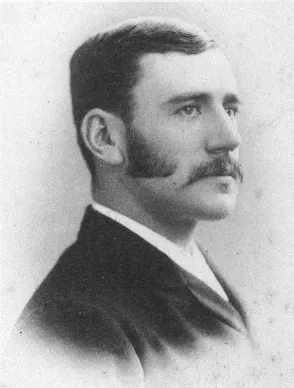
George Brinsden Vasey
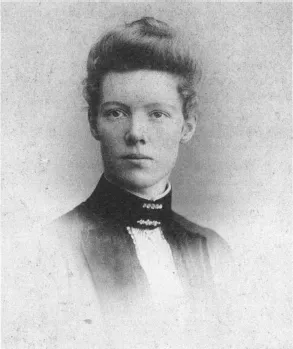
Alice Isobel Vasey
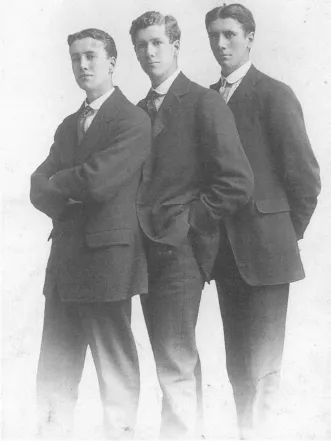
Thomas Arnold Vasey, John Brinsden Vasey and George Alan Vasey, shortly before George left for Duntroon in 1913
John Brinsden Vasey, the second of the four brothers, was born in 1893, attended Wesley College and later qualified as a surveyor. On the outbreak of the First World War he was on the survey staff of the Construction Branch of the Victorian Railways and enlisted immediately, joining the 2nd Field Engineer Company and sailing for Egypt on 19 October 1914. He took part in the Gallipoli landing on 25 April 1915 and was promoted corporal a month later. On 7 August he was wounded in the neck and leg and was taken aboard the hospital ship Dunluce Castle in good spirits. Unfortunately septicaemia set in, and although his left leg was amputated in an effort to save his life, he died on 14 August and was buried at Malta.
The fourth child, Blanche Isobel, was born in 1900 and died of leukaemia at the age of ten, a family bereavement that was felt deeply.
The fifth child, Gilbert Vasey, attended Melbourne University and became an agricultural engineer. He was never close to the other members of the Vasey family.
The youngest child was Marjorie Hope Vasey, who was born in 1905. She qualified as a nurse and became the principal theatre sister for the noted Melbourne surgeon Sir Alan Newton. Competent and dedicated, she served in the Second World War as a nursing sister and hospital matron and later married a Melbourne surgeon, E. T. Cato.
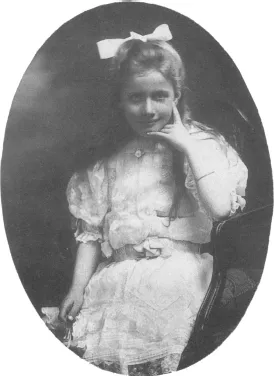
Blanche Isobel Vasey
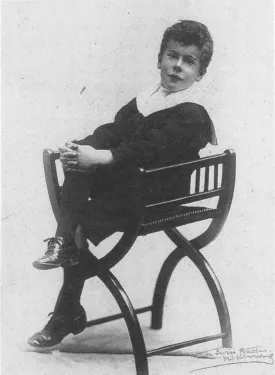
Gilbert H. Vasey
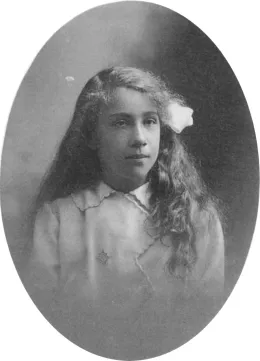
Marjorie Hope Vasey
George Alan Vasey, or Alan as he was known within his family, was born into a happy, loving family where, although money was scarce, the children were sent to private schools for their secondary education. They remembered their father with affection, and Marjorie recalled his charming manners and his ability to make friends and guests feel welcome. His children were brought up in the same tradition of courtly manners; it was expected that at social functions they would ensure that everyone was at ease and welcomed. Never an argumentative man, ‘Confound it all!’ was the most aggressive remark Marjorie ever remembered her father using. Years later a grandson recalled staying, when ten years of age, with his parents and one brother with the Vaseys at Brougham Place, Kew, for several months. ‘I don’t know what kind of barrister he was, but as a human being and an old gentleman he was magnificent.’1
Alan Vasey ‘drew more qualities from his mother—a reserved, quiet woman, inordinately shy, but possessed of a will which all her children knew to be indomitable’.2 Marjorie recalled that while her brother Arnold was humorous and witty, and Jack was a mischief-maker, Alan was restrained and quiet. In 1907, after three years at Canterbury Grammar School, Alan went off to Wesley College, Melbourne, a tall, lean, rather shy youth whose straight brown hair parted down the centre often strayed over his forehead. He proved to be an able scholar. As one of his contemporaries recalled,
In those days he was quiet, not spectacular. He was tall and slightly ungainly. He was a school prefect in his last year, but a ‘scholastic prefect’, as distinct from a ‘sporting prefect’. He was not distinguished in any sport; he played form sport and rowed a little. He came from a good church family, and he was, as I remember him, a good boy, but with nothing of the prig about him.3
In 1911 the Royal Military College opened at Duntroon, near the future national capital, with the purpose of providing regular staff officers for the new Australian Army. At a time when a university education was expensive, Duntroon offered a unique opportunity as tuition was free. Furthermore, the long-serving headmaster of Wesley College, L. A. Adamson, saw the school’s duty as one of producing men who would serve their country, and he provided extra coaching for boys wishing to sit for the Duntroon entrance examination, to be conducted by Sydney University in November 1912. According to one account, Vasey ‘was not specially attracted to soldiering; but he wanted an outdoor life and [was] persuaded that the army offered both this and an honourable career’.4 Of the 154 eligible candidates, 33 were admitted to the college, and five were from Wesley. Two, Vasey and Edward James Milford, were to become generals, and friends for the rest of their lives. Another schoolmate, only three months older, was R. G. Menzies, a future prime minister.
In applying for Duntroon Vasey was provided with a school reference which indicated that he had passed the public examinations for entrance to the University of Melbourne, had been a second lieutenant in the Commonwealth Senior Cadets, and was a prefect. ‘He is of sound moral character and entirely trustworthy and possesses qualities which should be of great assistance to one who desires to be a leader of men.’ His area officer in the Senior Cadets reported that Vasey was ‘keen, and in my opinion will make a good officer’.5
The Duntroon entry of 1913 was one of the most successful in the college’s history. Of the 33 entrants, six became generals—Vasey, Milford, William Bridgeford, Frank Berryman, Leslie Beavis and John Chapman—and four became brigadiers; nine were killed in action in the First World War as junior officers. In this outstanding group Vasey performed well, being placed in the first five academically in the final examinations for 1913.
With the outbreak of war in August 1914 the first Duntroon class was graduated early, on 14 August, its four-year course being shortened by four months. The second class, those who had entered the college in 1912, graduated in November 1914. In May 1915, following the news of the landing at Gallipoli on 25 April, most of the academic work for the 1913 class was dropped to enable the cadets to concentrate on military subjects, and on 28 June 1915 the class graduated as lieutenants in the Permanent Military Forces.
In his last six months at Duntroon Vasey was a sergeant in the Corps of Staff Cadets, and his final report showed that he had applied himself well. Although he had not played in senior sporting teams, his sportsmanship was listed as ‘very good’. He was very good at horsemanship, drill, physical training and physical co-ordination, his academic ability was ‘outstandingly good’, his mathematics and physics were ‘excellent’ and leadership was ‘good; a slow maturer’. General Milford, his Wesley and Duntroon classmate, recalled that Vasey was outstanding at mathematics and that at Duntroon his lecturer set him special work above the standard of the rest of the class.6 It is an indicator of the quality of the class that despite this good report Vasey graduated only tenth. Ahead of him, in order, were Beavis, Hatton, Brown, Jenkins, Berryman, Milford, Peart, Mortimer and Crombie. Hatton, Brown (a New Zealander), Jenkins, Peart and Mortimer were to be killed in action in the First World War. Of the 33 Australians to graduate, twelve were allotted to artillery and nineteen to infantry. On graduation at the age of twenty years and three months Vasey’s medical record showed that he had dark brown hair, brown eyes and a height of 5 feet 11¾ inches. Some years later his passport showed his height as 6 feet 1 inch.
Vasey and his fellow artillery graduates were granted leave until 12 July 1915 when they reported for duty at No 2 Battery, Royal Australian Field Artillery at Maribyrnong, a Melbourne suburb, where they were to undergo further training. After three months their commanding officer was to report on their progress, and if satisfactory, they were to be posted to a unit preparing for active service. At the end of September Vasey, along with Jenkins, Berryman, Milford and Peart, was posted to the 4th Field Artillery Brigade at Albert Park. A fortnight later the final reports on the new officers were completed and, in view of their later careers, they provide interesting insights.
Vasey. Although perhaps a little weak in command he knows his work thoroughly. A very good section commander. Well fitted for appointment to AIF.
Berryman. A very capable officer, a good horseman. Well fitted for appointment to AIF.
Milford. Perhaps a little lacking in self confidence but possesses a good knowledge of field artillery work and knows how to apply it. A very good section commander. Fine horseman. Well fitted for appointment to AIF.7
Thirty years later, Arthur Watt, an original member of the 11th Battery, 4th Field Artillery Brigade, wrote that Vasey ‘was a manly man when, as a youth, he came to the battery at its formation, and his Stirling qualities soon endeared him to all of us who served under him’. However, Second Lieutenant Alex Crawford, a nineteen-year-old militia officer, clearly recalls the arrival of the new officers, and did ‘not see in Vasey the makings of a distinguished soldier’. He thought that Vasey was rather hesitant in manner and his orders did not have that required air of authority. Already Vasey had ‘an easy flow of bad language’, but he was also very likeable with an ‘easy manner’.8
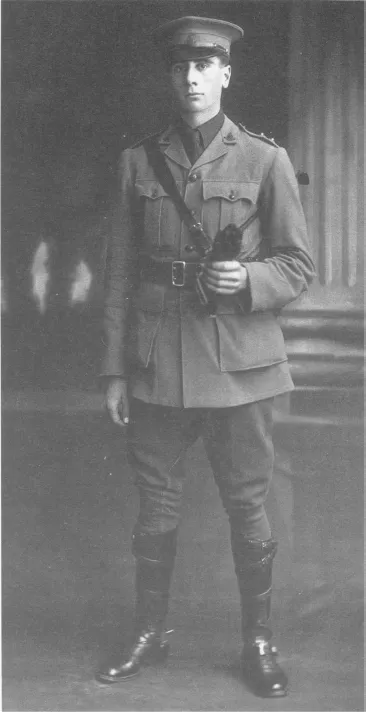
Lieutenant George Vasey, aged twenty, soon after graduation from Duntroon in 1915: entering the college in 1913, he was in the third intake which, because of the war, graduated early after only two and a half years training.
By contrast, Crawford found Berryman to be ‘fanatically keen’ and as ‘blunt as the back of an axe. We used to say of Berry that he would cut his grandmother’s throat if it was in the interests of the army’. Crawford remembers Milford as a ‘delightful, gentle natured chap, friendly, very likeable’ who helped him with trigonometry. The brigade embarked on RMS Wiltshire on 18 November, and Vasey’s sister Marjorie barely remembered the farewell party given for her brother. It must have been a poignant parting for the Vasey family for they now knew that their second son would not be returning.
The brigade arrived in Egypt in December, just as the Anzac troops were returning after the evacuation from Gallipoli. They went under canvas at Tel el Kabir and continued training as part of the 2nd Division artillery. A powerful influence was the commanding officer, Lieutenant-Colonel H. W. Grimwade, and Crawford recalls being severely reprimanded by him for exposing his section on a skyline during an exercise...
Table of contents
- Cover
- Title
- Copyright
- Contents
- Illustrations
- Acknowledgements
- Personalities
- Abbreviations
- Introduction
- 1 ‘Doing extremely good work’ First World War Experience, 1895–1919
- 2 ‘Daddy’s brigade did the best of all’ Twenty Years a Major, 1919–1939
- 3 ‘How terrible is this leaving’ The Advance Party, December 1939–February 1940
- 4 ‘George has accomplished a remarkable job’ The Arrival of the 6th Division, February–September 1940
- 5 ‘A new lease of life’ Preparing for Action, September–December 1940
- 6 ‘My time has come at last’ The Libyan Campaign, January–March 1941
- 7 ‘I’ll show you how to run a war’ The 19th Brigade in Greece, April 1941
- 8 ‘These damned Huns won’t catch me’ Australian Commander in Crete, April–June 1941
- 9 ‘I’m as frightened as the next fellow’ Retraining in Palestine, June–September 1941
- 10 ‘Rather a fine Xmas present’ Defending Syria, October–December 1941
- 11 ‘What we told you was our present plan’ The Defence of Australia, January–July 1942
- 12 ‘This is a war of nerves’ Advanced Land Headquarters, August–September 1942
- 13 ‘I’ve had enough of staff jobs’ GOC 6th Division, Port Moresby, September–October 1942
- 14 ‘The answer is speed of thought’ The 7th Division at Kokoda, November 1942
- 15 ‘I fear a war of attrition’ Gona and Sanananda, November 1942–January 1943
- 16 ‘Ineed a double staff’ On the Atherton Tableland, February-July 1943
- 17 ‘We are underpaid cinema actors’ In the Markham Valley, August–September 1943
- 18 ‘These wonderful men I command’ Ramu Valley and Shaggy Ridge, October 1943–February 1944
- 19 ‘Look after the war widows’ A Troubled Year of Home Service, March 1944–March 1945
- 20 ‘If ever I loved a man’ The Legacy of a Commander
- Notes
- Bibliography
- Index
Frequently asked questions
Yes, you can cancel anytime from the Subscription tab in your account settings on the Perlego website. Your subscription will stay active until the end of your current billing period. Learn how to cancel your subscription
No, books cannot be downloaded as external files, such as PDFs, for use outside of Perlego. However, you can download books within the Perlego app for offline reading on mobile or tablet. Learn how to download books offline
Perlego offers two plans: Essential and Complete
- Essential is ideal for learners and professionals who enjoy exploring a wide range of subjects. Access the Essential Library with 800,000+ trusted titles and best-sellers across business, personal growth, and the humanities. Includes unlimited reading time and Standard Read Aloud voice.
- Complete: Perfect for advanced learners and researchers needing full, unrestricted access. Unlock 1.4M+ books across hundreds of subjects, including academic and specialized titles. The Complete Plan also includes advanced features like Premium Read Aloud and Research Assistant.
We are an online textbook subscription service, where you can get access to an entire online library for less than the price of a single book per month. With over 1 million books across 990+ topics, we’ve got you covered! Learn about our mission
Look out for the read-aloud symbol on your next book to see if you can listen to it. The read-aloud tool reads text aloud for you, highlighting the text as it is being read. You can pause it, speed it up and slow it down. Learn more about Read Aloud
Yes! You can use the Perlego app on both iOS and Android devices to read anytime, anywhere — even offline. Perfect for commutes or when you’re on the go.
Please note we cannot support devices running on iOS 13 and Android 7 or earlier. Learn more about using the app
Please note we cannot support devices running on iOS 13 and Android 7 or earlier. Learn more about using the app
Yes, you can access General Vasey's War by David Horner in PDF and/or ePUB format, as well as other popular books in History & Military Biographies. We have over one million books available in our catalogue for you to explore.