Foundations of Clinical Psychiatry is the trusted introductory text for students of medicine and other health professions, including psychiatric nursing, psychology, social work and occupational therapy. It has also been the essential reference for family doctors for over quarter of a century. Foundations of Clinical Psychiatry: Fourth Edition has been revised and updated by five editors, leaders in their fields, in collaboration with a new generation of expert psychiatrists. The four-part structure—an introduction to clinical psychiatry; conditions encountered; specific patient groups and clinical settings; and principles and details of typical clinical services, and of biological and psychological treatments—provides a clear overview of clinical practice. It also explores the causes of mental illness and the ethical aspects of its treatment, and covers the full range of psychiatric disorders encountered by health practitioners.The fourth edition emphasises biological, psychological and social factors in assessing and treating patients, includes the integrated use of DSM-5 classification, and provides further reading suggestions. It is richly illustrated with dozens of clinical stories.
eBook - ePub
Foundations of Clinical Psychiatry Fourth Edition
- 694 pages
- English
- ePUB (mobile friendly)
- Available on iOS & Android
eBook - ePub
Foundations of Clinical Psychiatry Fourth Edition
About this book
Information
Topic
MedicineSubtopic
Psychiatry & Mental HealthII
The Range of Psychiatric Disorders
7
Stress, Coping and the Adjustment Disorders
Sidney Bloch and Michael Robertson
THIS chapter serves as a bridge between the material presented in Part I and the clinical disorders of psychiatry covered in Part II. It deals with conditions in which psychological symptoms can be observed as the result of stressful life events. Their presentation can assume many forms, ranging from mild anxiety to a psychotic reaction. The non-psychotic forms are termed ‘adjustment disorder’ and ‘reaction to severe stress’ in ICD-10, and ‘adjustment disorder’ in DSM-5; reactive psychosis is grouped under the rubric of ‘Other psychotic disorder’ in both classifications.
We now turn to the key concepts of stress, crisis, coping, defence mechanisms and adaptation (and their interrelationships), which facilitate an understanding of adjustment disorders and acute stress reactions.
Stress
The term is derived from the Latin stringere, meaning ‘to draw tight or compress’. It has been commonly used since the seventeenth century to describe human experiences of hardship, adversity or affliction. It conveys the experience (i.e. stress as response) of being subject to extreme pressure coupled with an effort to resist its effects in order to preserve physical and psychological wellbeing and, ultimately, bring about a return to the person’s former psychological state. Stress may also refer to situations (i.e. stress as stimulus) that place excessive demands on people and threaten to throw them off balance. Physical or mental illness, marital divorce or separation, death or severe illness of a family relative, bankruptcy, legal entanglements, retrenchment, retirement and migration are only a few of the myriad sources of stress to which we must necessarily adjust if we are not to be psychologically overwhelmed.
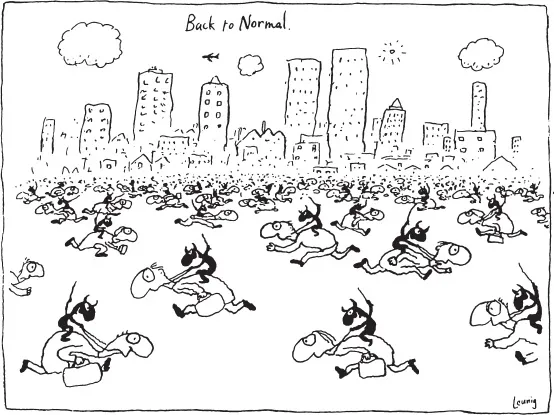
Stress may incorporate both stimulus and response, and their continuing interaction. Consider the example of a teacher wrestling with a ‘difficult’ class, a weighty teaching load, mounting administrative tasks and an unsympathetic principal. They may well suffer marked distress and impaired functioning, with these states undermining their capacity to grapple with the challenges confronting them.
Much of the thinking in this context stems from the pioneering work of Richard Lazarus and Susan Folkman, who introduced the notion of primary and secondary appraisal. In primary appraisal, we try to work out how controllable and predictable the stressful situation is, whereas in secondary appraisal, we assess available resources from personal resources (e.g. ‘I dealt effectively with the threat of retrenchment five years ago and should be able to manage the current threat’) to external resources (e.g. ‘My mother who courageously faced her breast cancer will be able to help me deal with my breast cancer’).
Crisis
Related to stress is the notion of a crisis—essentially an imbalance between situational demands and the personal and external resources we can muster to deal with them. Neither customarily applied strategies nor attempts to minimise the problem work satisfactorily. We then sense a discrepancy between the demands and resources. Two kinds of crisis befall us at one time or another: developmental and accidental. Developmental crises relate to predictable transitional points in our lives such as the onset of adolescence (vividly captured in J. D. Salinger’s classic novel The Catcher in the Rye—well worth reading), becoming a parent for the first time, experiencing menopause and retirement. They are typified by emotional turbulence, which leads to personal disequilibrium. Accidental crises, on the other hand, are associated with unexpected life events involving loss, threat or conflict, and our reactions to them.
Crises commonly overlap but can usefully be categorised as follows:
• Loss covers a wide range of life events, both physical and abstract, and includes loss of a loved one, one’s health, a bodily part or function (e.g. following a stroke), or even one’s sense of pride or self-confidence. The typical reaction is grief, in which the person experiences a range of psychological states such as numbness, pining, anger, sadness and guilt (see Chapter 10).
• Change involves new circumstances such as marriage, divorce, the last remaining child’s departure from the family home, retirement or migration, and can throw up difficulties and so threaten psychological wellbeing.
• Interpersonal relationships can involve difficulties within the family (e.g. King Lear and his daughters) or beyond (e.g. harassment by a manager). Either intimate or superficial, they can be the source of substantial stress.
• Conflict can occur when a person is immobilised by a dilemma and is unable to choose between options in case they make the wrong decision. The conflict may operate beyond one’s immediate awareness. Hamlet’s indecisiveness in the wake of the murder of his father is a perfect illustration:
Whether ’tis nobler in the mind to suffer
The slings and arrows of outrageous fortune,
Or to take arms against a sea of troubles,
And by opposing end them?
Coping
Coping mechanisms, the strategies we use to grapple with stress or a crisis, help us to reduce our level of distress and to adapt more effectively. Coping is an effort in problem-solving that enables us to return to a state of equilibrium so as to be able to face and manage the continuing challenges of life.
In order to deal with stress, we must first be aware, as noted earlier, of the nature of the stress and of its possible repercussions through primary and secondary appraisal. The word ‘coping’ derives from the Greek kolaphos, meaning ‘to strike’, and suggests a deliberate response. It covers a range of activities from everyday, reality-based problem-solving to more elaborate psychological manoeuvres. Skilled coping can be defined as a flexible, rational attempt at mastery.
Coping is commonly classified as either cognitive (i.e. adopting a specific way of thinking)—as reflected in the maxim of the Roman philosopher Epictetus, ‘Man is not disturbed by events but by the view he takes of them’—or behavioural (i.e. taking certain action). An instance of a cognitively based strategy is recalling a similar situation in the past and the methods that were deployed then. A behaviourally based strategy is exemplified by an employee’s consulting a trusted colleague to deal with a bullying superior. Cognitive and behavioural options often occur together. For instance, following the loss of a spouse, a widower may console himself by drawing on cherished memories as well as enlist emotional support from his children. Another dichotomy is approach versus avoidance coping, a reflection of active engagement and passive disengagement, respectively. A third distinction is between problem- and emotion-focused coping. In the former, the person attends to the demands of the situation and/or harnesses resources, both internal and external. Emotion-focused coping targets the psychological distress in an effort to reduce or ‘contain’ it.
Meaning-focused coping is yet another way of looking at coping and involves addressing what the stressful situation means to us. Thus, a person brings values and beliefs into the picture with the goal of examining the meaning of the situation; this may lead to new understanding and insights. The following responses to receiving a diagnosis of advanced cancer is typical: ‘I cannot necessarily do anything about what happens to me but I can do something about how I react to it’; ‘I believe I need to be out there, making the most of the time I have left. If I stop doing, I am dead. Gardening, reading, walking the dog, chopping wood allows me to transcend the situation’; ‘Whatever the purpose of my life, I am here to get everything done that I need to so that I’m content with going’; ‘I hope I will have done things for others so that they are better for my having been here’.
These distinctions—emotion- and problem-focused, cognitive and behavioural, and approach versus avoidance—are useful to tease out, but as anyone who has wrestled with crises well knows, we usually resort to several strategies concurrently. The following are well-recognised examples:
• realistically avoiding the source of stress, either by distraction or temporary withdrawal
• seeking appropriate help from family, friends or professionals
• reducing tension and other unpleasant stress-related emotions by using one or more methods of relaxation (e.g. meditation, tai chi, yoga, music, bushwalking)
• recognising the challenging features of the situation (‘I can learn much about myself in the face of the paraplegia of my brother and “grow” as a result’)
• applying problem-solving manoeuvres—identifying the problem, clarifying its nature, mapping out possible options, choosing the most appropriate one and monitoring its effectiveness
• drawing on relevant experience from the past
• using humour to achieve a more balanced perspective (‘It could be worse’; ‘One day this will make a great story for my grandchildren’; ‘Life is one damn thing after another’)
• adopting a stoical attitude (‘What will be will be; getting upset surely won’t help’)
• drawing on religious or spiritual strengths.
Despite all these options, the coping skills of even psychologically robust people may become less flexible and adequate when they are faced with a major crisis, where intense feelings predominate (see below).
Mechanisms of defence
Defence mechanisms (DMs) have acquired a specific meaning derived from their origin in psychoanalytic theory. Colloquially, we refer to a person as ‘well defended’ or observe someone ‘dropping his guard’. DMs operate beyond our immediate awareness. Whereas we consciously choose to use a specific coping strategy as mentioned above, the picture is not quite so straightforward when it comes to DMs, and we are not directly cognisant of the defences we may use. Consider the defence of humour. In a state of embarrassment, we may resort to joking without appreciating what motivates us to do so. On the other hand, we can, in full awareness, turn to black humour when facing a grim situation. Samuel Beckett’s tragic comedy Waiting for Godot is a classic example.
DMs operate automatically and tend to be maladaptive. They come into play to protect us from unpleasant emotions like anxiety, envy, guilt and shame, the product of conflict or other forms of threat. DMs may provide a breathing space, particularly in a psychological emergency, allowing coping methods to be explored and applied. Judging whether a DM helps can be difficult. For instance, temporary denial that a breast lump is serious may pave the way for judicious reality-testing when the person is in a more rational frame of mind. However, persisting denial may delay a vital medical consultation. By the same token, an element of denial, manifest as optimism in the face of a dire prognosis, may prolong life and reduce morbidity in the case of an established medical condition.
DMs have been classified variously for over a century. Sigmund Freud recognised their role in maintaining psychological balance when he said that ‘the ego makes use of various methods … of avoiding anxiety, danger and unpleasure. We call these devices defence mechanisms’. His daughter Anna Freud later elaborated on this work in The Ego and the Mechanism of Defence (1936, see Further reading), pointing out how they operate in daily psychological life as well as in abnormal mental states.
Building on these psychoanalytic foundations, George Vaillant, an American psychiatrist, has categorised them according to their level of maturity, ranging from psychotic or primitive through immature and neurotic to mature.
Mature defences
The most adaptive of all DMs, these resemble the coping strategies we described earlier. Used by well-functioning people, they contribute to emotional wellbeing.
Sublimation
Sublimation involves satisfying an impulse by transforming it from socially unacceptable to a valued form of activity. So, for example, an unconsciously embittered man cannot live without participating in vigorous contact sport and martial arts.
Altruism
Promoting the wellbeing of others brings satisfaction in the face of a stressful situation. A former gambler who has lost family and career as a result of her addiction, for instance, becomes active in Gamblers Anonymous, dedicating herself to helping fellow members.
Anticipation
Recognising an imminent threat facilitates rational decision-making. A degree of anxiety is appropriate in that it bolsters both motivation and planning. For example, anticipating the installation of a pacemaker, a patient with compromised cardiac status is able to prepare psychologically to rely on it.
Humour
The surprise element, often paradoxical, enables the person experiencing a stressful situation to confront it head on. Freud rated this defence highly, reflecting in an essay entitled ‘Humour’ that ‘the essence of humour is that it spares oneself the affects to which the situation would naturally give rise and dismisses the possibility of such expressions of emotion with a jest’.
Neurotic defences
These DMs are commonly used to protect us from threatening thoughts and feelings.
Intellectualisation
This is the reliance on a bland account of an intensely personal matter, with attention paid to trivial detail, and with negligible expression of feelings. For example, a patient in psychotherapy relates his experien...
Table of contents
- Cover
- Title
- Copyright
- Contents
- Preface
- Editor profiles
- Contributors
- I An Approach to Clinical Practice
- II The Range of Psychiatric Disorders
- III Special Clinical Areas
- IV Treatment
- Appendix A: The ICD-10 Classification (abbreviated)
- Appendix B: The DSM-5 Classification (abbreviated)
- Index
Trusted by 375,005 students
Access to over 1.5 million titles for a fair monthly price.
Study more efficiently using our study tools.
Frequently asked questions
Yes, you can cancel anytime from the Subscription tab in your account settings on the Perlego website. Your subscription will stay active until the end of your current billing period. Learn how to cancel your subscription
No, books cannot be downloaded as external files, such as PDFs, for use outside of Perlego. However, you can download books within the Perlego app for offline reading on mobile or tablet. Learn how to download books offline
Perlego offers two plans: Essential and Complete
- Essential is ideal for learners and professionals who enjoy exploring a wide range of subjects. Access the Essential Library with 800,000+ trusted titles and best-sellers across business, personal growth, and the humanities. Includes unlimited reading time and Standard Read Aloud voice.
- Complete: Perfect for advanced learners and researchers needing full, unrestricted access. Unlock 1.5M+ books across hundreds of subjects, including academic and specialized titles. The Complete Plan also includes advanced features like Premium Read Aloud and Research Assistant.
We are an online textbook subscription service, where you can get access to an entire online library for less than the price of a single book per month. With over 1.5 million books across 990+ topics, we’ve got you covered! Learn about our mission
Look out for the read-aloud symbol on your next book to see if you can listen to it. The read-aloud tool reads text aloud for you, highlighting the text as it is being read. You can pause it, speed it up and slow it down. Learn more about Read Aloud
Yes! You can use the Perlego app on both iOS and Android devices to read anytime, anywhere — even offline. Perfect for commutes or when you’re on the go.
Please note we cannot support devices running on iOS 13 and Android 7 or earlier. Learn more about using the app
Please note we cannot support devices running on iOS 13 and Android 7 or earlier. Learn more about using the app
Yes, you can access Foundations of Clinical Psychiatry Fourth Edition by Sidney Bloch, Stephen A. Green, Aleksandar Janca, Philip B. Mitchell, Michael Robertson in PDF and/or ePUB format, as well as other popular books in Medicine & Psychiatry & Mental Health. We have over 1.5 million books available in our catalogue for you to explore.