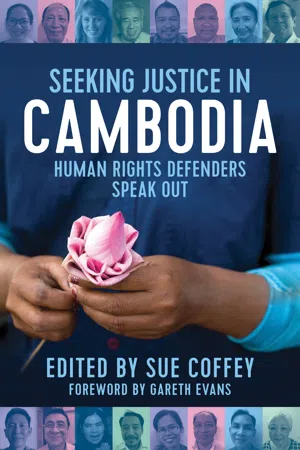
Seeking Justice in Cambodia tells the powerful stories of the original founders of Cambodian human rights organisations and the younger generation of leaders, all of whom have fought tirelessly and with great conviction to achieve justice and human rights for all Cambodians. Sue Coffey decided to compile this book following the period she spent working in Cambodia as an Australian Government volunteer. She was shocked by much of what she saw at the time: lack of transparency in government dealings; rampant deforestation; people being thrown off their land to make way for hydro schemes; freedom of speech and action blatantly under threat. She felt that unless the stories of these remarkable people were recorded, they might be lost to posterity. But this issue is not just a Cambodian one. The lessons here can apply to many other countries struggling to achieve human rights. Seeking Justice in Cambodia tells a powerful tale of the struggle to bring human rights to all Cambodians from the early 1990s to the present day.
- English
- ePUB (mobile friendly)
- Available on iOS & Android
eBook - ePub
About this book
Trusted by 375,005 students
Access to over 1.5 million titles for a fair monthly price.
Study more efficiently using our study tools.
Information
1
BENNY WIDYONO
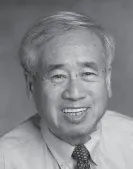
A Leading Member of the United Nations Transitional Authority in Cambodia, 1990–93, and UN Special Representative to Cambodia, 1994–97
Since 1963 Benny Widyono, an Indonesian, has been active as a United Nations civil servant, promoting rapid economic development of developing countries, peacekeeping and human rights. He was one of the leaders of the United Nations Transitional Authority in Cambodia (UNTAC), and later returned as Special Representative of the Secretary-General of the UN, Boutros Boutros-Ghali. He continued his distinguished career with the UN and has written a book, Dancing in Shadows, about the UNTAC period in Cambodia.
The Role of UNTAC in Promoting Human Rights in Cambodia
I was born on 16 October 1936 in Magelang, Central Java, Indonesia, in the shadow of the famous Borobudur Buddhist Temple, the largest Buddhist temple in the world. I was born under the name Oei Hong Lan. My father was a relatively wealthy ethnic Chinese man, who made his living by purchasing tobacco from impoverished farmers.
My father sent me to study economics in faraway Jakarta under Professor Sumitro Djojohadikusumo, the father of all Indonesian economists and a socialist, as he wanted me to eventually take over his company with an economics degree. Things did not turn out as he envisaged. My eyes were widely opened as Sumitro identified my father as a middleman who exploited the lives of the poor tobacco farmers. I refused to take over my father’s company, and went to the USA on a scholarship to obtain my PhD in economics from the University of Texas.
In October 1963, one week after I got my PhD, my son was born to my wife, who had been my childhood sweetheart. I obtained a job with the United Nations Economic and Social Commission for Asia and the Pacific (ESCAP) where I stayed until I was transferred to the United Nations headquarters in New York.
In 1965 an aborted coup by leftists in Indonesia led to a massacre of between 500 000 to 1 million suspected communists by iron-fisted anti-communist President Suharto. Suspecting China of being behind the coup, he forced all of us ethnic Chinese to change our names. Hence I became Benny Widyono. During 1975 to 1977 I spent two years with a United Nations body in Santiago, Chile.
The Paris Agreements and UNTAC
My introduction to the Cambodian tragedy had actually started during my posting as an economist with ESCAP in Bangkok in the 1970s. From that vantage point, one could not help but note that following the liberation of Cambodia from the Khmer Rouge regime by the Vietnamese army in January 1979, the full story of the brutality of life under Pol Pot’s Khmer Rouge regime began to emerge. Suddenly, the gates of the nationwide concentration camp were wide open, and people were able to move freely.
Acting on a tip from my staff, Craig Emerson—a young Australian economist who later became Minister for Trade and Competitiveness in Australia—and I, together with some colleagues, visited the area south of Aranyaprathet, a small border town in eastern Thailand, bordering on areas still held on to by the Khmer Rouge within Cambodia.
There we observed refugees streaming into Thailand. We watched in shock as ghastly, frail people, with no flesh and wide vacant eyes stumbled out of the forests one by one and collapsed on Thai soil by the thousands. They were dying in front of us.
Upon my return to my air-conditioned office in Bangkok, I immediately cabled the United Nations Department of Peacekeeping Operations in New York, volunteering to serve in Cambodia as a peacekeeper. Unfortunately, because of political manoeuvrings at the United Nations in New York, it took twelve years before I was finally sent in April 1992 to Cambodia with the United Nations Transitional Authority in Cambodia (UNTAC).
On 25 December 1978, twelve Vietnamese divisions, totalling 150 000 troops, entered Cambodia joined by a Cambodian rebel force, consisting of 20 000 ex-Khmer Rouge soldiers who had fled to Vietnam, liberated Cambodia from Khmer Rouge rule. A new People’s Republic of Kampuchea (PRK), led by Heng Samrin and Hun Sen was installed as Cambodia’s new government. It was backed by the Soviet Union and its allies, and soon gained 80 to 95 per cent of the country. In 1985, Hun Sen became prime minister.
However, three opposition factions united in 1982 as a ‘countergovernment’, styling itself the Coalition Government of Democratic Kampuchea (CGDK). The three groups were the right-wing Khmer People’s National Liberation Front (KPNLF); the Khmer Rouge Party of Democratic Kampuchea (Khmer Rouge) and Prince Norodom Sihanouk’s National United Front for an Independent, Neutral, Peaceful and Cooperative Cambodia (FUNCINPEC). The CGDK was supported by China and the Association of Southeast Asian Nations (ASEAN), as well as the United States, and was recognised by the United Nations General Assembly as the government of Cambodia until 1991.
The CGDK controlled the refugee camps on the Thai border plus some slivers of land in the country. During the political impasse, which lasted for more than a decade, the PRK was ostracised politically and economically, thereby prolonging the suffering of the Cambodian people.
A real breakthrough only became possible when the Cambodians judged themselves ready for it. In 1987, Sihanouk and Hun Sen—leaders of the two opposing forces, the CGDK and the People’s Republic of Kampuchea (PRK)/State of Cambodia (SOC)—came together for two historic meetings near Paris that finally broke the stalemate. Dr Kek Galabru, a prominent Cambodian figure, played a major role in bringing these two parties together and her story is told in this book. She subsequently founded LICADHO, the Cambodian League for the Promotion and Defense of Human Rights. After that, a confluence of favourable factors, including the collapse of the Cold War, brought a solution closer to reality. Finally, the signing of the Paris Peace Agreements brought an opportunity to solve the SOC–CGDK stalemate and for the creation of a stable, inclusive, national government.
The ‘Paris Agreements’ were designed to facilitate the transition towards peace, stability and democracy in Cambodia after twenty years of civil war, international isolation and the atrocities committed by the Khmer Rouge regime, under Pol Pot, from 1975 to 1979.
Furthermore, the agreements were designed to end nearly a decade of political stalemate during which Cambodia had effectively two governments, side-by-side, each recognised by a different group of external powers. The plan envisaged a transitional period from 23 October 1991 until the election of a new government and constituent assembly after ‘free and fair elections’.
A Supreme National Council (SNC), a power-sharing arrangement that included six members from the SOC and two from each of the three CGDK factions, was established as a transitional representative body, and was to act as interlocutor for the UN pending the elections. Chaired by Prince Sihanouk, the SNC would liaise with UNTAC and offer advice on key policy issues, but it was required to ‘delegate to the United Nations all powers necessary to ensure the implementation of (the Paris) Agreement’.
At an estimated cost of US$1.7 billion, UNTAC had an authorised strength of 15 547 troops and 893 military observers from thirty-four countries; 3500 civilian police from thirty-two countries; 1149 civilian staff, 465 UN volunteers and 56 000 Cambodian support staff.
UNTAC had an unprecedented mandate and powers, the most important of which were to conduct a free and fair election, repatriate the 360 000 refugees in the camps in Thailand, and demobilise at least 70 per cent of the military forces of the four factions.
UNTAC began its operations on 14 March 1992, with the arrival of its two most senior officials—Yasushi Akashi of Japan, the Special Representative of the Secretary-General and Head of Mission, and Lieutenant General John Sanderson of Australia, UNTAC’s military commander.
I joined UNTAC as the ‘shadow governor’ of Siem Reap, as part of the civil administration component of UNTAC. I was to coordinate all the components of UNTAC in the province, including establishing monthly meetings and approving the opening of political party offices in the lead-up to the elections.
Human Rights
The provisions of the Paris Peace Agreements on human rights given to UNTAC were the most comprehensive and intrusive ever entrusted to the United Nations, not just in peacekeeping operations but in the whole area of human rights. This was done in part owing to Cambodia’s special history, and in part because transitions to democracy within UN-controlled elections are essentially exercises in human rights implementation. Human rights were central to the transition, and to the entire move from conflict to peace in the broadest sense.
The mandate of the human rights component of UNTAC was essentially twofold. First, to foster a neutral political environment in which human rights were respected—essential for the purposes of free and fair elections—and secondly, in terms of the Paris Peace Agreements, to prevent the return to ‘policies and practices of the past’, which was a euphemism for the mass killings by the Khmer Rouge.
That vague phrase could not become the foundation for a strong UNTAC-led human rights regime that would ensure that the horrific past would never recur. So widely used was the euphemism that not many UNTAC-ists—as Sihanouk referred to us peacekeepers, who were mainly foreigners with little knowledge of Cambodian history or culture—were even aware that ‘practices of the recent past’ represented the deaths of millions at the hands of the Khmer Rouge.
While the human rights component was designed to prevent any recurrence of the gross violations of the Khmer Rouge period, UNTAC was denied access to the Khmer Rouge territories, severely hampering its effectiveness. As a result, UNTAC was active in monitoring human rights violations in SOC territories.
Why was this ambitious program on human rights to be carried out by the smallest UNTAC component, which consisted initially of only ten professional staff? The reasoning behind this initial modesty was, as stated by the Secretary-General in his proposal put to the UN Security Council, that ‘all 18 000 UNTAC staff would share responsibility for human rights, and that in the provinces, there would be no human rights staff, as all UNTAC staff would take care of that’.
Many of them did try to do this in their day-to-day tasks, but they interpreted human rights rules based on their own cultural perceptions, which varied widely among staff from 100 countries. Dennis McNamara, Director of UNTAC’s human rights component, who was a seasoned UN staff member hailing from the UN High Commissioner for Refugees (UNHCR) in Geneva, managed to get extra budgetary support from some governments, enabling the human rights component to increase its staff to some fifteen at headquarters, and by one extra professional staff member in each of the twenty provinces of Cambodia, which was vital.
Civil, administrative and human rights were closely interlinked. Thus, in Siem Reap province, we were lucky to get Eugenio Polizzi, an Italian volunteer, to be our dedicated human rights staff member reporting to me.
In line with this holistic approach to human rights, the authority given to UNTAC and the special representative in this area was enormous. The human rights mandate was crucially linked with the disarmament and demobilisation provisions; with the greater civil and administration control provisions, which were my mandate as UNTAC ‘Governor’ of Siem Reap; and with the conduct of the elections. The ambiguity of the Paris Peace Agreements in some respects in this area gave a flexibility that was beneficial.
Setting Up a Human Rights Legal Framework
The Cambodian peace settlement provided that the country would become a party to international rights instruments. Within a month of UNTAC’s arrival, and under the guidance of UNTAC, the SNC signed more international treaties than any other country in the region. The SNC signed seven international human rights treaties, and although not able to implement or report on them adequately, they are an important framework for subsequent legislative and judicial reform, especially because, at the request of UNTAC, all these documents were translated into Khmer and widely circulated with the assistance of local human rights groups.
Political control of the judiciary and unsatisfactory penal legislation prompted UNTAC to prepare a transitional criminal law, which was adopted by the SNC in September 1992. The preparation of this criminal law was not originally envisaged by the Paris Agreements. The comprehensive electoral law and rules, and the electoral code of conduct drafted by UNTAC and adopted by the SNC, also contained some human rights provisions and sanctions. These were used during the electoral process to prevent abuses.
When local authorities failed to take action to stop political violence in the lead-up to and during the electoral process of 1993, Yasushi Akashi took the radical step of setting up a special prosecutor’s office in January 1993, despite opposition from both the SOC and the non-SOC parties. It had the power to arrest, detain and prosecute persons suspected of serious human rights violations.
Helping to Establish a Flourishing Civil Society
In accordance with the Paris Peace Agreements, all known ‘civil internees’ and prisoners of war were reportedly released prior to UNTAC’s arrival. Although the development of a vibrant civil society in Cambodia was not within the mandate of UNTAC, which was a peacekeeping rather than a peace-building operation, there is no doubt that being released from SOC prison changed everything for Cambodian activists such as Thun Saray, who is interviewed in this book. Without UNTAC it would simply have been impossible for such individuals as Thun Saray and Dr Pung Chhiv Kek (Kek Galabru) to start human rights organisations.
In Siem Reap, both the Cambodian Human Rights and Development Association (ADHOC) and LICADHO established offices in Wat Damnak, a pagoda in the centre of town. Just as in Phnom Penh and elsewhere, the local SOC authorities were suspicious of these organisations and the latter often appealed to us as UNTAC authorities, seeking the protection of our Civil Police Component (CIVPOL) and the Bangladeshi military battalion stationed in Siem Reap.
Monitoring, Investigation of Human Rights Abuses and ‘Corrective Action’
The human rights movement, aided by CIVPOL, undertook systematic visits to all known prisons in Phnom Penh and later in the provinces. All of the prisons failed to meet the most basic international standards, partly because of inadequate resources. Lack of funds primarily accounted for the low standards in health and other areas, and for the shortage of staff. The non-functioning judicial system meant that prisons were constantly overcrowded.
All these prisons were operated under the authority of SOC. Other factions denied the existence of prisons in their areas, although UNTAC believed that there were military detention camps in various parts of the country. UNTAC generally could not obtain access to prisons without prior notice.
UNTAC was able to achieve some improvement in prison conditions and the release of some untried prisoners on humanitarian grounds, but the overall health, medical and penal situation remained far from satisfactory. Almost all prisoners had been detained without trial.
There was increasing violence in the period leading to the elections. The human rights component aided by CIVPOL completed 1300 investigations during its eighteen months in Cambodia. The component also recorded the killing of 440 Cambodians of ethnic Vietnamese descent, perpetrated by the Khmer Rouge. I participated in one such investigation as provincial governor, which was urgently conducted by Dennis McNamara, the head of human rights, when on 10 March 1993 the Khmer Rouge attacked an ethnic Vietnamese floating village on the Tonle Sap Lake in Siem Reap province, killing 124.
This was followed by a mass exodus of more than 200 000 Cambodian Vietnamese, under the protection of UNTAC’s human rights component assisted by CIVPOL, to the Vietnam border where they were unable to vote in the election: the ultimate aim of the Khmer Rouge massacre.
But violence was not confined to the Khmer Rouge; UNTAC recorded more than 633 killed and 179 wounded in election-related violence, with casualties among all the factions. Ultimately, the eventual refusal of the other three factions to comply with demobilisation (following Khmer Rouge compliance) rendered this aspect of UNTAC’s mandate a clear failure. During this period, 200 Cambodians were declared missing, 15 UNTAC staff were killed, and 67 were wounded—again, essentially by politically motivated acts of violence.
I must say that in Siem Reap province our achievements in the areas of public security and human rights were quite remarkable. To a great degree this was a result of the excellent cooperation between the provincial head of CIVPOL, Superintendent Joe Dowling, an extremely hardworking Irish policeman; his counterpart in the SOC, Colonel Lay Sopheap; and my human rights officer, Eugenio Polizzi. Siem Reap, Battambang, and Kampong Cham were the three most volatile provinces, which meant that Eugenio Polizzi and the civil police had their hands full investigating human rights abuses and reforming the judicial and prison systems.
Eugenio’s work was hampered by CIVPOL themselves, coming as some did from countries where human rights abuses were rampant. Not only were they untrained in human rights, but they also possessed no inclination to do their job. But Eugenio and Superintendent Joe Dowling took the lead in implementing reforms. Joe Dowling did a great job leading his contingent of 132 police from thirteen countries. He did so by setting an example of hard work, impartiality and strict discipline. He was particularly hars...
Table of contents
- Cover
- Title
- Copyright
- Dedication
- Contents
- Foreword
- Preface
- 1. Benny Widyono
- 2. Thun Saray
- 3. Pung Chhiv Kek (Dr Kek Galabru)
- 4. Koul Panha
- 5. Chhith Sam Ath
- 6. Thida Khus
- 7. HE Kem Sokha
- 8. HE Keo Remy
- 9. Ou Virak
- 10. Venerable Loun Sovath
- 11. Mam Sonando
- 12. ChakSopheap
- 13. Am Sam Ath
- 14. Mark Chann Sitha
- 15. Tep Vanny
- Rhona Smith
- Acronyms and Organisations
- Acknowledgements
- Index
Frequently asked questions
Yes, you can cancel anytime from the Subscription tab in your account settings on the Perlego website. Your subscription will stay active until the end of your current billing period. Learn how to cancel your subscription
No, books cannot be downloaded as external files, such as PDFs, for use outside of Perlego. However, you can download books within the Perlego app for offline reading on mobile or tablet. Learn how to download books offline
We are an online textbook subscription service, where you can get access to an entire online library for less than the price of a single book per month. With over 1.5 million books across 990+ topics, we’ve got you covered! Learn about our mission
Look out for the read-aloud symbol on your next book to see if you can listen to it. The read-aloud tool reads text aloud for you, highlighting the text as it is being read. You can pause it, speed it up and slow it down. Learn more about Read Aloud
Yes! You can use the Perlego app on both iOS and Android devices to read anytime, anywhere — even offline. Perfect for commutes or when you’re on the go.
Please note we cannot support devices running on iOS 13 and Android 7 or earlier. Learn more about using the app
Please note we cannot support devices running on iOS 13 and Android 7 or earlier. Learn more about using the app
Yes, you can access Seeking Justice in Cambodia by Sue Coffey in PDF and/or ePUB format, as well as other popular books in History & Asian History. We have over 1.5 million books available in our catalogue for you to explore.