
- English
- ePUB (mobile friendly)
- Available on iOS & Android
eBook - ePub
Riddles in Your Teacup
About this book
Natural phenomena and ordinary, everyday things often contain surprises and puzzles when we attempt to understand them in terms of basic physical principles. Trying to explain what we see around us can even help us to understand physical principles more fully.
Written by two well-known popularizers of science, Riddles in Your Teacup, Second Edition focuses on many puzzles, both simple and advanced, that relate to these phenomena. Revised and enlarged, this fascinating second edition contains challenging questions about everyday scientific mysteries. It presents an amusing and entertaining collection of puzzles and solutions, including some riddles that have continued to defy explanation.
Information


Questions
1
Kettle Croon Physics around the Kitchen
“All our knowledge brings us nearer to our ignorance.”T S ELIOT
“It isn’t that they can’t see the solution. It is that they can’t see the problem.”G K CHESTERTON
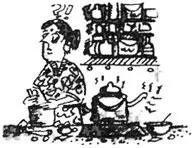
Kettle Croon
We are all familiar with the hissing sound (called the “singing” of the kettle) that starts a few moments after the kettle is put on the fire to boil water. This sound gradually increases and then suddenly drops when the water starts to boil. In fact, we know from the sudden drop of the sound that the water is ready, boiling. Have you ever wondered what causes the kettle to “sing”?
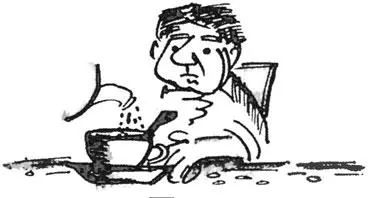
Spoon in a Teacup
One often puts a metal spoon into the china cup before pouring hot tea into it. Why? Which is safer to use, a thin-walled cup or a thick-walled one?
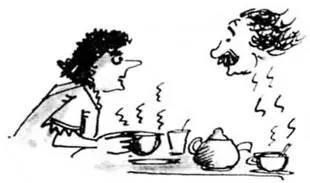
Einstein in your Teacup
Erwin Schrödinger was an eminent physicist who discovered the fundamental equation of quantum mechanics which describes the behaviour of atomic and sub-atomic entities. Schrödinger’s wife remembered Einstein every time she poured her tea. This is because it was Einstein who first explained to her and to her husband why wet tea leaves (which are heavier than the liquid) always collect at the centre of the bottom of a cup when the tea is rotated by a spoon for a while and then allowed to settle. This is what Schrödinger wrote to Einstein on 23 April 1926 (reprinted in Letters on Wave Mechanics, edited by K Przibram, Philosophical Library, p 27): “It just happens that my wife had asked me about the ‘teacup phenomenon’ a few days earlier, but I did not know a rational explanation. She says that she will never stir her tea again without thinking of you.”
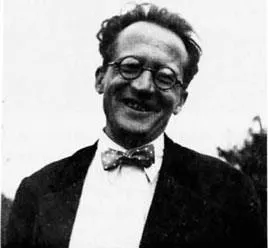
Next time you have tea, turn it with your spoon and notice where the leaves settle. Why do you think the leaves settle at the centre and not get pushed to the walls by the centrifugal effect?
A Hole in a Tea Pot
Why is a small hole usually made on the lid of a tea pot?
The Teetotaller’s Dilemma
Some like to pour milk first and then tea, others prefer to add milk to the tea. Is there any difference between the two?
Fire without Hazard
Why doesn’t the whole gas cylinder catch fire when the burner is ignited?
The inner Core
When one makes ice cubes in a refrigerator, one usually finds that the outer part of the cubes is transparent whereas the inner core is opaque. Why?
An Apple a Day
Why does the cut surface of an apple turn brownish after some time?
Ovens with a Difference
Microwave ovens are now quite common in kitchens. Do you know how they work?
Don’t Lick an Ice Tray
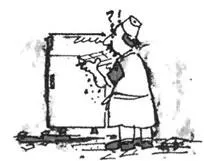
Have you ever tried to hold a really cold frosted ice tray? If you have, you must have noticed that your fingers tend to stick to the tray. Why? Don’t ever try to lick the tray—it will be a very painful experience!
From Fermi to the Frying Pan
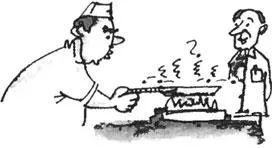
The famous Italian physicist Enrico Fermi once asked a student during an examination: “The boiling point of olive oil is higher than the melting point of tin. Explain how it is then possible to fry food in olive oil in a pan”. (Italian saucepans are wholly made of tinned copper.) What is the answer?
Coiling Chocolate
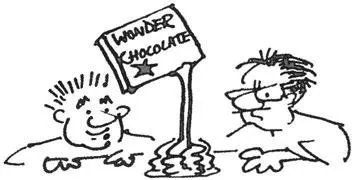
The coiling of thick molten chocolate as it is poured onto a plate or a slab of ice-cream must have struck you as odd. What on earth makes it coil?
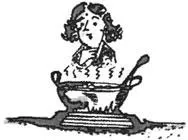
Leaping Liquid
The nuisance caused by milk spilling over when boiled is well known. One has to keep a constant watch and stir the milk to prevent it spilling. Why does milk have this peculiar property?
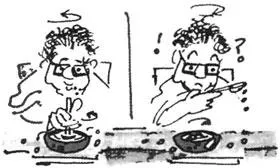
Sou...
Table of contents
- Cover
- Half Title
- Title Page
- Copyright Page
- Dedication
- Table of Contents
- Foreword
- Preface to the Second Edition
- Acknowledgments and Bibliography
- Questions
- Answers
- Index
Trusted by 375,005 students
Access to over 1.5 million titles for a fair monthly price.
Study more efficiently using our study tools.
Frequently asked questions
Yes, you can cancel anytime from the Subscription tab in your account settings on the Perlego website. Your subscription will stay active until the end of your current billing period. Learn how to cancel your subscription
No, books cannot be downloaded as external files, such as PDFs, for use outside of Perlego. However, you can download books within the Perlego app for offline reading on mobile or tablet. Learn how to download books offline
Perlego offers two plans: Essential and Complete
- Essential is ideal for learners and professionals who enjoy exploring a wide range of subjects. Access the Essential Library with 800,000+ trusted titles and best-sellers across business, personal growth, and the humanities. Includes unlimited reading time and Standard Read Aloud voice.
- Complete: Perfect for advanced learners and researchers needing full, unrestricted access. Unlock 1.5M+ books across hundreds of subjects, including academic and specialized titles. The Complete Plan also includes advanced features like Premium Read Aloud and Research Assistant.
We are an online textbook subscription service, where you can get access to an entire online library for less than the price of a single book per month. With over 1.5 million books across 990+ topics, we’ve got you covered! Learn about our mission
Look out for the read-aloud symbol on your next book to see if you can listen to it. The read-aloud tool reads text aloud for you, highlighting the text as it is being read. You can pause it, speed it up and slow it down. Learn more about Read Aloud
Yes! You can use the Perlego app on both iOS and Android devices to read anytime, anywhere — even offline. Perfect for commutes or when you’re on the go.
Please note we cannot support devices running on iOS 13 and Android 7 or earlier. Learn more about using the app
Please note we cannot support devices running on iOS 13 and Android 7 or earlier. Learn more about using the app
Yes, you can access Riddles in Your Teacup by P Ghose,Partha Ghose,D Home in PDF and/or ePUB format, as well as other popular books in Biological Sciences & Philosophical Metaphysics. We have over 1.5 million books available in our catalogue for you to explore.