- 256 pages
- English
- ePUB (mobile friendly)
- Available on iOS & Android
eBook - ePub
About this book
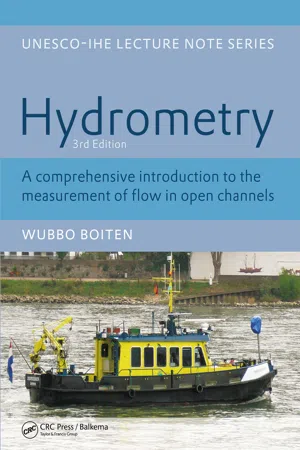
Hydrometry presents a thorough introduction to the science of hydrometry: the measurement of flow in open channels. Dealing with both traditional techniques and innovative new methods and instruments, in line with the latest ISO standards, this book deals with the main themes of hydrometry: the measurement of water levels and bed levels, of discharge, and of sediment transport; it considers the use of flow measuring structures, hydrological networks, and the organization of surveys. Dr Boiten has extensive experience of teaching students from many countries and backgrounds, and has distilled this experience into a clear and comprehensive account of hydrology and water resource management. Hydrometry will appeal to graduate students and to professionals engaged in hydrology and the management of water resources.
Information
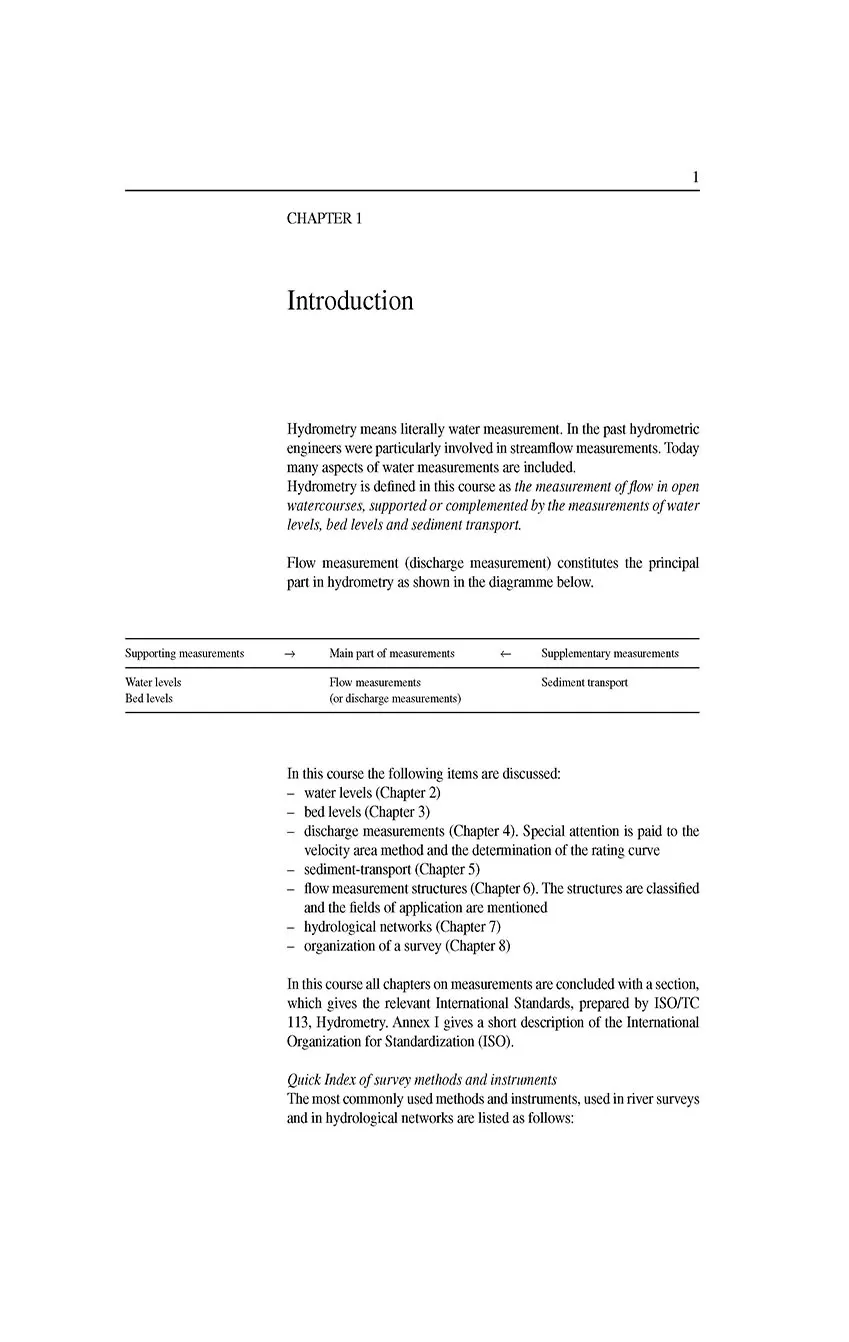
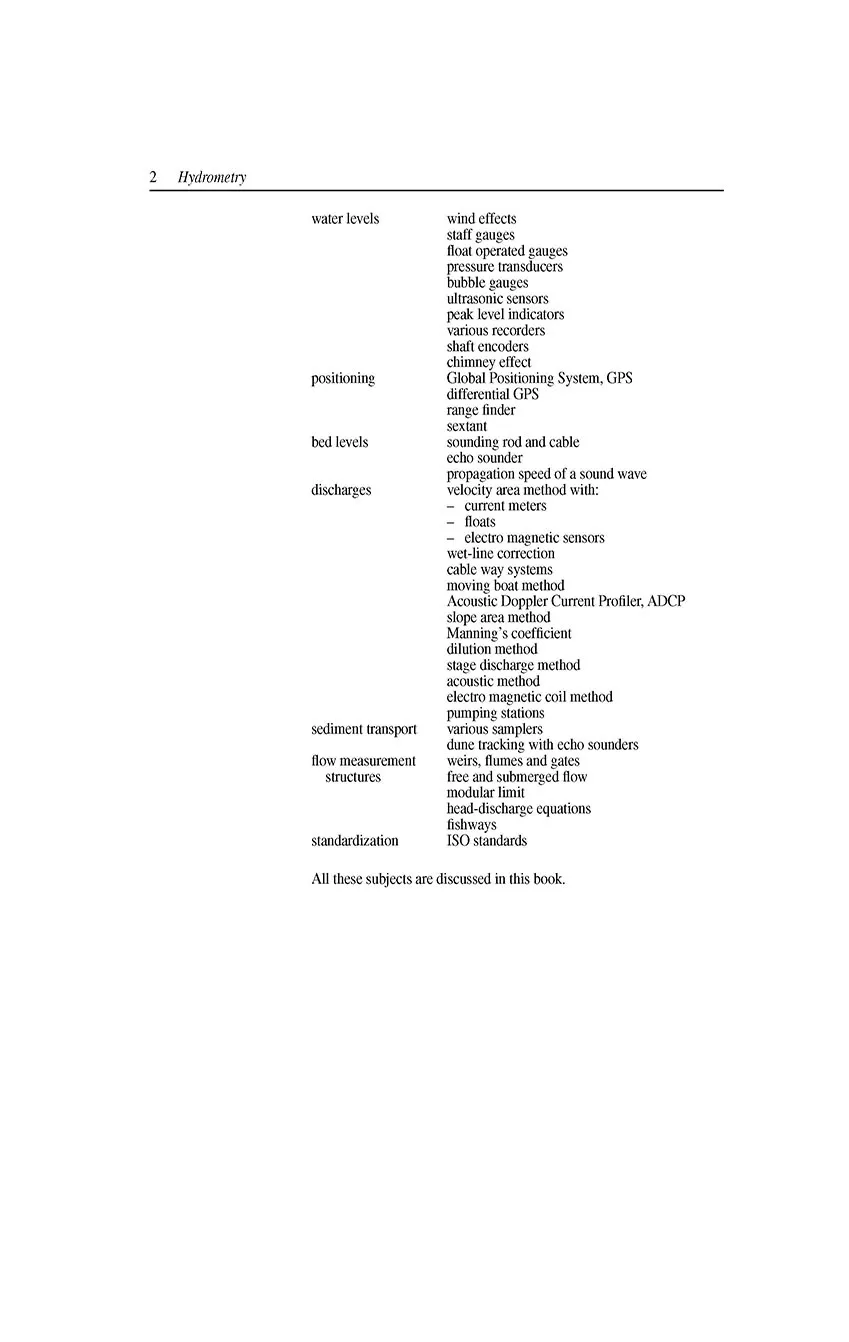
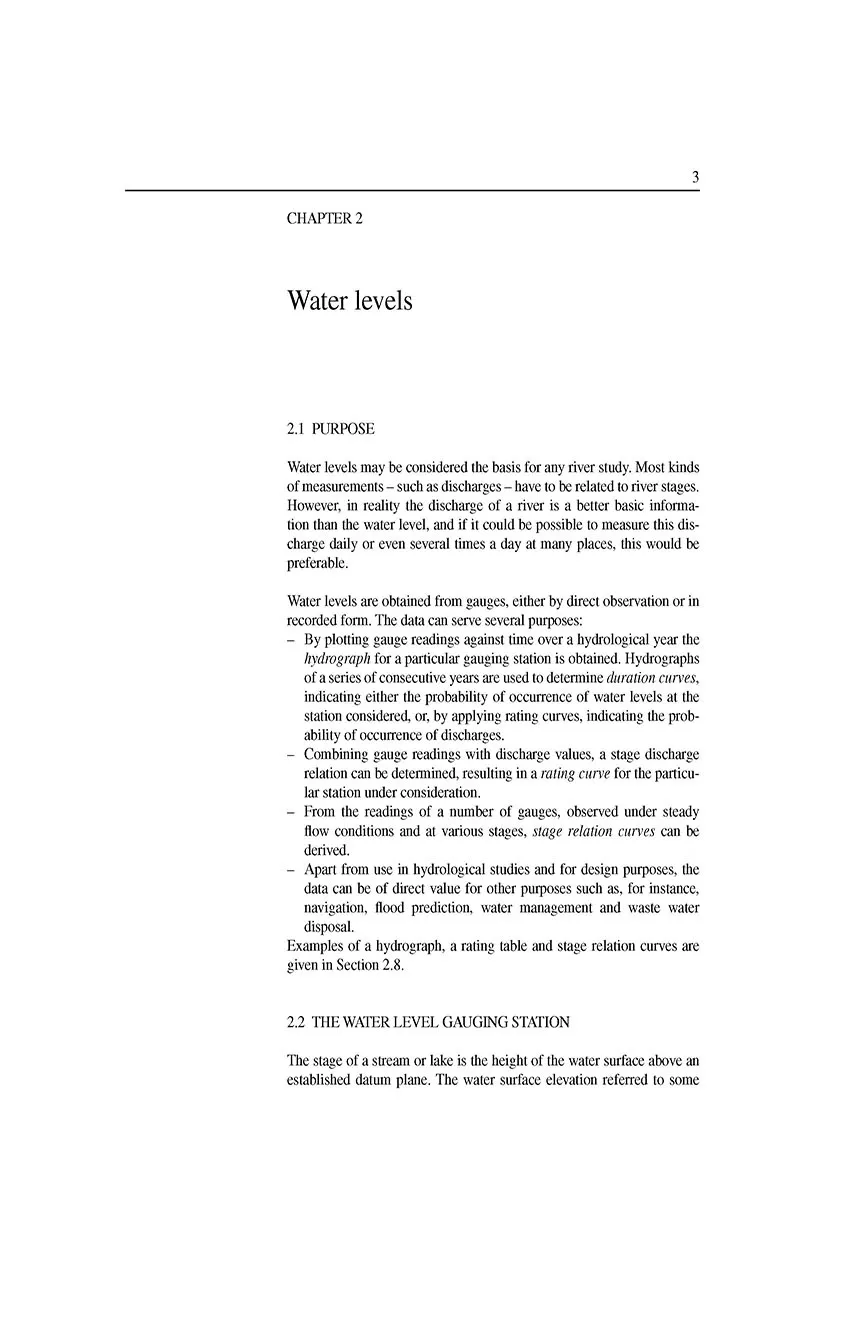
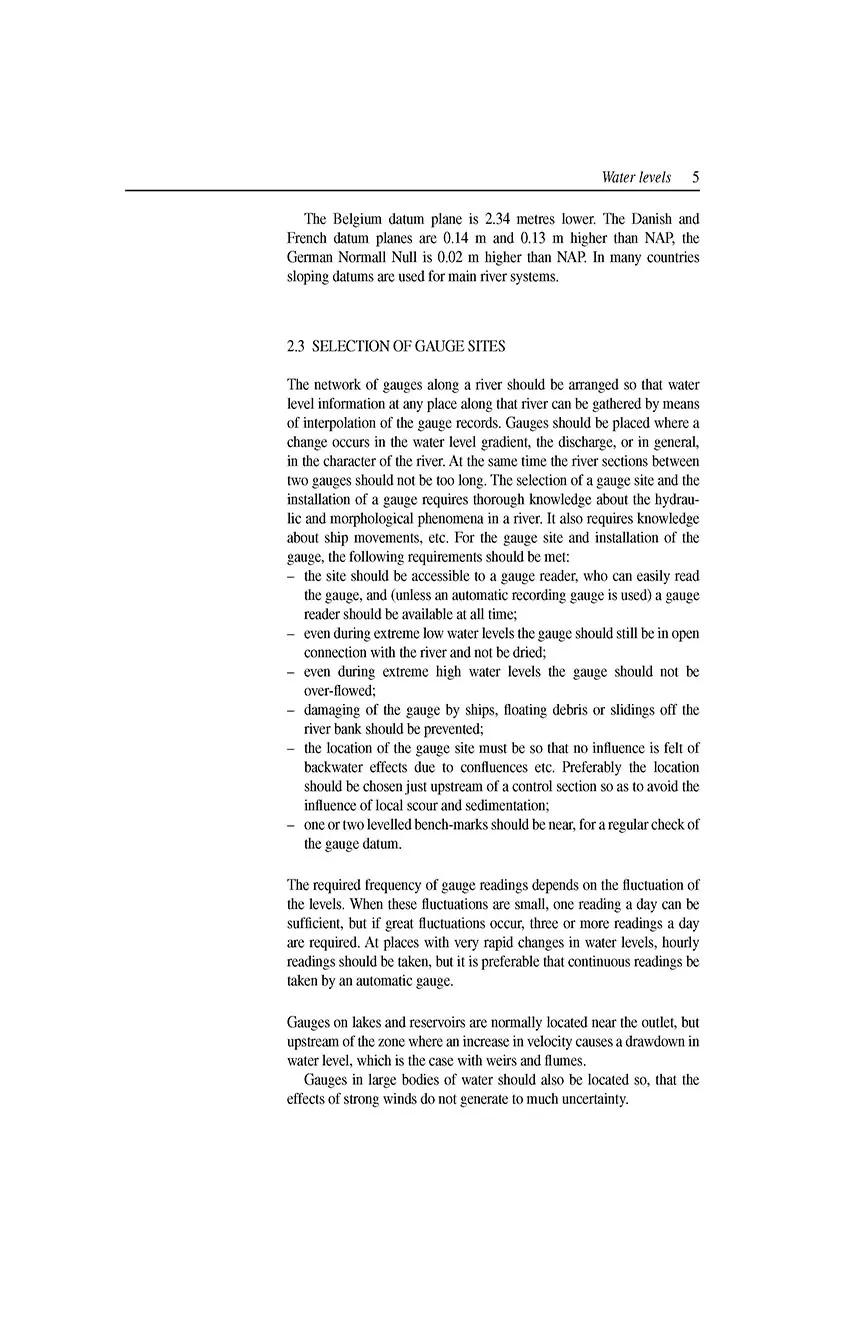
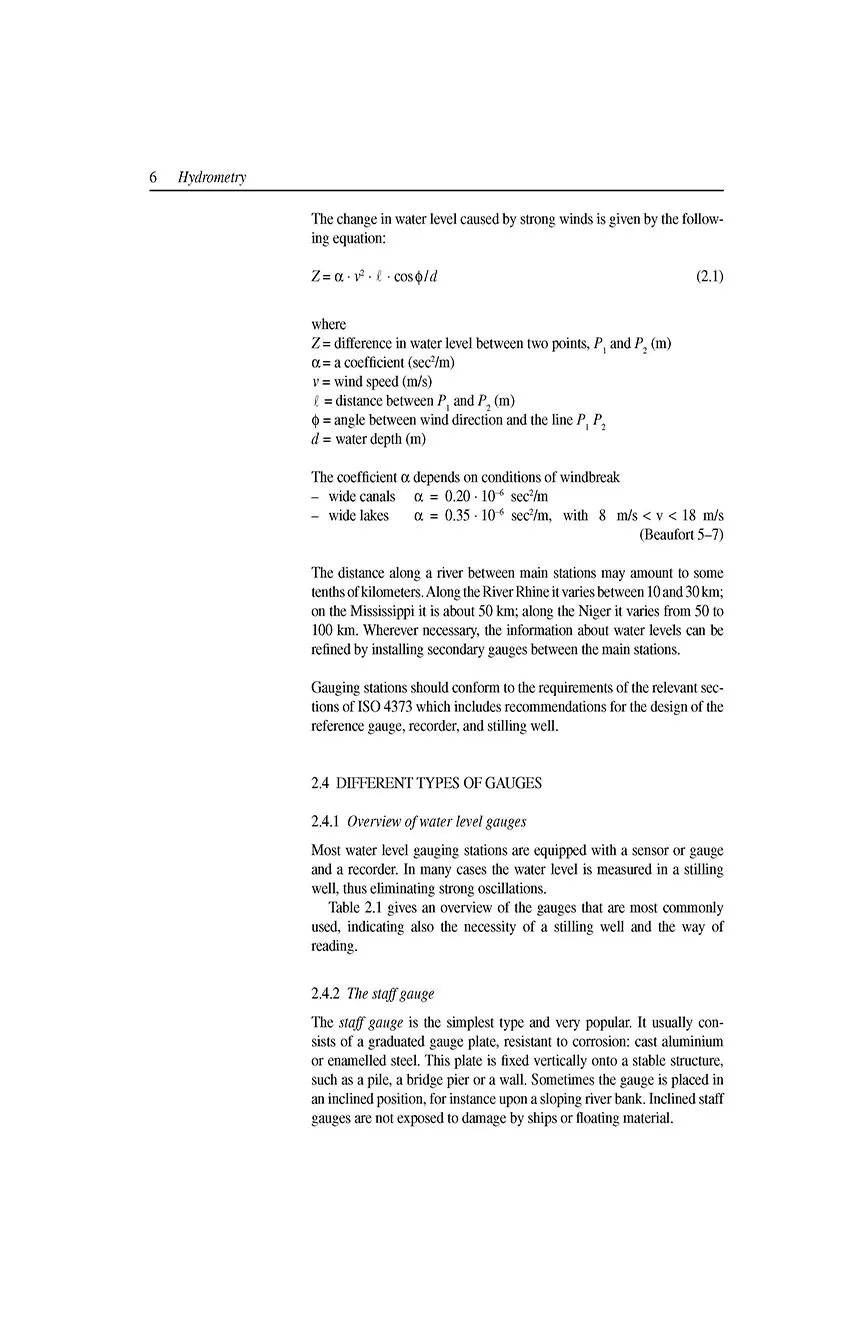
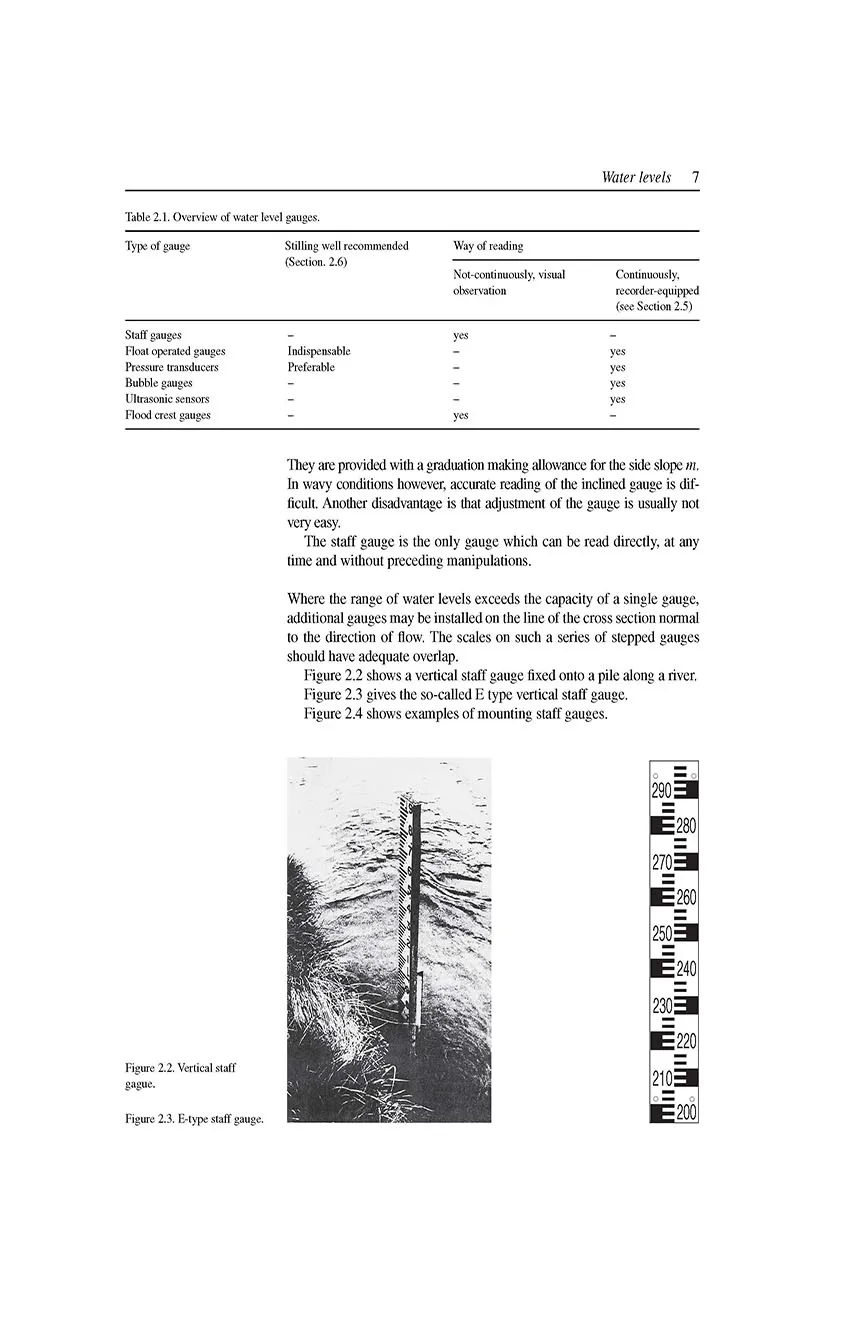
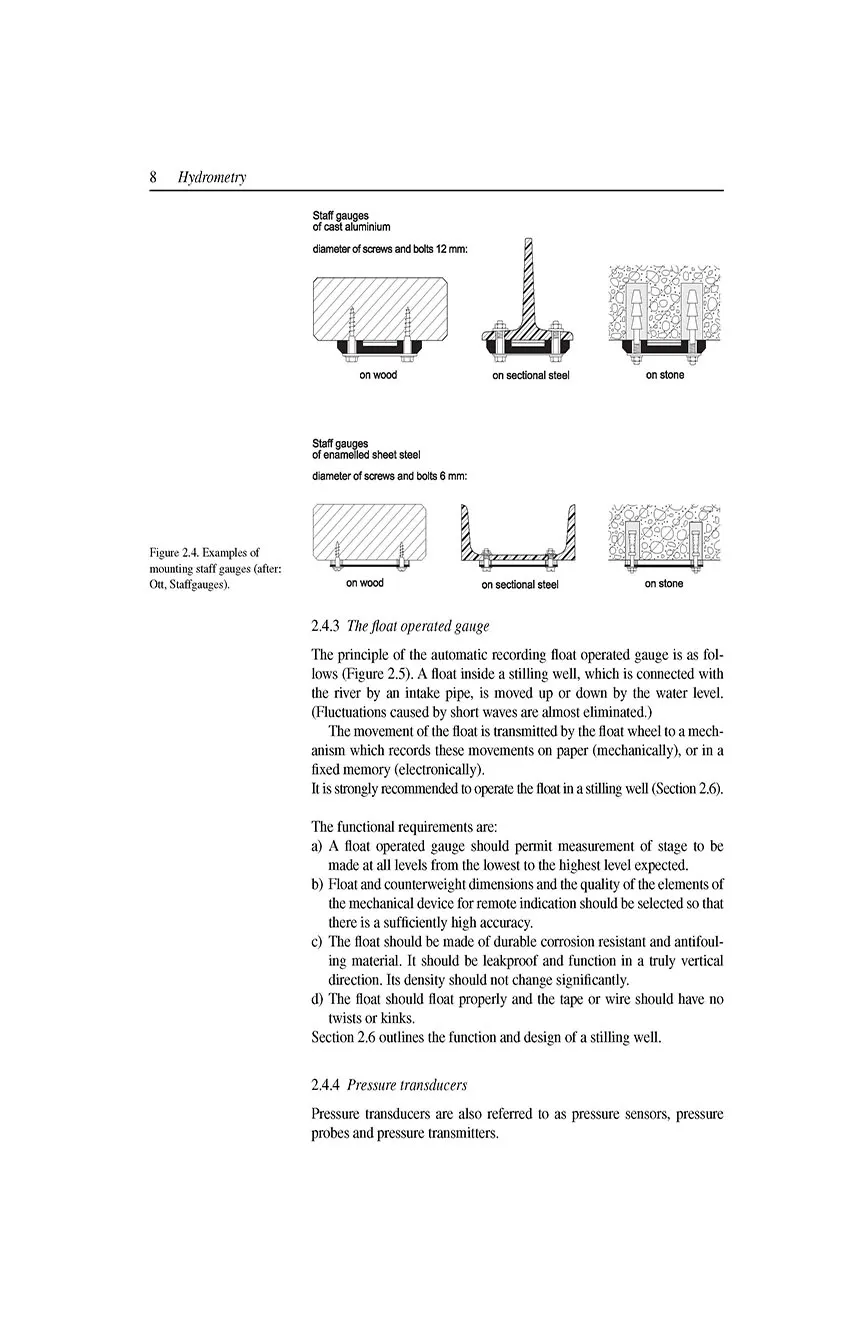
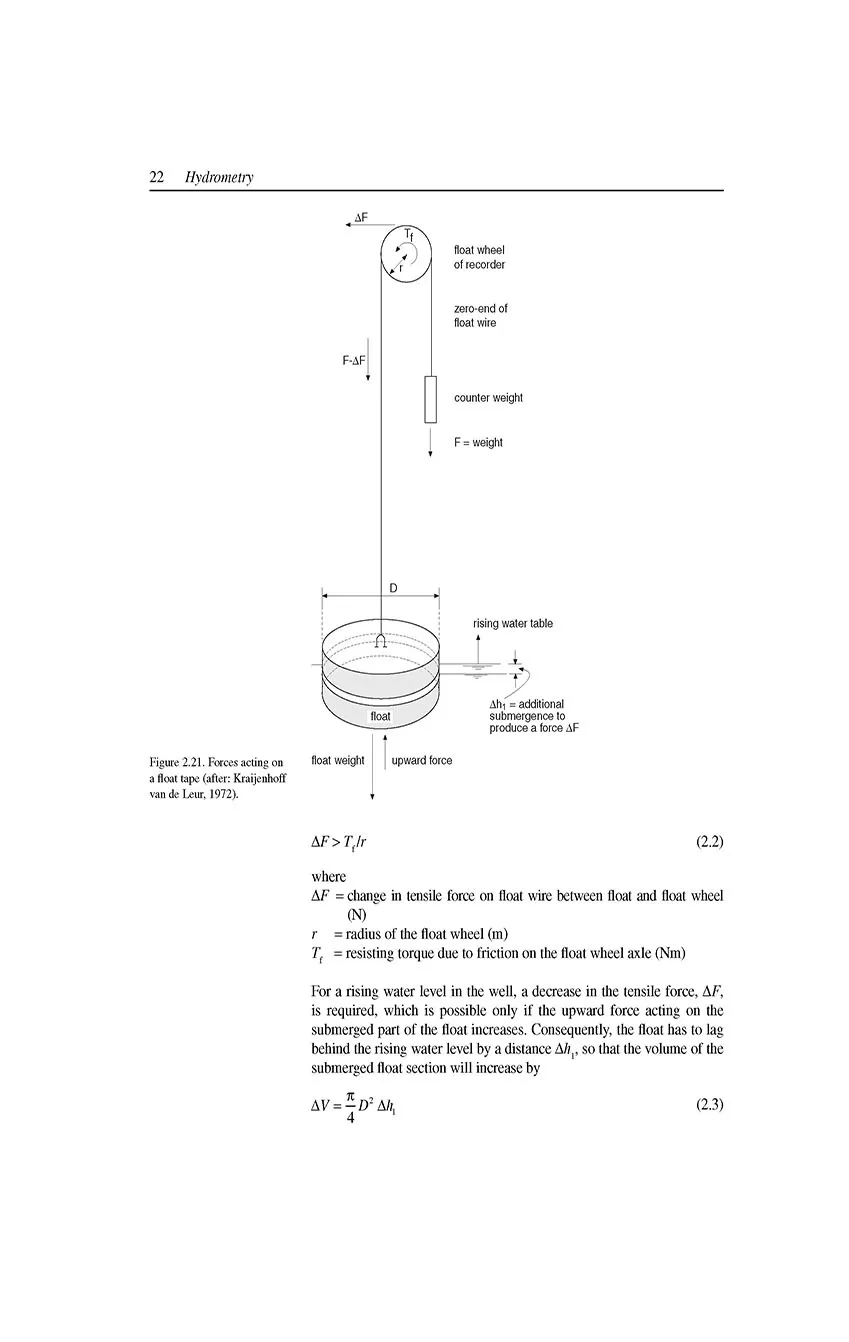
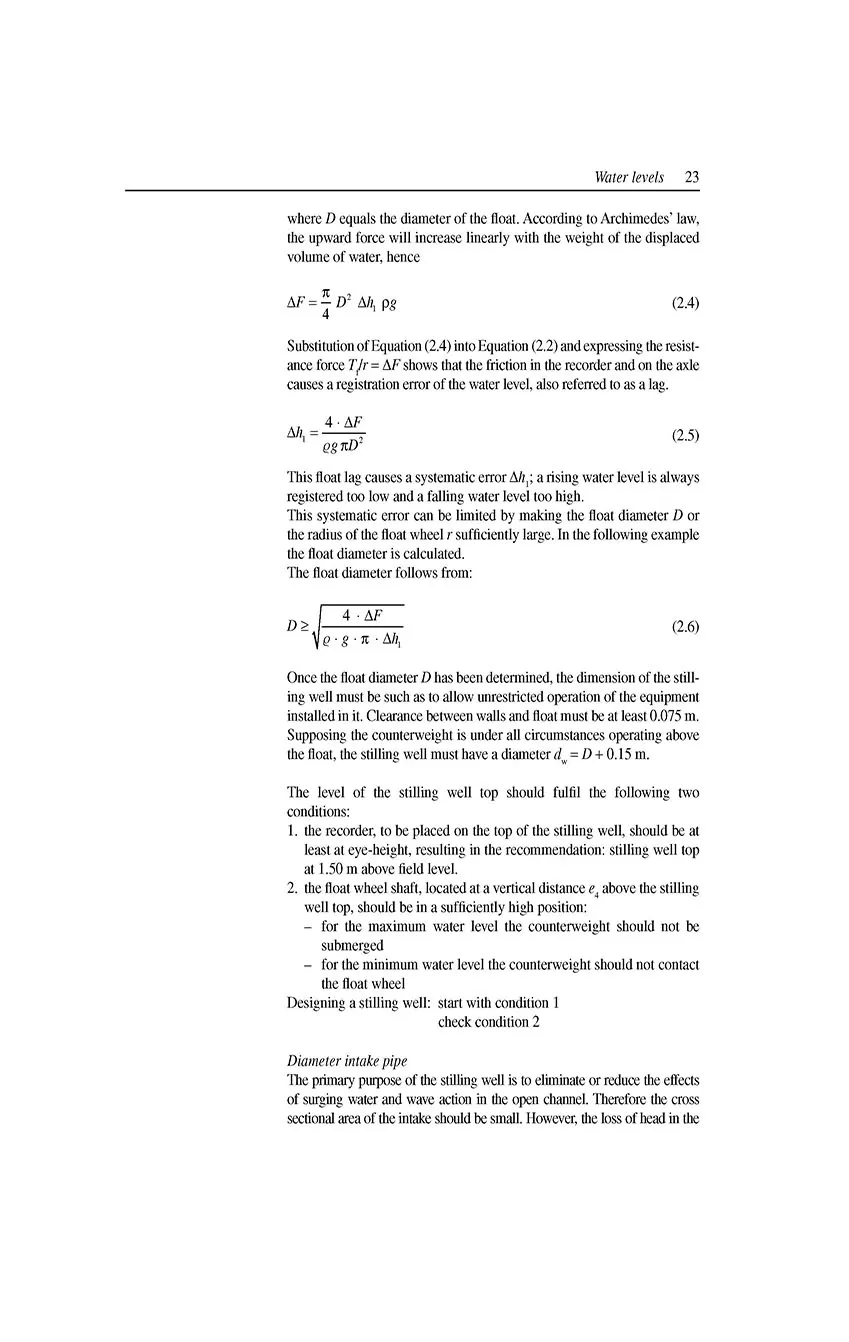
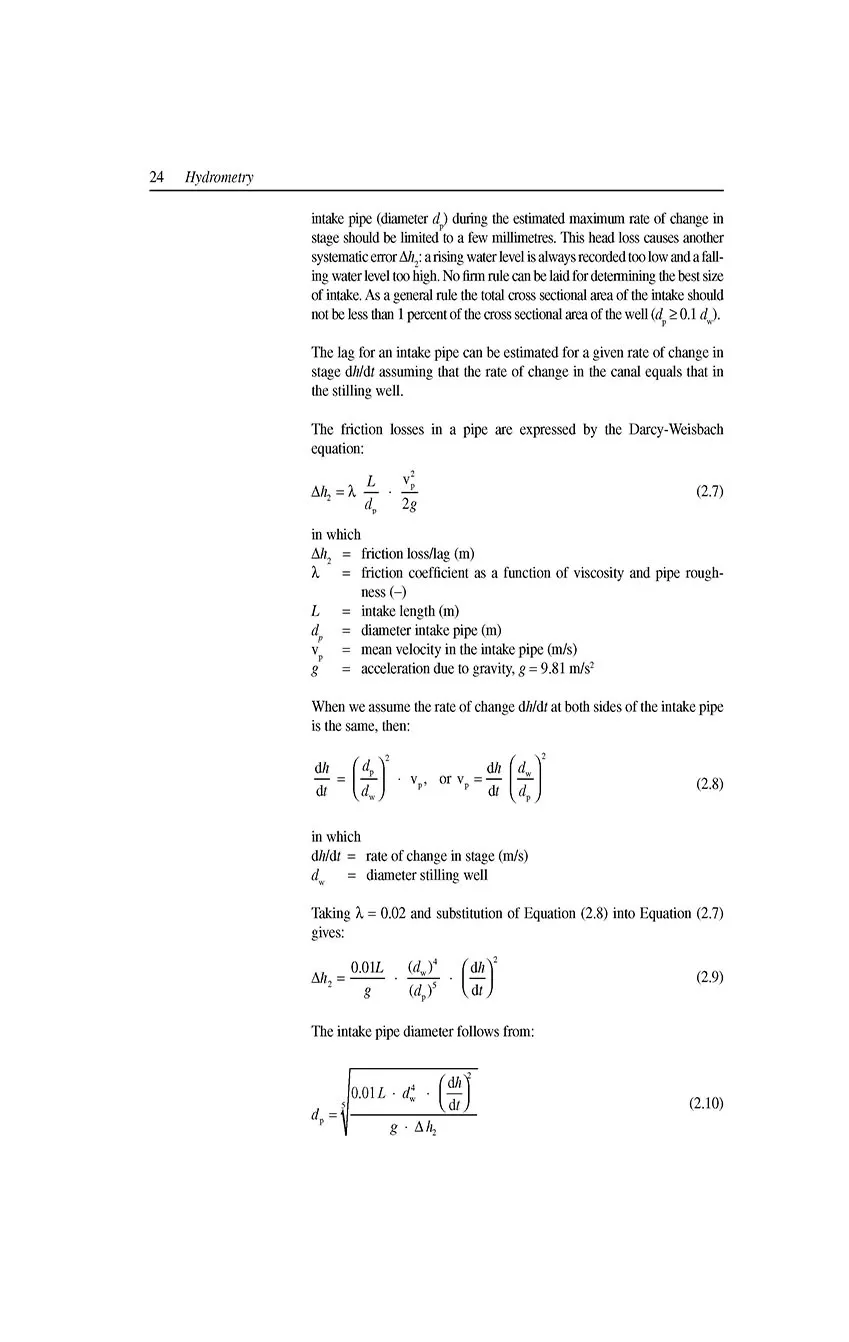
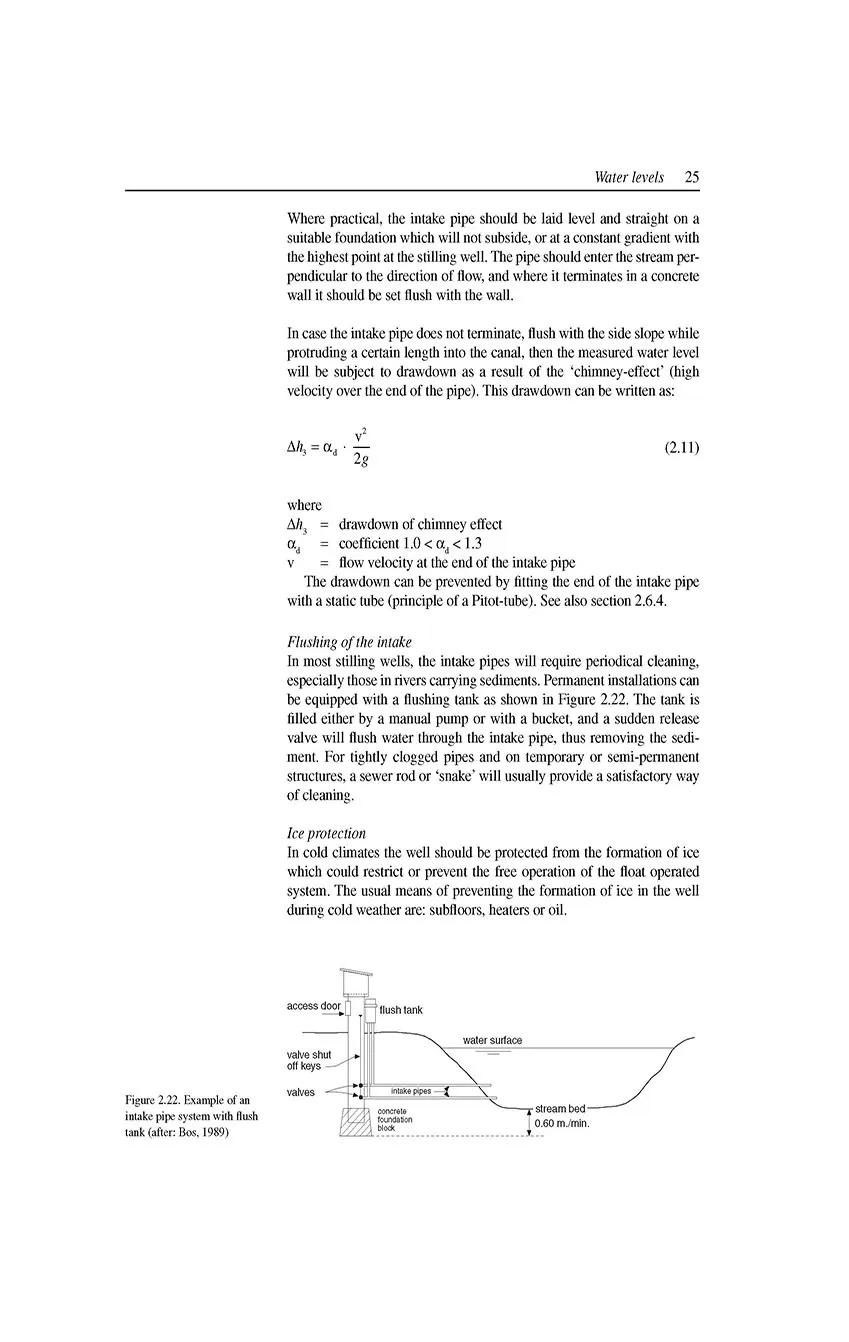
Table of contents
- Cover
- Half Title
- Series Page
- Title Page
- Copyright Page
- Contents
- PREFACE
- 1 INTRODUCTION
- 2 WATER LEVELS
- 2.1 Purpose
- 2.3 Selection of gauge sites
- 2.4 Different types of gauges
- 2.4.1 Overview of water level gauges
- 2.4.3 The float operated gauge
- 2.4.4 Pressure transducers
- 2.4.5 Bubble gauges
- 2.4.6 Ultrasonic sensor
- 2.4.7 Peak level indicators
- 2.5 Automatic recording systems
- 2.5.2 Analogue mechanical recorders
- 2.5.3 Digital mechanical recorders
- 2.5.4 Electronic recorders
- 2.5.5 Shaft Encoders
- 2.6 Function and design of a stilling well for float operated gauges
- 2.6.1 Description of the float system
- 2.6.2 Example of the design of a float operated system
- 2.6.3 Errors with float-operated systems
- 2.6.4 Chimney effect with a protruding intake pipe
- 2.7 Accuracy of water level measurements
- 2.8 Presentation of results of water level measurements
- 2.9 International standards
- 3 MEASUREMENT OF BED LEVELS
- 3.1 Introduction
- 3.2 Position fixing
- 3.3 Global Positioning System, GPS
- 3.4 Instruments for traditional position fixing
- 3.5 Examples of traditional position fixing in a straight range line
- 3.6 Examples of traditional position fixing in a free system
- 3.7 Sounding and sounding instruments
- 3.8 Data processing
- 3.9 International standards
- 4 DISCHARGE MEASUREMENTS
- 4.1.1 Purpose
- 4.1.2 Relation discharge %85 bed roughness
- 4.2 Various methods of discharge measurements
- 4.3 Velocity area method
- 4.3.1 Introduction
- 4.3.3 Selection of site
- 4.3.4 Instruments to measure point flow velocities
- 4.3.5 Velocity measurements
- 4.3.6 Determination mean velocity in the vertical
- 4.3.7 Determination of the total discharge in the cross-section
- 4.3.8 Uncertainties in the velocity area method
- 4.3.9 Limited number of verticals (the d 3/2 method)
- 4.3.10 The moving boat method
- 4.3.11 Float measurements
- 4.3.12 The Acoustic Doppler Current Profiler, ADCP
- 4.4. Slope area method
- 4.5 Dilution methods
- 4.6 Stage discharge method
- 4.6.1 Introduction
- 4.6.2 Controls
- 4.6.3 Determination of the unique rating curve
- 4.6.4 Extrapolation of rating curves
- 4.6.5 Non-unique rating curves
- 4.6.6 Processing of stage discharge data
- 4.6.7 Statistical evaluation of discharge data
- 4.7 Slope stage discharge method
- 4.8 Acoustic method
- 4.9 The electromagnetic method
- 4.10 Pumping stations
- 4.10.1 Introduction
- 4.10.3 Centrifugal pumps
- 4.11 Flow measurement structures
- 4.12 Selection of discharge measurement methods
- 4.13 International standards
- 5 MEASUREMENT OF SEDIMENT TRANSPORT
- 5.2 Sediment yield
- 5.3 Bed forms
- 5.4 Classification of sediment transport
- 5.4.2 Bed load
- 5.4.3 Suspended load
- 5.4.4 Wash load
- 5.5 Sediment transport measurements
- 5.5.2 Bed load Transport Meter Arnhem
- 5.5.3 Dune tracking method
- 5.5.4 Delft Bottle
- 5.5.5 Optical and acoustic sampling methods
- 5.5.6 Water sampler
- 5.6 Bottom grab and bottom sampling
- 5.7 Grain sizes
- 5.8 Intake structures on a meandering river
- 5.9 International standards
- 6 FLOW MEASUREMENT STRUCTURES
- 6.2 Functions of structures
- 6.3 Structures in irrigation schemes
- 6.3.1 Introduction
- 6.3.2 Brief description of structures
- 6.3.3 Flow control systems
- 6.4 Classification of flow measurement structures
- 6.4.1 Broad-crested weirs
- 6.4.3 Short-crested weirs
- 6.4.4 End depth methods
- 6.4.6 Gates
- 6.5 Fields of application
- 6.5.2 Sanitary engineering and industry
- 6.5.4 Laboratory measurements
- 6.6 Definition of weir flow
- 6.7 Head-discharge equations
- 6.8 Selection of the most suitable flow measurement structure
- 6.8.1 Characteristics
- 6.8.2 Field conditions
- 6.8.3 Human requirements
- 6.9 Design of a flow measurement structure
- 6.9.3 Description of the round-nose horizontal broad-crested weir
- 6.9.4 Hydraulic design
- 6.9.5 Set up of the rating curve
- 6.10 Calibration of flow measurement structures using scale models
- 6.11 Fishways
- 6.11.2 Rating curves of fishways
- 6.12 Accuracy of discharge measurements
- 6.13 Standardization of flow measurement structures
- 7 HYDROLOGICAL NETWORKS
- 7.1 Introduction
- 7.2 The dynamics of a water system
- 7.3 Purpose and first setting up of a hydrological network
- 7.4 Optimization of monitoring networks
- 8 ORGANIZATION OF A SURVEY
- ANNEX I INTERNATIONAL STANDARDS
- REFERENCES
Trusted by 375,005 students
Access to over 1.5 million titles for a fair monthly price.
Study more efficiently using our study tools.
Frequently asked questions
Yes, you can cancel anytime from the Subscription tab in your account settings on the Perlego website. Your subscription will stay active until the end of your current billing period. Learn how to cancel your subscription
No, books cannot be downloaded as external files, such as PDFs, for use outside of Perlego. However, you can download books within the Perlego app for offline reading on mobile or tablet. Learn how to download books offline
Perlego offers two plans: Essential and Complete
- Essential is ideal for learners and professionals who enjoy exploring a wide range of subjects. Access the Essential Library with 800,000+ trusted titles and best-sellers across business, personal growth, and the humanities. Includes unlimited reading time and Standard Read Aloud voice.
- Complete: Perfect for advanced learners and researchers needing full, unrestricted access. Unlock 1.5M+ books across hundreds of subjects, including academic and specialized titles. The Complete Plan also includes advanced features like Premium Read Aloud and Research Assistant.
We are an online textbook subscription service, where you can get access to an entire online library for less than the price of a single book per month. With over 1.5 million books across 990+ topics, we’ve got you covered! Learn about our mission
Look out for the read-aloud symbol on your next book to see if you can listen to it. The read-aloud tool reads text aloud for you, highlighting the text as it is being read. You can pause it, speed it up and slow it down. Learn more about Read Aloud
Yes! You can use the Perlego app on both iOS and Android devices to read anytime, anywhere — even offline. Perfect for commutes or when you’re on the go.
Please note we cannot support devices running on iOS 13 and Android 7 or earlier. Learn more about using the app
Please note we cannot support devices running on iOS 13 and Android 7 or earlier. Learn more about using the app
Yes, you can access Hydrometry by W. Boiten in PDF and/or ePUB format, as well as other popular books in Physical Sciences & Fluid Mechanics. We have over 1.5 million books available in our catalogue for you to explore.