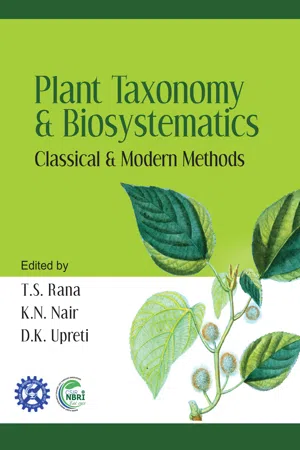
The basic aim of this manual is to provide useful resource materials for training young students and faculties working in the area of plant systematics. The manual provides updated information on basic as well as applied aspects of plant systematics on various groups of plants like Algae, Lichens, Bryophytes, Pteridophytes, Gymnosperms and Angiosperms. 1 to 3 describe the various approaches and methods to study microbial and fungal diversity, which is basically a very useful precursor to the students and young researchers. 4 and 5 provide deals with the multi-dimensional approaches in Lichen systematics. The book progresses upwards through the plethora of information on the diversity and systematics of Algae, Bryophytes, Pteridophytes and Gymnosperms ( 6-10). 11 to 15 contain on the plant methodological details identification, approaches and methods of Flora, revision, monograph and development of herbarium. This information is very important for the students and young faculties who intend to pursue their researches in plant taxonomy. 14 and 15 particularly provide all the relevant information on the International Code of Plant nomenclature including cultivated plants. These s per se are very significant for the amateur as well as serious readers of plant taxonomy. Plant taxonomy and biosystematics is a dynamic subject, as it derives information from various other disciplines like palynology, seed morphology, pharmacognosy, molecular biology, etc. We have, therefore, broaden the scope of this book by including the s on palynology, seed morphology, molecular systematics, biostatistics, ecological and remote sensing methods for diversity analyses, and pharmacognostical tools for identification of herbal drugs ( 16-22). The knowledge and information on these applied aspects of biology in relation to taxonomy will certainly infuse the interest in readers, who are pursuing plant taxonomy as their scientific pursuits. 23 and 24 describe the various methods of characterization and evaluation of ornamental and medicinal plants. The last (25) of the book provides the information about CSIR-NBRI Botanic Garden and its various repositories, which could be of great interest to the readers from the perspectives of plant conservation.
- 546 pages
- English
- PDF
- Available on iOS & Android
eBook - PDF
About this book
Information
Topic
Ciencias biológicasSubtopic
BiologíaTable of contents
- 9789383305414_cvr - Copy.pdf
- 9789383305414_txt.pdf
- 9789383305414_cvr.pdf
Trusted by 375,005 students
Access to over 1.5 million titles for a fair monthly price.
Study more efficiently using our study tools.
Frequently asked questions
Yes, you can cancel anytime from the Subscription tab in your account settings on the Perlego website. Your subscription will stay active until the end of your current billing period. Learn how to cancel your subscription
No, books cannot be downloaded as external files, such as PDFs, for use outside of Perlego. However, you can download books within the Perlego app for offline reading on mobile or tablet. Learn how to download books offline
Perlego offers two plans: Essential and Complete
- Essential is ideal for learners and professionals who enjoy exploring a wide range of subjects. Access the Essential Library with 800,000+ trusted titles and best-sellers across business, personal growth, and the humanities. Includes unlimited reading time and Standard Read Aloud voice.
- Complete: Perfect for advanced learners and researchers needing full, unrestricted access. Unlock 1.5M+ books across hundreds of subjects, including academic and specialized titles. The Complete Plan also includes advanced features like Premium Read Aloud and Research Assistant.
We are an online textbook subscription service, where you can get access to an entire online library for less than the price of a single book per month. With over 1.5 million books across 990+ topics, we’ve got you covered! Learn about our mission
Look out for the read-aloud symbol on your next book to see if you can listen to it. The read-aloud tool reads text aloud for you, highlighting the text as it is being read. You can pause it, speed it up and slow it down. Learn more about Read Aloud
Yes! You can use the Perlego app on both iOS and Android devices to read anytime, anywhere — even offline. Perfect for commutes or when you’re on the go.
Please note we cannot support devices running on iOS 13 and Android 7 or earlier. Learn more about using the app
Please note we cannot support devices running on iOS 13 and Android 7 or earlier. Learn more about using the app
Yes, you can access Plant Taxonomy And Biosystematics by Rana,T.S. in PDF and/or ePUB format, as well as other popular books in Ciencias biológicas & Biología. We have over 1.5 million books available in our catalogue for you to explore.