- English
- ePUB (mobile friendly)
- Available on iOS & Android
eBook - ePub
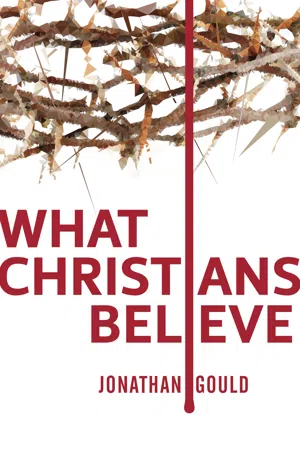
What Christians Believe
Information
Publisher
Christian Focus PublicationeBook ISBN
9781781910696
Year
2012
God and man
Christianity, if false, is of no importance, and if true, of infinite importance. The one thing it cannot be is moderately important.
C.S. LEWIS
Investigating the Christian faith is a hazardous business. We may begin our investigation in an open frame of mind, prepared to find much in the faith that is inspiring and uplifting, as well as a certain amount about which we remain unconvinced.
However, in the end, we can only reach one of two verdicts concerning the enormous claims that Christianity makes. Either we shall conclude that it is true or that it is false. And our lives will bear out our verdict. If it is false, then there is an end of the matter. We may safely put Bible and church with their doctrinal fictions on one side, and ignore the personal constraints and cultural expectations that flow from them.
If, however, Christianity is true, the enormity of its claims means everything will change for us. The purpose of our lives will change and with that we will have a whole new basis for evaluating the priority and importance of all that we might do. ‘Christianity’ cannot simply be the bit that we tack on to otherwise busy and fulfilling lives directed by some other inner guiding light. No; if Christianity is true, then the God of which it speaks must be central to life and my purpose in living.
A psalm (or a song) of King David, the most famous of Israel’s kings, written in about 1000 B.C., speaks of the God who is there and the purpose for which he has made us:
1O LORD, our Lord, how majestic is your name in all the earth!
You have set your glory above the heavens.
2From the lips of children and infants you have ordained praise because of your enemies, to silence the foe and the avenger.
3When I consider your heavens, the work of your fingers, the moon and the stars, which you have set in place,
4what is man that you are mindful of him, the son of man that you care for him?
5You made him a little lower than the heavenly beings and crowned him with glory and honour.
6You made him ruler over the works of your hands; you put everything under his feet:
7all flocks and herds, and the beasts of the field,
8the birds of the air, and the fish of the sea, all that swim the paths of the seas.
9O LORD, our Lord, how majestic is your name in all the earth! (Ps. 8)1
WHAT IS GOD LIKE?
What is God like, according to King David? The short answer given in a word, both at the beginning and end of this psalm, is that God is ‘majestic’: ‘how majestic is your name in all the earth’ (v. 1, ‘name’ here standing for the whole character of the God of whom he speaks). David was himself a great king, and this word ‘majestic’ might well have been used to describe himself and his position in the land he ruled. In relation to royalty, the word ‘majestic’ speaks of power and splendour.
But, more than that, the God to whom he ascribes such majesty is no mere local and tribal deity. This God is not hidden away in the obscurity of just one small place. No, this God has made his ‘name’ known ‘in all the earth’ – that is to all people in every place. The truth about God is not gleaned with great difficulty by brilliant academics in ivory towers, drenched in learning and a pile of ancient languages. Here is truth accessible in the remotest parts of our planet Earth, to every people group in our world.
This truth about God is revealed primarily through the splendour of our universe. King David has done an easy thing and taken a walk outside on a clear moonlit night. He has lifted up his eyes to the skies. He stops to consider the immensity and the beauty of the universe he can see, and finds that it declares the God who is behind it all – the God who made it all and who owns it all. The heavens King David sees are the Lord’s: ‘your heavens, the work of your fingers’, he says. The moon and the stars – you, Lord, have set them in place (v. 3).
It will be clear that a reliable Bible – such as we are assuming – is not to be interpreted with wooden literalism. To speak of God’s ‘fingers’ or ‘hands’ is not to say that God is a man up there with eyes, ears, a nose and two hands with four fingers and a thumb on each. This is anthropomorphic language – in other words language which is personal, physical and human (‘hands’ and ‘fingers’) is being used to communicate the truth about God’s creative activity in making the world.
And the truth is this universe is not an accident; it is a creation and this creation reveals its creator. It is as though stamped across the sky are the words ‘Made by God’ or, more accurately, ‘Made by Me’. For the heavens are not simply attributed by man to God, in the absence of some more thoughtful scientific explanation. The heavens are God’s handiwork, and their magnificence reveals the majesty of their maker to us. And the majesty of God, both his awesome power and his unutterable splendour, that he publishes ‘above the heavens’ (v. 1) is for all to see. The universe is God’s testimony to himself, and his primary means of revealing himself to all of humanity: ‘How majestic is your name... in all the earth.’
SOMETHING OR SOMEONE?
And yet this language of fingers and hands tells us more than that the creator God is powerful. This God, of whom King David speaks, is not only powerful to create, but is personal too. David speaks of ‘your glory’, ‘your heavens’, ‘the moon and the stars which you have set in place’, ‘the work of your fingers’ and the ‘works of your hands’. And more than all these, King David speaks of God’s name: ‘How majestic is your name in all the earth.’
Quite unlike the way we might use ‘O God!’ as an exclamation or in the heat of a moment to express frustration or annoyance, King David’s ‘O LORD’ is a reverent address of God using the name by which he has revealed himself in history.2 So for King David to address God as ‘LORD’ (printed in capitals in our Bibles), is not simply to give God a title of honour (Sir, Dr, Rev., etc.) but to address God using this name – LORD – by which he has revealed himself. By itself all the talk of God’s power in creation could conjure up notions of impersonal forces. But God has made himself known not only through nature, but by the giving of his name. God has revealed himself not only by acts of power in creation, but by words of personal communication.
According to the record, God revealed himself to certain people, described as the fathers of the Israel-ite people: Abraham, Isaac and Jacob, and then sub-sequently to others (including Moses). Through this revelation made to these men, and passed on by them to subsequent generations, God was able to call a people to belong to himself. By the time King David writes, this is the reality; there is a people that belongs to this God – the Israelite people. To use the language of this psalm, ‘the LORD’ (that is, God’s name) has become their ‘Lord’ (that is, their acknowledged ruler or king). So the psalmist can begin and end this song identifying the God to whom he speaks ‘O LORD, our Lord’ [my italics].
This all-powerful and utterly personal God who historically called a people, descendants of Abraham, to belong to himself, is the same creator God who today calls people from among all the nations to belong to him. A god that was all-powerful, but not personal, could compel us to fear it (rather as one might fear the power of the sea), but could not create the possibility of any sort of relationship. On the other hand, a god who was personal, but not the all-powerful creator, might collect some friends, but could not command our allegiance. By contrast to these half-truths, the God of the Bible, majestic in power and personal in character, both creates the possibility of relationship with him and, rightly, commands the allegiance of all those to whom he speaks.
This revelation of God as all-powerful and yet utterly personal means that it is really impossible to be indifferent to him. In the end, there will be those who gladly praise the Lord God and those who oppose him. But face-to-face with the Lord God, spiritual neutrality is not an option in this life or indeed the next.
Not only is God’s self-revelation something we need to consider with great care, knowing just how high the stakes are, but this fundamental truth that the powerful creator of the universe is personal and knowable, supplies a key to two further truths in this psalm concerning mankind and the purpose for which God made us.
MADE IN GOD’S IMAGE
The first truth, quite astonishingly, is that God made us to be like him. The very same word that the psalm uses to speak of God’s splendour and majesty, namely ‘glory’ (‘You have set your glory above the heavens’ v. 1), is now the word used to describe mankind: ‘You made him a little lower than the heavenly beings and crowned him with glory and honour’ (v. 5). It’s clearly not coincidental; we are being told that men and women were made to be like their maker. We find this truth taught in the account of creation in Genesis, the first book of the Bible, in the words ‘Let us make man in our image, in our likeness’, and then again in the words ‘So God created man in his own image, in the image of God he created him; male and female he created them’ (Gen. 1:26-27).
One consequence of this truth is that we can learn something about God by looking at mankind. But a second important consequence is that we learn what we were made to be like by looking at God. God’s glory is, at least in some respects, to be the model for our own. The God of glory has crowned mankind that he has made with glory. Or to use the language of Genesis, God has made us in his image, in his likeness, and therefore he supplies in his very own nature and character the pattern to which you and I were made to conform.
Here is the answer to the perennial question ‘Who am I?’ This question sends many of us on a far-reaching, but ultimately fruitless, quest to discover our real inner selves. But the answer is not found by looking in at ourselves; it is found by looking outside of ourselves at the creator God who made us to be like him, that is, to reflect his glory.
We do not now reflect God’s glory as fully as he intended, for reasons we shall see in a later chapter. But the restoration of my true purpose and dignity, reflecting the glory of the God who made me, comes about through belonging to the LORD, as my Lord, and through a personal relationship with him.
This truth has some small parallel in our human relationships because we tend to become like those whose company we keep. To observers, husbands and wives can grow to be like one another; children can become like their parents (‘like father, like son’ or ‘a chip off the old block’); peers exercise a phenomenal influence over one another for good or ill (‘peer pressure’); and friends of all ages unconsciously imitate one another. The old adage that ‘you can tell a man by the company he keeps’ reflects this same truth, as does its biblical equivalent that ‘bad company corrupts good character.’
And what we observe in human experience finds its corollary in spiritual terms; if humanity is to reflect deity, humanity must relate to deity. A reflection of God, and a restoration of his image in us, will depend on a relationship with God. If we are to find ourselves, we must know our creator because the real me was made to be like the real God. To be able to say that the LORD is our Lord, is ultimately the way in which his glory will, once again, crown our lives.
MADE TO RULE
The other surprising truth we see here, concerning the purpose for which God made man, is that God has given mankind a task to perform. God made mankind to look after this world for him:
6You made him ruler over the works of your hands; you put everything under his feet:
7all flocks and herds, and the beasts of the field, 8the birds of the air, and the fish of the sea, all that swim the paths of the seas (Ps. 8:6-8).
To speak of God as maker is true as far as it goes, but it does not go far enough if we conclude that God, having made the world, has put his feet up for an eternally long weekend, or that he is off on another new project. No, the world God has made is a world which he continues to rule. But for the most part the way in which God exercises his benevolent rule of his world is by entrusting it to our care. God says to mankind – you rule over the plant and animal kingdoms.
The first book of the Bible, Genesis, tells us that God put a man and a woman in a garden, and commissioned them to work it and take care of it. It’s a big task, and an even bigger one to carry out responsibly, as environmental campaigners frequently remind us. For the commission to rule over the world, both its animal and plant life, is not an excuse to plunder the world’s resources recklessly, and pollute what we don’t consume. Nor is it permission to be idle whilst the needs of our fellow men and women across the world are left fatally neglected and the world’s resources carelessly underexploited. God has given to humanity the resources that are needed to care and provide for human life and exercise a responsible care for the animal kingdom. It is a solemn trust.
Surely this is not easily accomplished. And man’s God-given ingenuity has proved to be a double-edged sword. At its best, it exhibits great creativity, and the agricultural, scientific and technological endeavours of the three thousand years since King David wrote his psalm testify that mankind has some ability to fulfil this high calling. But the evidence is not all one way. According to the book of Genesis, when God finished each aspect of his creation, ‘God saw that it was good.’ The evidence today is more mixed than that. There has not always been the benevolent care and rule over the animal kingdom that is worthy of the good creator’s perfectly good creation. And much that people suffer in this world has a reason other than a real lack of physical resources to supply the want. For example, Burma is a country so fertile that it used to be known as the ‘rice bowl of Asia’, yet, not long ago, one in three of its children were malnourished, according to the World Food Programme. In 2000, The Economist declared Burma the ‘most needlessly miserable country’.3 Since then conditions have got much worse.
In a recent and salutary reminder, Lord Rees (Astronomer Royal and President of the Royal Society) wrote ‘our planet has existed for 45 million centuries. But this century is the first in which one species – ours – could threaten the entire biosphere.’4
These sorts of statistics highlight the immense task which, under God, is ours. Only a breathtaking arrogance on our part would say that this God-given task could be fulfilled without God-given resources of love and wisdom – the will to care and the ability to provide. All this is a sure sign that relating rightly to God is the only way that mankind can rule rightly for God. Mankind was made to rule for God in this world, but it was only ever possible with the inner resources that come from God. Left to our own devices, this world, its people as well as the rest of its animal and plant life, would, to a greater or lesser extent, suffer the effects of human misrule whether through the tyranny of oppressive regimes or the incompetence of benign ones.
The sad thing is it was never meant to be this way. We were made to rule, but just as the mandate to rule was derived from God so also, in relating and submitting to him, we were to find the mental acumen and the spiritual wisdom that were needed for the task. Again, in the words of this psalm, it was in knowing ‘the LORD’ as ‘our Lord’ that God intended we should rule over this world which is his by ownership and ours only for stewardship.
THE BIG ISSUE
So, relating to God, the LORD, as our Lord, was and is to be the key to finding our God-given identity (reflecting his glory) and fulfilling our God-given purpose (ruling his creation).
However, when King David took up his pen to write this psalm, these were not the thoughts uppermost in his mind; whether they are news to us or not, they were not news to him. These truths were simply part of the revelation of God and his purposes evident from the creation all around and above him. That revelation of God would have been endorsed in the instruction he would have received in his parents’ home and among the wider Israelite community of which his family was a part...
Table of contents
- Testimonial
- Title
- Indicia
- Contents
- Preface
- 1. God and man
- 2. Common mistakes
- 3. Mark that man
- 4. Facts or faith?
- 5. What’s gone wrong with the world?
- 6. Does God care?
- 7. How can I know God?
- 8. A life-changing message
- 9. A real-life story
- Postscript
- Abbreviations
- Christian Focus
Trusted by 375,005 students
Access to over 1.5 million titles for a fair monthly price.
Study more efficiently using our study tools.