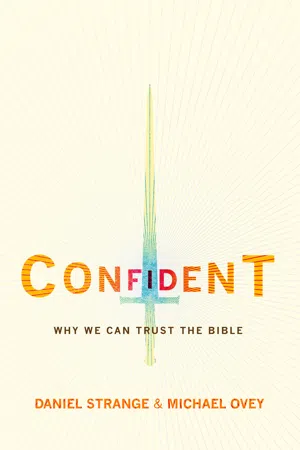
- English
- ePUB (mobile friendly)
- Available on iOS & Android
eBook - ePub
Information
Publisher
Christian Focus PublicationeBook ISBN
9781781915714
Year
2015Part One:
A Word for Them
Where does the Bible fit into the life and times of our non-Christian friends, family and acquaintances?
While it’s still fresh in the memory, please indulge us a little as we continue with Spurgeon’s famous big cat illustration that opened up our book. Last year one of us took our kids to the ‘Lions of the Serengeti’ enclosure at Whipsnade Zoo. As the blurb says, ‘our innovative viewing area offers uninterrupted views of our pride roaming the plains of Whipsnade, through three metre high floor to ceiling viewing windows.’ It was an impressive view (although the lions didn’t particularly want to ‘perform’ that day), but the glass was so thick that the experience was a little desensitising and quite frankly, tame (pardon the pun). You knew you were still in Dunstable, England and not in the Serengeti, Africa.
Not to worry though (I’m being sarcastic now!), because on our side of the glass was a ‘real’ lovely old lady, a zoo volunteer, who had on a table in front of her a ‘real’ lion pelt, and a ‘real’ lion skull, that the kids could handle and play with. Are you getting our point?
Key Summary
When it comes to the Bible, how do we get into a position where we can ‘open the door and let the lion out’—a real, majestic, terrifying lion that is, and not some flea-bitten relic of a lion. We want to release the lion (who, by the way, is ready and waiting to be introduced). But there seem to be these big, thick, impenetrable walls in the way—which means that people’s only ‘experience’ of the lion is rather uninspiring and, frankly, dead. How do we break down these walls?
The first part of our little book deals with what makes up the seemingly impenetrable walls. The walls range over a number of common problems that people have with regard to the Bible:
- problems of illiteracy and implausibility
- problems of culture and relevance
- problems of basic comprehension
1
Keeping it Real … and Realistic
Introduction
We’ve started thinking about those walls that can separate people from engaging with the Bible. Now, of course, you might be someone who engages with people in everyday life who don’t seem to have any walls—or only tissue-paper thin ones, which are easily ripped down. In your experience, these people are quite happy to engage with the Bible and the claims it makes. Praise God if this is you. Please get on with your let-the-lion-loose mission.
For many others, including ourselves among those ‘others’, the walls do seem very thick indeed! We don’t think that this thickness is down to a lack of faith on our part about the power of God’s Word, or the power of the Holy Spirit. There is certainly no desire on our part to dilute the Bible’s message to make it more acceptable and palatable, muzzling the lion to domesticate it, as it were. The reality and thickness of the walls exist like any other barrier to unbelief, and we knock down those barriers with a healthy dose of prayer, proclamation and persuasion.
Up against the walls
When it comes to barriers to the Bible, what are these walls made out of? There are at least two factors we want to get out into the open as we start. One is ignorance, and another is implausibility. Let us explain.
1. The wall of ignorance
First, there’s the wall of ignorance. We know, don’t we, that not a year goes by without some new survey or poll highlighting new levels of biblical illiteracy. As Boyd Tonkin wrote a couple of years ago in The Independent, on the anniversary of the King James Bible,
For anyone religious or not, who cares about the continuity of culture and understanding, Gordon Campbell lets slip a remark to freeze the blood. A professor at Leicester University, he recalls that ‘When the name of Moses came up at the seminar I was leading, no one had any idea whom he might have been, though a Muslim student eventually asked if he was the same person as Musa in the Qur’an (which he is).’1
Wow! What a state we’re in.
Now one might be tempted to think that such cultural ignorance is bliss. Doesn’t this illiteracy give us a clean slate with people to tell them about the Bible? Well possibly, if our communication about the Bible presumes such illiteracy and ignorance and we start with basic building blocks and work up from there. But in our conversations with non-Christians don’t we simply presume too much knowledge? We basically think that people know what the Bible is, how it functions and what it says because we do and our Christian friends do. But your average guy today just doesn’t, and as a result communication and comprehension become very difficult. One might say it’s a Christian version of what communication gurus call ‘The Curse of Knowledge’: ‘We start to forget what it’s like not to know what we know’.2 We see it happening a lot between doctors and their patients, and lawyers and their clients. I think we see it many times in our conversations about the Bible.
Let’s do a little thought experiment. Taking the above example at Leicester University, how much would you have to back-track to explain to someone who Moses is starting with nothing? Do it now.
Breaking through the wall of biblical illiteracy, or rather chipping away at it, means being able to communicate from where people are, presuming nothing and explaining everything. Let’s not be ignorant about our ignorance!
In terms of our attitude and character, it means being convinced and convicted of Ecclesiastes 7:10: ‘Do not say, “Why were the old days better than these?” For it is not wise to ask such questions.’ Yes, we can go dewy-eyed, be wistful, even self-flagellate, remembering a time when people knew what the Bible is, what it contains, what the Old Testament is, what a prophet is, who Moses is, how Moses points to Christ and so on. But in the phrase of our American colleagues here at Oak Hill College, ‘We are where we are.’ We can and should pray for elements of that time to return, but for now those times are not our times. There’s a whole lot of unlearning that’s gone on for well over a century between Spurgeon’s times and ours. The slow chip, chip, chip will require empathy, patience, long-suffering and determination. Biblically speaking, it will mean suffering fools gladly without ourselves succumbing to that ugly vice that the Bible calls ‘vain conceit’.3
In terms of our practice, breaking through this wall of biblical illiteracy might mean having to scale back and be more realistic when it comes to the aims and objectives of our conversations, our preaching and teaching about the Bible. We might be thinking every time: ‘At the end of our chat about the Bible, I want people to know what the Bible is, what it’s for, to whom it testifies, and then I want said person to confess that Jesus Christ is Lord, and to acknowledge that the Bible is God’s Word: authoritative, sufficient, perspicuous, and necessary.’ Instead of this it might be: ‘At the end of the chat about the Bible, I want said person to go home, rummage around bookcases and boxes of detritus and find a copy of the Bible he or she was given x years ago and have a quick look at it and put it on the kitchen table.’ It might mean thinking: ‘At the end of talking about the Bible, I want said person to go home and set up to record the Channel 4 documentary on the Bible that was going to be on next week.’ It might just mean, ‘At the end of our chat about the Bible, I want people to google the word “Bible” on their phones and see what comes up.’ Now of course the ultimate aim that we are always working towards in an intentional way, is for people to know what the Bible is, what it’s for, who it testifies to and to confess that Jesus Christ is Lord, acknowledging that the Bible is God’s word: authoritative, sufficient, perspicuous, and necessary. But we might have to work up to it slowly, a bit like introducing a baby to solids from liquids. It can be painfully slow (and very messy) from bland puree, to very small pieces, to slightly less small pieces, but at least you’ve got a chance of getting something into the vicinity of the mouth. Going straight in, even ‘choo-choo-train style’, with a pork chop is unrealistic, and probably will result in choking.
So let’s be patient, take our time, move from step to step, play the long game and pray.
2. The wall of implausibility
Second, there’s the wall of implausibility. When we talk about implausibility (and of course its reverse ‘plausibility’), we’re talking about those deeply embedded beliefs about stuff that are so deep we don’t even ask if they are true or not. We just assume they are. It’s these kinds of beliefs (or unbeliefs) that provide the background and structure that makes arguments easier or harder to understand and accept. These structures are a bit like an atmosphere—the cultural air that we breath. We take it for granted and it becomes just normal. We don’t think about the beliefs, let alone question them.
In writing this book, we don’t think we’re being too controversial when we say that there is a deep implausibility about the Bible in our culture today. People, who might never have picked up a Bible in their lives, simply assume a whole load of negative things about it because since they were born they have been breathing in air that has told them and moulded them into believing that the Bible is … (fill in the missing word).
Implausibility, however, is maybe something we Christians have less patience with than ignorance. There’s a sense in which we might go easier on those who are ignorant about the Bible, but are less forgiving with those who think the Bible and its claims are implausible.
If we want to talk about the ‘plausibility’ or ‘implausibility’ of a Christian truth within culture, it doesn’t mean we’re going theologically squidgy. It doesn’t mean an obsequious ‘cap in hand’ pandering to the world, or a desperate prettifying of ugly reality. It certainly does not mean a denial of the sovereign work and power of the Holy Spirit, who is ultimately responsible not only for making dead hearts beat again but, more particularly, actually convincing us that God’s Word is exactly that.
Talking about plausibility or implausibility, rather, is about being prayerfully aware and savvy about the form that unbelief takes in any given culture. It’s about the way that humans collectively manifest all the wilful suppression and substitution stuff that Paul in Romans 1 talks about in such stark terms. It’s seeing sociology and specifically the sociology of knowledge (yes, this is a real discipline that people think about!) as a tool we can use for rigorously Christian theological ends. It’s about asking both why people don’t believe and how people don’t believe. Of course at rock bottom the root of disbelief is sin, but we can and need to set this out in more explanatory detail. To talk about plausibility or implausibility is relevant, wise and sound. When it comes to people taking the Bible seriously today, the glass wall of implausibility might seem impenetrable and impregnable. There are just so many issues that people have with the Bible in terms of its authority, relevance, morality, reliability and so forth.
When we take the time to consider why people think the Bible implausible, however, we’ll be in a much better position to make right diagnoses and give appropriate treatment in the appropriate areas. We’ll be able to give answers that are more scalpel-like and less like using a machete.
So let’s pause to reflect on the specifics of people’s unbelief; about their distrust and disdain of the Bible. Let’s be patient, take our time, move from step to step, play the long game and pray.
Questions
- There’s an old saying in English law ‘Ignorance of the law is no defence’. That suggests we should take ignorance of the law really quite seriously. But how seriously do you think we take ignorance of the Bible and its contents? How seriously should we take the ignorance of the Bible in Christians of our generation? Please read 2 Kings 22:1–23:27 and think through or discuss the following questions:
- How seriously does Josiah treat his and his people’s ignorance of God’s law?
- What is their response?
- How does God treat the ignorance of the kingdom of Judah?
- We’ve stressed the way that our time is ignorant about the Bible and finds it implausible. Think of a friend or relative who is not a Christian:
- What do they think the story of the Bible is?
- What makes the Bible implausible to them? What are good ways of responding to those ideas of implausibility?
- Check out with that friend or relative that you have understood them correctly about what they think the Bible’s story is and why they find it implausible. Have you understood them correctly?
1 Boyd Tonkin, ‘Battles of a Book’, The Independent (December 31, 2010), http://www.independent.co.uk/arts-entertainment/books/features/battles-of-a-book-the-king-james-bibles-history-of-dissent-and-inspiration-2171902.html.
2 Chip and Dan Heath, Made to Stick (London: Arrow, 2008), p. 46.
3 Phil. 2:3; Gal. 5:26.
2
The Reasonableness of Revelation
Introduction
There’s a big debate that carries on between academics, and in particular sociologists of religion, about whether the world is becoming less religious or more religious and how the U.K. fits into worldwide trends. It’s been going on for decades. Many of us are probably unaware about this debate and its see-saw nature, apart from the occasional time in the media when there’s a survey or a census, or some prominent public figure pronounces something provocative on a religious topic. Then Professor such and such is wheeled out into the daylight for a twenty-second soundbite, and then there’s the usual round of radio phone-ins with titles like ‘Are we losing our religion?’ and ‘Is God dead?’ Then after a day or so things just seem to carry on as normal.
While we might not be able to feel it, little cultural shifts are happening all the time. It’s a massive gut-feeling generalisation, but in terms of public perception and consciousness, maybe, just maybe, we might be ‘doing God’ a little more than we did in 2003.1 (Sorry if you’re outraged and want to contest this statement: you can’t phone in!) Now, don’t get excited, We’re not talking revival, or that God is the new essential fashion accessory for this season, but that perhaps there is a little more toleration around, even in some media streams, about faith and belief. Of course it goes without saying that it can be faith and belief in anything.
However, if God, gods, ‘something up there,’ ‘something out there,’ ‘something in here,’ faith, spirituality, can be more easily broached in polite company, throwing in the word ‘Bible’ can still be guaranteed to give us an uncomfortable tumbleweed moment. There can be a number of reactions, all of which don’t promote further conversation: wide eyes (‘you can’t be serious’); rolled eyes (‘here she goes again’); glazed eyes (‘what am I going to have for dinner tonight?’).
Spiritual, yes. Bible, no. God or gods, maybe, Bible no. Whatever the reasons, when it comes to the Bible, implausibility and incredulity seem to go into over-drive.
Maybe one way to start chipping away at our wall of implausibility is to try to show that the whole idea of the Bible is not far-fetched but actually rather sensible, really. In order to do this, I would suggest that we don’t start with the Bible, but with what the Bible claims to be: a self-communication from a personal God. If we start here, then we can work back to the Bible. Let’s take it step by step.
Although we’ll be talking about it in more detail later on, we need to start by talking about the general issue of authority and trust.
1. You’ve gotta trust someone … trust me!
Authority: we can’t live with it, we can’t live without it.
The radio phone-in, in fact, is a great example of what we think about authority. Even though there might be our old friend the professor back in the radio studio to give his professional opinion, a central idea underlying these shows is that really everyone’s say is as valid as everyone else’s. In a sense we’re all experts and pundits and asked to give our opinion because ‘damn it, we have the right to give it in our free democracy!’
One doesn’t have to be a cultural guru to see that part of what’s going on here is that there seems to be a deep suspicion of authority and authority figures, be it parents, teachers, police, politicians, priests and pastors. And we know, don’t we, that we might have good reasons for these suspicions? Many people feel they’ve been let down in recent years: whether it’s reasons for going to war in Iraq, phone-hacking, MP expenses, Baby P, Stafford Hospital, Yew-tree, or Hillsborough. Sometimes it’s conspiracy, sometimes cock-up. One of us will always remember the Professor of Economics at L.S.E., Luis Garicano, answering the Queen’s simple but devastating question as to why no-one had noticed the credit crunch coming: ‘At every stage someone was relying on someone else and everyone thought they were doing the right thing.’
So faced with these authorities that we perceive to be disordering our lives and disappointing us time and again, we all need to protect ourselves and we do that by turning to ourselves. We become our own authorities, gatekeepers and filters for what is true and false, right and wrong. We can even shape our spiritual beliefs to fit our own wants and desires.
That’s the problem. When someone comes along and tells you that they trust and even live by the contents of a book written a long time ago by dead men – a book that in public consciousness has a ‘history’ but recently not a glowing one, a book the contents of which might make demands on you, might even say things that you don’t want to hear about yourself – then, pardon me, you’re going to be very sceptical and wary.
How do you respond to all this?
First, we think you need to try and level up the playing field by getting people to see that your normal day to day living depends upon you trusting authorities all the time. Yes they may let you down but you would not have a society or any kind of order if there were not authority structures in place. We don’t deny that principled anarchists exist but we don’t see them around that much and we’re not sure how consistent they can be (they’re principled for a start). Even in popular consciousness we may berate some experts, institutions and authorities, but we love others, don’t we? Anyone heard of Simon Cowell?
Moreover, when it comes to things like beliefs and values we all have commitments to things2 which rest on prior commitments and so on. Although we don’t often do it, when we take some tim...
Table of contents
- Testimonials
- Title
- Indicia
- Contents
- Verses
- Introduction
- Part One: A Word for Them
- Part Two: A Word for Us
- Conclusion: Who do you Trust?
- Also from Christian Focus…
- Christian Focus
Trusted by 375,005 students
Access to over 1.5 million titles for a fair monthly price.
Study more efficiently using our study tools.