Heterogeneous catalysis plays a central role in the global energy paradigm, with practically all energy-related process relying on a catalyst at a certain point. The application of heterogeneous catalysts will be of paramount importance to achieve the transition towards low carbon and sustainable societies. This book provides an overview of the design, limitations and challenges of heterogeneous catalysts for energy applications. In an attempt to cover a broad spectrum of scenarios, the book considers traditional processes linked to fossil fuels such as reforming and hydrocracking, as well as catalysis for sustainable energy applications such as hydrogen production, photocatalysis, biomass upgrading and conversion of CO2 to clean fuels. Novel approaches in catalysts design are covered, including microchannel reactors and structured catalysts, catalytic membranes and ionic liquids. With contributions from leaders in the field, Heterogeneous Catalysis for Energy Applications will be an essential toolkit for chemists, physicists, chemical engineers and industrials working on energy.
- 516 pages
- English
- ePUB (mobile friendly)
- Available on iOS & Android
eBook - ePub
Heterogeneous Catalysis for Energy Applications
About this book
Trusted by 375,005 students
Access to over 1.5 million titles for a fair monthly price.
Study more efficiently using our study tools.
Information
CHAPTER 1
Design of Advanced Catalysts for Natural Gas Reforming Reactions
A. C. ROGER* AND K. PARKHOMENKO
University of Strasbourg, ICPEES UMR CNRS 7515, 25 rue Becquerel, Strasbourg, 67087, France
*Corresponding contributor. Email: [email protected]
1.1Introduction
Natural gas is one of the main energy resources that occupies a pivotal role in the global energy paradigm. Natural gas reforming is among the most investigated reactions in heterogeneous catalysis due its direct connection with key industrial processes such as methanol or ammonia synthesis. This chapter will focus on the design of robust reforming catalysts able to overcome the traditional drawbacks of commercial catalysts such as sintering or coking.
1.2Natural Gas as an Energy Resource
The global consumption of natural gas has very much increased over recent decades.1 This is mainly due to the industrialization of developing economies in regions with large gas resources (Africa and the Middle East) and to the progressive coal-to-gas switching,2 especially in the USA and China, which has been initiated to decarbonize energy and decrease energy-related CO2 emissions.
Gas consumption is still supposed to grow by 50% until 2040, reaching a total volume of 5370 billion cubic metres (Bcm) (see Table 1.1). Although the direct use of gas as a transportation fuel is growing rapidly, this sector remains small, at less than 2% of total consumption in 2017, compared to industry (32%), buildings (21%) and power generation (39%). These four uses imply the combustion of natural gas to generate heat or power. In 2017, only 206 Bcm of natural gas (around 6% of total consumption) was not combusted but chemically converted.
Table 1.1Global gas consumption (Bcm) by sector in 1990 and 2017 and forecast for 2040.
Natural gas consumption | 1990 | 2017 | 2040 |
Transport | 2 | 55 | 192 |
Industry | 771 | 1182 | 1749 |
Buildings | 530 | 784 | 971 |
Power | 543 | 1443 | 2109 |
Non-combusted | 103 | 206 | 349 |
Total | 1949 | 3670 | 5370 |
The flow diagram in Figure 1.1 depicts the use or natural gas in 2017. Among the 206 Bcm that has been converted, around 90% has been converted by reforming reactions to hydrogen for ammonia synthesis or petrochemistry. Around 10%, after a step of reforming to produce synthesis gas (syngas), was further converted into methanol through the Fischer–Tropsch (FT) process to produce chemicals or fuels. Note that despite the strong industrial interest in direct routes of methane conversion to fuels and chemicals,3 this direct use, avoiding the energy-consuming reforming step, is almost equal to 0%. Only one oxidative coupling of methane (OCM) industrial unit producing ethylene has been identified to date.4
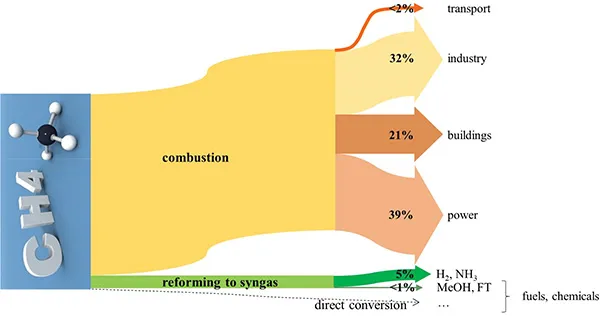
Figure 1.1Natural gas use by sector in 2017.
1.3Thermodynamic Aspects of Natural Gas Reforming
The steam reforming of methane (SRM) (eqn (1.1)) is a mature technology that is used industrially to produce hydrogen from natural gas.5,6 The syngas thus obtained is compatible with methanol synthesis and the FT process.7 Syngas can also be generated by dry reforming of methane (DRM), using CO2 as an oxidizing agent according to eqn (1.2). This process would be of particular interest in the context of the decarbonization of fuels, starting from biogas. The recent considerations around reducing greenhouse gas emissions clearly drove the research for efficient and stable DRM processes.8
CH4 + H2O → 3H2 + CO | ∆rH°298K = 206 kJ mol–1 | (1.1) |
CH4 + CO2 → 2H2 + 2CO | ∆rH°298K = 247 kJ mol–1 | (1.2) |
CO2 + H2 → H2O + CO | ∆rH°298K = 41 kJ mol–1 | (1.3) |
CH4 + 0.5 O2 → 2H2 + CO | ∆rH°298K = –36 kJ mol–1 | (1.4) |
The steam reforming and the dry reforming reactions are linked by the reverse water gas shift reaction (RWGS) (eqn (1.3)). Both reforming reactions are strongly endothermic and can be combined with the exothermic partial oxidation of methane (POX) (eqn (1.4)) to decrease energy demand9 and to allow for better thermal control of the catalytic reactor.10
The thermodynamics of the reforming reactions imply that they have to be operated at high temperature.11 Depending on temperature, pressure and inlet composition, the formation of solid carbon, through methane decomposition (eqn (1.5)) or the Boudouard reaction (eqn (1.6)), may be favoured, which would be detrimental to the stability of the catalytic materials.12
CH4 → C(s) + 2H2 | ∆rH°298K = 75 kJ mol–1 | (1.5) |
2CO → C(s) + CO2 | ∆rH°298K = –171 kJ mol–1 | (1.6) |
For methane steam reforming under a stoichiometric mixture, the maximal formation of carbon is expected at around 600 °C (Figure 1.2). The formation of carbon decreases at higher temperatures, in the range where high conversions are reached. At temperatures higher than 850 °C, almost total conversion can be achieved with close to 100% selectivity.11 The use of steam to methane (S:C) ratios higher than 1 allows for the total suppression of the formation of solid carbon.13
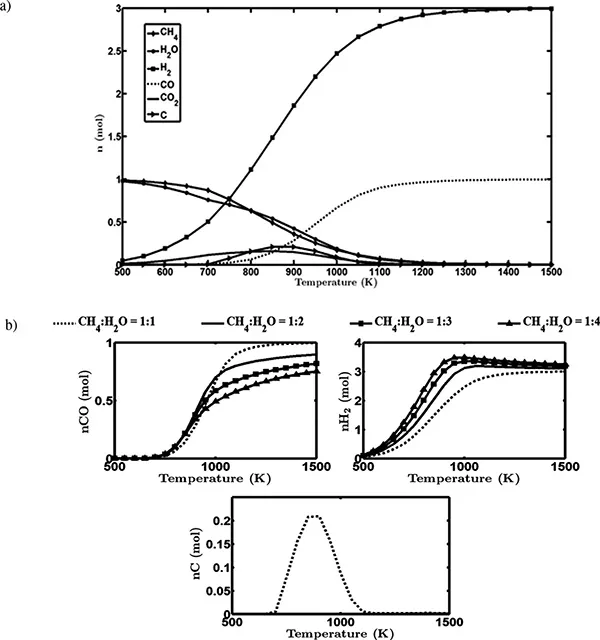
Figure 1.2Thermodynamic equilibrium for methane ...
Table of contents
- Cover
- Half Title
- Series Information
- Title Page
- Copyright Page
- Preface
- Contents
- Chapter 1 Design of Advanced Catalysts for Natural Gas Reforming Reactions
- Chapter 2 Natural Clay Minerals for Hydrocracking Reactions
- Chapter 3 Catalytic Conversion of Fossil and Renewable Fuel Resources: Approaches Using Sub and Supercritical Water as a Reaction Medium
- Chapter 4 Recent Advances in Photocatalytic Materials for Solar Fuel Production from Water and Carbon Dioxide
- Chapter 5 Catalytic Technologies for Clean Hydrogen Production
- Chapter 6 Application of Heterogeneous Catalysts for the Conversion of Biomass-derived Feedstocks into Fuel Components and Eco-additives
- Chapter 7 Catalysis in Modern Bio-refineries: Towards a New Bio-energy Paradigm
- Chapter 8 Catalytic Technologies for the Production of Liquid Transportation Fuels from Biomass
- Chapter 9 Metal Organic Frameworks: From Material Chemistry to Catalytic Applications
- Chapter 10 Application of Ionic Liquids for Sustainable Catalysis
- Chapter 11 Structured Catalysts and Non-conventional Reactor Designs for Energy Applications
- Chapter 12 Catalytic Conversion of CO2 to Fuels and Value-added Chemicals
- Chapter 13 In Situ Characterization of Metal/Oxide Catalysts for CO2 Conversion: From Fundamental Aspects to Real Catalyst Design
- Chapter 14 Catalytic Aspects of Fuel Cells: Overview and Insights into Solid Oxide Fuel Cells
- Subject Index
Frequently asked questions
Yes, you can cancel anytime from the Subscription tab in your account settings on the Perlego website. Your subscription will stay active until the end of your current billing period. Learn how to cancel your subscription
No, books cannot be downloaded as external files, such as PDFs, for use outside of Perlego. However, you can download books within the Perlego app for offline reading on mobile or tablet. Learn how to download books offline
Perlego offers two plans: Essential and Complete
- Essential is ideal for learners and professionals who enjoy exploring a wide range of subjects. Access the Essential Library with 800,000+ trusted titles and best-sellers across business, personal growth, and the humanities. Includes unlimited reading time and Standard Read Aloud voice.
- Complete: Perfect for advanced learners and researchers needing full, unrestricted access. Unlock 1.5M+ books across hundreds of subjects, including academic and specialized titles. The Complete Plan also includes advanced features like Premium Read Aloud and Research Assistant.
We are an online textbook subscription service, where you can get access to an entire online library for less than the price of a single book per month. With over 1.5 million books across 990+ topics, we’ve got you covered! Learn about our mission
Look out for the read-aloud symbol on your next book to see if you can listen to it. The read-aloud tool reads text aloud for you, highlighting the text as it is being read. You can pause it, speed it up and slow it down. Learn more about Read Aloud
Yes! You can use the Perlego app on both iOS and Android devices to read anytime, anywhere — even offline. Perfect for commutes or when you’re on the go.
Please note we cannot support devices running on iOS 13 and Android 7 or earlier. Learn more about using the app
Please note we cannot support devices running on iOS 13 and Android 7 or earlier. Learn more about using the app
Yes, you can access Heterogeneous Catalysis for Energy Applications by Tomas R Reina, Jose A Odriozola in PDF and/or ePUB format, as well as other popular books in Physical Sciences & Energy. We have over 1.5 million books available in our catalogue for you to explore.