The idea of the imagination is as evocative as it is elusive. Not only does the imagination allow us to project ourselves beyond our own immediate space and time, it also allows us to envision the future, as individuals and as collectives. The radical imagination, then, is that spark of difference, desire and discontent that can be fanned into the flames of social change. Yet what precisely is the imagination and what might make it 'radical'? How can it be fostered and cultivated? How can it be studied and what are the possibilities and risks of doing so?
This book seeks to answer these questions at a crucial time. As we enter into a new cycle of struggles marked by a worldwide crisis of social reproduction, scholar-activists Max Haiven and Alex Khasnabish explore the processes and possibilities for cultivating the radical imagination in dark times.
A lively and crucial intervention in radical politics, social research and social change, and the collective visions and cultures that inspire them.
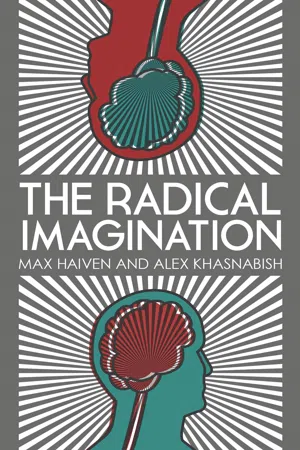
eBook - ePub
The Radical Imagination
Social Movement Research in the Age of Austerity
- English
- ePUB (mobile friendly)
- Available on iOS & Android
eBook - ePub
The Radical Imagination
Social Movement Research in the Age of Austerity
About this book
Information
PART ONE
Solidarity research
ONE
The methods of movements: academic crisis and activist strategy
For the majority world – for everyone outside the walls of the enclaves of privilege located disproportionately (though by no means exclusively) in the global North – globalized neoliberal capitalism and its logic of accumulation by dispossession (Harvey 2003; McNally 2011) have been only the most recent chapter in a more than five-century history of genocide, colonialism and imperialism. In recent years, the interests of transnationalized capital have been accorded a place of preeminence, whether through free-trade agreements, debt and aid, ‘development projects’ and structural adjustment programmes, or counter-insurgency and military intervention. In the global North, within the belly of the beast, great social violence has been unleashed by neoliberalism: increasingly precarious or non-existent work, entrenched and deepening inequality and immiseration, the evisceration of public services, the enclosure of public space and the augmentation of the state’s repressive apparatuses alongside the withering of its commitments to even the most basic elements of social welfare. This has meant nothing less than a low-intensity socio-economic war against actors, institutions and practices identified as contrary or marginal to this neoliberal order, notably women, queer and trans folk, people of colour, migrants, Indigenous nations and those considered disabled. If ever there was a time for robust, formidable social movements, that time is now.
Until recently, the apparent dearth of movements capable of contesting this globalized regime of elite ‘accumulation by dispossession’ (Harvey 2003) led many to decry the absence of a radical imagination. After all, in the face of a naked calculus that declared banks and corporations ‘too big to fail’ while condemning broad swathes of humanity (to say nothing of the planet or non-human life) to economic and social oblivion, it seemed self-evident that the spark necessary to animate radicalized mass movements was conspicuously absent, extinguished perhaps by neoliberalism’s enclosure of the lifeworld and the privatization of all things public. If people had once ‘dreamed big’ and sought unapologetically to change the world, more than two decades into the ‘end of history’ such dreams now seemed smothered by the rampant individualism, claustrophobic cynicism and reactionary backlash engendered by neoliberal social engineering and shrill neoconservative moralism (see Haiven 2014). In 2011, this dismal landscape was fractured by the explosive emergence of the uprisings in the Arab world, the Occupy movement and the ‘movement of the squares’. For many, participants and observers alike, these movements represent the rediscovery of the radical imagination, so long dormant (Graeber 2011). Of course, all these movements have confronted formidable challenges since the heady days of their emergence in 2011. Dynamics of repression, co-optation and the difficult work of sustaining movements notwithstanding, these mass manifestations of rage and hope have served to illuminate some important socio-political dynamics with respect to the terrain of social change in the age of austerity. In reclaiming public space – in a physical and communicative sense – and unabashedly refusing to capitulate to the elite invocation that there could be no alternative to the status quo, these movements have ruptured and transformed the capitalist imaginative landscape and allowed new visions of social transformation to rush into the vacuum.
Crisis
Invoked frequently since the turn of the millennium, the word ‘crisis’ has become so ubiquitous that it has, ironically, been rendered banal, deployed to describe a wide variety of circumstances – humanitarian, ecological, economic, political, social, moral, and so on – in need of some kind of urgent attention or intervention. Careful attention to its use nevertheless reveals a different truth. Rather than functioning as a rallying cry for collective action, it often serves to obfuscate rather than illuminate, demobilize rather than inspire. After all, crisis is by its very nature complex, massive and overwhelming, a problem of such immense proportions that it is almost unimaginable in scope. While crisis implicates us all, in the context of hierarchical, highly stratified and technocratic societies, its solutions are all too often entrusted to the powerful. Indeed, crises seem to call out for expert knowledge, specialized intervention, blueprints for action crafted by professional insiders. Of course, that’s the point to crisis. Rather than challenging the status quo and setting the stage for a radical unsettling of it in order to make room for something new, the crisis trope encloses our collective imagination of what is possible, narrowing it to focus on the crisis as defined by those with the power to proclaim it. Once proclaimed and defined, crisis management becomes the banner beneath which all manner of elite projects can march and behind which the rest of us are expected to fall in line.
The elite-driven project of accumulation by dispossession that has followed in the wake of the most recent convulsions of global capitalism is a case study in these dynamics. Rather than the 2008 collapse of credit markets being seen as perhaps the result of deep systemic flaws (exacerbated by years of neo-liberal deregulation and corporate consolidation in the financial sector), the origins of the crisis were displaced onto renegade individuals: rogue traders, subprime mortgage hucksters and the subprime borrowers themselves. More importantly, an elaborate fiction was spun regarding the necessity that the vast majority of the world’s population diminish their expectations, commit to generations of precarity, abandon the hope for societies which publicly and collectively provide for the needs of those who constitute them, and embrace a vastly augmented security state along with entrenched and deepening inequality. The solution to the crisis was then christened ‘austerity’, in whose holy name a historically unprecedented transfer of public wealth into private hands is occurring, allegedly to ameliorate this crisis (Blythe 2013).
We can add to this the way that the present economic crisis and the crisis of austerity are fundamentally built upon and contribute to the racialized and gendered patterns of exploitation, oppression and inequality that are the bedrock of the capitalist system. As the economic and social crises deepen, the costs are disproportionately borne by women, people of colour, migrant workers and others whose subjugation has always been central to accumulation. As austerity regimes dismantle what remains of the welfare state, poverty deepens and efforts to redress historical inequalities are abandoned. As social programmes are slashed, the ‘reproductive’ labour once offered through state schools, health-care systems and pensions is downloaded to individuals and families, typically to women.
The worsening crisis leads to new waves of un- and under-employment, to greater stress and anxiety, to greater alienation, and with these we see the resurgence of religious fundamentalisms, ethnic nationalism, violent xenophobia and racist backlash that target society’s most vulnerable and marginalized. While recent years have seen important victories for feminist, queer, trans and other movements, there is no end to oppression, though sometimes it emerges in subtler forms. But as the crisis wreaks havoc on the pillars of conventional masculinity (the ability to have meaningful work and support a family, etc.) we see the rebirth of far-right and regressive male anger directed towards these groups. Meanwhile, a culture of individualistic competition misinterprets the crisis as resulting from the ‘greed’ of ‘special interest groups’ (including unions, civil rights and multicultural organizations, the arts, etc.) and fosters a vindictive politics of punitive cuts, surveillance and loathing. All this permits and enables the displacing of the crisis of capitalism onto the social realm, making the systemic crisis of accumulation a general crisis of social reproduction.
None of this is to suggest the existence of some secret cabal engaged in crafting an elaborate conspiracy; nor do we imagine the bulk of society either as mystified masses in the thrall of elites or without agency and thus entirely absolved of complicity in perpetuating systemic inequality, exploitation and violence. But recognizing this complexity should not mean retreating into some muddy realm of complete relativity where everyone can be understood as equally victim and victimizer. A system of exploitation and violence may dehumanize the oppressor, but this in no way should be seen as equivalent to costs borne by those oppressed within such systems. There is a profound inequality in terms of who reaps the rewards of participating in and perpetuating such systems.
Research, enclosure and academic capital
Of course, crisis is nothing new to the academy, post-secondary education, research or scholarship. While crises of various kinds have been the object of study for many academics, crisis has increasingly come to define the state of many disciplines and of the university itself. With the rise of neoliberal capitalism in the 1970s and a vicious neoconservative moral order in the 1980s, a wide variety of practices and institutions associated with the liberal welfare state and the class compromise it brokered became prime targets for elites eager to build a new world order premissed on unfettered corporate profiteering enforced by repressive and juridical state apparatuses (Harvey 2005). Neoliberal capitalism emerged in the 1970s as a response to ‘the contradictions between democratically governed national states responsive at least partially to citizens’ needs and a global economy organized around profit-seeking [transnational corporations] and increasingly stateless financial capital’ (Carroll and Ratner 2005: 11). Indeed, in 1975, the Trilateral Commission – an unelected and unaccountable coterie of elites representing Europe, North America and Japan, brought together to foster inter-elite ‘dialogue’ and ‘cooperation’ on political and economic issues – wrung its collective hands over what it perceived as ‘an excess of democracy’ generating ‘a breakdown of traditional means of social control, a delegitimation of political and other forms of authority, and an overload of demands on government, exceeding its capacity to respond’ (Crozier et al. 1975: 8). From this perspective, the problem seemed to be that while capital accumulation was entirely the province of elites, the trappings of liberal democracy still allowed the rest of society to evade total domination. While Keynesian social welfarism had sought to dull somewhat the cutting edges of capitalism by ameliorating some of its worst consequences through state programmes and intervention – in order, it should be understood, not to subvert it but to ensure its survival in the face of explicitly radical and revolutionary challenges – neoliberalism celebrates and proliferates social division and inequality as a mechanism for furthering the capitalist domination of society, effectively addressing the vexatious issues raised by the Trilateral Commission and others. In this way, rather than signalling the decline of the state as an apparatus of control, neoliberalism actually increases the need for a ‘well-armoured’ one (Carroll and Ratner 2005: 12). Indeed, as Wendy Brown (2010) notes, the decline of state sovereignty in the economic realm has led to a desperate attempt to exert punitive authority over social life, especially by targeting marginalized groups, migrants, refugees and other alleged ‘outsiders’.
The consequences of neoliberalism, however, reach far beyond the material realm. As cultural theorist Henry Giroux (2004) has argued, neoliberalism represents nothing less than the subordination of the lifeworld by capital: the enclosure of that which was common, the privatization of that which was public, and an overarching policy of militarization and surveillance aimed at ensuring the compliance of the ruled. The implications of this privatization of the social commons by capital has implications for critical inquiry, scholarship and the university.
Indeed, the university has become a key site of struggle both in terms of what it could offer to capital (research and development, resources, expertise) and what it might do as a space – however imperfect – of critical and free inquiry. Within the university, the social engineering neoliberalism has sought to achieve more broadly has been replicated. Disciplines that can offer something substantial to the interests of capital (engineering, applied sciences, business) have been celebrated while those seen as marginal or opposed to them (many of the humanities and social sciences) have been maligned and defunded. For those disciplines that do not immediately present themselves as instrumentally useful to a new regime of capital accumulation, survival becomes predicated on the capacity to make a case for (and, in many cases, remake themselves in order to achieve) their relevance to labour markets and the potential for corporate partnerships (Martin 2011; Bousquet 2008; Edu-factory Collective 2009). This is not a lament for the bygone days of the liberal university, imagined as a place of free inquiry, democratic participation and critical discussion. Such a place has never existed. Indeed, we would do well to remember that dominant institutions like the university have always been tied to the production and reproduction of the social order in which they are enmeshed (Wallerstein 1996).
Here the insights of the transnational Edu-factory Collective (2009; Roggero 2011) are particularly instructive. Under the maxim ‘as once the factory, so now the university’, they draw attention to three ways academe has become a key institution of global power and contestation. First, the idea of the ‘edu-factory’ alerts us to the ‘industrialized’ character of education in an age of its commodification, when university degrees are seen as purchasable credentials and where budget cuts, the calcification of disciplines, and institutional restructuring increasingly cast education as a standardized product rather than a reflexive process of personal and social transformation. At their worst, universities have become dynamos of a nightmare version of what critical pedagogy scholar Paolo Freire (2000) has called the ‘banking model’ of education: one where prepackaged knowledge is deposited in discrete chunks into students’ heads to be stored for later withdrawal, at testing time or in the workplace.
Second, it alerts us to the way the university today, like the factory of the industrial age, acts as a key laboratory for developing new ways to discipline labour. On the one hand, not only do students emerge from universities with an education increasingly oriented towards ‘job-ready skills’; they also typically graduate heavily indebted, and that debt acts as a form of labour discipline when they enter the workplace, diminishing their capacity for resistance and refusal by creating the omnipresent fear that unemployment will lead to financial ruin (see Caffentzis 2013; Williams 2008). On the other hand, the university is also the scene of new techniques for harnessing the energy, enthusiasm and aspirations of its increasingly precarious employees. The overproduction of Ph.D.s and the glut of hopeful university teachers means that, to a greater and greater extent, the university relies on a massive ‘reserve army’ of underemployed would-be academics working from contract to contract with few guarantees (Bousquet 2008). Yet this is quickly becoming the norm even beyond the university, as precarious work based on the (self-)exploitation of workers’ hopes and dreams that they may one day be able to ‘do what they love’ becomes the expected norm in many sectors of the economy. The university, as the Edu-factory Collective argue, has become a model for the proletarianization of cognitive labour more generally.
Finally, the idea of the edu-factory draws our attention to the fact that a huge proportion of the population in the global North now passes through university, rendering it an acute site of struggle. In the industrial age, the factory represented the fulcrum of society, the institution on which society pivoted. This made it a powerful focus for social movement organizing. Today, while the university remains in many ways a highly privileged and elitist place, it is also one institution that increasingly dominates the landscape of work and life, even if its impact is limited to the way it excludes some individuals from access and, hence, the material and social privileges that allegedly accompany a university degree. In many post-industrial cities, the university sector is the largest single employer; integration into the pharmaceuticals, security, weapons, finance and medical sectors has seen expansion of the university’s scope and influence. Numerically speaking, more people may today pass through the doors of a university (as students, as workers, as contractees, etc.) than ever passed through the gates of a factory in years gone by.
To be clear, the Edu-factory Collective is not suggesting that factories have ceased to be key sites of struggle and exploitation, though largely production has...
Table of contents
- Cover
- About the Editor
- Title
- Copyright
- Contents
- Acknowledgements
- Introduction: The importance of the radical imagination in dark times
- Part I: Solidarity research
- Part II: Dwelling in the hiatus
- Part III: Making space, making time
- Part IV: The methods of movements
- References
- Index
Trusted by 375,005 students
Access to over 1.5 million titles for a fair monthly price.
Study more efficiently using our study tools.
Frequently asked questions
Yes, you can cancel anytime from the Subscription tab in your account settings on the Perlego website. Your subscription will stay active until the end of your current billing period. Learn how to cancel your subscription
No, books cannot be downloaded as external files, such as PDFs, for use outside of Perlego. However, you can download books within the Perlego app for offline reading on mobile or tablet. Learn how to download books offline
We are an online textbook subscription service, where you can get access to an entire online library for less than the price of a single book per month. With over 1.5 million books across 990+ topics, we’ve got you covered! Learn about our mission
Look out for the read-aloud symbol on your next book to see if you can listen to it. The read-aloud tool reads text aloud for you, highlighting the text as it is being read. You can pause it, speed it up and slow it down. Learn more about Read Aloud
Yes! You can use the Perlego app on both iOS and Android devices to read anytime, anywhere — even offline. Perfect for commutes or when you’re on the go.
Please note we cannot support devices running on iOS 13 and Android 7 or earlier. Learn more about using the app
Please note we cannot support devices running on iOS 13 and Android 7 or earlier. Learn more about using the app
Yes, you can access The Radical Imagination by Doctor Alex Khasnabish,Max Haiven in PDF and/or ePUB format, as well as other popular books in Politics & International Relations & Political History & Theory. We have over 1.5 million books available in our catalogue for you to explore.