This book elucidates the potential of the shipbuilding industry for initiating economic development, which eventually leads to enhancing the prosperity of a nation. This is explained by intrinsically linking the macroeconomics of the nation with the microeconomics of the shipbuilding industry. The economic and commercial spin offs by the shipyard to the various industries have been analysed and calculated. An attempt has been made to trace the illustrious past of Indian shipbuilding from the Bronze Age, through the ancient kingdom period, to the present times, in the backdrop of Indian maritime history. The operational requirement of commercial as well as defence shipbuilding has been analysed to assess the available potential market space for the Indian shipbuilding industry.Lessons from history help to formulate future strategies. In pursuit of this, the book investigates the global trends in commercial shipbuilding since the industrial revolution period to date; the success stories of leading shipbuilding nations viz.UK, USA, Japan, Korea and China have been analysed. The benefits accrued by these nations through shipbuilding have been summarised. The strategies adopted by each of these countries to reach the pinnacle in shipbuilding have been examined and the salient features relevant for India have been identified.Productivity measurement in shipbuilding has been examined and the problems with the current system have been highlighted, along with solutions. This book suggests the usage of Data Envelopment Analysis (DEA), a mathematical linear programming technique, as an appropriate tool to measure total productivity as well as profitability. The various ways of improving profitability in shipbuilding, by way of cost-cutting techniques, along with some Indian case studies have been explained in the book.Keeping the 'Indian Maritime Agenda 2010-2020' vision document in the backdrop, a strategic appreciation of the Indian shipbuilding industry has been undertaken using the SWOT, the Matrix and the Scenario analyses. Based on these analyses, strategies have been formulated for all the stakeholders who can influence the Indian shipbuilding industry. The book then identifies the need for an alchemist leader, who can harmonise all the stakeholders and thereby propel the Indian shipbuilding industry towards achieving the long-term goal of creating a prosperous India.
- 286 pages
- English
- ePUB (mobile friendly)
- Available on iOS & Android
eBook - ePub
About this book
Information
Print ISBN
9789381904442
Edition
11
SHIPBUILDING: CREATING
A PROSPEROUS NATIONAL ECONOMY
A PROSPEROUS NATIONAL ECONOMY
“Patriotism is, fundamentally, a conviction that a particular country is the best in the world because you were born in it”— George Bernard Shaw
A peep into history
Mankind has been using boats and then ships right from the day man began to settle along the rivers. The first reference of a floating vessel dates back to around 10,000 years ago and the earliest evidence of boats is provided by the Egyptians from their Neolithic period between 6000 and 5000 BCE.a The Egyptians, during the Nile Valley Civilisation, considered boats to be God’s chariots for transportation from one place to another. One of Egypt’s oldest temples—the Edfu temple (built between 237 and 57 BCE)—has got a boat kept in the main sanctum as illustrated in figure 1.1 (a) (plate 1). Figure 1.1 (b) (plate 1) shows the relics on the walls of ancient Egyptian temples. Ancient Egyptians considered boats to be divine, and the boat/ship builders were looked upon with great regard and respect, as builders of God’s chariots. It can be also noted from this that the ancient Egyptians had the knowledge and skills to build different types of sailboats.
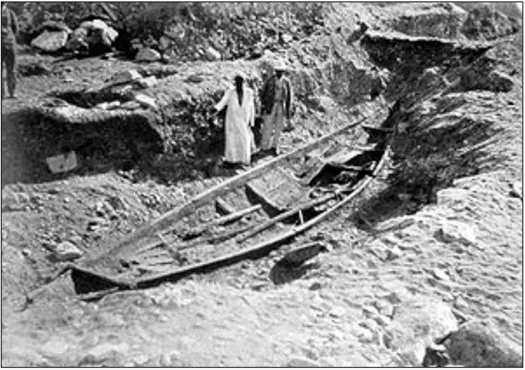
By around 3000 BCE, the Egyptians had the skills and expertise to assemble wooden planks into a hull1 using woven straps to lash the planks together and seal the gaps using reeds or grass.b A group of 14 boats, known as the ‘Abydos boats’ built with this technology, has been unearthed in Egypt as can be seen in figure 1.2 (plate 1). These boats are 75 ft (22.8 m) long and 7 ft 10 in (2.3 m) wide. Another remarkable example of their boat-building skill is the ‘Khufu ship’, a vessel 143 ft (44 m) long built around 2500 BCE, which has been excavated, preserved, and located near the Giza pyramids.
Figure 1.1 (a): Sanctum at the Edfu temple with a boat built between 237–57 BCE
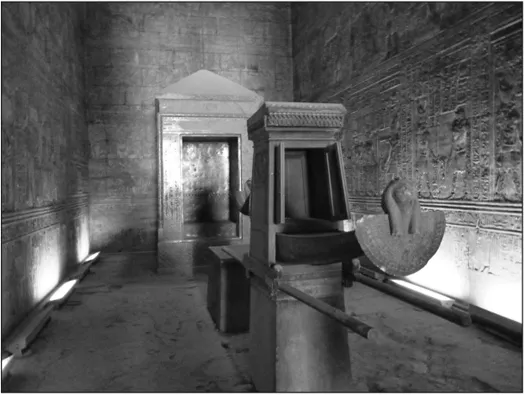
Figure 1.1 (b): An ancient Egyptian temple wall inscription showing a sailing boat
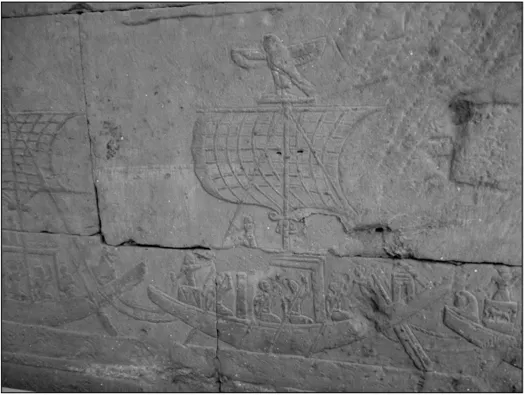
Figure 1.2: An Abydos boat built around 3000 BCE
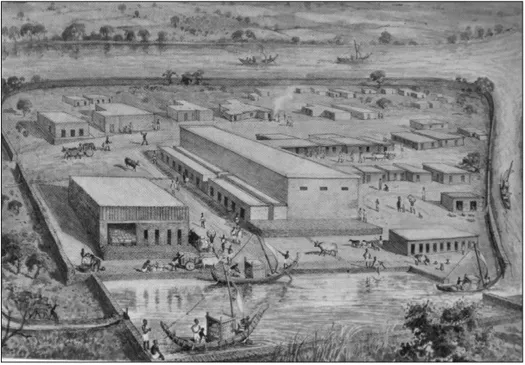
The Indus Valley Civilisation was known to use boats around 3000 BCE; it was also well-known for their skills in constructing boats and sail ships.c Lothal in Gujarat, which was part of this civilisation, appears to have been the boat-building centre, as it could get building materials from the Gujarat forests. Five anchors made of stone have been found at Lothal.d Lothal had the world’s first dock, which was trapezoid-shaped measuring approximately 214 × 36 m built before 2000 BCE.e The photograph of this dock is illustrated in figure 1.3 (plate 1). The archaeological findings from this civilisation reveal that there was a vibrant and dynamic maritime network, using a variety of watercraft, during the 2nd millennium BCE. A double-ended vessel, with a crescent-shaped hull—probably made of reeds bundled with lashing—is observed in a stone seal from Mohenjodaro. A graffito from the same place represents a vessel with a mast and steering oars or side rudders at the stern of the ship, while a terracotta boat model from Lothal represents a square-sterned vessel with a sharp bow, with fittings for rigging.f
Figure 1.3: Dock at Lothal during the Indus valley civilisation before 2000 BCE
[Source: SR Rao, “Lothal and the Indus civilization”, (India: Popular Press Pvt. Ltd., 1973)]
Before recorded history, the fishing community living along the coast of South India had built boats by tying wooden logs together with coconut coir rope. In the Tamil language (one of the South Indian languages) ‘tied wood’ is known Kattu Maram, and these boats known as Kattumaram are popularly used for fishing even today. It is from this name that the modern day terminology of catamaran has been derived.
In the 11th century, a Sanskrit book ‘Yuktikalpataru’ attributed to King Bhoja Narapati is known to bring out shipbuilding standards existing during that time.g This book describes the measurement system used for ship construction. In those days, ships had been classified as ‘sea going’ (Viśeşa) and ‘river going’ (Sāmānya). In addition, ships had been classified based on the length and location of the cabin—Sarvamandira (ships with cabins extending from one end of the deck to the other; these ships were recommended for the transport of royal treasures and horses), Madhyamarnandira (ships with cabins only in the middle part of the deck; these ships were recommended for pleasure trips), and Agramandira (these ships were used mainly in warfare). This book describes the characteristics of the wood and iron nails that were used in shipbuilding. The details of painting, decoration, and furnishing of ships that were comfortable for passengers is described. This book also indicates the right season for building ships. India, thus, has had a very rich historical/traditional association with shipbuilding.
The raft form of boats, which were propelled by oars, gradually evolved into sail ships. The sail ships built by each country were different in terms of the number of masts and sails used. These sailing ships were used by adventurous seafarers to explore the various sea routes, and new sea routes and countries were identified. This led to the mapping of the world, and later, facilitated trade and commerce between different corners of the earth. Coastal countries started protecting their coasts by building floating fortresses. The first known such fortress, dates back to the period 722 to 200 BCE of the ancient Chinese Zhou dynasty.h These were large rectangular barges known as ‘castle ships’ with multiple decks and guarded ramparts.
With the advent of the industrial revolution,2 new technology developed. Steel and steam engines were available, which impacted shipping and shipbuilding in a large way. Ships were fitted with propellers because of which they could move faster, and did not depend on wind power. Wooden hulls got transformed to strong steel ships. Technology also supported the development of equipment and gadgets like reliable compasses, etc., which facilitated the seafarer to explore the sea further and at a faster pace.
The importance of sea, ships, trade, and maritime security was well understood by every country, and those who neglected it, were getting extinct from the global map. Sea trade gradually led to the setting up of trade partners. Each country was also securing its maritime borders using its fleet of battleships, and this helped the country to expand its power. The industrial revolution was also facilitating the European countries to produce more goods. The Europeans were, therefore, looking for markets beyond their boundary to sell their products and this led to colonisation. Acquiring and defending colonies warranted sea fighting capability, and thus naval forces were becoming essential. During this era, it was getting very clear that ‘he who rules the sea, rules the world’.
Ships and their types
Ships, which are the largest mobile man-made objects on this earth, can be classified under various categories, based on their mode of propulsion,3 type of hull,4 hull material,5 operating route,6 purpose,7 etc.
Commercial ships or merchant ships are used for various purposes such as cargo trade, transportation of passengers, fishing,8 tourism,9 and special purposes.10 Of these categories, the cargo carrying ships form the major portion of commercial ships; there are different types of ships in this category such as the tanker,11 the Bulk Carrier (BC),12 the container,13 the General Cargo (GC),14 the Liquefied Petroleum Gas (LPG)/Liquefied Natural Gas (LNG)15ship, the Roll-on Roll-off (Ro-Ro)16 ship, etc. The world fleet as on 2011 had 1,03,392 seagoing commercial vessels with a combined tonnage of 1,396 million Deadweight17(DWT).i In this, BCs account for 532 million DWT, tankers for 475 million DWT, containers for 184 million DWT, and G...
Table of contents
- Cover
- Half Title
- Title
- Copyright
- Dedication
- Contents
- Foreword
- Preface
- Message
- Acronyms
- 1. Shipbuilding: Creating a Prosperous National Economy
- 2. Commercial Shipbuilding: Indian and Global Perspectives
- 3. Defence Shipbuilding: Opportunities Galore
- 4. Lessons From History: Analysis of Global Shipbuilding Leaders
- 5. Japan: A Trend Setter in Shipbuilding
- 6. Economic Miracle Through Shipbuilding: Republic of Korea
- 7. The Contemporary Shipbuilding Leader: China
- 8. Economic Ecosystem: Shipbuilding Industry
- 9. Progress in Shipbuilding: Measuring Productivity
- 10. Shipyard Productivity and Profitability: Internal Factors
- 11. Shipyard Productivity and Profitability: External Factors
- 12. Stakeholders: Indian Shipbuilding Industry
- 13. Strategy: Indian Shipbuilding Industry
- 14. Shipbuilding: A Road Map to Prosperous Nation Building
Trusted by 375,005 students
Access to over 1.5 million titles for a fair monthly price.
Study more efficiently using our study tools.