eBook - ePub
The Early Prehistory of Wadi Faynan, Southern Jordan
Archaeological Survey of Wadis Faynan, Ghuwayr and Al Bustan and Evaluation of the Pre-Pottery Neolithic A Site of WF16
- 640 pages
- English
- ePUB (mobile friendly)
- Available on iOS & Android
eBook - ePub
The Early Prehistory of Wadi Faynan, Southern Jordan
Archaeological Survey of Wadis Faynan, Ghuwayr and Al Bustan and Evaluation of the Pre-Pottery Neolithic A Site of WF16
About this book
This edited volume provides a full report on the Pre-Pottery Neolithic A site of WF16, southern Jordan. Very few sites of PPNA date have been excavated using modern methods, so this report makes a very significant contribution to our understanding of this period. Excavations have shown that the site contains a highly dynamic use of architecture, and the faunal assemblage reveals new information on the processes that lead to the domestication of the goat.
Information
Subtopic
ArchaeologyIndex
Social Sciences1. The Dana-Faynan-Ghuwayr Early Prehistory Project
1.1 Origin of the project
The Dana-Faynan-Ghuwayr Early Prehistory Project (DFGEP) was established in 1997 and involved four seasons of survey and excavation in its study region located in southern Jordan (Figure 1.1). Four additional short-term field visits were made to complete the acquisition of data. Post-excavation studies lasted until the spring of 2004. Following a series of interim reports (Finlayson and Mithen 1998; Mithen and Finlayson 2000; Mithen et al. 2000; Finlayson et al. 2000; Finlayson et al. 2001), this monograph provides the final project report.
The project originated from a research initiative by the former British Institute at Amman for Archaeology and History (BIAAH). In 1993, William Lancaster, its then director, was commissioned to undertake a study of the resident Bedouin in Wadis Dana and Faynan in southern Jordan by the Royal Society for the Conservation of Nature (RSCN). This was part of the RSCN’s preparation for the creation of a nature reserve in Wadi Dana, a project funded by the World Bank. The RSCN had recognised the threat to the archaeological heritage in the wadis from economic development and grave robbing. These had already disturbed significant elements of the Roman/Byzantine field system and cemetery in Wadi Faynan.
BIAAH began a survey and mapping project, initially funded by the Foreign and Commonwealth Office (McQuitty 1998). This involved the production of a photogrammetric map and a detailed survey of the most threatened sites (Barnes et al. 1995). A pilot field-walking survey was also conducted (Ruben et al. 1997). An agreement was made with the RSCN to share their camp in Wadi Faynan, and funds were obtained to improve its facilities to allow the accommodation of archaeological field teams. On the basis of their preliminary work, BIAAH undertook rescue excavations at the Byzantine South Cemetery site in collaboration with Yarmouk University (Findlater et al. 1998) and sought to interest British universities into conducting further archaeological research in Wadis Dana and Faynan.
By 1996, BIAAH had been subsumed within the Council for British Research in the Levant (CBRL), and three new UK-based archaeological projects in Wadi Faynan had been established. Professor Graeme Barker, University of Leicester, had convened an interdisciplinary team of archaeologists and geographers to examine landscape development within Wadi Faynan, with a focus on the Roman/Byzantine field system (Barker et al. 1997, 1998, 1999, 2000). A second initiative was led by Dr Katherine Wright, Institute of Archaeology, University College London, entitled the Wadi Faynan Fourth and Third Millennium Project. This was concerned with the excavation of a Bronze Age settlement (WF100) located during the BIAAH survey (Barnes et al. 1995). This project sought to examine issues relating to Levantine–Egyptian links and the development of complex societies (Wright et al. 1998). Thirdly, Dr Freeman of Liverpool University had begun a building survey of the Khirbet Faynan, the principal Roman/Byzantine standing monument of the area located at the juncture between Wadis Faynan, Dana and Ghuwayr (Figure 1.2). All of these projects were focused on the history of agriculture, mining and metallurgy, and the related development of the Christian community in Faynan.
As a preliminary to the development of its nature reserve, the RSCN had commissioned the Centre for Field Archaeology, Edinburgh University, to undertake an archaeological survey in Wadi Dana, this being directed by Bill Finlayson in his then capacity as manager of the Centre (Finlayson and Baird 1995). Finlayson was then approached by Alison McQuitty, who had become Director of BIAAH in 1994, to undertake work on the early prehistory of Wadi Faynan to complement the later prehistoric and historic studies being undertaken by Barker, Wright, Freeman and their colleagues. Finlayson invited Steven Mithen to collaborate on this project, recognising that research within this region could potentially address their mutual research interests concerning Levantine Palaeolithic, Epipalaeolithic and early Neolithic archaeology. A reconnaissance of Wadi Faynan for early prehistoric settlement was conducted in Spring 1996 (Finlayson and Mithen 1998), the results of which were sufficiently positive to justify the formation of the DFGEP with a four year programme of fieldwork.
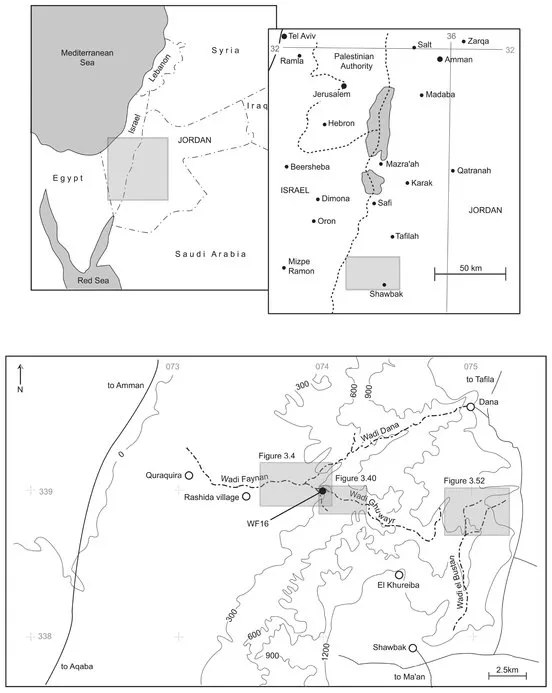
Figure 1.1 Location map of study area, marking the three areas surveyed as described in Chapter 3 and location of the PPNA site of WF16.
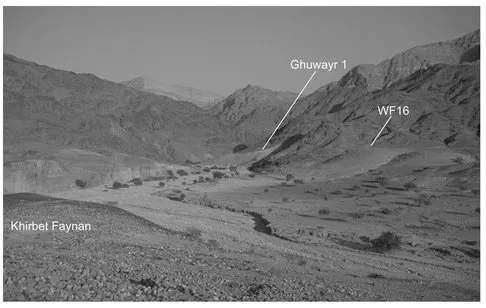
Figure 1.2 Confluence of Wadi Faynan and Wadi Ghuwayr, looking south-east towards the Jordanian plateau. The PPNA site of WF16 is located on the knoll on the right of the picture and the PPNB site of Ghuwayr 1 is visible by its excavation trench in the mid- ground of the picture on the right side of Wadi Ghuwayr.
1.2 The study area of the DFGEP and previous archaeological studies
The study area is situated at the confluence of three wadis, the Ghuwayr, the Dana, and the Shayqar, which meet to form Wadi Faynan (Figure 1.1). The area has a very diverse topography, with an altitudinal variation from c. 30 m above sea level in Wadi Faynan to the limestone uplands c. 1200 m above sea level on the edge of the Jordanian plateau, combining both Mediterranean and arid zone regions (Figures 1.2, 1.3). This area has various microenvironments, partly reflecting its topographic diversity. Rainfall in the Faynan desert zone varies from a monthly mean of 0–0.1 mm from June to September, rising to only 17 mm a month in December and January, although flash floods can occur as rainfall on the plateau of more than 200 mm a year (Figure 1.4). The topography of Wadi Faynan largely consists of a series of flat and broad wadi bottoms and terraces (Figure 1.5). When travelling eastwards up the wadis, the topography becomes very rugged as they become narrow gorges with few areas suitable for either cultivation or habitation (Figure 1.6). Before reaching the Jordanian plateau, the topography becomes varied and spectacular, with steep hills and cliffs.
Archaeological work in the Wadi Faynan area has taken place for over a century. Initial visits by pioneering scholars such as Lagrange (1898, 1900), Musil (1907), Frank (1934), Glueck (1935) and Kind (1965) established the importance of the area, particularly in relation to mining and early Christian history. More recently, survey work has been conducted by Raikes (1980), King et al. (1989), and MacDonald (1992), while the German Mining Museum at Bochum conducted a project to examine the mining history of the area (Hauptmann and Weisgerber 1987). Adjacent to Wadi Faynan, Russ Adams and Thomas Levy direct a substantial field project dedicated to later prehistory (Adams 1991; Adams and Genz 1995; Levy et al. 1999).
Surprisingly, given the extent of archaeological activity, very little was known about early prehistoric settlement in the Wadi Faynan region prior to the DFGEP project. Survey work by the Centre for Field Archaeology (CFA), Edinburgh University, had identified and sampled numerous archaeological sites within the Dana Reserve, part of which fell within the Faynan area (Finlayson and Baird 1995). Some artefact scatters were thought to be Middle Palaeolithic in date but the earliest dated settlement in the region was the Pre-Pottery Neolithic B (PPNB) site of Ghuwayr 1, at that time only partially excavated by Dr Mohammed Najjar (Simmons and Najjar 1996, 1998) (Figures 1.7, 1.8), followed by the Pottery Neolithic site of Tell Wadi Feinan (Najjar et al. 1990) (Figure 1.7). Up until April 1996, no major concentration of pre-PPNB material had been identified within the region covered by the DFGEP. The archaeology in the immediate vicinity of the confluence of the Wadis Dana, Ghuwayr and Shayqar is dominated by the Khirbet Faynan (Figures 1.3, 1.7, 1.9), a dense tumble of sandstone masonry within which there are substantial standing walls, which is associated with an aqueduct across the Wadi Shayqar, a reservoir, mill, cemetery, extensive deposits of slag and a field system that extends across the Wadi Faynan, the latter being the principle subject of Barker et al.’s (1997, 1998, 1999, 2000) project.
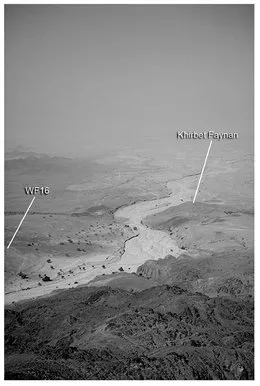
Figure 1.3 Looking west along Wadi Faynan to the Wadi Araba. The Roman/Byzantine settlement of the Khirbet Faynan is located on the right side of the wadi floor in the mid-ground of the picture, and the PPNA site of WF16 on the left hand side in the foreground.
Despite the absence of any evidence for pre-PPNB settlement, the study area appeared to provide considerable potential for addressing issues in Palaeolithic, Epipalaeolithic and early Neolithic archaeology of the Levant. Surveys elsewhere in Jordan and in similar landscapes to the study area had identified sites from all of these periods, such as in the Azraq basin (Garrard et al. 1985, 1987, 1988, 1994), the Badia (Betts 1991), Wadi Hammeh (Edwards 1988, 1990, 1991), Wadi Hasa (Olszewski and Coinman 1998), Wadi Hismeh (Henry 1988), and Wadi Ziqlab (Banning et al. 1989). Consequently, there was every expectation that a rich early prehistoric record remained to be discovered within Wadis Faynan, Ghuwayr and Dana. The DFGEP aimed to document this record with the possibility of addressing key issues concerning Palaeolithic, Epipalaeolithic and early Neolithic archaeology.
The manner in which the project developed required the last of these to become our major focus of interest owing to the discovery of a Pre-Pottery Neolithic A (PPNA) site, designated as WF16, during the reconnaissance survey of 1996. A sampling exercise in 1997 identified WF16 as having stratified deposits and organic preservation. As a consequence, the majority of the project’s limited resources were placed into evaluating this single site rather than into the field survey within the study area. That was, nevertheless, extensive and recovered a considerable sample of Lower and Middle Palaeolithic artefacts, but sparse evidence for Upper Palaeolithic and Epipalaeolithic settlement in the area. We will, therefore, briefly summarise the key research issues concerning these periods as they relate to the design and results of the survey.
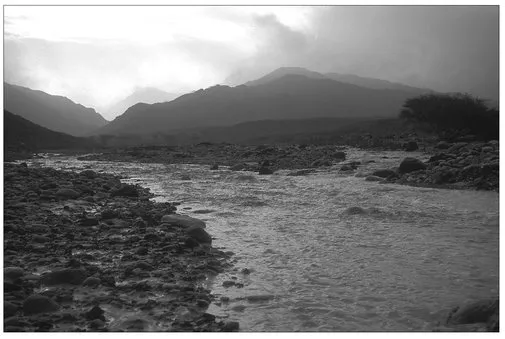
Figure 1.4 Wadi Faynan in flood, April 2002.
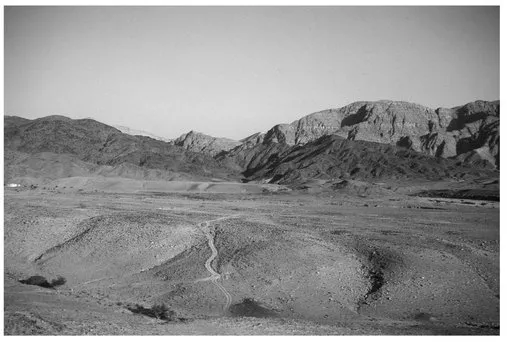
Figure 1.5 Gravel terraces in Wadi Faynan, looking south-east towards Wadi Ghuwayr.
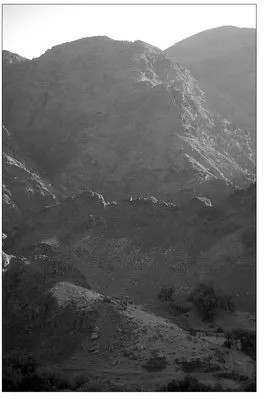
Figure 1.6 Wadi Ghuwayr, showing a typical gravel terrace on the meander of the wadi and the steep, rugged terrain.
1.3 Research issues in early prehistoric Levantine archaeology
1.3.1 The Palaeolithic: artefact variability and chronological succession
Palaeolithic sites are relatively rare in Jordan when compared to those of later periods or other regions of the Levant. An examination of the site distribution maps in MacDonald et al. (2000; see also Olszewski 2001; Rollefson 2001) shows a general low frequency of sites from the Palaeolithic through to the Neolithic on the east bank of the Jordan river and in the Wadi Araba. The majority of Jordanian Palaeolithic sites are located on its plateau, in other highland areas in southern Jordan, or in the eastern deserts and oases. While relatively few stratified Lower and Middle Palaeolithic sites have been discovered, numerous surface artefact scatters are known. The scarcity of cave or rock shelter sites may account for the absence of hominin remains. Upper Palaeolithic sites are more numerous than those of earlier periods but have a similar distribution (Olszewski 2001).
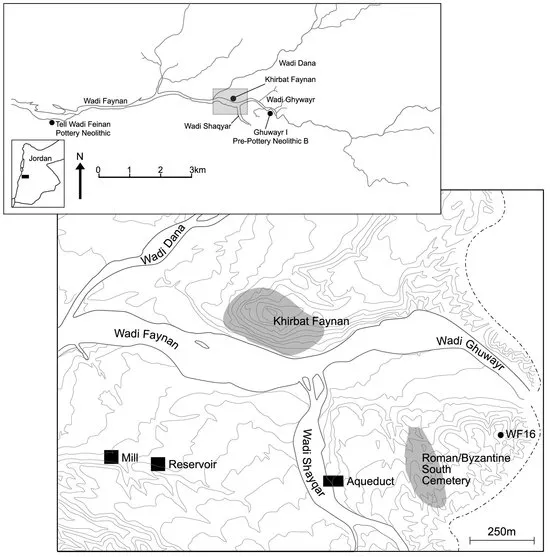
Figure 1.7 Wadis Faynan, Ghuwayr, Dana and Shayqar, showing location of the PPNA site of WF16, PPNB site of Ghuwayr 1 and the Pottery Neolithic site of Tell Wadi Feinan, the Nabatean/Roman/Byzantine settlement of Khirbet Faynan and associated aqueduct, cemetery, reservoir, and mill.
In 1997 there were two key issues of particular interest to the DFGEP co-directors that could potentially have been addressed within the study area. The first was the relationship between artefact form, technology and raw material availability. While artefact studies have remained largely typologically oriented in Levantine research, that undertaken elsewhere in the Old World has placed a greater emphasis on the impact of raw material availability on stone technology. This has been especially the case for the study of bifaces. White (1998), for instance, argued that the variation in form of bifaces from southern England was a direct reflection of the size of raw material nodules available; when these were sufficiently large ovates would be produced, otherwise hominins had to compromise and produce pointed artefacts. He found some support for his thesis by comparing artefacts made from secondary and primary raw material sources, the latter being assumed to provide larger and better quality nodules. McPherron (1995) proposed an alternative model, arguing that as the resharpening of bifaces reduces their length, this would cause a shift from pointed to ovate forms.
The DFGEP study area provided an opportunity to examine this and related issues in the context of the Levant. The 1996 reconnaissance survey by Finlayson and Mithen had recognised that the gravels constituting much of the Quaternary deposits contained heavily rolled nodules of flint, while seams of high quality flint were known to exist within the limestone geology of the Wadi al-Bustan region on the plateau (Figure 1.1). Whether or not scatters of bifaces also existed within the study area, and whether sufficient identification to a raw material source was possible to enable research on the impact of raw material on biface technology, remained unclear. Similar questions about raw materials, artefact form and stone tool technology have also been asked about Middle and Upper Palaeolithic assemblages and could also have been potentially addressed within the study area.
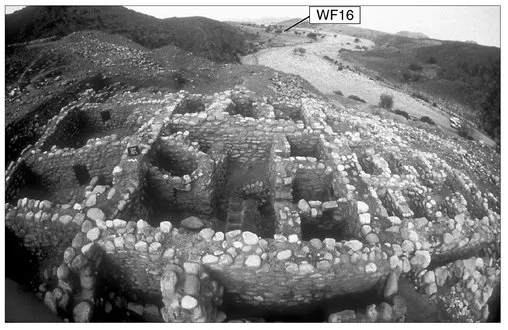
Figure 1.8 The PPNB site of Ghuwayr 1 in 2001 (photo: Alan Simmons), marking the location of WF16.
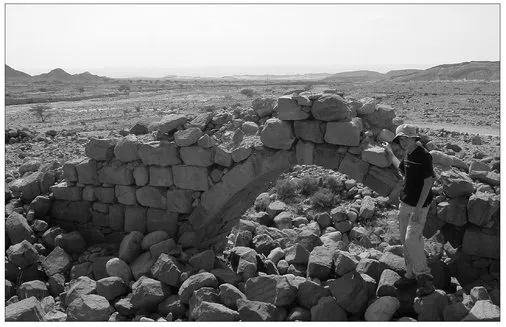
Figure 1.9 Arch at the western extent of the Khirbet Faynan, looking west towards the Wadi Araba with the Roman/ Byzantine field system in the near distance. Nicholas Mithen (aged 13) as scale (April 2003).
A second question regarding Palaeolithic archaeology within the study area concerned cultural succession and chronology. As in other regions of the Old World, it is conceivable that there is a chronological pattern to changes in artefact form and assemblage composition within the key periods of the Lower, Middle and Upper Palaeolithic. Identifying such chronological change and the date of the transition between these periods is notoriously difficult when the bulk of...
Table of contents
- Title Page
- Copyright Page
- Dedication
- Table of Contents
- Table of Figures
- List of Tables
- Table of Contents
- List of Contributors
- Foreword
- Acknowledgements
- 1. The Dana-Faynan-Ghuwayr Early Prehistory Project
- PART ONE - ARCHAEOLOGICAL SURVEY
- PART TWO - EVALUATION OF SITE WF16
- WF16 and the Pre-Pottery Neolithic A of the southern Levant (Arabic version)
- Appendices
- Bibliography
Trusted by 375,005 students
Access to over 1.5 million titles for a fair monthly price.
Study more efficiently using our study tools.
Frequently asked questions
Yes, you can cancel anytime from the Subscription tab in your account settings on the Perlego website. Your subscription will stay active until the end of your current billing period. Learn how to cancel your subscription
No, books cannot be downloaded as external files, such as PDFs, for use outside of Perlego. However, you can download books within the Perlego app for offline reading on mobile or tablet. Learn how to download books offline
Perlego offers two plans: Essential and Complete
- Essential is ideal for learners and professionals who enjoy exploring a wide range of subjects. Access the Essential Library with 800,000+ trusted titles and best-sellers across business, personal growth, and the humanities. Includes unlimited reading time and Standard Read Aloud voice.
- Complete: Perfect for advanced learners and researchers needing full, unrestricted access. Unlock 1.5M+ books across hundreds of subjects, including academic and specialized titles. The Complete Plan also includes advanced features like Premium Read Aloud and Research Assistant.
We are an online textbook subscription service, where you can get access to an entire online library for less than the price of a single book per month. With over 1.5 million books across 990+ topics, we’ve got you covered! Learn about our mission
Look out for the read-aloud symbol on your next book to see if you can listen to it. The read-aloud tool reads text aloud for you, highlighting the text as it is being read. You can pause it, speed it up and slow it down. Learn more about Read Aloud
Yes! You can use the Perlego app on both iOS and Android devices to read anytime, anywhere — even offline. Perfect for commutes or when you’re on the go.
Please note we cannot support devices running on iOS 13 and Android 7 or earlier. Learn more about using the app
Please note we cannot support devices running on iOS 13 and Android 7 or earlier. Learn more about using the app
Yes, you can access The Early Prehistory of Wadi Faynan, Southern Jordan by Bill Finlayson,Steven Mithen,Steven Mithen, Steven Mithen in PDF and/or ePUB format, as well as other popular books in Social Sciences & Archaeology. We have over 1.5 million books available in our catalogue for you to explore.