With the expansion of the EU in 2004 and its inclusion now of 25 European countries, the movement of workers across the Continent will affect the employment opportunities of women. But as this up-to-date investigation across nine countries shows, there remain significant differences amongst specific European countries regarding women's education and employment opportunities. Taking 1945 as its historical starting point, this sociological study, based on some 900 questionnaire responses and more than 300 in-depth interviews, explores the complex inter-relationship between women's employment, the institutionalization of equal opportunities, and Women's Studies training.
This volume is the first to explore what happens to women who have undertaken Women's Studies training in the labour market. Factors influencing their actual employment experiences include employment opportunities for women in each country, their expectations of the labour market and gender norms informing those expectations, how far equal opportunities are actually enforced and the strength of local women's movements.
Doing Women's Studies provides unique information about, and insightful analyses of, the changing patterns of women's employment in Europe; equal opportunities in a cross-European perspective; educational migration; gender, race, ethnicity and nationality; and the uneven prevalence and impact of Women's Studies on the lifestyles and everyday practices of those women who have experienced it. The contributors are prominent feminist researchers from nine European countries. Their findings will be of interest to sociologists and gender studies experts working in the areas of gender, employment, equal opportunities and the impact of education on employment.
eBook - ePub
Doing Women's Studies
Employment Opportunities, Personal Impacts and Social Consequences
- English
- ePUB (mobile friendly)
- Available on iOS & Android
eBook - ePub
Doing Women's Studies
Employment Opportunities, Personal Impacts and Social Consequences
About this book
Information
1 | Employment opportunities for women in Europe
We have prepared this chapter with the aim of providing a basic framework for understanding the employment opportunities for Women’s Studies graduates in nine European countries (partners in the EWSI project – see Introduction to this volume). We thus take a systematic look at the national variations in women’s labour market participation generally. The project was based on the idea that, due to the particular training they receive, Women’s Studies graduates are in a better position to contest the gender stereotypes that shape women’s experiences of the work–life interface than are most other women of their generation. In order to verify this hypothesis, we thought it important to provide some knowledge about the dominant ‘gender order’ (Connell 1987) or ‘sexual contract’ (Pateman 1988) that characterizes the different European Union (EU) member-states at the beginning of the twenty-first century.
We therefore briefly propose a theoretical framework for understanding the potential influence of Women’s Studies on women’s employment expectations, aspirations and experiences, before going on to present a general statistical overview of women’s employment rates and patterns in the partner countries of the EWSI project. With reference to the recent research on gender and welfare states, we attempt to illustrate the dynamic nature of society-specific gender relations, in relation to women’s labour-force participation, to the domestic division of labour and caring, and to public policy decisions. As many authors have stressed, these three dimensions of gender relations have all been contested and transformed in recent years. Since the second wave women’s movement has played an important role in redefining the relative positions of men and women in employment and in the family, and in encouraging equal opportunity public policy innovations, and since the knowledge-base for Women’s Studies was inspired by the women’s movement, it seems logical to conclude that Women’s Studies training provides students with the ability to negotiate the terms of existing gender relations. Women’s Studies training not only provides students with detailed knowledge of the social processes that produce gender discrimination and inequality, it also enhances their self-confidence and ability to negotiate more egalitarian relationships in their daily lives. In the third part of this chapter, we discuss the potential impact of Women’s Studies training on women’s employment patterns in the EU and conclude with an analysis of the potential role of Women’s Studies for improving the efficiency of European and national equal opportunities measures in the future.
Theoretical perspectives on women’s employment in Europe
In the EWSI project we decided to adopt the ‘gendered welfare states’ analytical framework developed throughout the 1990s by several European researchers. This approach was particularly relevant for our project, since it places the question of women’s employment in a global societal context. It suggests that three dimensions of contemporary European societies, which traditional academic disciplinary boundaries have all too often dissociated, need to be analysed together: first, the process of industrialization and the specific labour market characteristics of industrial and post-industrial societies; second, the family sphere, seen both from the angle of marriage and parenting, and from the angle of the domestic, educational and ‘caring’ activities carried out there; and, lastly, the state, or rather the public policies which have historically shaped the relationship between the two above-mentioned spheres, and which are also liable to determine the precise forms of this relationship in a given national context, in particular as regards the social positions and roles collectively attributed to men and women (see Figure 1.1).
Figure 1.1 is useful for a comparative analysis of the employment aspirations and opportunities of graduates in Women’s Studies, since it relates simultaneously to the social structures that characterize a society at a given time in its history and to the collective representations which constitute the ‘mental aspect’ of gender relations (Godelier 1984; Guillaumin 1992). We can thus understand not only why job opportunities, for women in general and for Women’s Studies graduates in particular, are not identical in all European societies, but also why women’s employment aspirations and experiences also vary according to their societal and historic context. Thus: ‘State policies can affect, notably, women’s demands for employment, the way in which women define themselves as active or inactive within the labour market, the costs and profits generated by the decision to take up paid work, given the costs of child care and other constraints’ (European Commission 1996b: 2).
Women’s employment and welfare state regimes Although academic feminist research has always been interested in the role of the state in maintaining or combating gender inequalities in the labour market, the debate on European comparisons of women’s employment patterns was refuelled in the early 1990s by Gosta Esping-Andersen’s (1990) The Three Worlds of Welfare Capitalism. Esping-Andersen was not directly interested in the question of gender relations, and was to be severely criticized by a wide range of feminist scholars for his neglect of this question (Daly and Lewis 2000; Jenson 1986; Lewis 1992; Sainsbury 1994, 2001; Ungerson 1990). This book can nevertheless be seen as a major milestone in attempts to analyse the role of the state in shaping women’s employment in contemporary western societies. With the explicit aim of analysing the potential for ‘convergence’ between the different ‘welfare regimes’ of the EU member-states, Esping-Andersen’s work was an extension of the previously available frameworks for analysing the role of the state in contemporary western (capitalist) societies (Titmuss 1963, 1974).
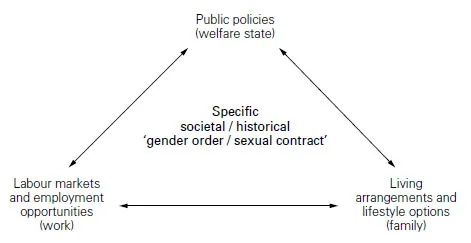
Figure 1.1 Societal structures and the gender contract
The question of the dynamic nature of these societal models is at the heart of the feminist Birgit Pfau-Effinger’s work. According to Pfau-Effinger, the new ‘gendered welfare state regime’ models need to be refined, notably in order to account for changes over time. Through a comparative analysis of the ‘modernization of motherhood’, Pfau-Effinger claims that women’s employment patterns are not solely determined by state intervention in the labour market and childcare provision. In order better to understand the national and historical variations in women’s employment patterns, all the ‘gendered’ aspects of modern societies need to be analysed. In addition to the ‘gender systems’ highlighted in previous feminist research on welfare state regimes, Pfau-Effinger introduces the notion of ‘gender culture’, which refers to the specific set of standards, norms and values that define gender relations and the sexual division of labour in a particular national and historical context. Thus, men and women do not only live in societies where the objective possibilities for more egalitarian relations between the sexes vary considerably, they also adhere to very different beliefs about the ‘ideal’ nature of men and women’s place in society (Pfau-Effinger 1996). The societal ‘gender arrangement’ must therefore be analysed in a way that accounts for the ‘objective’ social structures and for the ‘subjective’ relationship of individuals to those structures. According to Pfau-Effinger, the nature of the ‘gender contract’ in each country can be identified by means of the following indicators: (a) the fact that men and women are either assigned to ‘specific spheres’ or that both sexes are expected to articulate their professional, their parental and their personal commitments to society; (b) the degree to which equal opportunity measures are institutionalized at all levels of society; (c) the fact that childcare and other forms of care are either primarily assigned to individuals and families, to public sector institutions or to the market; (d) the degree to which heterosexual marriage dominates lifestyle choices, in comparison to alternative living arrangements (single-parent families, staying single with or without children, community-based living arrangements, etc.) (Pfau-Effinger 1993: 390). Pfau-Effinger is particularly interested in the ability of different social groups to impose changes on the dominant social structures and norms in a given social context. Although she does not deny that there may be structural inequalities between the different groups involved in the negotiat...
Table of contents
- Cover
- Title
- Copyright
- Contents
- Tables and figure
- Acknowledgements
- Introduction
- 1 Employment opportunities for women in Europe
- 2 Equal opportunities in cross-European perspective
- 3 The institutionalization of Women’s Studies in Europe
- 4 The professionalization of Women’s Studies students in Europe: expectations and experiences
- 5 The impact of Women’s Studies on its students’ relationships and everyday practices
- 6 Educational migration and gender: Women’s Studies students’ educational mobility in Europe
- 7 Gender, race, ethnicity and nationality in Europe: findings from a survey of women’s studies students
- 8 Comparative research in Europe
- Notes on contributors
- References
- Index
Trusted by 375,005 students
Access to over 1.5 million titles for a fair monthly price.
Study more efficiently using our study tools.
Frequently asked questions
Yes, you can cancel anytime from the Subscription tab in your account settings on the Perlego website. Your subscription will stay active until the end of your current billing period. Learn how to cancel your subscription
No, books cannot be downloaded as external files, such as PDFs, for use outside of Perlego. However, you can download books within the Perlego app for offline reading on mobile or tablet. Learn how to download books offline
Perlego offers two plans: Essential and Complete
- Essential is ideal for learners and professionals who enjoy exploring a wide range of subjects. Access the Essential Library with 800,000+ trusted titles and best-sellers across business, personal growth, and the humanities. Includes unlimited reading time and Standard Read Aloud voice.
- Complete: Perfect for advanced learners and researchers needing full, unrestricted access. Unlock 1.5M+ books across hundreds of subjects, including academic and specialized titles. The Complete Plan also includes advanced features like Premium Read Aloud and Research Assistant.
We are an online textbook subscription service, where you can get access to an entire online library for less than the price of a single book per month. With over 1.5 million books across 990+ topics, we’ve got you covered! Learn about our mission
Look out for the read-aloud symbol on your next book to see if you can listen to it. The read-aloud tool reads text aloud for you, highlighting the text as it is being read. You can pause it, speed it up and slow it down. Learn more about Read Aloud
Yes! You can use the Perlego app on both iOS and Android devices to read anytime, anywhere — even offline. Perfect for commutes or when you’re on the go.
Please note we cannot support devices running on iOS 13 and Android 7 or earlier. Learn more about using the app
Please note we cannot support devices running on iOS 13 and Android 7 or earlier. Learn more about using the app
Yes, you can access Doing Women's Studies by Gabriele Griffin, Gabriele Griffin,Gabrielle Griffin in PDF and/or ePUB format, as well as other popular books in Social Sciences & Gender Studies. We have over 1.5 million books available in our catalogue for you to explore.