?Data?– this new intangible manna – is produced in real time. It arrives in a continuous stream and comes from a multitude of sources that are generally heterogeneous. This accumulation of data of all kinds is generating new activities designed to analyze these huge amounts of information. It is therefore necessary to adapt and try new approaches, methods, new knowledge and new ways of working. This leads to new properties and new issues as a logical reference must be created and implemented. At the company level, this mass of data is difficult to manage; interpreting it is the predominant challenge.
- English
- ePUB (mobile friendly)
- Available on iOS & Android
eBook - ePub
About this book
Businesses are becoming increasingly aware of the importance of data and information. As such, they are eager to develop ways to ?manage? them, to enrich them and take advantage of them. Indeed, the recent explosion of a phenomenal amount of data, and the need to analyze it, brings to the forefront the well-known hierarchical model: ?Data, Information, Knowledge?.
Information
1
From Data to Decision-Making: A Major Pathway
While information is at the heart of economic intelligence, data are essential elements required to build knowledge in order to make a good decision. This is something which at the moment may seem optimal in the possible fields of its knowledge. It is the use of data that gives power. As companies become increasingly aware of the importance of data and information, they are rushing to think about how to “manage”, enrich and leverage it.
Thus, the explosion of a phenomenal amount of data, and the need to analyze them, brings to the fore the well-known hierarchical model: “Data, Information and Knowledge”. This model is often exploited in the literature on information and knowledge management. Several studies claim that the first appearance of the hierarchy of knowledge can be found in T.S. Elliot's poem “The Rock” in 1934. In recent literature, several authors cite R.L. Ackoff's 1989 publication “From data to wisdom” as a source of the hierarchy of knowledge. Indeed, this hierarchical model highlights three words: “Data”, “Information” and “Knowledge”. The relationship between these three words can be represented in the above form where knowledge is given the highest place to emphasize the fact that a great deal of data is necessary for the acquisition of knowledge.
This hierarchical model is often exploited in the literature on information and knowledge management. It can also be exploited as an approach to the concept of business intelligence.
1.1. Background on economic intelligence
In the United States, it was the work of academics in the 1960s that revealed the importance and necessity of conceiving economic intelligence as a branch of the economy. Harold Wilensky's book “Organizational Intelligence” - 1967. It defines business intelligence as the activity of producing knowledge serving the economic and strategic goals of an organization, collected and produced in a legal context and from open sources.
Stevan Dedijer in the late 1960s conceptualized “intelligence” as an economic matter, and gave a broad definition: “Intelligence is the information itself, and its processing, and the organization that deals with it, while it obtains, evaluates and uses it under more or less secret, competitive or cooperative conditions, for the purposes of conducting any social system and about the nature, capacities, intentions, actual or potential operations, of internal or external opponents.”
Klaus Knorr was one of the first to advocate a wide dissemination of Business Intelligence, starting from the university space; for him it is “the operation to obtain and process information about the external environment in which an organization wants to maximize the achievement of its different goals”. Business intelligence is becoming a major component of corporate strategy and is based on information that is the foundation of any decision-making process. Information as such had received a fundamental scientific treatment without which economic intelligence could not have developed.
In France, the contribution of a group of experts from the Commissariat Général du Plan was published in 1994 under the name of the Martre Report. This work on the “Economic Intelligence and Company Strategy” proposes a definition in the introduction to the report: “Economic intelligence can be defined as all the coordinated actions of research, processing and distribution, with a view to its exploitation, of information useful to economic players. These various actions are carried out legally with all the necessary guarantees of protection to preserve the company's assets, in the best conditions of quality, time and cost. Useful information is that which is needed by the various levels of decision-making in the company or community to develop and consistently implement the strategy and tactics necessary to achieve the objectives defined by the company in
order to improve its position in its competitive environment. These actions, within the company, are organized in an uninterrupted cycle, generating a shared vision of the objectives to be achieved ”
1.2. Strategic economic intelligence revisited
The economy has become global, it is constantly changing. This dynamic gives information, which is at the heart of economic intelligence, a speed of circulation that can lead to radical changes in the economic environment of companies. Whoever masters or attempts to master information can have a significant edge in our competitive world. It also requires the ability to understand our economic, social and financial environment and its interactions very quickly. “Economic intelligence” is defined by ethical means, and its strength lies in the ability to interpret and not in the seditious nature of the information gathered. Economic intelligence is a major component of any strategy.
Economic Intelligence has had difficulty establishing itself in France. Nine years after the Martre report, the government asked MP Bernard Carayon for a new report. Five years after this last report, the 2008 Defense White Paper paid particular attention to economic intelligence in the context of the protection of fragile industrial sectors whose skills may be of a sensitive nature. Finally, in its progress report of January 5, 2010, the “états généraux de l’industrie” (general industry report) underlined the need for French industry to better understand its competitive environment, its potential markets and the opportunities that new technologies can offer. This report insists on support for exports through a better match between production and world demand through economic intelligence and a sustained promotion of “made in France”.
1.2.1. The three major steps for decision support
The proposed model retains three concepts; “Data, Information, Knowledge” which make it possible to define the global concept of economic intelligence by highlighting the central place of “Information”. This global concept leads to the decision-making and the cycle of Strategic Business Intelligence. This work was presented for the first time on 19 April 2005 at the CCI of Montpellier during “Des Matins De La Cité”.
The explosion of a phenomenal amount of data, the need to analyze and visualize it, brings to the forefront the well-known hierarchical model: “Data, Information and Knowledge”. This model is often exploited in the literature on information and knowledge management. Several studies claim that the first appearance of the hierarchy of knowledge can be found in T.S. Elliot's poem “The Rock” in 1934. The poem contained the following lines:
– Where is the wisdom we have lost in knowledge?
– Where is the knowledge we have lost in information?
In recent literature, several authors cite R.L. Ackoff's 1989 publication “From data to wisdom” as a source of the hierarchy of knowledge. Indeed, this hierarchical model highlights three words: “Data”, “Information”, “Knowledge”1. The relationship between these three words can be represented in the schematic form below, where knowledge takes the highest place to emphasize the fact that a lot of data is needed to acquire knowledge.
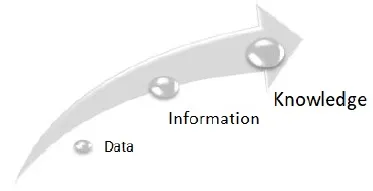
Figure 1.1. The three concepts (source: Monino and Lucato 2005)
1.2.2. Modeling the concept of strategic business intelligence
A schematization of the concept of Strategic Economic Intelligence can be proposed from part of the hierarchical model described by Thomas Stearns Eliot in 1934, which establishes a link between wisdom, knowledge and information starting from data. This model leads to wisdom (Ermine et al. 2012) that can be approached through strategic decision-making.
“I want the right information at the right time to make the right decision2. (Porter 1979).
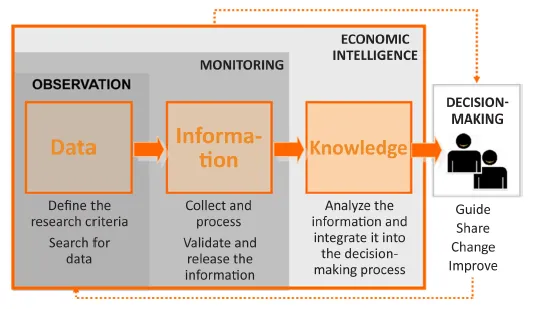
Figure 1.2. Business intelligence model of data to decision-making (source: Monino and Lucato 2005). For a color version of this figure, see www.iste.co.uk/monino/control.zip
1.2.2.1. Data
For a company, data are essential, and there are more and more concerning the environment in which it operates or will operate. We will no longer work on classes of behaviors, but on individual analysis. It is easy to understand that this revolution is leading to the creation of so-called “startup” companies whose aim would be to automatically process the wealth of data that make up what is known as “Big Data”. This is certainly one of the com...
Table of contents
- Cover
- Table of Contents
- Title Page
- Copyright Page
- Foreword
- Acknowledgements
- Introduction
- 1 From Data to Decision-Making: A Major Pathway
- 2 Data: An Indispensable Platform for Companies
- 3 From Data to Information: Essential Transformations
- 4 Information: Contextualized and Materialized Data
- 5 From Information to Knowledge: Valuing and Innovating
- 6 From Knowledge to Strategic Business Intelligence: Decision-Making
- Conclusion
- Glossary
- References
- Index
- Other titles from ISTE in Innovation, Entrepreneurship and Management
- End User License Agreement
Trusted by 375,005 students
Access to over 1.5 million titles for a fair monthly price.
Study more efficiently using our study tools.
Frequently asked questions
Yes, you can cancel anytime from the Subscription tab in your account settings on the Perlego website. Your subscription will stay active until the end of your current billing period. Learn how to cancel your subscription
No, books cannot be downloaded as external files, such as PDFs, for use outside of Perlego. However, you can download books within the Perlego app for offline reading on mobile or tablet. Learn how to download books offline
Perlego offers two plans: Essential and Complete
- Essential is ideal for learners and professionals who enjoy exploring a wide range of subjects. Access the Essential Library with 800,000+ trusted titles and best-sellers across business, personal growth, and the humanities. Includes unlimited reading time and Standard Read Aloud voice.
- Complete: Perfect for advanced learners and researchers needing full, unrestricted access. Unlock 1.5M+ books across hundreds of subjects, including academic and specialized titles. The Complete Plan also includes advanced features like Premium Read Aloud and Research Assistant.
We are an online textbook subscription service, where you can get access to an entire online library for less than the price of a single book per month. With over 1.5 million books across 990+ topics, we’ve got you covered! Learn about our mission
Look out for the read-aloud symbol on your next book to see if you can listen to it. The read-aloud tool reads text aloud for you, highlighting the text as it is being read. You can pause it, speed it up and slow it down. Learn more about Read Aloud
Yes! You can use the Perlego app on both iOS and Android devices to read anytime, anywhere — even offline. Perfect for commutes or when you’re on the go.
Please note we cannot support devices running on iOS 13 and Android 7 or earlier. Learn more about using the app
Please note we cannot support devices running on iOS 13 and Android 7 or earlier. Learn more about using the app
Yes, you can access Data Control by Jean-Louis Monino in PDF and/or ePUB format, as well as other popular books in Computer Science & Data Processing. We have over 1.5 million books available in our catalogue for you to explore.