Cultural Entrenchment of Hindutva
eBook - ePub

Cultural Entrenchment of Hindutva

Local Mediations and Forms of Convergence

  1. 358 pages
  2. English
  3. ePUB (mobile friendly)
  4. Available on iOS & Android
eBook - ePub

Cultural Entrenchment of Hindutva

Local Mediations and Forms of Convergence

About this book

The book reflects on the discreet influence of Hindutva in situations/places outside or at the margins of its organisational and mobilisational arena, where people denying any commitment to the Sangh Parivar, incidentally, show affinities and parallelisms with its discourse and practice. This study looks at Hindutva's entrenchment not so much as an orchestration from above but more as an outcome of a process that evolves in relation to specific social and cultural milieus.

The contributors analyse Hindutva's entrenchment, emphasising on the ethnography of the forms of mediation and/or convergence produced in certain contexts. The 11 case studies highlight three different dynamics of Hindutva's cultural entrenchment. The first section gathers cases where RSS-affiliated organisations have set up specific cultural or artistic programmes at the regional level, involving the meditation of local people whose interest in these programmes does not necessarily mean that they endorse the Hindutva agenda completely. The next deals with convergence and refers to cases where the followers gather around a charismatic personality, whose precepts and practice may bring them towards a closer affinity with the Hindutva programme. The last section deals with the contexts of resistance, where social milieus engaged in opposing Hindutva may, in fact, paradoxically, and even inadvertently, imbibe some of its ideas and practices in order to contest its claims.
Frequently asked questions

Yes, you can cancel anytime from the Subscription tab in your account settings on the Perlego website. Your subscription will stay active until the end of your current billing period. Learn how to cancel your subscription.
At the moment all of our mobile-responsive ePub books are available to download via the app. Most of our PDFs are also available to download and we're working on making the final remaining ones downloadable now. Learn more here.
Perlego offers two plans: Essential and Complete
  • Essential is ideal for learners and professionals who enjoy exploring a wide range of subjects. Access the Essential Library with 800,000+ trusted titles and best-sellers across business, personal growth, and the humanities. Includes unlimited reading time and Standard Read Aloud voice.
  • Complete: Perfect for advanced learners and researchers needing full, unrestricted access. Unlock 1.4M+ books across hundreds of subjects, including academic and specialized titles. The Complete Plan also includes advanced features like Premium Read Aloud and Research Assistant.
Both plans are available with monthly, semester, or annual billing cycles.
We are an online textbook subscription service, where you can get access to an entire online library for less than the price of a single book per month. With over 1 million books across 1000+ topics, we’ve got you covered! Learn more here.
Look out for the read-aloud symbol on your next book to see if you can listen to it. The read-aloud tool reads text aloud for you, highlighting the text as it is being read. You can pause it, speed it up and slow it down. Learn more here.
Yes! You can use the Perlego app on both iOS or Android devices to read anytime, anywhere — even offline. Perfect for commutes or when you’re on the go.
Please note we cannot support devices running on iOS 13 and Android 7 or earlier. Learn more about using the app.
Yes, you can access Cultural Entrenchment of Hindutva by Daniela Berti, Nicolas Jaoul, Pralay Kanungo, Daniela Berti,Nicolas Jaoul,Pralay Kanungo in PDF and/or ePUB format, as well as other popular books in Historia & Historia del mundo. We have over one million books available in our catalogue for you to explore.

Information

Year
2020
Print ISBN
9780415677998
eBook ISBN
9781000083682
Edition
1

PART I
Hindutva-affiliated Organisations and Local Mediators

1
Music and Politics in Kerala: Hindu Nationalists Versus Marxists
*

* I would like to thank Daniela Berti, Gilles Tarabout and Nicolas Jaoul for the care they took in reading this article and for their insightful comments. I owe special thanks to Vincent Rioux and Bernadette Sellers for having read a first version of this article.
Christine Guillebaud
Communists have spread all over Kerala, not only in government but also in art and culture!
M. A. Krishnan, former Chief Editor, Kesari Weekly, the roar of nationalism (RSS), 2007
Artistic practices have greatly attracted the attention of the political arena in Kerala since the second half of the 20th century. After India’s partition in 1947, the segmentation of regional states on a linguistic basis fostered local nationalism in Kerala governed by the freshly elected communist government. As a matter of fact, this state has developed a broad cultural policy promoting local heritage both in music and dance. This phenomenon has been driven by the necessity to build a ‘Keralite’ national unity. Since 1956, the state of Kerala has created various festivals in its large cities, targeting the middle classes and setting up artistic competitions in high schools and colleges. It has also developed a radio and television network to broadcast local music. Moreover, this policy has led to the creation of a number of research institutes where experts (usually Marxist researchers) in folklore studies have produced a large number of publications over the last 60 years.
During the mid-1970s, some 20 years after the birth of Kerala state, Hindu nationalists from the RSS set up their own organisations for the arts and their dissemination. The first of these, Tapasya ‘Art and Literary Forum’ (Kala sahitya vedi), specialises in organising music and dance performances and literature festivals. The second, Balagokulam, also known as ‘The Children’s Cultural Movement’, promotes the collective teaching of music, dance and poetry for children with the aim of spreading the Hindu cultural tradition.
This article will compare two competing nationalist programmes of Keralite artistic practices. The focus will be on the opposing views on how to define the concepts of cultural heritage and national culture, as well as the different strategies used to spread them among the population. We will first present current activities and methods used by the Sangh Parivar in artistic fields to spread its Hindutva ideology to the public at large and especially to the younger generation. Such activities are mainly based on a process of Sankritisation. An analysis will then be made of the areas covered by the Kerala government’s cultural policy and its strong impact on the emergence of a ‘regional’ nationalism. Mediated by local folklorists, this policy has acquired the approval of social equality values and has led to a social reform movement by promoting the arts.

Tapasya and Balagokulam, Two Keralite Organisations for the Promotion of Hindu Culture

Apart from the numerous (all-India based) Sangh Parivar organisations established today in Kerala, several regional organisations have emerged over the last three decades in various spheres of society and culture1. Among these, Tapasya (heat) and Balagokulam (herd of cows of the child [Krishna]) form two associations entirely dedicated to the arts and their teaching.
1 For instance, the Ksetra Samrakshana Samithi for the protection of Hindu temples; the Matsya Pravartaka Sangham, a Hindu fishermen trade union; the Bharatiya Vichara Kendram which organises conferences and seminars for the intellectual elite; the Hindu Aikya Vedi whose aim is the ‘consolidation’ of various organisations and social sections in Hindu society; and the Amrita Bharati Vidya Pitham, a kind of open university proposing distance learning in order to propagate Hindu cultural heritage and the Sanskrit language.

A ‘Divine’ Art

The organisation Tapasya was set up in 1975 in the Calicut offices of the weekly Kesari, the main RSS journal in Kerala, often compared to its Hindi equivalent, Panchajanya, and to the Marathi Vivek. Tapasya was formerly a small group of intellectuals interested in literature, folk arts and dance. Among them was the great poet (Mahakavi) Akkitam Achuthan Namboodiri, author of the essay ‘Epic of 20th Century’ (uripatam nottantinte itihasam) published in 1952. Today, most RSS activists consider this opus to be a visionary text having predicted the collapse of the communist block. M. A. Krishnan, chief editor of Kesari from 1964–90, and V. M. Korath, former freedom fighter and chief editor of Mathrbhumi,2 began to animate a literature forum in Calicut which scholars, journalists and All India Radio staff members attended. The RSS was banned several times; hence these intellectuals consider themselves to have been ‘formally underground’. They chose the name ‘Tapasya’ in reference to the term ‘tapas’, a Vedic and classical Hindu concept depicting the spiritual experience traditionally undergone by rishis (sages). This RSS group, entirely dedicated to the arts and literature, seems to be one of the first of this kind in India. It appeared to be the driving force behind the Sangh Parivar national organisation called the All India Samskara Bharati,3 established a few years later in 1981 in Nagpur, central India. At the national level, this organisation works for the preservation of Indian culture through the development of its art forms, attributing awards to young talents or senior artists. It also organises a national painters’ camp and, more recently, a classical music festival.4 Historically, Tapasya was the first regional cultural organisation to be officially affiliated to the Samskara Bharati. Although it initially emerged among RSS activists, it spread afterwards as a parallel organisation.
2 Daily newspaper in Malayalam created in 1923. Supporting the Indian National Congress, it is considered to be one of the early platforms for the state’s freedom movement.
3Samskara’ is a Sanskrit word which means ‘consecration, cultivation of the mind, accomplishment’. ‘Bharati’ is the goddess of knowledge and music, more commonly known as Sarasvati.
4 Held at the cultural capital of Mysore, this event gathered around 500 musicians from all over the country. As expressed by the organisation’s secretary, Krishna Murthy: ‘This festival is our endeavour to bring together the renowned and young Carnatic and Hindustani musicians, as it would help them to interact with each other. Also, we believe that the festival makes a good platform for all artistes to meet and share views and experiences on a common basis’ (The Times of India, 11 January 2009). The ideological implications of such a project, shared with Tapasya, will be explored later.
Today, Tapasya is well established among classical artists and art critics. By organising regular concerts and literature forums, it has managed to gather numerous artistic personalities. It also includes members of the Keralite branch of the three major national institutions dedicated to the arts in India — the Sangeet Natak Akademi (government organisation for the promotion of music and the performing arts), Sahitya Akademi (its equivalent for literature) and Lalita Akademi (Academy of Fine Arts). Like these institutions, Tapasya is a regular cultural organisation: it awards trophies, prizes and certificates to many Keralite performers,5 poets and novelists. Moreover, it publishes the monthly Varttikam (1,000 copies) run by Chief Editor K. P. Shashi Dharan, a literature critique, as well as a high quality catalogue.
5 For example, one could mention the Tapasya Purashkar Music Award. With regard to the performing arts, prize winners are mainly classical art specialists (Carnatic music, Mohiniyattam dance, etc.) or folk performers (tiruvadira kali dance, brahmani pattu, etc.), all members of Brahmin castes. Specialists from other castes started to win prizes only recently.
Among the 30 Tapasya units based in Kerala, the town of Irinjalakuda certainly is the most developed as it benefits from a rich artistic environment. It houses an important Brahmin elite: masters of the Sanskrit drama Kutiyattam, artists and producers of Kathakali and classical dances are actual members of the organisation or obtain casual contracts and funds. This success among performers is not specific to this organisation. It appears to be the result of a long process of institutionalising classical art forms which started during the 1930s throughout India.6 After Independence, performers faced a shortage of traditional patronage, provided in the olden days by royal courts and nobility. The advent of national and private academies during the 1950s subsequently modified the status of practitioners, from craftsman to artist, and reshaped their performance and transmission activities (Guillebaud 2010). In this context of changing patronage, Tapasya has been considered a regular cultural institution offering performance opportunities and new income to local musicians. Thus, it has been rooted in the artistic, mainly classical, milieu for more than 30 years, in a way comparable to other private or public institutions.
6 On the process of the institutionalisation of Indian classical arts during the 20th century and its relationship with nationalist movements after Independence, see Mitter (1994) and Guha-Thakurta (2004) for painting and sculpture; Bakhle (2005) for Hindustani music, Subramaniam (2006) and Weidman (2006) for Carnatic music, Srinivasan (1983) for Bharatanatyam dance and Kothari (1989) for Kathak dance.
However, performers are generally not aware of its affiliation with the Hindu nationalist movement. The last annual programme held in 2007, celebrating the 30th anniversary of the organisation,7 reveals such an ambivalent position. Many well-known artists were invited to take part in the event as, for instance, the tabla player, Sudheer Kadalundi, famous for his Guinness World record in 2005 (he gave a non-stop 57-hour recital, The Hindu, 1 March 2007). His performance of ‘fusion music’ on such occasions began with the national anthem ‘Vande Mataram’ and was followed by a mix of Hindustani, Carnatic and semi-classical pieces played on the flute, violin, keyboard, tabla and cymbals. Like most well-known musicians in India and elsewhere, during an interview he explained: ‘I need to assume a social responsibility. I must help spread the message of peace, unity and brotherhood (...) Music is a God-given gift. It is also my bread and butter. I am glad to remain a performing artist’ (ibid.). This discourse that underlines the unity and divine character of music, its universality and spirituality, even if it contains the same type of vocabulary used by Hindu nationalists, does not seem to convey any political ideology. Indeed, that is the kind of contradictory situation in which most artists affiliated to Tapasya seem to live. They agree to be patronised by Tapasya without effectively sharing its ideological views. It is one of the essential aspects of this organisation’s cultural entrenchment process in Kerala.
7 Like other Sangh associations, Tapasya brings together the different district units during an annual meeting at the state level to celebrate the organisation’s anniversary, with concerts and seminars largely covered by the media.
Backstage, out of the public eye, the organisation’s committees, at the regional and district levels, have formalised a specific ideological discourse to convey what, to their mind, the ultimate aim of Art should be, and a nationalist project for preserving and spreading the ‘Hindu cultural tradition’. M. A. Krishnan is the current Tapasya guide at the Kerala state level. A professor and specialist of Sanskrit literature, he left his job and joined the RSS in 1954, propagating its nationalist views. He explains his project by using the notion of ‘heredity’, a term that is typical of a racial discourse and used by him in English:
India has a cultural and literary background. The greatest are Vedas and Upanishads; they are the roots of our heritage. In Malayalam as well, there is a very long history. We have to keep up this heredity, propagate literature and pass them on to the next generation. Music, drama, especially in Kerala, mural paintings (Ramayana and Purana) and Ravi Varma8 pictures... through the discussion and writings, we encourage heredity (interview with M. A. Krishnan, February 2007).
8 Raja Ravi Varma (1848–1906) was a painter and portraitist. He was the initiator of posters (also called ‘chromos’) picturing Hindu deities and printed in Bombay in 1894.
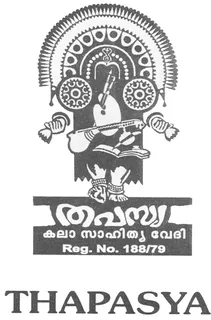
Plate 1.1: Tapasya logo. All rights reserved. Courtesy of Christine Guillebaud.
From Sanskrit texts to Raja Ravi Varma paintings, including the performing arts, the Tapasya project encompasses all art forms. The association’s logo is somewhat explicit. An anthropomorphic figure wears ritualistic headgear (muti) used in various rituals in Kerala such as in teyyam (a possession cult from north Kerala) or those performed by the Paraya community.9 According to M. A. Krishnan, this headgear represents ‘all Devi and Kali puja’, a way of symbolis...

Table of contents

  1. Cover
  2. Half Title
  3. Title Page
  4. Copyright Page
  5. Contents
  6. List of Plates
  7. List of Abbreviations
  8. Foreword
  9. Acknowledgements
  10. Introduction
  11. PART 1: Hindutva-affiliated Organisations and Local Mediators
  12. PART II: Convergence, Gurus and Sects
  13. PART III: Entrenchment amidst Resistance
  14. About the Editors
  15. Notes on Contributors
  16. Index