As the current economic crisis spreads around the globe questions are being asked about what king of capitalist or post-capitalist economy will follow. There is increasing talk of the need for stringent economic regulation, the need to temper greed and individualism, to make the economy work for human and social development. The search is on for a kinder, greener, less unequal and more redistributive economy.
This transitional moment, with its pointed questions about the economy to come, provides an opportunity to assess the role and potential of the 'social economy', that is, economic activity in between market and state oriented towards meeting social needs. Until a decade ago, the term was used mainly by the fringe to describe the 'alternative economy'. Typically, organisations providing affordable child-care to low-wage families in a poor neighbourhood, or those making goods from recycled materials for low-income households, were considered to be residual or marginal to a mainstream dominated by markets and states.
In the last decade, expectation in both the developed and developing world has changed in quite radical ways. Mainstream opinion is starting to see the social economy as a source of building social capabilities as well as developing new markets in welfare provision. Policymakers around the world have begun to support the social economy, and increasingly on business grounds, jostling with traditional interest on the fringe in the sector as a moral and social alternative to the capitalist economy.
It is precisely this emerging but disputed centrality of the social economy that makes this book so timely. The book positions the social economy conceptually and normatively with the help of case evidence from a number of developed and developing countries. Uniquely, it brings together in English the work of leading scholars of the social economy who are also actively engaged in national and international policy formulation. Although it argues a case for seeing the social economy as distinctive from the state and market in terms of aims, values, and actors, it also notes many overlaps and complementarities once the economy is conceptualised as a plural entity responding to needs in diverse organisational combinations. The book also shows that expectations - social and economic - cannot be divorced from local institutional and historical circumstances and legacies. Accordingly, while certain generic policy principles can be shared internationally, interventions on the ground cannot ignore the demands of situated practice and legacy.
- English
- ePUB (mobile friendly)
- Available on iOS & Android
eBook - ePub
PART I
Conceptual dilemmas
1
Locating the social economy
Ash Amin
As economic crisis continues to spread around the globe, questions are being asked about what will follow. Even mainstream opinion, so sure about the market economy, is asking whether capitalism can survive in its present form. There is increasing talk of stringent economic regulation and the need to temper greed and individualism, make the economy work for human and social development, return control of the economy to states and stakeholders, and harness economic progress to social and environmental sustainability. The search seems to be on for a kinder, greener, less unequal and more redistributive capitalism. No doubt the intensity of this search will depend upon how well market capitalism recovers from the crisis.
The critics of capitalism see the present time as an opportunity to move on, to alter radically the meaning and social status of the economy, so that the inequality, egotism and recurrent crises built in to capitalism can be overcome. For socialists, Greens, communitarians, and other anti-capitalists, the current finance-led meltdown is the symptom of a deeper systemic flaw, necessitating a different kind of economic system. They argue that a new system should allow diverse forms of social ownership, harness finance to productive use, mobilize local resources and capabilities, serve social and developmental needs, empower producers and consumers, and reinforce human solidarity and ethical care. It must do more than socialize the market economy, by making money, markets and the productive system work for human development, ecological preservation, spatial equality and collective fellowship.
This transitional moment, with its pointed questions about the economy to come, provides an opportunity to assess the role and potential of the ‘social economy’. Until a decade ago, the term, if known, was used mainly by the fringe, to describe activity in the ‘alternative economy’ (e.g. practices of non-monetary exchange, microfinance, ethical trade or community enterprise). In the developed economies, despite their legacies of unemployment, inequality and fiscal stress on the state to deliver comprehensive welfare, mainstream opinion held that responsibility for balancing economic prosperity and social well-being lay in the hands of states and markets. The same was true in the developing economies, notwithstanding their legacies of persistent poverty, inequality, economic inefficiency and state failure. Here, policy emphasis remained on making markets work, building state responsiveness, improving the terms of international economic integration, and dealing with corporatism. Even in discourse on transition towards a needs-driven, non-capitalist economy, the social economy barely featured.
The social economy then, as today, was understood as commercial and non-commercial activity largely in the hands of third-sector or community organizations that gives priority to meeting social (and environmental) needs before profit maximization. Typically, this would include community-based organizations employing young mothers to provide affordable crèche facilities to low-wage families in a poor neighbourhood or worker-owned enterprise or non-profit organization making goods from recycled materials for low-income households. This kind of engagement in the economy was considered to be residual or marginal, at best a temporary solution in communities and spaces bypassed or damaged by markets and states. The social economy was not expected to contribute in any significant way to job generation, market formation and wealth creation. Exceptions such as the thriving social co-operatives in parts of Spain and in Italy, or social enterprises in regions such as Quebec managing to combine market and welfare roles, were reviewed as examples of success against the grain of private-sector and state centrality.
In the last decade, the term ‘social economy’, or variants such as ‘solidarity economy’, have become more widely used in academic and policy discourse, within both developing and developed economies. Most significantly, the understanding of its status has changed in quite radical ways. The social economy is no longer seen as a historical leftover or of marginal social and economic value. Mainstream opinion has begun to recognize the potential of the social economy to build socio-economic capability and tap latent economic potential based on welfare markets (Nicholls, 2006). This new interest joins traditional fringe interest in the social economy as real evidence of post-capitalist possibility based on social participation and an explicit ethic of care.
Governments around the world, supported by parties and institutions of varying political hue, have begun to introduce legislation and policies to stimulate and support the social economy, and increasingly on business grounds. Crèches, community farms, waste recycling projects, social housing schemes, neighbourhood regeneration projects, ethical trade and alternative finance ventures, community-based training programmes, and so on, are being rebranded as generators of new work and new markets based on the trade of socially needed products and on the economic empowerment of disadvantaged communities. This shift in mainstream thinking is not entirely of a utilitarian nature. It also stems from a desire to make capitalism more ‘caring’, through markets and modes of delivery that are socially responsible, needs-based and stakeholder-oriented. It tends to view the economy as a heterogeneous entity composed of many kinds of market engagement, social coordination and ethical orientation.
It is precisely this emerging, but disputed, centrality of the social economy that makes this book so timely. The book examines the social economy from distinctive conceptual positions as well as on the basis of grounded evidence from a number of developed and developing countries. Uniquely, it brings together in English the work of leading scholars of the social economy who are also actively engaged in national and international policy formulation and advocacy. The book offers new thinking on three issues in particular. First, it positions the social economy in its wider context, especially in relation to state and market. Second, it shows how the dynamics, strengths, weaknesses and achievements of the social economy have to be understood in the context of local circumstances and legacies. Third, the book steers policy analysis towards differentiating general interventions from those that must remain context-specific (thereby rebalancing a discourse that has lost sight of the particularities of situated practice). These three aspects are developed in the rest of this chapter.
Market, state and social economy
While there may be some consensus on the growing role of the social economy in delivering welfare, jobs and economic prosperity, there seems less agreement on whether this should be distinct from the role played by market and state. In Chapter 2, John Pearce, a pioneer of the community business movement in Scotland, argues that the social economy must be seen as part of a distinctive third sector or system, marked by unique values and principles. Pearce defines the first sector as profit-oriented, organized around private interests, and exclusively sustained by commercial trade; the second sector as non-trading and involving planned provision of public services by the state; and the third sector as one engaged in both trading and non-trading activities, but characterized by community-based or social ownership and a clear commitment to principles of self-help, mutual obligation and social relevance.
Pearce is clear, therefore, that the social economy fulfils a specific function beyond market and state, one that would be compromised under pressure to adapt to the values and principles of the private or public sector. The application of market performance measures, for example, to evaluate eligibility for public funding (instead of measures consistent with the ethos of the social economy, such as social utility) risks diverting social enterprises from their core mission to meet social needs, build solidarity and regenerate local communities, by forcing them down the commercial route. Similarly, state use of the social economy to reduce its welfare obligations could undermine the often slow, personalized and multiple care that third-sector initiatives close to communities pride themselves in offering, under pressure to comply with standardized public-sector rules on efficiency, price and delivery.
This emphasis on the distinctiveness of the social economy is strongly echoed by other contributions in the book (see also Amin et al., 2002; Evers and Laville, 2003; Nyssens, 2006). For example, Julie Graham and Janelle Cornwell, the Community Economies Collective and Katherine Gibson, José Luis Coraggio and María Sol Arroyo, and Nöelle Lechat reveal that the social enterprises they have worked with (respectively in Massachusetts, the Philippines, Buenos Aires and South Brazil) consider market engagement and profit-making as a means to a different kind of economy; one that values social entrepreneurship, collective working, integrating work and family life, and social and environmental responsibility. The actors involved in the enterprises – and the researchers studying them – are clear that goals are different from those in the economic mainstream, regarding the meaning and purpose of economic activity, and its social and political role.
While clarity over goals might be unambiguous, their realization is far from straightforward. The above chapters, along with Jenny Cameron’s chapter on social enterprise in Australia, acknowledge the very real tension that exists in balancing market/profit demands and social/ethical ambitions; a tension requiring constant vigilance and active management – sometimes at the expense of one or the other side of the balance, frequently testing the capabilities of ventures barely equipped to thrive economically. What is interesting, however – at least in the evidence presented in this book – is that these pressures are seen as a challenge to be addressed, rather than as a reason to abandon original goals. As Jean-Louis Laville observes in the final chapter, strong social and ethical motivations explain participation in the social economy, including the desire to see markets working for social and communal needs.
The contributions in the book also distinguish the social economy from the public sector. While they acknowledge the importance of links with the state in the form of appropriate legislation, market opportunities, support and recognition, they are also clear that the welfare role of the social economy is not to replicate or replace state provision. They caution against erosion of the welfare state through privatization or neglect to the degree that the third sector is forced to step in. They also insist that a qualitative difference exists between the state and the social economy in welfare provision. The latter is understood to offer more than a universal service, by working in non-standardized or non-bureaucratic ways, staying close to individual and community needs, and linking welfare provision to self-help, capacity-building and social integration. This distinction may rest on a certain caricature of the welfare state, by playing down reforms in recent years oriented towards responding to individual needs, working with other social agencies and building social capabilities, but significantly actors within the social economy – enterprises, volunteer organizations, representative bodies and intermediaries – continue to believe their welfare role to be distinctive.
That the social economy has its own specificity seems relatively uncontroversial. A more open question is whether the economy should be read as three separate systems (with the social economy unequivocally located in one of them) or as an entity differentiated along lines that blur the distinction between market, state and third sector, showing each domain to be highly variegated and possibly similar in some ways to activity in other domains. For example, it could be argued that a professionally run community crèche has more in common with a small state-run crèche that involves its clients or with a privately owned one that generates enough profit to offer free additional services to families than it has with a crèche that is managed by volunteers but lacks specialized skills, resources and experience. Similarly, a wood-recycling social enterprise employing people from disadvantaged backgrounds may be more similar in ethos and outcome to a profit-maximizing market leader with an active corporate social responsibility project in the same field than to a fair-trade company struggling to survive against cost-cutting competitors and forced to cut back on staff participation and empowerment.
Such examples suggest that while primary goals and legal status within the social economy may be distinctive, there may be more overlap with the private and public sectors in the areas of meeting needs, building capacity and social reintegration than is suggested by a three-system approach to the economy. Indeed, new thinking on the mainstream economy itself is revealing markets and regulating systems as highly variegated and hybrid. For example, work in behavioural economics, along with that in economic anthropology, socio-economics and cultural economy that is close to actors and outcomes on the ground, is showing how all economic activity must be thought of as an entanglement of material inputs, rules and routines, codes of conduct, norms and values, and varying desires, expectations, satisfactions and wants.
This work sees every domain of the economy as instituted, situated and socio-culturally inflected; calling for analysis of corporate practices, market dynamics, regulatory regimes, consumption patterns, and so on, as the hybrid of culture and political economy (Amin and Thrift, 2005; Sum and Jessop, 2008; du Gay and Pryke, 2002). It is thinking that draws on a long tradition of institutionalist and socio-cultural writing on the economy, including that of Polanyi, Veblen and Commons in the early twentieth century, and, in more recent years, that of heterodox economists such as Hodgson, Callon, Boltanski and Thevenot, Stark, Thrift, and Gibson-Graham. It shows that even the ‘general’ rules of the economy do not operate with iron-like certainty but as instituted habits. And, as such, they are as much habits of culture – conditioned preferences, settled consumption patterns, trading conventions, cultures of social interaction, traditions of learning and knowing – as they are the crystallizations of calculus, technology and operational formulas.
To read the economy along these lines is to be open to the assembled and evolving nature of every domain of the economy. Importantly, it is also to be prepared to rethink how the domains of the economy should be differentiated, in leaning towards distinctions of formative practice rather than conventional economic categories. For example, categorization based on economic conduct, as Gibson-Graham (2006) attempt in their typology of the ‘diverse economy’, might disassemble the social economy (and the third sector in general) as a coherent category. Gibson-Graham divide the economy by mode of entrepreneurial, transactional and labour conduct, to then identify variation in each of the three categories. Thus, transactions are divided between ‘market’, ‘alternative market’ and ‘non-market’ arrangements; labour between ‘wage’, ‘alternative paid’ and ‘unpaid’ forms; and enterprise between ‘capitalist’, ‘alternative capitalist’ and ‘non-capitalist’ organization.
In this typology, as Julie Graham and Janelle Cornwell reveal in Chapter 3, activities such as ethical trade and co-operative exchange belong to the ‘alternative market’ in terms of their transactional behaviour, as do also, however, activities such as barter, informal trade and the sale of public goods. In turn, the enterprise characteristics of these activities belong to the ‘alternative capitalist’ category, along with state enterprises, Green capitalists and socially responsible firms, while their labour practices appear in the ‘alternative paid’ or ‘unpaid’ segments of the labour typology, together with, but clearly also different from, indentured labour, housework and family care, or slave labour. Gibson-Graham’s categorical descriptions and allocations are not uncontroversial, but the salient point is that, depending on the mode of conduct considered (organizational, labour or transactional), the social economy can be placed in different segments of the economy, juxtaposed with other economic forms normally assumed to be categorically different. Such an expanded reading of the economy, treating non-capitalist forms as neither exceptional nor residual, and differentiating the economy by formative practices, invites a finer-grained reading of the social economy, able to recognize diverse practices that connect with markets and states in varying ways and to different degrees.
How the social economy is conceptualized in relation to the rest of the economy has a direct bearing on what is expected from it. In a three-system reading, the social economy can only play a distinctive role, in between or beyond state and market. It must address the limitations or failures of state welfare and private markets (by solving urgent social needs and preparing disadvantaged people and communities to return to paid work), or it must advance the cause of a different kind of economy – one that is more caring, needs-based, holistic and associative. Alternately, if conceptualized as a heterogeneous entity with varying degrees of proximity and overlap with an equally heterogeneous public and market economy, the social economy could be expected to work alongside, perhaps even in conjunction with, other actors including private businesses and sta...
Table of contents
- Cover
- Title Page
- Copyright
- Contents
- Figures, Tables and Boxs
- Acknowledgements
- Part I Conceptual dilemmas
- 1 Locating the social economy
- 2 Social economy: engaging as a third system?
- Part II International evidence
- 3 Building community economies in Massachusetts: an emerging model of economic development?
- 4 Working for social enterprises: does it make a difference?
- 5 Experimenting with economic possibilities: ethical economic decision-making in two Australian community enterprises
- 6 Building community-based social enterprises in the Philippines: diverse development pathways
- 7 A path to the social economy in Argentina: worker takeovers of bankrupt companies
- Part III Policy challenges
- 8 Organizing for the solidarity economy in south Brazil
- 9 The three pillars of the social economy: the Quebec experience
- 10 Social economy and development in Poland
- 11 Supporting the social and solidarity economy in the European Union
- Notes on contributors
- Index
Trusted by 375,005 students
Access to over 1.5 million titles for a fair monthly price.
Study more efficiently using our study tools.
Frequently asked questions
Yes, you can cancel anytime from the Subscription tab in your account settings on the Perlego website. Your subscription will stay active until the end of your current billing period. Learn how to cancel your subscription
No, books cannot be downloaded as external files, such as PDFs, for use outside of Perlego. However, you can download books within the Perlego app for offline reading on mobile or tablet. Learn how to download books offline
Perlego offers two plans: Essential and Complete
- Essential is ideal for learners and professionals who enjoy exploring a wide range of subjects. Access the Essential Library with 800,000+ trusted titles and best-sellers across business, personal growth, and the humanities. Includes unlimited reading time and Standard Read Aloud voice.
- Complete: Perfect for advanced learners and researchers needing full, unrestricted access. Unlock 1.5M+ books across hundreds of subjects, including academic and specialized titles. The Complete Plan also includes advanced features like Premium Read Aloud and Research Assistant.
We are an online textbook subscription service, where you can get access to an entire online library for less than the price of a single book per month. With over 1.5 million books across 990+ topics, we’ve got you covered! Learn about our mission
Look out for the read-aloud symbol on your next book to see if you can listen to it. The read-aloud tool reads text aloud for you, highlighting the text as it is being read. You can pause it, speed it up and slow it down. Learn more about Read Aloud
Yes! You can use the Perlego app on both iOS and Android devices to read anytime, anywhere — even offline. Perfect for commutes or when you’re on the go.
Please note we cannot support devices running on iOS 13 and Android 7 or earlier. Learn more about using the app
Please note we cannot support devices running on iOS 13 and Android 7 or earlier. Learn more about using the app
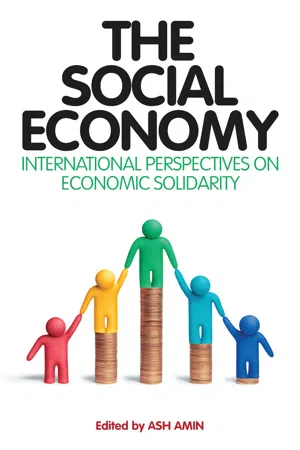
Yes, you can access The Social Economy by Ash Amin in PDF and/or ePUB format, as well as other popular books in Economics & International Economics. We have over 1.5 million books available in our catalogue for you to explore.