A concise practical handbook on high welfare standards in pig farming for people who work directly with animals. The aim is to improve animal health and farm profitability through introducing good husbandry practices and finding low cost solutions to improve welfare for the animals.Aimed at farmers, stockmen, food industry personnel and agricultural students, the book explains why welfare is important for the animal and the farm, what good welfare looks like, how to measure welfare in practice using assessment tools, and practical advice for improving welfare for pigs.
- English
- ePUB (mobile friendly)
- Available on iOS & Android
eBook - ePub
Pigs Welfare in Practice
About this book
Information
Topic
MedicineSubtopic
Veterinary MedicineChapter 1
Understanding pig welfare
1.1 Good welfare, more than just being healthy
Animal welfare may be simply defined as the quality of life that an animal has in its real conditions. There are three main factors that compose the quality of life, in other words, those that matter to the animal (Figure 1.1):
- its biological functioning: the state of being fit and healthy
- its behavioural coping: successful engagement with the outside world
- its subjective feelings: experience of positive as opposed to negative affective states.
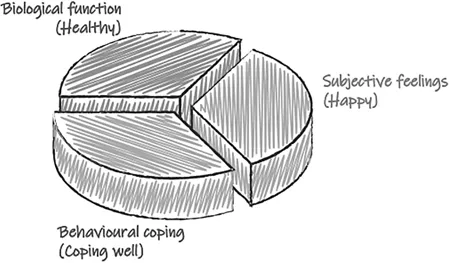
Figure 1.1 The main attributes that determine animal welfare.
Illustration: I. Camerlink.
Wild living animals have been endowed with species-specific physiological, behavioural and psychological capabilities through the process of natural selection. These include, on the one hand, negative mechanisms such as pain or fever to cope with injury and infection, aggressive behaviour to overcome competitors or fear emotion to avoid predators. On the other hand, there are positive mechanisms, such as a balanced metabolism for the utilization of nutrients, social behaviour to maintain company or the contentment emotion to reward success. In farm animals, such as the pig, all the mechanisms of physiological, behavioural and psychological functioning of the wild ancestor species are maintained, although some of them have been quantitatively strengthened or diminished through the processes of domestication and selective breeding. Therefore, for a domestic pig to have a good quality of life, it needs to live in an environment that promotes positive physiological, behavioural and mental functioning and does not trigger negative mechanisms.
Ethically, there is wide agreement that when humans keep animals in captivity, they become responsible for their quality of life. Thus we – the human society – should provide farm animals with living conditions that are conducive to good welfare. Practically, it is the farmers that set up and run the environment for livestock, but their decisions are affected by societal conditions, such as consumer demand, the economic situation, legislation and public opinion. Thus, the concept of animal welfare needs to be understood both from the point of view of farmer and from the point of view of the society at large.
Farmers are motivated to provide good care of their animals and keep them healthy in order to support their high performance. For practically minded farmers, the question thus arises: Why is the extra term ‘animal welfare’ needed anyway? Therefore, it is useful to clarify the relationships and differences between animal performance, animal health and animal welfare.
Performance and health are closely related in pigs. Poor health undermines the capacity for growth and reproduction. At the same time, prolific reproduction and fast growth puts pressure on health and welfare. In past decades, breeding programmes emphasized performance traits and consequently the current genotypes of pigs channel resources into production rather than into maintenance and health, putting the animals under reproductive and metabolic strain and making them more susceptible to illness and injury. Therefore, high producing pigs need intense and highly skilled monitoring, support and intervention, if they are to live a healthy life.
The relationship between pig health and pig welfare is that of inclusion – pig welfare is a broader term encompassing pig health. When animal welfare is practically evaluated on farms, for example, through an assessment scheme such as the Welfare Quality® protocol, four broad areas are considered. These areas include health, nutrition, environment and behaviour. Thus, besides enjoying good health, pigs should also receive sufficient and appropriate diet, enjoy physical and thermal comfort and have the opportunity to engage in normal non-harmful behaviour directed at the physical environment, their conspecifics and the human caretakers. In combination, all these four areas should result in good animal mental well-being, providing a life in which positive emotional states, such as security, contentment and engagement are promoted while negative states, such as pain, fear, distress, frustration or apathy, are avoided or at least mitigated.
The fact that animal welfare is a more inclusive concept than animal health implies that it is more difficult to agree what is best for pig welfare and how to put it into practice. There is an agreement that advances in pig welfare should be based on evidence, primarily on scientific knowledge. In spite of the progress in applied ethology, neurobiology and comparative psychology, it remains difficult to measure animal behavioural needs and emotional states. Moreover, deciding how to integrate or balance the different aspects of pig welfare is not straightforward. For instance, tail docking causes intense yet relatively short-lived pain in all pigs in the herd (and may even induce more long-term discomfort) yet it reduces the risk of tail-biting outbreaks that may induce severe suffering in a minority of pigs. How should these two aspects of pig welfare be balanced against each other? Free movement of farrowing sows contributes positively to their welfare, through behavioural engagement and positive effects on leg health, yet it may endanger piglet welfare through increased risk of crushing. Again, how should such a trade-off be resolved? These trade-offs in pig welfare are real challenges and the search for answers stimulates research to find innovative solutions. For example, the provision of a stimulating environment and effective monitoring of pig behaviour can reduce tail-biting occurrence in undocked pigs and farrowing pens designed to meet the behavioural needs of both lactating sows and sucking piglets can reduce crushing to levels comparable with crated sows.
At the societal level, the animal welfare discussion is even more complex because it includes not only the matter-of-fact dialogue between professional pig stakeholders (farmers, veterinarians and animal welfare scientists) but also a broader value-related debate with other stake-holders, such as consumers, the food industry and policymakers. With increasing quality of human life, society is gradually becoming more attentive to the well-being of food-producing animals. A genuine dialogue is needed in order to find a common ground and thus to secure the economic, environmental and societal sustainability of pig farming in a dynamically evolving society. On the one hand, broader society needs to have access to accurate information about real pig needs and on the care given to the animals in modern husbandry. On the other hand, pig professionals need to listen to the genuine concerns and expectations society has about farm animals’ quality of life and to work on practicable solutions in areas of pig life where the need for progress is most acute.
1.2 A global understanding of animal welfare
Around the world, humans depend on animals for food, transport, entertainment, labour and research. How animals are raised and used for these purposes is influenced by historic traditions combining with modern day influences, which create pressure for change. The resources available, system used, local culture and legislation all combine to influence animal welfare. The welfare status of an individual animal is determined by their health, nutrition, behaviour and environment, which all affect their mental well-being. A global perspective is needed to truly understand animal welfare, as there is no single best location for pig welfare. Pigs reared in an indoor intensive system in a developed country benefit from a veterinarian overseeing their care, temperature controlled barns and welfare legislation. Their ability to express natural behaviour can be restricted, however, if they are not given sufficient space and foraging material. Whereas a pig in a rural smallholding in a less developed country that is free to roam has great behavioural freedom, but their welfare suffers if they become ill and their farmer cannot afford to treat them, or they are malnourished due to a poor-quality diet. In the Global North, indoor intensive systems today provide the majority of pig rearing settings, with a consumer demand for outdoor reared meat at the higher end of the market. In the Global South, traditional smallholding systems remain, which are rapidly being replaced by industrial production in, amongst others, China. Welfare is emerging as a concept in urban areas, creating a demand for more humane systems, as well as for export markets, yet this is restricted by the level of socioeconomic development. A lack of available resources does not necessarily have to be a limiting factor preventing welfare improvement. Training, skills in gentle handling methods and understanding welfare, for example, can facilitate small changes by farmers and stockworkers that can make a big difference to pigs’ lives (discussed in detail in Section 4.1). This chapter now discusses animal welfare in different regions around the world and considers how each region’s traditions, beliefs, legislation and current consumer trends affect pig welfare.
1.2.1 Europe
European Union (EU) member states have long been the front runners when it comes to animal welfare legislation. The EU itself passed the first directive (on stunning before slaughter) in 1974, and many have followed. Currently there are three pieces of legislation directly addressing pig welfare. They relate to the keeping of pigs (Dir (EU) 58/1998 and Reg (EU) 120/2008), livestock transport (Dir (EU) 1/2005), and stunning and killing of livestock (Dir (EU) 1099/2009). They include several requirements that go beyond what is asked for elsewhere in the world. Examples include a ban on stall housing of pregnant sows after week 4 of pregnancy, the compulsory provision of at least 40 lux of light during 8 hours of the day, and a minimum weaning age of 21 days.
In the last two years, the European Commission has indicated on several occasions that it has no intention of developing new welfare legislation. Although the last EU Strategy for the Protection and Welfare of Animals (2012–2015) still considered the feasibility of introducing a simplified EU legislative framework, a new framework did not materialize. Instead, the Commission is now promoting the guiding principle ‘Everyone is Responsible’, thus reflecting the obligation and shared interest of all stake-holders to maintain high levels of animal welfare. They are supporting this approach in a number of ways.
First, DG SANTE (the directorate that deals with animal welfare policy) has set up the European Platform on Animal Welfare to ‘promote an enhanced dialogue on animal welfare issues that are relevant at EU level among competent authorities, businesses, civil society and scientists’ (https://ec.europa.eu/food/animals/welfare/eu-platform-animal-welfare_en). The Platform will focus on better application of EU rules on animal welfare, the development and use of voluntary commitments by businesses, and the promotion of EU animal welfare standards to valorize the market value of EU products. The Platform consists of about 75 members and meets twice per year.
Second, while new legislation is not foreseen, the Commission is pushing for compliance with existing legislation. An important enforcement priority in recent years was the ban on routine docking of pig tails. In the EU tail docking is allowed before day 7 but only in exceptional circumstances. The reality is that more than 95% of EU pigs have their tails cut off. EU member states are now required to produce verifiable action plans to eliminate routine docking, and the progress of these plans is monitored through a programme of inspection visits.
Third, to support farmers, transporters and other stakeholders, DG SANTE organizes activities that develop and disseminate practical advice. An example of this is the ‘Animal Transport Guides’ project, which produced ‘good and better practices’ via comprehensive guides, practical factsheets, short videos and a European road show to visit places where transporters meet (www.animaltransportguides.eu). Similarly, support materials were developed to promote welfare at slaughter and the provision of adequate enrichment materials on farm.
Finally, member state policy workers and inspectors are supported through courses included under the ‘Better Training for Safer Food’ (BTSF) initiative (https://ec.europa.eu/food/safety/btsf_en). In addition, in 2018 the EU Commission designated the first European Reference Centre for Animal Welfare. The centre has a focus on pigs (hence EURCAW-Pigs) and also aims at competent authorities, policy workers and their support bodies. Their website (www.eurcaw.eu) is accessible to all stakeholders and will include scientific and practical knowledge on all areas of EU pig legislation.
1.2.2 North America and Canada
In the USA, intensive rearing of pigs is the norm with approximate...
Table of contents
- Cover
- Half Title
- Title Page
- Copyright Page
- Contents
- List of contributors
- Foreword
- Introduction
- 1 Understanding pig welfare
- 2 Making the business case for animal welfare
- 3 Assessing animal welfare
- 4 What you can do to improve animal welfare?
- Appendices
- Appendix 1: Welfare Quality® form for sows and piglets
- Appendix 2: Welfare Quality® form for growing pigs
- Appendix 3: Scoring list for pig qualitative behaviour assessment
- Appendix 4: Checklists for suitability of enrichment objects
- Appendix 5: Calculation guide for the amount of enrichment
- Index
Trusted by 375,005 students
Access to over 1.5 million titles for a fair monthly price.
Study more efficiently using our study tools.
Frequently asked questions
Yes, you can cancel anytime from the Subscription tab in your account settings on the Perlego website. Your subscription will stay active until the end of your current billing period. Learn how to cancel your subscription
No, books cannot be downloaded as external files, such as PDFs, for use outside of Perlego. However, you can download books within the Perlego app for offline reading on mobile or tablet. Learn how to download books offline
Perlego offers two plans: Essential and Complete
- Essential is ideal for learners and professionals who enjoy exploring a wide range of subjects. Access the Essential Library with 800,000+ trusted titles and best-sellers across business, personal growth, and the humanities. Includes unlimited reading time and Standard Read Aloud voice.
- Complete: Perfect for advanced learners and researchers needing full, unrestricted access. Unlock 1.5M+ books across hundreds of subjects, including academic and specialized titles. The Complete Plan also includes advanced features like Premium Read Aloud and Research Assistant.
We are an online textbook subscription service, where you can get access to an entire online library for less than the price of a single book per month. With over 1.5 million books across 990+ topics, we’ve got you covered! Learn about our mission
Look out for the read-aloud symbol on your next book to see if you can listen to it. The read-aloud tool reads text aloud for you, highlighting the text as it is being read. You can pause it, speed it up and slow it down. Learn more about Read Aloud
Yes! You can use the Perlego app on both iOS and Android devices to read anytime, anywhere — even offline. Perfect for commutes or when you’re on the go.
Please note we cannot support devices running on iOS 13 and Android 7 or earlier. Learn more about using the app
Please note we cannot support devices running on iOS 13 and Android 7 or earlier. Learn more about using the app
Yes, you can access Pigs Welfare in Practice by Irene Camerlink in PDF and/or ePUB format, as well as other popular books in Medicine & Veterinary Medicine. We have over 1.5 million books available in our catalogue for you to explore.