This tries to provide an account of Napoleon's, Charles XII's, and Hitler's invasions of Russia. It compares the three efforts, indicates why the author thinks they all failed, evaluates whether anyone could have succeeded and if they made any sense from the point of view of the aggressor.
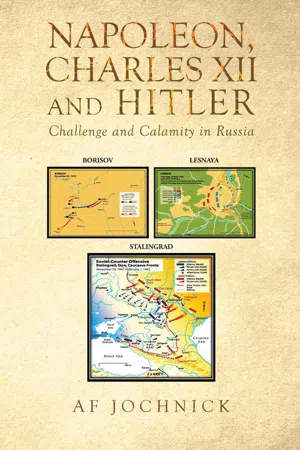
- 172 pages
- English
- ePUB (mobile friendly)
- Available on iOS & Android
eBook - ePub
Napoleon, Charles XII and Hitler Challenge and Calamity in Russia
About this book
Information
Topic
ArtSubtopic
History of ArtGerman Invasion of the Soviet Union
Background and Planning
Germany in 1932
The enormous development in almost all aspects of society, industry, commerce, labor, and, of course, the military during the period 1812 to 1940 makes it desirable to provide more details about some areas and individuals of particular relevance to this work, during the period ten to fifteen years preceding World War II. Like literally all developed countries, Germany was hit hard by the 1930s depression. Problems in the Weimar Republic had started earlier than in most countries because it suffered under terms of the 1918 Versailles peace treaty, which presented almost insurmountable problems. The German economy was weak and the debt obligations, primarily to Britain and France, caused a strong downward pressure. When the worldwide depression hit, the Weimar leaders simply could not find an effective response. Since this was a time when currencies were tied to gold, the options available to stimulate an economy that was heading into depression were very limited. It is unlikely that Hitler’s Nazi Party would have grown so dramatically between the 1928 and 1932 elections if Germany’s economic decline had not been so steep. In 1928 German unemployment was 8.6 percent. In 1932 it was 33 percent. In the 1928 election, 1 percent of the votes went to the Nazi Party. In 1932 the Nazis received 37 percent and became the biggest party in the parliament.
The aging president Paul von Hindenburg resisted appointing Hitler to be chancellor (prime minister), but in the end, the combination of the terrible economic conditions in Germany and the Nazi Party’s victory in the election forced Hindenburg‘s hand.29
Developments in Germany, 1932–39.
From a human rights perspective, the development in Germany from 1932 to 1939 could hardly have been worse. Economic policy was established by Hjalmar Schacht, who became head of the German Central Bank in 1933 and Hitler’s minister of finance in 1934.30 In many areas, economic improvements were exceptional. By 1939, unemployment had been reduced to the 6 to 7 percent level. There were some impressive projects, including the first divided highway system in the world.31 Because of Hitler’s priorities, the armament industry, in particular, experienced strong growth, but certain other sections of the economy, including consumer goods, fell behind.
Chancellor Adolf Hitler
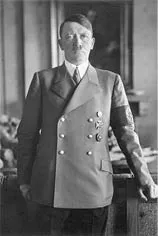
Adolf Hitler was born in 1889 in Braunau-am-Inn in Austria, then part of the Austrian-Hungarian Empire. His family moved in 1906 to Lambach, Bavaria, where Hitler got his education. He left school at sixteen without a degree and moved to Vienna, where he tried to become an artist. In 1907–08 he submitted his watercolor paintings to the Vienna Academy of Fine Art, but they were rejected. After the second rejection, Hitler run out of money and had to live in homeless shelters or hostels. In 1913, he inherited some money when his father died, and moved to Munich. When World War I started in 1914, he joined the German Army, although an Austrian citizen.32 During the war, he was twice awarded medals for bravery, the second time resulting from the recommendation of a Jewish officer. Through his demagogic oratory, he became politically successful as head of the National Socialist Workers Party (NSWP), which he created. As chancellor, Hitler quickly assumed dictatorial powers, although he lacked significant education regarding administrative or military matters. He ruled Germany until his death by suicide on April 30, 1945.
The Versailles Treaty greatly restricted Germany’s military. The country could have no air force, the Army could not exceed one hundred thousand men, and no sophisticated military equipment could be manufactured in or imported to Germany. Even during the early days of the Weimar Republic, military and political organizations started violating terms of the treaty. One example is a secret arrangement, begun in 1923 with the Soviet Union, under which future German military pilots were trained in the Russian city of Lipetsk. This training went on until 1933, when Hitler renounced the Versailles Treaty. From then on, manufacturing in Germany was largely concentrated on the production of military equipment, including tanks, aircraft, and submarines.
The German Air Force was officially created in 1935. In the Spanish Civil War, German pilots gained opportunities to improve their skills at the same time as new German airplane designs could be tested.33 When World War II broke out in September 1939, Germany had an Air Force with pilots far better trained and aircraft more effective and advanced than any other country in the world.
Developments in Military Doctrines, 1918 to 1939
In the two decades between the two World Wars, the art of warfare and the tools employed to conduct it probably changed more than in any similar period in history. This was particularly true for military aircraft and various armored and motorized vehicles. Airplanes and tanks had been introduced during World War I, but the Fokkers and Sopwith Camels employed during that war bore little resemblance to the Messerschmitts and Spitfires that appeared early in World War II. The same holds true for the types of tanks used in the two wars. While some German tanks in 1939 were so outdated as to be nearly obsolescent, they were still far more advanced than anything used twenty years earlier.
These changes had a profound impact on military doctrines and strategy. All the major countries struggled with these issues in different ways and with different results, particularly during the ten-year period leading up to World War II. The development and use of these new tools had to take into account the experiences of World War I. The French military planners had concluded that frontal attacks against fortified positions were almost suicidal. They decided that a solidly fortified border was the best defense. The Maginot Line was built along its German border from Switzerland to Belgium. Senior French commanders appear to have given little thought to how the Air Force and such armored forces, as had been introduced, should be employed. The young Charles de Gaulle was an exception. In 1934, he published a book called The Army of the Future. In it he predicted that tanks and other armored vehicles would be of paramount importance in any future war. He suggested that these weapons should be concentrated in separate units served by specially trained soldiers. The book was mostly ignored in France, but it received considerable attention in Germany.34
In the United Kingdom, the interest in the use of tanks was minimal among the senior levels of its military. However, Captain Liddell Hart, Major General J. F. C. Fuller, and a few other military historians had started in the late 1920s developing theories about how the new weapons might be employed in a future war. Their writings, like that of de Gaulle, received little attention in their home country, but they were studied with interest in some other countries. A number of young officers in the emerging German Army tried to inform themselves about the new weapons. General Heinz Guderian, one of Germany’s most successful armored commanders in World War II, was among these early students of tanks and motorized troops. He presented his own thoughts, which were quite similar to those of Liddel Hart and de Gaulle, in a book published in 1938.35 Senior military commanders in Germany, including Franz Halder, the head of the Army general staff, were skeptical of Guderian’s ideas, but they caught the interest of Hitler. As a result, the theories of Guderian and his followers became the basis for the employment of armored forces in the German Army.
General Heinz Guderian
Heinz Guderian was born in 1888 to a Prussian military family in Kulm, Germany. As a young officer, he served in his father’s regiment. He was ambitious and serious and studied both foreign languages and the newest technical developments like the use of radio communications. He stayed in the military after World War I and took an interest in the development of tanks and mobile warfare. In 1939, Guderian was appointed head of an armored corps, which contributed greatly to the victory in France in 1940. Guderian and his fellow tank commanders played a crucial role in the early victories of Barbarossa in 1941. Guderian was somewhat controversial because of a tendency to ignore orders from superiors. In 1940, General von Kleist wanted to fire Guderian for continuing his advance toward the English Channel despite orders to the contrary. Von Rundstedt saved him that time, but in December 1941, Hitler did fire him for retreating in violation of orders. However, following the Stalingrad defeat, Guderian was recalled to accelerate the development of the German mobile forces. He died in 1954.
Separate armored divisions were created, consisting of one or two tank regiments and two or three regiments of motorized infantry. These divisions would also be supported by aircraft used for recognizance purposes but also capable of attacking enemy forces. The German armored forces played a decisive role in Germany’s rapid defeat of the French and British forces in 1940. The French were not without tanks, and their tanks were almost as numerous, and some were as good or better than Germany’s. However, the French did not know how to use them effectively. Their tanks were just positioned here and there among the infantry battalions and often ended up being almost useless.36
Some senior commanders in the Soviet Union started looking into the use of tanks in the late 1920s. Probably the most capable and talented of this group was Marshal Mikhail Tukhachevsky. He played a key role in developing mechanized forces in the Soviet Army as early as 1930. For several years, he held the second-ranking position in the Soviet military behind Voroshilov. Tukhachevsky prepared detailed regulations for the use of mechanized forces in the Soviet Army, which were issued in 1932 and 1936.37 Largely thanks to Tukhachevsky, the development of tanks had produced good results by 1941. Unfortunately for the Soviet state, Stalin’s paranoia and fears caused him to target his best commanders for his purges. Stalin was considering eliminating Tukhachevsky in 1930, but lacked support. In 1937, he found it. Tukhachevsky had played a crucial role in developing the new weapons. At Tukhachevsky’s mock trial, the cavalry commander, Marshal Semyon Budyonny, testified that Tukhachevsky’s advocacy of tanks and motorized troops was evidence in itself of treacherous intent.38
Stalin’s elimination of many of the best Soviet military talents undoubtedly provided the Germans an important window of opportunity to destroy the Soviet armies before the surviving Soviet commanders had learned how to use their most important weapons.39 Fortunately for the Germans, Budyonny, one of only two Soviet marshals to survive Stalin’s persecutions, and not Tukhachevsky, was commander of the Soviet forces in the Ukraine in 1941.40
Germany’s Military in September 1939
By September 1939, Germany had spent nearly six years building up its military forces.41 In preparation for its invasion of Poland and war with the Western democracies, the Hitler regime entered into a treaty with the Soviet Union, the Nonaggression Pact of August 23, 1939. This pact provided that neither party would take military action against the other for a period of ten years. On September 1, 1939, Germany invaded Poland, prompting Britain and France to declare war against Germany. By then the German military included ten armored divisions, each consisting of two tank regiments of 150 tanks. In addition, two regiments of motorized infantry were part of each division. Compared to what the Germans would eventually face when encountering the Soviet Army, the German tanks were not very impressive.
The armored divisions that invaded France and the Low Countries in May 1940 consisted mostly of the Panzer I and Panzer II tanks, which were equipped with thin armor and only a twenty-millimeter cannon. Because the war started earlier than the industrial planners had expected, Panzer III and Panzer IV tanks, with much thicker armor and equipped with a fifty-seven-millimeter gun, were only available in small numbers. However, the German commanders knew how to use their tanks effectively. The German Air Force lent close support to the advancing tank regiments. The German Air Force in 1940 coun...
Table of contents
- Acknowledgments
- Introduction
- Napoleon’s Invasion of Russia
- Charles XII and the Great Northern War
- German Invasion of the Soviet Union
- Final Observations
- Notes
- Sources
- About the Author
Trusted by 375,005 students
Access to over 1.5 million titles for a fair monthly price.
Study more efficiently using our study tools.
Frequently asked questions
Yes, you can cancel anytime from the Subscription tab in your account settings on the Perlego website. Your subscription will stay active until the end of your current billing period. Learn how to cancel your subscription
No, books cannot be downloaded as external files, such as PDFs, for use outside of Perlego. However, you can download books within the Perlego app for offline reading on mobile or tablet. Learn how to download books offline
Perlego offers two plans: Essential and Complete
- Essential is ideal for learners and professionals who enjoy exploring a wide range of subjects. Access the Essential Library with 800,000+ trusted titles and best-sellers across business, personal growth, and the humanities. Includes unlimited reading time and Standard Read Aloud voice.
- Complete: Perfect for advanced learners and researchers needing full, unrestricted access. Unlock 1.5M+ books across hundreds of subjects, including academic and specialized titles. The Complete Plan also includes advanced features like Premium Read Aloud and Research Assistant.
We are an online textbook subscription service, where you can get access to an entire online library for less than the price of a single book per month. With over 1.5 million books across 990+ topics, we’ve got you covered! Learn about our mission
Look out for the read-aloud symbol on your next book to see if you can listen to it. The read-aloud tool reads text aloud for you, highlighting the text as it is being read. You can pause it, speed it up and slow it down. Learn more about Read Aloud
Yes! You can use the Perlego app on both iOS and Android devices to read anytime, anywhere — even offline. Perfect for commutes or when you’re on the go.
Please note we cannot support devices running on iOS 13 and Android 7 or earlier. Learn more about using the app
Please note we cannot support devices running on iOS 13 and Android 7 or earlier. Learn more about using the app
Yes, you can access Napoleon, Charles XII and Hitler Challenge and Calamity in Russia by Af Jochnick in PDF and/or ePUB format, as well as other popular books in Art & History of Art. We have over 1.5 million books available in our catalogue for you to explore.