Rocket Propulsion has come of age. Although its potentialities and capabilities in many areas have been recognized for centuries, it is only in recent years that scientists have had the materials and the manufacturing techniques at their command so they could control and direct the tremendous forces available. Space exploration and manned flights by astronauts have brought the science of rocketry to the attention of the general public. It has also stimulated the interest of students at all levels of advancement in the technical details of space flight. Rocket Propellant Technologies is written for serious students of astronautics. This volume reviews briefly the history of rocketry and the fundamental principles connected with rocket propulsion. Types of propellants, the chemical reactions involved, and the techniques used in manufacturing are explained. The merits of solid and liquid fuels are enumerated. Exotic propellants of the future are discussed, with reasons why their development is essential. Finally, the safety aspects of manufacturing and testing rocket propellants are given in detail. The Amateur Rocket Association under whose guidance this series has been prepared, serves as a focal point for many related activities, bringing new ideas to the attention of its members and offering suggestions for future lines of research.

- 208 pages
- English
- ePUB (mobile friendly)
- Available on iOS & Android
eBook - ePub
Rocket Propellant Technology
About this book
Trusted by 375,005 students
Access to over 1 million titles for a fair monthly price.
Study more efficiently using our study tools.
Information
Chapter 1 - History of Rockets
It was in the early thirteenth century that man turned toy fireworks into weapons of war. The first recorded use of rockets as military weapons was in defense of Kai Fung Fu, China, in 1232.
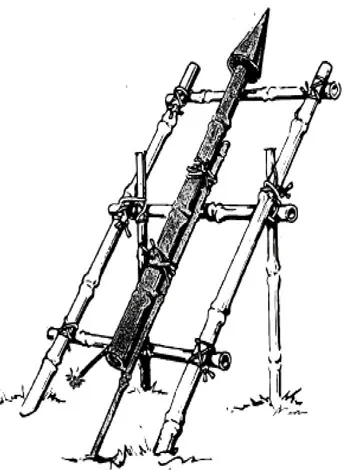
Fig 1-1. The Chinese “arrows of flying fire”
The Chinese “arrows of flying fire” were fired from some sort of crude rack-type launcher- and were propelled by gunpowder. The gunpowder was packed in a tube (probably bamboo) that had a hole in one end for the escaping hot gases, a closed end for the push to be exerted against, and a long stick as an elementary guidance system.
About 1280 A.D., Arab military men, referring to the propulsive ability of gunpowder, suggested improvements over the simple Chinese skyrocket. One interesting innovation was what might be best described as an air squid or traveling land mine; it could scurry across land in the manner of a squid through water.
It was about 1400 when rocketry became of commercial importance throughout Europe and especially in Italy—where perhaps the greatest designers of pyrotechnics were found. The use of fireworks for all sorts of celebrations created a major market for the manufacture of large quantities of rockets. This spread throughout Europe and reached its zenith during the middle of the eighteenth century.
One of the earliest technical publications on rocketry, the Treatise Upon Several Kinds of War-Fireworks, appeared in France in 1561. The treatise made a critical analysis of the rockets used in earlier military campaigns. A recommendation was made to substitute varnished leather cases for the commonly accepted paper and bamboo ones. There is no evidence that this suggestion was followed by later rocketeers.
Comparatively, refinements in rocket design came faster in the next few hundred years, at least on paper. In 1591, some three hundred years before Dr. Robert Goddard thought of it, a Belgian, Jean Beavie, described and sketched the important idea of multi-staged rockets. Multi-staging, placing two or more rockets in line and firing them in step fashion, is today’s practical answer to the problem of escaping earth’s gravitational attraction.
By 1600, rockets were being used in various parts of Europe against cavalry, foreshadowing the modern antitank hand weapon, and the bazooka of World War II and Korean fame. Later, in 1630, a paper was written describing exploding aerial rockets which created an effect similar to that of the twentieth- century shrapnel shell. By 1688, rockets weighing over 120 pounds had been built and fired with success in Germany. These German rockets, carrying 16-pound warheads, used wooden powder cases reinforced with linen.
Toward the end of the eighteenth century, a London lawyer, Sir Walter Congreve, became fascinated by the challenge to improve rockets. He made extensive experimentation on propellants and case design. His systematic approach to the problem resulted in improved range, guidance, and incendiary capabilities. The British armed forces used Congreve’s new rockets to great advantage during the Napoleonic Wars.
When Congreve died in 1828, his applied engineering and dedication had already resulted in several technological advances. In addition to fortified cases, new propellants, and incendiaries, Congreve developed stabilizing fins that provided rocketeers with effective guided missiles.
The latter half of the nineteenth century saw the demise of rockets as weapons, but man’s ingenuity, fortified with rapidly expanding technology, was directed towards the challenge of human transportation by rockets. This period of time and the first quarter of the twentieth century saw the significant growth of reasoning and mathematics applied to rocket development. For the most part, military applications were forgotten. The founders of modern rocketry made their appearance at the threshold of the exciting events of our time.
A Russian assassin, Nikolai Kibaltchitch, while in prison awaiting trial in 1881, proposed a rocket ship powered by controlled firing of explosive pellets. His ship consisted of a firing chamber centered above a hole in a manned platform. The firing chamber could be rotated 90 degrees to move the ship in a horizontal direction. To avoid any influence of public opinion in favor of the prisoner, Russian officials withheld his plans. It wasn’t until after the Russian Revolution that Kibaltchitch’s writings were finally revealed.
In 1891, a German inventor, Hermann Ganswindt, designed a spaceship for travel to Mars. He also described a propulsion system similar to that of Kibaltchitch, except that he suggested a series of dynamite explosions that would shoot out steel balls with the hot exhaust. He reasoned that controlled explosions would eventually allow the ship to escape the earth’s gravitational attraction. Ganswindt also proposed the idea of rotating the ship while in space to produce an artificial gravity for the passengers, thereby recognizing the weightlessness phenomenon. He never succeeded in obtaining support for his impractical propulsion scheme.
Tsiolkovsky—
Father Of Interplanetary Travel
Father Of Interplanetary Travel
The first person to spell out the theory of space travel as based on serious mathematical study was a deaf and poor Russian school teacher. For many years he was barely noticed in his own country and drew even less attention elsewhere. Now recognized as the father of astronautical theory and of Russian rocketry, Konstantin Tsiolkovsky was one of the first, if not the first, to suggest the use of liquid propellants. For centuries, solids like gunpowder were considered to be the only possible fuels. There was, however, a Peruvian, Pedro Paulet, who claimed in 1925 that he had built and successfully fired in 1895 a 5-pound rocket engine which used gasoline and nitrogen peroxide. It is doubtful that this event took place, at least as early as clai...
Table of contents
- Preface
- Chapter 1 - History of Rockets
- Chapter 2 - Introduction to Chemical Rockets
- Chapter 3 - Classification of energentic materials
- Chapter 4 - Propellant Componenets
- Chapter 5 - Propellant Research And Developement
- Chapter 6 - Propellant grain manufacturing process
- Chapter 7 - Internal ballistics and thermochemistry
- Chapter 8 - Grain And Motor Design
- Chapter 9 - Modern Composite Propellants
- Chapter 10 - Liquid Propellants
- Chapter 11 - Motor Evaluation Systems
- Chapter 12 - Gun Propulsion
- Chapter 13 - Safety Testing
- Chapter 14 - Safety Considerations
Frequently asked questions
Yes, you can cancel anytime from the Subscription tab in your account settings on the Perlego website. Your subscription will stay active until the end of your current billing period. Learn how to cancel your subscription
No, books cannot be downloaded as external files, such as PDFs, for use outside of Perlego. However, you can download books within the Perlego app for offline reading on mobile or tablet. Learn how to download books offline
Perlego offers two plans: Essential and Complete
- Essential is ideal for learners and professionals who enjoy exploring a wide range of subjects. Access the Essential Library with 800,000+ trusted titles and best-sellers across business, personal growth, and the humanities. Includes unlimited reading time and Standard Read Aloud voice.
- Complete: Perfect for advanced learners and researchers needing full, unrestricted access. Unlock 1.4M+ books across hundreds of subjects, including academic and specialized titles. The Complete Plan also includes advanced features like Premium Read Aloud and Research Assistant.
We are an online textbook subscription service, where you can get access to an entire online library for less than the price of a single book per month. With over 1 million books across 990+ topics, we’ve got you covered! Learn about our mission
Look out for the read-aloud symbol on your next book to see if you can listen to it. The read-aloud tool reads text aloud for you, highlighting the text as it is being read. You can pause it, speed it up and slow it down. Learn more about Read Aloud
Yes! You can use the Perlego app on both iOS and Android devices to read anytime, anywhere — even offline. Perfect for commutes or when you’re on the go.
Please note we cannot support devices running on iOS 13 and Android 7 or earlier. Learn more about using the app
Please note we cannot support devices running on iOS 13 and Android 7 or earlier. Learn more about using the app
Yes, you can access Rocket Propellant Technology by Jawaharlal "Ram" Ramnarace,Jawaharlal "Ram" Ramnarace in PDF and/or ePUB format, as well as other popular books in Technology & Engineering & Military Science & Technology. We have over one million books available in our catalogue for you to explore.