![]()
| 1 | Brief History of Aluminum–Lithium Alloy Creation |
The creation of new generations of civil and combat aircraft, and leading-edge design solutions for aerospace engineering, requires industrial production development and mastering of new structural materials and new design solutions and processes for their usage in parts. The basic structural materials in civil aircraft are aluminum alloys, but they are also used on a large scale in structures of other aircraft types. In Russia and abroad, research is being carried out toward the development of aluminum alloys to ensure maximum weight efficiency. One of the ways to address this is the development of reduced-density alloy compositions.
Researchers have turned their attention to lithium, which has a unit weight of 0.536 MT m−3. The first alloys appeared in the 1950s and were based on the Al–Cu–Li system, such as the alloys X2020 (USA) and VAD23 (USSR), later known as 1230. These alloys were 3% lighter and 8% harder than conventional alloys 2024 and D16; also, they demonstrated high strength at room and elevated temperatures (up to 175°C). The alloy X2020 used in the design of military seaborne airplane served, as mass media reported, for many years without complaints. The alloy VAD23 in the form of thin cross-sectional profiles was part of the design of the supersonic commercial airliner TU144, but that program was withdrawn. Nevertheless, due to its high elasticity modulus, VAD23 (1230) was used in a number of reconditioned parts where sheets were produced in considerable quantities through to the 1990s.
The genuine breakthrough in the development of lithium-doped aluminum (Al–Li) alloys was made by a team of VIAM scientists (V. F. Shamrai, N. V. Shiryaeva) supervised by academician I. N. Fridlyander: the invention of the hardening effect by heat treating an extensive group of alloys in the ternary Al–Mg–Li system [1]. At the same time, it was determined that lithium with an elasticity modulus smaller than that of aluminum increased the elasticity modulus of the alloys from the Al–Mg–Li system by up to 8%. That effect was marked as an invention (the “Fridlyander effect”) [1].
Based on that system, the lightest aluminum alloy 1420 containing 2% lithium and 5.5% magnesium [2] was offered. Two percent of lithium by weight is equivalent to 11 at.% of aluminum alloy. Therefore, alloy 1420 is 10%–12% lighter than duralumin-type alloys used for the fuselage with the same strength characteristics; moreover, it has high corrosion resistance.
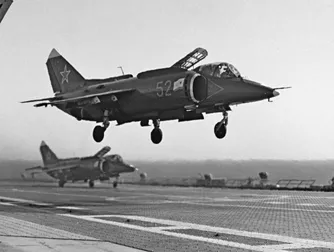
Between 1970 and 1971, the serial production of vertical takeoff and landing (VTOL) jets Yak-36 and Yak-38 was started, with riveted fuselages made of alloy 1420, which were based onboard and inboard sea aircraft carriers (Figure 1.1). Even after many years of their operation, there were problems reported due to alloy 1420. The fighter Yak-36 is being successfully operated even today [3]. The application of alloy 1420 in the riveted structure resulted in weight reduction by 16%.
FIGURE 1.1Yak-38 fighter, where alloy 1420 was used (first serial utilization of the Al–Li alloy).
Successful application of alloy 1420 gave rise to the active development of Al–Li alloys and drew the design engineers’ attention to the use of these alloys. In the 1980s and 1990s, both in Russia (Soviet Union) and other countries, alloys were developed based on Al–Li–Cu and Al–Li–Mg–Cu systems, but work was in progress in Russia to create new alloys based on the Al–Li–Mg system as well. All Al–Li alloys were additionally doped with zirconium and manganese. Calcium was introduced into alloy 1420 as an alloying element.
In Russia, scandium is widely used to dope Al–Li alloys (alloys 1421, 1461, 1424, B-1461, V-1464, V-1469). Western companies have started using silver for doping (alloys 2094, 2095, 2195, 2196, and 2098) since 1990. In Russia, alloy V-1469 became the first to contain silver. After 2012, Western companies registered Al–Li alloys with zinc (2397, 2099); at the same time, alloys with zinc (1424, B-1461) appeared in Russia.
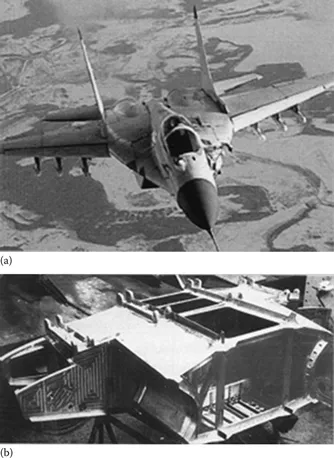
In 1985, the A. I. Mikoyan Design Bureau, upon the initiative of M. R. Valdenberg, deputy chief designer, started work to create a welded airplane using aluminum. For the first time in the world, a welded fuselage of one of the MiG-29 fighter modifications was made in aluminum alloy 1420 [3]. A large variety of semifinished products—more than 150 items of forgings, extruded panels, and sheets—were used in the design. They were also used to fabricate leakproof, welded fuel tanks, and cockpits (Figure 1.2), which resulted in weight reduction of the design elements by up to 27%.
FIGURE 1.2(a) MiG-29M fighter, where welded structures in Al–Li alloy 1420 were used, (b) fuel tank.
MiG-29 aircraft with welded tanks made of alloy 1420 are in service even today. That work evolved during the creation of the welded structure of the new-generation fighter 1–44 [3–5].
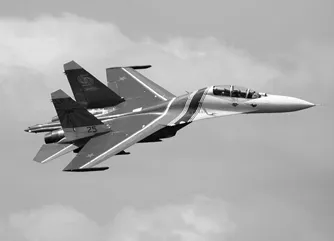
There are up to 800 sheet-formed parts in alloy 1420 used in the unloaded areas of the fighter-interceptor Su-27 (1985) (Figure 1.3).
Welded hulls of submarine-launched missiles are manufactured from alloy 1420, and then from its modification 1421. Alloy 1420 is being used in the structure of a number of other similar parts [3] for many years.
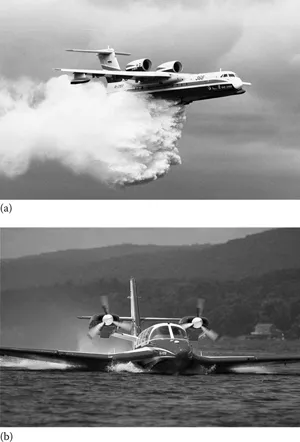
With the purpose of reducing the weight of parts, the G. M. Beriev Aircraft Company took a decision to use 1441 alloy sheets in the Be-200 and Be-103 programs. Alloy 1441 is rolled well in both clad and bare forms, which allows producing thin sheets (up to 1.2 mm) by coil rolling. Alloy sheets with the same strength characteristics have a higher fatigue crack growth resistance and a longer life than 1163AT alloy sheets by a factor of 1.5 (Figure 1.4) [6,7].
FIGURE 1.3Su-27 fighter interceptor.
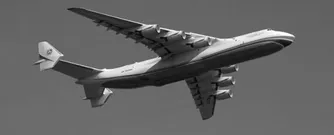
At the end of the 1980s, the Antonov Design Bureau started trials with a new lithium-containing alloy, 1450, for their transport aircraft programs. The Bureau developed the world's largest airplanes “Ruslan” and “Mria”; therefore, ingots with a cross section of 400 × 1450 and 450 × 1200 mm were cast to manufacture large plates and extruded panels, which were used in those planes [8] (Figure 1.5).
In 1995, A. N. Tupolev ANTK, after evaluating data on alloy 1420's properties and applications in the military aircraft programs Yak-36, Yak-38, and MiG-29, took a decision to use the Al–Li alloy 1420 in the civil airplane Tu-204 for the first time. It was used for nonweight-bearing structures such as sheets (fuselage stringer set, fillets, compensators), extruded profiles (floor beam ribs and walls, interior element fixtures, equipment location racks), and die-forgings (manhole covers, reinforcement elements).
With the substitution of parts made of alloy 1163, a weight reduction of 10%–12% was achieved. The possibilities for applying alloy 1420 die-forgings as window frames are being worked out.
Also, a number of similar parts for a new short- to medium-range commercial airplane, Tu-334 (2003), are also made using alloy 1420.
A number of parts for the experimental airplane Tu-156 with an LNG- and kerosene-fired engine were fabricated using alloy 1420. The use of alloy 1460 (new modification is 1461) to manufacture tanks for cryogenic propellants was reviewed for Tu-156 and a cryogen-powered plane [9,10]. A welded tank was manufactured using this alloy and successfully tested for the McDonnell Douglas Reusable Launch Vehicle. Alloy 1460 was used to substitute alloy 1201, which resulted in a welded tank weight reduction by up to 25%.
In 2003, the strongest corrosion-resistant weldable alloy V-1469 was developed based on the Al–Cu–Li–Mg system doped with zirconium, scandium, and silver [11,12]. The alloy has extremely high processibility by metal forming, which allows producing sheets with 1.5 mm thickness, cold-rolled coils, rolled rings, and extruded profiles of various cross sections. Also, sheets with thickness down to 0.35 mm were produced [12]. The alloy is recommended for use in the MC21 design and also for welded tanks for cryogenic propellants.
FIGURE 1.4(a) Be-200 hydroplane and (b) Be-103 hydroplane, where Al–Li alloy sheets were used in their design.
FIGURE 1.5World's largest transport airplane “Mria,” where semifinished products in Al–Li alloys were used, including large extruded panels in alloy 1450.
Numerous researches have demonstrated the potential of Al–Li alloys in super-plastic forming [13–18]. In the 1980s, OAO KUMZ manufactured and supplied sheets made of alloy 1420RS with the specified grain size for superplastic forming to their customers. Parts of complex configuration were formed from the shee...