Human Adaptation in Ancient Mesoamerica
eBook - ePub

Human Adaptation in Ancient Mesoamerica

Empirical Approaches to Mesoamerican Archaeology

  1. English
  2. ePUB (mobile friendly)
  3. Available on iOS & Android
eBook - ePub

Human Adaptation in Ancient Mesoamerica

Empirical Approaches to Mesoamerican Archaeology

About this book

This volume explores the dynamics of human adaptation to social, political, ideological, economic, and environmental factors in Mesoamerica and includes a wide array of topics, such as the hydrological engineering behind Teotihuacan's layout, the complexities of agriculture and sustainability in the Maya lowlands, and the nuanced history of abandonment among different lineages and households in Maya centers.

The authors aptly demonstrate how culture is the mechanism that allows people to adapt to a changing world, and they address how ecological factors, particularly land and water, intersect with nonmaterial and material manifestations of cultural complexity. Contributors further illustrate the continuing utility of the cultural ecological perspective in framing research on adaptations of ancient civilizations.

This book celebrates the work of Dr. David Webster, an influential Penn State archaeologist and anthropologist of the Maya region, and highlights human adaptation in Mesoamerica through the scientific lenses of anthropological archaeology and cultural ecology.

Contributors include Elliot M. Abrams, Christopher J. Duffy, Susan Toby Evans, Kirk D. French, AnnCorinne Freter, Nancy Gonlin, George R. Milner, Zachary Nelson, Deborah L. Nichols, David M. Reed, Don S. Rice, Prudence M. Rice, Rebecca Storey, Kirk Damon Straight, David Webster, Stephen L. Whittington, Randolph J. Widmer, John D. Wingard, and W. Scott Zeleznik.

Frequently asked questions

Yes, you can cancel anytime from the Subscription tab in your account settings on the Perlego website. Your subscription will stay active until the end of your current billing period. Learn how to cancel your subscription.
No, books cannot be downloaded as external files, such as PDFs, for use outside of Perlego. However, you can download books within the Perlego app for offline reading on mobile or tablet. Learn more here.
Perlego offers two plans: Essential and Complete
  • Essential is ideal for learners and professionals who enjoy exploring a wide range of subjects. Access the Essential Library with 800,000+ trusted titles and best-sellers across business, personal growth, and the humanities. Includes unlimited reading time and Standard Read Aloud voice.
  • Complete: Perfect for advanced learners and researchers needing full, unrestricted access. Unlock 1.4M+ books across hundreds of subjects, including academic and specialized titles. The Complete Plan also includes advanced features like Premium Read Aloud and Research Assistant.
Both plans are available with monthly, semester, or annual billing cycles.
We are an online textbook subscription service, where you can get access to an entire online library for less than the price of a single book per month. With over 1 million books across 1000+ topics, we’ve got you covered! Learn more here.
Look out for the read-aloud symbol on your next book to see if you can listen to it. The read-aloud tool reads text aloud for you, highlighting the text as it is being read. You can pause it, speed it up and slow it down. Learn more here.
Yes! You can use the Perlego app on both iOS or Android devices to read anytime, anywhere — even offline. Perfect for commutes or when you’re on the go.
Please note we cannot support devices running on iOS 13 and Android 7 or earlier. Learn more about using the app.
Yes, you can access Human Adaptation in Ancient Mesoamerica by Nancy Gonlin, Kirk D. French, Nancy Gonlin,Kirk D. French in PDF and/or ePUB format, as well as other popular books in Social Sciences & Archaeology. We have over one million books available in our catalogue for you to explore.

Chapter 1


Empirical Archaeology and Human Adaptation in Mesoamerica

KIRK D. FRENCH AND NANCY GONLIN
Archaeological imagination [is] finding new ways of asking questions that link the most empirical of research projects with innovative social theory.
—Elizabeth Brumfiel (Hauser 2012, 184)
Over half a century ago the deliberate transformation of archaeology into a more scientifically based discipline from its culture-historical period began in North America (Willey and Sabloff 1974). Ten years prior to that time, an innovative explanatory perspective called cultural ecology emerged as a viable theoretical orientation to explain human adaptation and cultural evolution in both contemporary and ancient societies. These separate yet intertwined pursuits created the foundation for a paradigm shift in North American archaeology that was embraced by numerous researchers who were dissatisfied with simply documenting chronology and culture areas and were seeking an explanatory framework such as that provided by the combination of ecology and culture. The New Archaeology was, and still is, the dominant paradigm in North American Archaeology (e.g., McClung de Tapia 2013), although numerous other paradigms have significantly contributed to our understanding of the past. And while it has evolved in recent years with the incorporation of different perspectives, the core commitment of New Archaeology to a comparative anthropological basis, explanatory power, and scientific robusticity remains a key contribution of this perspective. The chapters in this volume highlight the applicability and sustainability of the concept of adaptation within the perspective of cultural ecology in archaeological research in Mesoamerica, and particularly in the Maya area.
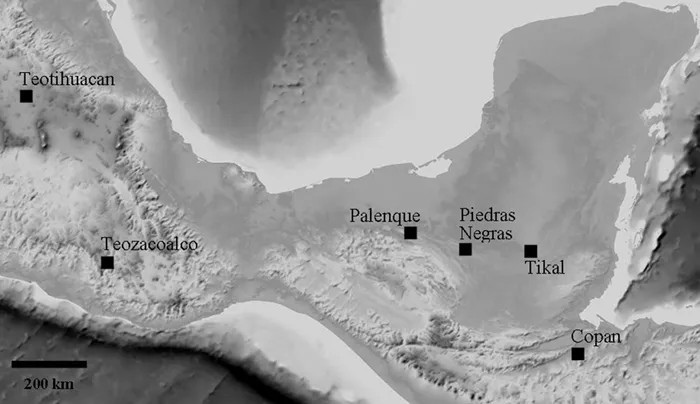
The theoretical orientation of the Anthropology Department at The Pennsylvania State University (Penn State, or PSU) has emphasized the intersection of ecology and culture, whether in the field of archaeology, biological anthropology (e.g., Baker 1978; Wood 1992), or cultural anthropology (e.g., Johnson 2003). The approaches of anthropological archaeology and human adaptation have been successfully used to orient the investigation of ancient cultures through dozens of Penn State archaeological projects over the last 50 years (figure 1.1) with the production of abundant research that has furthered the knowledge of the human condition (see Milner, this volume). Understanding of sociopolitical evolution and conflict has been advanced through an empirical approach to the studies of settlement patterns, household archaeology, demography, the environment, and mortuary studies, among other topics.
figure-c001.f001
Figure 1.1. Map of Mesoamerican sites discussed in this volume.

A Genealogical History of Approaches to Human Adaptation and Cultural Ecology

As with the culture-historical approach that preceded the New Archaeology, it seems fitting to begin with a descriptive narrative detailing the background of cultural ecology, human adaptation, and empirical research in archaeology. To better understand these approaches and their relevance to the contributions in this volume, it is informative to present the background as an academic genealogy.
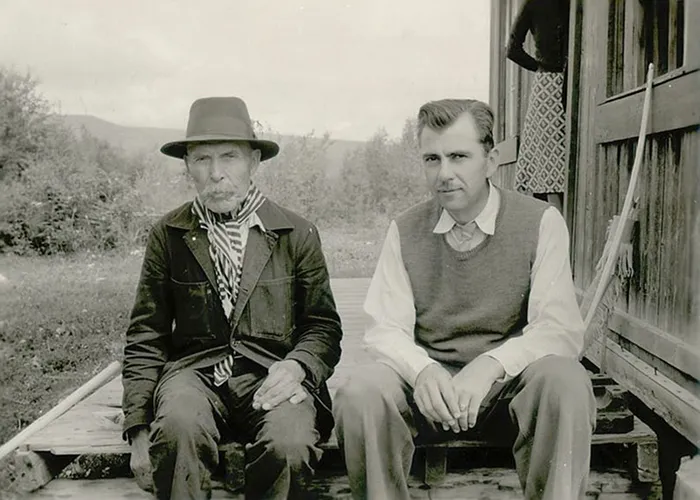
Julian Steward’s (figure 1.2) theoretical trajectory was divergent to that of his mentor, Alfred L. Kroeber. Unlike Kroeber’s reliance on the historical approach (adopted from his mentor, Franz Boas), much of Steward’s energy was devoted to the study of the environmental adaptation of specific societies. Kroeber suggested that cultures in analogous environments would often follow the same developmental stages and formulate similar responses to environmental challenges. However, Steward did not believe that cultures followed the same universal development. Rather, he proposed that cultures evolved in many distinctive patterns depending on circumstances of their environment, referring to his theory as multilinear evolution (Steward 1955). The approach Steward outlined for multilinear evolution involved an area of study he called cultural ecology—the analysis of cultural adaptations formulated by human beings to meet challenges and opportunities created by their environments.
figure-c001.f002
Figure 1.2. Julian Steward (right) with a collaborator in 1940 (Smithsonian Institution, National Anthropological Archives, INV 02871300, Photo Lot 33).
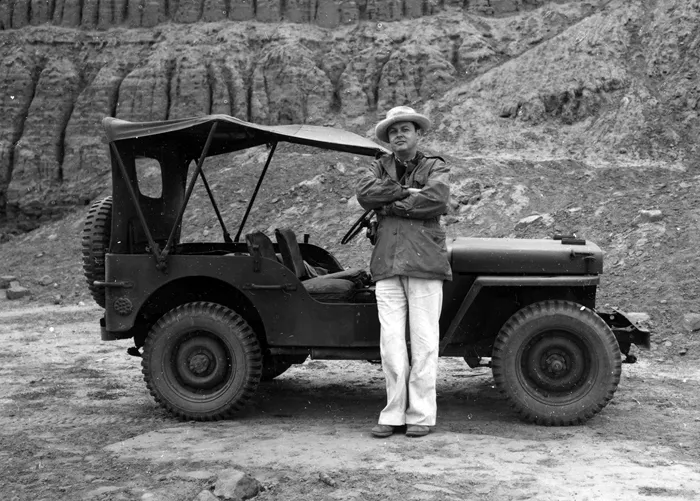
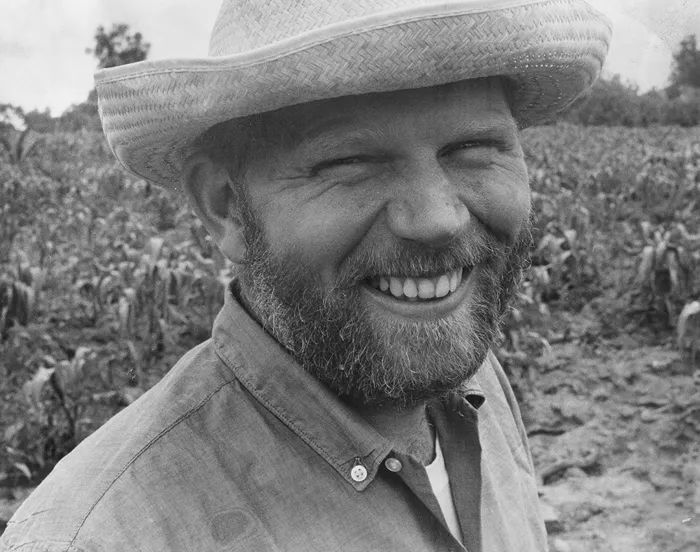
William Duncan Strong, who was also a student of Kroeber’s and a classmate of Steward’s, conducted exhaustive research in the western United States, eastern Canada, and Peru (Strong et al. 1930; Stewart and Strong 1939; Strong 1957). In 1941 Strong named his student, Gordon Willey (figure 1.3), as his field assistant for the Pachacamac Project in Peru. Strong taught Willey how to command and synthesize large amounts of data. A year after receiving his PhD in 1942, Willey had the opportunity to work for Strong’s colleague, Julian Steward, at the Smithsonian’s Bureau of American Ethnology. While there, Willey was assistant editor of Steward’s monumental Handbook of South American Indians (Steward 1940–1947). Around the same time, Steward, Strong, and Willey began planning the Viru Valley Project of Peru. Settlement archaeology relies on landscape, ecology, and site recording, but it was the concept of culture that allowed for interpretations of settlement patterns, because ultimately, it is behavior and meaning that are of utmost importance to anthropological archaeologists in understanding the past. It was during this project that Steward suggested to Willey that he make settlement study his top priority (Billman and Feinman 1999). Willey joined the faculty in the Department of Anthropology at Harvard in 1948, and in the following year he accepted William T. Sanders (figure 1.4) as his graduate student.
figure-c001.f003
Figure 1.3. Gordon Willey in the Viru Valley, Peru, ca. 1946 (courtesy of the Peabody Museum of Archaeology and Ethnology, Harvard University, PM# 2002.26.19).
figure-c001.f004
Figure 1.4. William T. Sanders on location filming the documentary La...

Table of contents

  1. Cover
  2. Contents
  3. List of Figures
  4. List of Tables
  5. Foreword
  6. Preface
  7. Section I: Introduction
  8. 1. Empirical Archaeology and Human Adaptation in Mesoamerica
  9. Section II: Water and Land
  10. 2. Water Temples and Civil Engineering at Teotihuacan, Mexico
  11. 3. Measuring the Impact of Land Cover Change at Palenque, Mexico
  12. 4. Complementarity and Synergy
  13. Section III: Population and Settlement Studies
  14. 5. Chronology, Construction, and the Abandonment Process
  15. 6. The Map Leads the Way
  16. Section IV: Reconstruction and Burial Analysis
  17. 7. The Excavation and Reconstruction of Group 8N-11, Copan, Honduras
  18. 8. The Maya in the Middle
  19. Section V: Political Economy
  20. 9. Life under the Classic Maya Turtle Dynasty of Piedras Negras, Guatemala
  21. 10. The Production, Exchange, and Consumption of Pottery Vessels during the Classic Period at Tikal, Petén, Guatemala
  22. Section VI: Reflections and Discussion
  23. 11. Forty Years in Petén, Guatemala
  24. 12. Two-Katun Archaeologist
  25. List of Contributors
  26. Index