![]()
Becoming Alignment Strong
AAlignment Strong is a planned, organization-wide, and long-range change initiative; a leadership blueprint supported and affirmed from the top. It strategically improves an organization’s problem-solving processes, efficiency, health, and competitive posture through the formulation/formation and linkage of ten integral processes, practices, and systems identified in the Vitruvian alignment schematic. The codification of these ten explicit components comprises the Da Vinci Organizational Code, which enables an organization to become and remain centered, strong, and competitively postured.
THE DA VINCI ORGANIZATIONAL CODE
Two statements by da Vinci himself dramatize this strongly aligned, organizational code:
•“People of accomplishment rarely sat back and let things happen to them. They went out and happened to things.”
•“Realize that everything connects to everything else.”
The Da Vinci Organizational Code is a series of ten components, exemplifying the emergence of leadership within an organizational system, adapting to the realities of the external environment. The ten components are sequenced as follows:
•Core Values
•Strategic Vision
•Mission/Competitive Advantage
•Leadership/Team
•Strategy
•Goals/Objectives
•Organization Structure
•Departmental Mission Statements/Value Chain
•Individual Objectives/Management Performance System
•Integrated Culture
I have observed, in thirty years of organization development practice, that there is a logical and natural design to Alignment Strong. Yet, as a third-party change agent, I have intervened at different landmarks. The purported alignment sequence may be rearranged, but having it supported and affirmed from the top is ideal, if not essential. Nevertheless, Alignment Strong participants will perceive, begin to comprehend, and welcome both an emergent/organic and deliberate/ rationalistic ebb and flow.
The Da Vinci Organizational Code I’ve created has nothing to do with a secret society (that’s a different book). Instead, it’s about applying the harmony, strength, flexibility, and sheer humanity that the Vitruvian Man schematic illustrates. I interpret it as a code for competitive leadership posture that can and should be sustained throughout an organization, while being fully aware of the ecosystem to which it must adapt.
Adjusting this alignment is the plumb line, which is defined as a vertical line directed exactly toward the earth’s center of gravity (according to the American Heritage Science Dictionary). Applied to the human body, the plumb line, symbolized by da Vinci’s vertical marking down the middle of his Vitruvian Man, mathematically results in perfect alignment and balance. In business, an accurate plumb line results in a healthy and economically fit organization that is environmentally adaptive and regenerative. Within the Da Vinci Organizational Code, a plumb line assures competitive leadership posture.
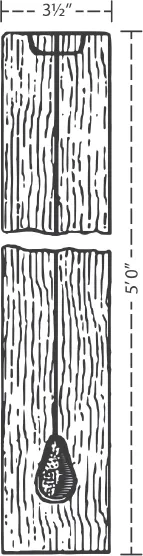
The plumb line—a simple string attached to a plumb bob (weight) used around the time of the building of the pyramids—determines true alignment.
Plumb Line Clarity
Let me dispel any unfamiliarity you may have with the term plumb line. You are not alone. The PhD organization development practitioner and university instructor who critically reviewed my manuscript before publication was unaware of the term. So were all three of my college-degree daughters. Maybe that’s the problem. They all have college degrees; a plumb line originated as a tool for construction, not in the classroom. Use of the instrument is traced back to the building of the Egyptian pyramids and is mentioned in the Old Testament.
One of my previous clients, Perry Merlo, president of Merlo Construction Company, shared with me that he was introduced to a plumb line at the age of nine by his dad, Reno Joseph Merlo, who founded the company in 1946. It’s a vertical measuring tool consisting of a string with a teardrop-shaped weight attached (a plumb bob). This simple tool is used to measure the verticality of walls, forms, and columns, to set anchor bolts, to apply wallpaper, and to pour cement, all with precise accuracy. Also, a plumb line centers highway survey telescopes called transit levels. Today, the highway crews you see in the orange jackets and plastic helmets use optical plummets instead of plumb bobs to position their transit levels along the correct lines.
Without plumb lines, things end up jagged, uneven, crooked, and awry, including highways. Alignment is critical.
How do you measure alignment in an organization?
Research by Denison Consulting shows how one can measure culture in a way that is useful to organizations because it links culture with other bottom-line performance measures. Their scrutiny affirms the Alignment Strong competitive leadership model. Culturally strong-aligned companies financially outperform their misaligned competitors. Denison’s research concludes that “culture has not only short-term impact on performance but lasting effects as a competitive edge. Specifically, this research has shown an advantage on ROA, sales growth, and market value for organizations scoring in the top 25% (vs. bottom) on the Denison Organization Culture Survey (DOCS).”1 Accordingly, by adopting Alignment Strong’s ten components, financial expectations for market share expansion and enhanced profitability are more accurate and competitive, even taking into account the headwinds of the external environment.
Let’s look again at Leonardo da Vinci’s Vitruvian Man in order to see how the ideal alignment of the human form mirrors the perfect alignment of your organization. You will also realize how this plumb line as applied to da Vinci’s Vitruvian Man represents unrivaled alignment within your company.
ALIGNMENT IDEAL
Da Vinci’s Vitruvian Man portrays perfect posture alignment. This ideal state of homeostasis causes the least amount of musculoskeletal pain and strain. Most of us have experienced lower back pain, strained muscles, dislocations, and sore joints. For your organization, these tedious pains may be translated as a lack of accountability, customer attrition, quality failures, stale culture, high turnover, and/or lackluster financial performance.
By using the Da Vinci Organizational Code—the conscious and consistent alignment of the schematic’s ten components—your organization will achieve greater ease and fluidity. Posture experts describe ideal alignment in terms of the locations of body parts used as landmarks, relative to the vertical plumb line that runs down your center. A similar plumb line within your own organization connects the opposite ends of the axis, top to bottom. The Alignment Strong leadership model assists an organization in aligning its “ten body parts,” or landmarks, to their imagined plumb line, enabling it to establish homeostasis with the external environment. In such a posture, the organization is prepared to embrace the task/demands (e.g., product innovation, competitive pricing, extraordinary customer service) of the external environment while optimizing strength and maintaining balance.
MISALIGNMENT LEGACY
The Alignment Strong leadership model requires astuteness. Without this wisdom, organizational breakdowns can occur right at the beginning or at the top of the schematic, where core values, strategic vision, and mission were formulated and articulated haphazardly. This shows that the credibility of the CEO and leadership team has been diminished. Predictably, strategy execution is then problematic; supporting goals at the middle to lower levels are not truly aligned to authentic and accurate expectations. These issues result when an organization becomes misaligned.
Consequently, operational excellence initiatives languish. Morale is impacted. Employees mentally and emotionally disengage. Turnover increases, adding to recruitment, training, and retention costs. The disruptive loss of critical employees undercuts the P&L, putting additional pressure on short-term/tactical objectives at the expense of long-term strategic goals. Consistent research confirms that most CEOs today face this dilemma of balancing long-term and short-term goals.
Misalignment, as defined by Webster’s New World Dictionary, is “the incorrect positioning or placement of something.” The juxtaposition—alignment—is “the process of adjusting parts so that they are in a proper relative position.” Clearly, the goal of a leader is to bring his or her organization into total and complete alignment.
But how do you get there?
I will show you.
ALIGNMENT FRAMEWORK
This book provides a framework—like the Vitruvian bones, ligaments, and muscles—for sorting out your experiences, and prioritizing your acquired knowledge toward organizational progress and personal development. Continual feedback and evaluation for the organization and leader underscores agile learning.
Using the Da Vinci Organizational Code, you will find your own strong alignment, complete with a plumb line of perfect balance, enabling you to adapt continually and stay buoyant amid an ever-changing external environment. You will see how things line up and how modularity reduces complexity. You will see sequential patterns. You will see interdependence. You will see how sets of patterns can mesh. You will gain strong alignment in order to be Alignment Strong.
From that position, you can regard any particular organizational process—from its founding or birthing through ultimate consequences—and look both back, in evaluation, and forward, in prediction. You can know why things are a certain way. Your wisdom will be built on quality, a summation of your experiences, and garnered knowledge.
You will care differently about things and you will know why. You will store energy through discernment, the wisdom gatekeeper. You will gain clarity and resolve through emotional commitments.
You and your organization will become aligned strongly.
![]()
Embracing Change
AAlignment Strong is akin to a developmental journey. And this entire developmental journey is based on change, which is subtle and complex. A change process is usually incremental, as contrasted to revolutionary. Parallel change initiatives may coexist as well. Leaders begin to manifest a sixth sense as they recognize the need for change. They become more knowledgeable as to where there is ripeness for change in the interior landscape of their own organization (e.g., leadership, team development, mission clarity, core values, strategic vision) or where the external impetus (e.g., threat of competition, ...