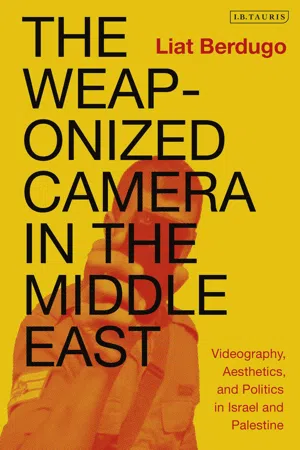
Drawing on unprecedented access to the video archives of B'Tselem, an Israeli NGO that distributes cameras to Palestinians living in the West Bank, East Jerusalem, and the Gaza Strip, Liat Berdugo lays out an argument for a visual studies approach to videographic evidence in Israel/Palestine.
Using video stills as core material, it discusses the politics of videographic evidence in Israel/Palestine by demonstrating that the conflict is one that has produced an inequality of visual rights. The book highlights visual surveillance and counter surveillance at the citizen level, how Palestinians originally filmed to "shoot back" at Israelis, who were armed with shooting power via weapons as the occupying force. It also traces how Israeli private citizens began filming back at Palestinians with their own cameras, including personal cell phone cameras, thus creating a simultaneous, echoing counter surveillance.
Complicating the notion that visual evidence alone can secure justice, the Weaponized Camera in The Middle East asks how what is seen, but also who is seeing, affects how conflicts are visually recorded. Drawing on over 5,000 hours of footage, only a fraction of which is easily accessible to the public domain, this book offers a unique perspective on the strategies and battlegrounds of the Israel/Palestine conflict.
eBook - ePub
The Weaponized Camera in the Middle East
Videography, Aesthetics, and Politics in Israel and Palestine
- 272 pages
- English
- ePUB (mobile friendly)
- Available on iOS & Android
eBook - ePub
The Weaponized Camera in the Middle East
Videography, Aesthetics, and Politics in Israel and Palestine
About this book
Information
Chapter 1
CAMERA AS REVELATORY TOOL OF EXPOSURE
CAMERA AS REVELATORY TOOL OF EXPOSURE
“Your face can be seen”
In 2017, a B’Tselem volunteer named Ahmad Ziyadah videotaped his own violent arrest by Israeli soldiers.1 The video begins: Ziyadah films as he approaches a line of three Israeli soldiers who blockade his path on a road outside the West Bank village of Madama. “Go home,” the lead Israeli soldier commands in Arabic, but Ziyadah replies that he is home already, asserting ownership of the land as his place of dwelling. A standoff between the soldiers and the videographer ensues. The commanding Israeli soldier speaks into his radio in Hebrew, stating that he is not “too bothered” by Ziyadah’s filming. However Ziyadah fails to comply with the soldiers’ order to leave, and the soldier reports through the radio that he will seize Ziyadah’s camera and detain Ziyadah, himself.
Ziyadah seems to understand that the encounter will shortly escalate. His camera, which had been fixed on the commanding Israeli soldier, pans to the two other soldiers. “Here’s the second one,” he narrates to his camera, pausing on the second soldier’s face, “and the third,” he states. Ziyadah’s narration indicates that his motive is to clearly expose the identity of all three perpetrators on camera. He creates videographic mug shots of the soldiers, cataloguing their faces as if biometrically for use against their future acts of violence.
The encounter between Ziyadah and the three Israeli soldiers does indeed escalate. The commanding soldier moves to apprehend Ziyadah’s camera, but Ziyadah refuses to give it over. The soldier then grabs the camera, and Ziyadah shouts “Not the camera!” three times in an effort to protect his instrument of revelation. As a struggle for the camera ensues, the footage degrades from its prior clarity into shaky color blurs (Figure 1.1). Finally, Ziyadah declares, hauntingly: “Your face can be seen” (Figure 1.2).
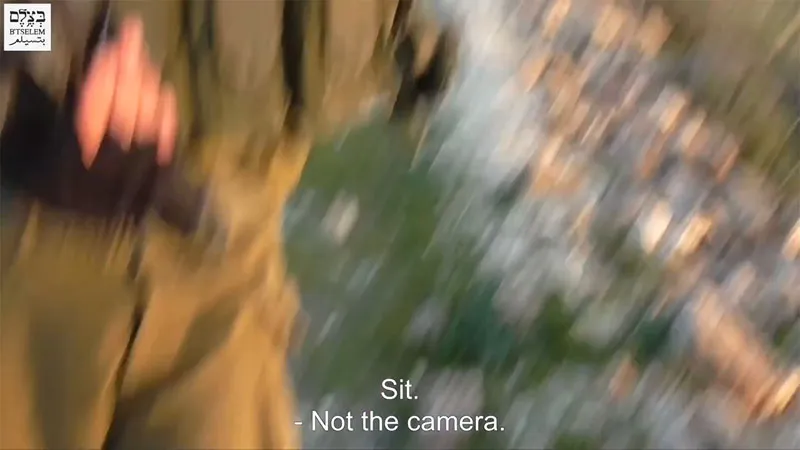
Figure 1.1 An Israeli soldier attempts to seize a B’Tselem video camera during an arrest. Location: Madama; Date: February 10, 2017; Filmed by Ahmed Ziyadah, © B’Tselem.
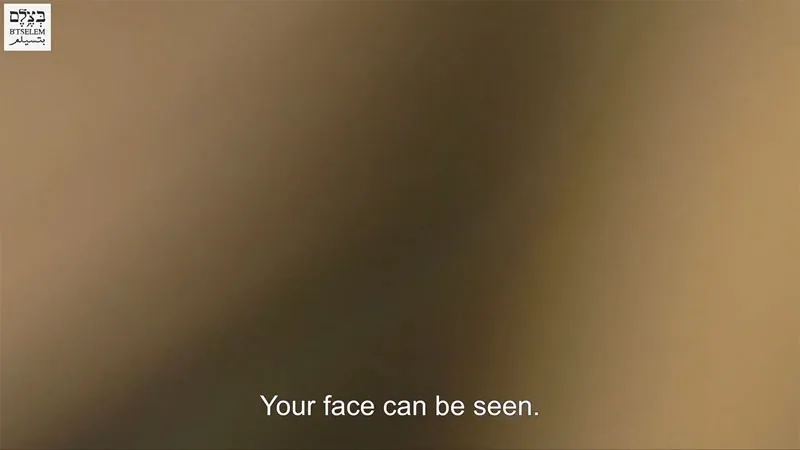
Figure 1.2 The B’Tselem Camera Project volunteer declares the exposure of an Israeli soldier as he is violently detained. Location: Madama; Date: February 10, 2017; Filmed by Ahmed Ziyadah, © B’Tselem.
Notably, the face of the Israeli soldier cannot be seen at the moment of this revelatory declaration (“Your face can be seen”). All that can be seen are fields of color, oscillating between the tan of the dirt road, the olive of the soldiers’ uniforms, and the blue-white of the sky as Ziyadah and the Israeli soldier both struggle to control the camera. Yet with this declaration, the Palestinian citizen videographer addresses the soldier with an assertion of visual exposure—an assertion that threatens and an assertion meant to carry the gravitas of visual capture.
Exposure and Human Rights
Palestinians living in Israel and the Occupied Palestinian Territories have long been subjected to a uniquely reduced condition of visuality to Jewish Israelis. Scholar Gil Hochberg calls this a condition of “public invisibility,” a public state of diminished visibility caused by removed rights.2 It is a condition of invisibility in which a person fails to appear as a person, as a citizen, or as a human being at all. It is a lack of visibility before the sphere of rights, and a condition paralleling that of a stateless refugee.
Against this backdrop, a key goal of B’Tselem’s “Shooting Back” project was exposure. The project aimed to make Palestinian invisibility visible to Jewish Israelis and to overcome “the hostility that was blocking the gaze of Israeli addressees,” as Ruthie Ginsburg put it.3 As part of its mission, B’Tselem states:
B’Tselem works to expose the injustice, violence and dispossession inherent to the regime of occupation, to deconstruct the apparatuses that enable it, and challenge its legitimacy in Israel and internationally.4
Likewise, in an acceptance address for the French Republic’s 2018 Human Rights Award, B’Tselem director Hagai El-Ad said, “We are here not only to further expose the truth—but also to bring an end to the injustice.”5 At its highest organizational levels, B’Tselem ties together the very act of exposure with possibilities of justice. Using citizen videography as a tool of visuality, B’Tselem’s project aims to turn Palestinian public invisibility into what Hochberg calls a “visible invisibility”—namely, an invisibility that is made visible to the public eye.6 A visible invisibility would expose ongoing settler-colonial violence, structural forms of racism, ethnopolitical supremacy, and religious dominance of Jewish Israeli actors over an occupied Palestinian population.
Indeed, camera-wielders seek to expose with the belief that these exposures will cause change—a belief that I call the exposure assumption. In Israel–Palestine, Palestinian videographers expose the acts of Israelis in an effort to reveal atrocities, human rights violations, illegal activities, or even acts of ordinary complicity produced by an ongoing and repressive occupation.7 More intricately, the exposure assumption is a belief that photographic or videographic exposure counters both what is unseen and what is concealed from sight. Once exposed, the subject—be it a perpetrator, an event, or an occurrence—cannot continue as before. Exposure mobilizes a virtual community of spectators into action and thus brings about change that was not possible without the act of photography or videography. Importantly, in its revelatory capacity, the camera implies that atrocities or violations have not yet been seen. Instead, the exposure assumption posits they have been concealed, hidden, or unknown to a public. The image then exposes precisely by making public.
Of course, a camera can be said to expose in two different senses, as Ginsburg has noted.8 In the first sense, a photographic exposure is a photochemical or photoelectric act that results in an image. The image produced is called an exposure. The image can be overexposed if there is too much light and underexposed if there is too little. This exposure, then, relates to the casting of light onto a photosensitive surface.
In the second sense the camera exposes when a resultant image is circulated in the visual economy and reveals its real-world referent, its index, to an audience that has not previously seen it.9 It is this latter sense of exposure that human rights organizations worldwide seek with cameras. Expose violations and justice will follow: thus goes the logic of this somewhat enhanced version of the exposure assumption. Notably, this formulation ties justice tightly to the concept of revelation and circulation within a visual economy of images.
This sense of exposure is linked to what English philosopher and social theorist Jeremy Bentham called “publicity,” which he celebrates as the “very soul of justice.”10 Publicity—meaning the circulation of material in the public sphere—works intimately with the process of the juridical. The ability to enact justice is not only tied to the visible but also justice should be served visibly. As the English aphorism goes, “Justice should not only be done, but should be seen to be done.”11 Notably, Bentham also employed his conceptions of visuality to his formulation of the panopticon, leveraging the mere possibility of visual exposure as a tool for social control of inmates within an architectural institution of state power.12
When human rights organizations capture images for circulation in the visual economy, they produce what Kevin DeLuca and Jennifer Peeples have termed an “Image Event.”13 These are events that are intended to be seen both by eyewitnesses and by virtual spectators at a distance through visual documentation. Such image events can be used in a myriad of ways to advance a human rights discourse: they can be mobilized to further a cause (as protest images), to bring about a humanitarian response (via what Robinson has termed the “CNN-effect”),14 or to provoke an imagination of a world where the visual reality was otherwise and atrocities have been prevented.
However, the act of exposure is far more complex in practice. This chapter explores the complexity of the camera’s role in exposure and the revelatory attempts of the camera in the hands of the oppressed, repressed, and those seeking change through the potential of images. It argues that images are necessary but not sufficient to spark a distant spectator’s action and instead contends that the failure of the exposure assumption makes room for viewers to acknowledge and contend with the difficult gap between representation and civic responsibility.
The Audience of Exposure
Let us return, for a moment, to Ahmed Ziyadah’s video and his haunting declaration, “Your face can be seen.” For whom does this exposure of the “face” carry weight? Is it for the soldier himself, whose identity has been revealed? Is the exposure for a possible juridical realm, in which the “face” is used as identifying evidence of a perpetrator? Or is the exposure for the spectator of this video, who will apprehend the identity of the soldier, pass judgment upon him (and the state that he represents) within the public sphere of discourse?
Exposure has an audience that is outside of the self. The act of exposure seeks an Other. Exposure seeks exteriority. Etymologically, “exposure” derives from the Latin root exponere, meaning to “place out” as if for others to see.15 Placing something “out” is a method of inviting others to “evaluate and judge what stands before them,” as Ginsburg has noted.16 Or, as Jean-Luc Nancy has written, “ ‘To be exposed’ means to be ‘posed’ in exteriority, according to an exteriority, having to do with an outside in the very intimacy of an inside.”17 At its core, exposure notions toward an exterior audience.
I posit three possible audiences for Ziyadah’s act of exposure. The first is the Israeli soldier himself. The declaration “Your face can be seen” possesses an addressee: it is proclaimed to the “you” who appears with the face and is identified by his facial features. Ziyadah’s act of exposure thus implicates the soldier as its first audience and aims to threaten him into better behavior.
The second broadly constituted audience of Ziyadah’s exposure is a juridical one—lawyers, judges, jurors, or human rights commissions. This is an audience that has been imbued by a regime with power to adjudicate and to be the “law speaker” (Latin ius dicus, from which the word “judge” is derived). However, as of 2016, B’Tselem ceased cooperation with Israeli legal investigations into the state’s wrongdoings, as it concluded that its participation in Israel’s unjust legal system only served as a fig leaf for the continued militarized occupation of the West Bank.18 Therefore, this video has not been and will likely never be mobilized for a juridical audience.
The seeing of the face that “can be seen” is an action taken not only by the Palestinian eye—Ziyadah’s eye, his very literal retinas—or even by his camera. This private Palestinian seeing does not publicly expose the soldier. Only by broadening the audience of seeing—that is, by circulating this video within a public, or what Eyal Weizman ca...
Table of contents
- Cover
- Half-Title Page
- Dedication
- Title Page
- Contents
- Figures
- Plates
- Acknowledgments
- Introduction
- Chapter 1 Camera as Revelatory Tool of Exposure
- Chapter 2 Camera As Shame-Producer
- Chapter 3 Camera as Mirror
- Chapter 4 Camera as Shield
- Chapter 5 Camera as Evidence
- Chapter 6 Camera as Weapon
- Closing Words
- Notes
- References
- Index
- Copyright Page
- Plates
Trusted by 375,005 students
Access to over 1.5 million titles for a fair monthly price.
Study more efficiently using our study tools.
Frequently asked questions
Yes, you can cancel anytime from the Subscription tab in your account settings on the Perlego website. Your subscription will stay active until the end of your current billing period. Learn how to cancel your subscription
No, books cannot be downloaded as external files, such as PDFs, for use outside of Perlego. However, you can download books within the Perlego app for offline reading on mobile or tablet. Learn how to download books offline
Perlego offers two plans: Essential and Complete
- Essential is ideal for learners and professionals who enjoy exploring a wide range of subjects. Access the Essential Library with 800,000+ trusted titles and best-sellers across business, personal growth, and the humanities. Includes unlimited reading time and Standard Read Aloud voice.
- Complete: Perfect for advanced learners and researchers needing full, unrestricted access. Unlock 1.5M+ books across hundreds of subjects, including academic and specialized titles. The Complete Plan also includes advanced features like Premium Read Aloud and Research Assistant.
We are an online textbook subscription service, where you can get access to an entire online library for less than the price of a single book per month. With over 1.5 million books across 990+ topics, we’ve got you covered! Learn about our mission
Look out for the read-aloud symbol on your next book to see if you can listen to it. The read-aloud tool reads text aloud for you, highlighting the text as it is being read. You can pause it, speed it up and slow it down. Learn more about Read Aloud
Yes! You can use the Perlego app on both iOS and Android devices to read anytime, anywhere — even offline. Perfect for commutes or when you’re on the go.
Please note we cannot support devices running on iOS 13 and Android 7 or earlier. Learn more about using the app
Please note we cannot support devices running on iOS 13 and Android 7 or earlier. Learn more about using the app
Yes, you can access The Weaponized Camera in the Middle East by Liat Berdugo in PDF and/or ePUB format, as well as other popular books in Art & Film & Video. We have over 1.5 million books available in our catalogue for you to explore.