Longlisted for the Historians of British Art (HBA) Book Prize 2022
This book on Stephen Willats pulls together key strands of his practice and threads them through histories of British cybernetics, experimental art, and urban design. For Willats, a cluster of concepts about control and feedback within living and machine systems (cybernetics) offered a new means to make art relevant.
For decades, Willats has built relationships through art with people in tower blocks, underground clubs, middle-class enclaves, and warehouses on the Isle of Dogs, to investigate their current conditions and future possibilities. Sharon Irish's study demonstrates the power of Willats's multi-media art to catalyze communication among participants and to upend ideas about "audience" and "art." Here, Irish argues that it is artists like Willats who are now the instigators of social transformation.
eBook - ePub
Concerning Stephen Willats and the Social Function of Art
Experiments in Cybernetics and Society
- 320 pages
- English
- ePUB (mobile friendly)
- Available on iOS & Android
eBook - ePub
Concerning Stephen Willats and the Social Function of Art
Experiments in Cybernetics and Society
About this book
Information
CHAPTER 1
The Omnidirectional Artist
Stephen Willats dates his artistic career from 1958, at the age of fifteen. From an early age he drew, constructed, wired, painted, molded, and bent material into visual work. Many artistic questions with which he initially grappled—the role of the artist in society, the relationship between art and audience—remained central to his work in the decades that followed. Of course, he and the times changed, so his responses to these questions altered as well. This chapter considers some early influences, tracing connections through Willats’s career up to about 1970. During this period he started publication of Control Magazine (1965–); gave visual form to theoretical concepts drawn from cybernetic and learning theories; exhibited his early electronic works at the Oxford Museum of Modern Art (1968); distributed his large-scale print, the Art + Cognition wall manifesto (1968); and taught at Ipswich Civic College and Nottingham School of Art. The materials and techniques that Willats used—screen prints, photocopied images, collages, electronic circuitry, lights, film, sound recordings—provided new media to cybernetics to explore concepts of feedback, self-organization, and regulation, for example. These media were created in relation to the audience; interactions with others crucially constituted the meaning of the works.
Willats grew up in Ealing, just west of London. This suburb was connected to other parts of the metropolis by public transport, but itself had music clubs and art schools known for their experimentation. Using London and its environs to organize his own education, Willats went to clubs, worked at avant-garde art galleries, frequented anarchist cafes, took studio art classes, discussed philosophy with other young people, and adapted surplus electronics to activate his sculptures.1 The Ealing Club opened in 1959 and became well known for jazz and blues; there, in 1959, Willats displayed some portraits of Club visitors that he had drawn.
Drian Gallery, founded by Halina Nalecz (1917–2008), had hired Willats as a gallery assistant in 1958, where he worked until 1961. In 1960, Willats also worked at Graphic Arts Studio in London, and there he learned about graphic design and silkscreen printing.2 Then, from 1961 to 1962, Willats worked on Saturdays at New Vision Centre Gallery (NVCG), which had been launched in 1956 by South African artist Denis Bowen (1921–2006). In the late 1950s and 1960s, both Drian and NVCG were showing abstract artists from across the globe who challenged the prevailing interest in romanticism and figurative art. In 1959, for instance, Argentine nonobjective artist Gyula Kosice (1924–2016) and kinetic artist Yaacov Agam (b. 1928) both exhibited at Drian, and in January 1961, a group retrospective of twenty-three British constructivists was held there; in August 1961, Stuart Brisley (b. 1933) exhibited at NVCG.3 Of Denis Bowen and the other NVCG codirectors, Marlowe Russell wrote:
It is difficult to appreciate how alienating non-figurative art was deemed to be in Britain during the postwar decades. . . . Although their role is often overlooked, Denis and his colleagues at the [gallery] made essential contributions to shaping postwar modern British art and enabling the emergence of significant trends.4
Time at these galleries enabled Willats to find mentors, read and think while awaiting visitors, and meet experimental artists, including William Green (1934–2001), who was exploring a range of aesthetic ideas and media.
Willats’s interests aligned with those of the older Denis Bowen. Margaret Garlake quoted Bowen regarding the artist’s role: “The artist is no longer an outside observer of events but an active participant in the creation of them.”5 A small 1959 ink drawing in Willats’s notebook delineated his early and similar interest in the ways in which an artist actively created events: the artist exists within the environment. In turn, the environment provides stimuli for the artist. The artist then produces an output that affects the environment. The artist’s output is altered in some form and feeds back into the environment again, as well as going in a new direction. In this early drawing, the inputs and outputs were neatly and abstractly depicted as quadrilaterals; as Willats’s career matured, he realized that information flows were not linear, but omnidirectional.
During quiet periods at the galleries, Willats read philosophy (Merleau-Ponty, for example) and learning theory. His father, Eric A. Willats, was a librarian in Islington and borrowed books for his son.6 Bowen encouraged Willats to attend Ealing College of Art, which drew a vibrant group of artists and musicians at that time, including Peter Townshend (of The Who), Ronnie Wood (eventually of The Faces and the Rolling Stones) and Freddie Mercury (of Queen), to name a few. Willats first took evening classes at Ealing with William Green (who had had an exhibit at NVCG in 1958), as well as with painter Ruskin Spear (1911–90) at Hammersmith School of Art.7 In 1962, Willats also took an evening class in printmaking at Camberwell School of Arts and Crafts in south London, with Michael Rothenstein (1908–93). He then entered the experimental Groundcourse at Ealing in 1962 for one year, on a scholarship.
Art exhibits that influenced Willats that year (1962) included one of Nicolas Schöffer’s work and a display of concrete poetry at the Institute of Contemporary Arts (ICA). Ross Ashby (in 1960), Richard Hamilton, and Basil Bernstein (in 1962) gave talks at the ICA as well.8 Willats has often noted his intellectual debt to Basil Bernstein’s ideas of restricted and elaborated codes; for Willats, Bernstein’s theories provided an entry into sociolinguistics.9 In 2017, Willats recalled this time period: “The world we were living in was actually a random variable that we were creating sense from, rather than it giving us a sense [emphasis in original].” Aligned with this sense-making was an awareness of responsibility on the artist’s part to form an intent, and articulate ramifications of that intent, including how it would be received.10
Heuristic Tools on the Move
In the early 1960s, Willats had a studio in Chelsea, where he produced sculptures that instantiated the learning and probability theories he had been reading about. Some of these sculptures were designed to engage the viewer in the artwork by inviting them to rearrange the pieces. “The artist,” Willats wrote in 1967, “might find his role as the programmer of areas of randomness triggering creative behaviour, the audience becoming all important and not just an afterthought.”11 Through triggering creativity, the viewer became a participant and their awareness of the work shifted accordingly. Observers of Willats’s works, such as Variable Shift Machine (1963), Shift Boxes Nos 1 and 2 (1964), the Visual Automatics series (1964–5), and the quite lavish Visual Transmitters (1966, 1968), could explore their visual perception and cognitive tendencies. These sculptures of flashing lights, rotors, and colorful undulations caused “a perceptual reaction.”12 The “shift boxes” engaged viewers’ perceptions and behaviors, using darkness to focus attention and drawing on our inclination to create patterns, even when the signals were randomly generated.
At Ealing, Willats worked most closely with tutors Noel Forster, Anthony Benjamin, and William Green.13 Only toward the end of the course did Willats develop a connection to the head of the Groundcourse, Roy Ascott (b. 1934). Ascott and Willats at this point were both interested in diagramming social structures, interactive performances, and feedback informed by multiple disciplines, infusing cybernetics with their social interests. Willats credited Ascott with his adaptation of the diagram as a means of visual communication.14
Ascott, head of Foundation Studies at Ealing, created the Groundcourse for learning “from the ground up.” He described the two-year course as dynamic and integrative of art, science, and technology, with many visitors to the program from a wide range of disciplines. Both artists and scientists were brought in to share their viewpoints, including scientists Frank George, W. Ross Ashby, and Gordon Pask in 1963, and artist Gustav Metzger in 1962.15 The pedagogy was “based on cybernetic thinking with the emphasis on behaviour—not the object but the process, not art as a thing but art as a system which involved people [emphasis in original].”16 Ascott in 1964 stated that the viewer “becomes a decision-maker in the symbolic world that confronts him,” stressing the importance of interventions by a spectator for extending the meaning of an artwork.17 Willats explored similar ideas in his Manual Variable constructions. Pask, together with Robin McKinnon-Wood (1931–95), founded System Research Ltd in Richmond (a borough of London), where Willats worked part-time in 1962–3 as a machine operator and as a subject in various experiments.
While experimenting with plaster shapes and blinking light boxes in the form of heuristic tools, Willats was also drawing. Emerging into adulthood in the late 1950s in London—at the same time as the city was engaged in massive rebuilding—meant that Willats had opportunities to artistically examine the tall blocks of flats (“tower blocks”) that municipalities were erecting in the postwar years. Chapman Taylor Partners’ eighteen-story Campden Hill Towers (1961) at Notting Hill Gate was erected near where Willats worked and attracted a number of graphic designers to move in18 (see Figure 1.1). This concrete frame structure, with shops on a recessed ground floor and flats above, was in an area being extensively redeveloped.19 The formal repetition of framing, the voids and solids of windows, walls and floors, and the large scale of the tower blocks rising across the city provided Willats with literal imagery that shaped the abstract concepts he was exploring formally and intellectually. Willats continued these studies of buildings for decades.20 Organic Exercise No. 6, Series 2 of 1962 is a large ink drawing on paper (Figure 1.2). The strong black lines read as building stories and bays, with thin black lines legible as fenestration. Other patterns in broad and light strokes may represent vents, louvers, mechanical structures, or balconies. The drawing is an interpretation of a high-rise structure rather than an effort to recreate an actual facade in two dimensions. The improvisational quality of the drawing is evident in the varied lines and spaces between them that set up rhythms with playful angles and atectonic forms. No one would mistake this drawing “exercise” as a portrait of Campden Hill Towers, and that was not the intention. The building’s six bays rising through eighteen stories provided lines and masses, shadows and highlights, voids and solids, which Willats used to explore with ink and paper the shapes proliferating across London.
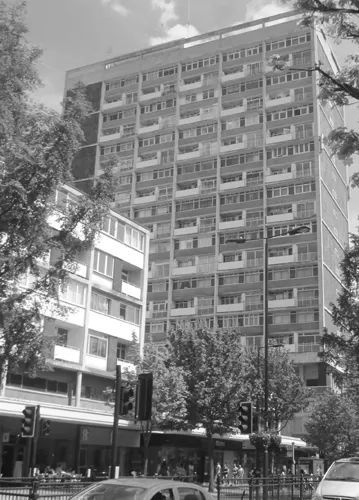
FIGURE 1.1 Campden Hill Towers, Notting Hill Gate, London, Chapman Taylor Partners, architects, 1961. Photo by Sharon Irish, 2016.
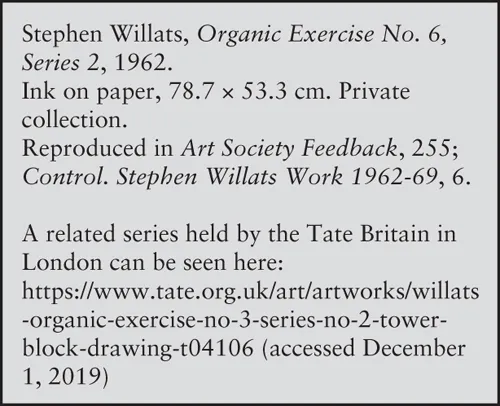
FIGURE 1.2 Stephen Willats, Organic Exercise No. 6, Series 2, 1962. Ink on paper, 78.7 × 53.3 cm. Private collection.
In July 1963, Willats moved to a studio in London Mews, in which he has worked ever since. In 1964, he was invited to exhibit his work at the Chester Beatty Research Institute, a center for cancer research on Fulham Road, near Willats’s former Chelsea studio; there was a gallery inside the hospital. This first one-man show of Wil...
Table of contents
- Cover
- Half-Title
- Title
- Contents
- List of Illustrations
- Preface
- Acknowledgements
- Introduction: New Functions for Art Practice in Society
- 1 The Omnidirectional Artist
- 2 Modeling the Social
- 3 Mutually Bound
- 4 The Art of Sociotechnical Systems
- 5 Creativity in Self-Organization
- 6 Open-Ended Urban Systems
- Conclusion
- Notes
- Bibliography
- Index
- Copyright
Trusted by 375,005 students
Access to over 1.5 million titles for a fair monthly price.
Study more efficiently using our study tools.
Frequently asked questions
Yes, you can cancel anytime from the Subscription tab in your account settings on the Perlego website. Your subscription will stay active until the end of your current billing period. Learn how to cancel your subscription
No, books cannot be downloaded as external files, such as PDFs, for use outside of Perlego. However, you can download books within the Perlego app for offline reading on mobile or tablet. Learn how to download books offline
Perlego offers two plans: Essential and Complete
- Essential is ideal for learners and professionals who enjoy exploring a wide range of subjects. Access the Essential Library with 800,000+ trusted titles and best-sellers across business, personal growth, and the humanities. Includes unlimited reading time and Standard Read Aloud voice.
- Complete: Perfect for advanced learners and researchers needing full, unrestricted access. Unlock 1.5M+ books across hundreds of subjects, including academic and specialized titles. The Complete Plan also includes advanced features like Premium Read Aloud and Research Assistant.
We are an online textbook subscription service, where you can get access to an entire online library for less than the price of a single book per month. With over 1.5 million books across 990+ topics, we’ve got you covered! Learn about our mission
Look out for the read-aloud symbol on your next book to see if you can listen to it. The read-aloud tool reads text aloud for you, highlighting the text as it is being read. You can pause it, speed it up and slow it down. Learn more about Read Aloud
Yes! You can use the Perlego app on both iOS and Android devices to read anytime, anywhere — even offline. Perfect for commutes or when you’re on the go.
Please note we cannot support devices running on iOS 13 and Android 7 or earlier. Learn more about using the app
Please note we cannot support devices running on iOS 13 and Android 7 or earlier. Learn more about using the app
Yes, you can access Concerning Stephen Willats and the Social Function of Art by Sharon Irish in PDF and/or ePUB format, as well as other popular books in Arte & Arte generale. We have over 1.5 million books available in our catalogue for you to explore.