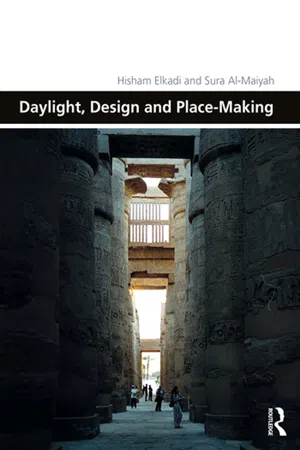
In the beginning God created the heavens and the earth. Now the earth was without shape and empty, and darkness was over the surface of the watery deep, but the Spirit of God was moving over the surface of the water. God said, “Let there be light.” And there was light! God saw that the light was good, so God separated the light from the darkness.
(Genesis 1, 2)
Verse no. 35 in the Quran also describes light in the most mystical and esoteric way. The remarkable beauty and imagery of light presented in this verse has captured the imagination and inspired philosophers for centuries. It reads,
Allah (God) is the Light of the heavens and the earth.
The example of His light is like a niche within which is a lamp,
The lamp is within glass, the glass as if it were a pearly [white] star,
Lit from [the oil of] a blessed olive tree,
Neither of the east nor of the west,
Whose oil would almost glow even if untouched by fire.
Light upon light.
Allah guides to His light whom He wills.
And Allah presents examples for the people,
and Allah is Knowing of all things.
The interpretation of this verse, as well as of some others, has received various interpretations through history, most notably by the Sufi Muslim philosopher Al Ghazâli (1058–1111). The separation of light and darkness is perceived separation as the of human souls from the Deity. Seventy thousand veils of shades of lights need to be crossed for a naked human soul to stand face to face with the naked Deity. The human soul begins at the bottom (darkness) and works up the light ladder, layer by layer to the very top. In almost all religions, from Manichaeism to Buddhism through to the Abrahamic religions, light represents purity, knowledge, and truth. Darkness, on the other hand, portrays evil, ignorance, and sinfulness. The angels, the celestial beings, are either made of, or glow of, light; they are luminous beings created by God.
Light, with its embedded values and interpretations in human psychology, has been even considered as the source of our consciousness and hence our existence. In such theories, the world is a manufactured reality where light as an energy field feeds its operations and machineries. Whether this is the case or not, one thing we are sure of is that light does reveal and frame life for us. We have been, through history, able to manipulate this energy, not only to give us the ingredients of life, but also to enrich our thoughts, excite our senses, and heighten our appreciation of beauty.
Architecture in many ways is the play of light, shade, and shadows to create a meaningful place. Whether we prefer total isolation in full darkness or absolute freedom in glorious light, we can manipulate our place with light, shade, and shadows to articulate our feelings and control our movements.
The impact of light on our visual experience can only be enhanced with the presence of its antithesis, the shadows. Von Meiss (1990) described shadow as light’s counterpart that could be defined, therefore, as “a local relative deficiency in the quality of light meeting the surface or light reflected from the surface to the eye” (Baxandall, 1995, p. 2). The nature of shadow, originated under different sky conditions, has always provided important cues that identify its counterpart qualities. The flatness of daylight due to the lack of azimuth directionality under overcast sky conditions, for instance, explains the lack of information about a directional structure in the visual scene. Directly related to shadow definition is the effect of contrast between surfaces that are directly illuminated and those that are not. Under clear sky conditions, the consternated quality of direct sunlight produces sharp, dark, and directional shadows. Due to the adaptation of the human eye to the brightness levels of the illuminated areas, the cast shadows tend to appear extremely dark and opaque. By contrast, the shadows formed under a distributed light source, such as an exterior skylight under overcast skies, are very weak, soft, and non-directional (Moore, 1991). As a result, the vertical surfaces of an urban space tend to be seen in two dimensions. The lack of reflected light from the ground under these conditions may also contribute to rather passive, poorly illuminated façades with suppressed features (Baker et al., 1993). However, the contribution of the reflected component of the ground plane varies and is mainly dependent on the area of the floorscape, the climatic conditions, and seasonal variations.
Like light, shadows can also be utilised to emphasise and accentuate forms, edges, and the features of bodies and space (Von Meiss, 1990). Whilst the shadow line from a deep recess emphasises the apparent weight and thickness of a structure, the shadow cast by the projecting features of a façade adds another layer to its configuration. The play of light and shadow and the projecting features of the façades contribute significantly to the richness of the visual experience in traditional residential streets, particularly under sunny and bright skies. The history of such interplay of light and shadow provides an insight into the development of architecture in different regions of the world.
The history of daylight in architecture cannot, therefore, be separated from understanding the play between illuminance and the lack of it. It is this interplay of light and shadows through history that develops a poetic conversation in our built environments.
The ancient civilisations
The history of daylight in architecture dates, of course, to the beginning of time, starting with creating places with natural light in a “clearing” or entering the mouths of caves. Before effective artificial lighting became available, it was particularly important to properly design with daylighting. Organised knowledge of good daylighting practices in building has a very long tradition. Perhaps the earliest culture to have constructed a lasting architecture of materialised light is that of ancient Egypt, among whose remains we find elaborately sensitised structures for gathering, and locking in, sunlight (Plummer, 1987).
Ancient Egypt
You rise glorious at the heavens’ edge, O living Aten!
You in whom all life began.
When you shone from the eastern horizon
You filled every land with your beauty.
You are lovely, great and glittering,
You go high above the lands you have made,
Embracing them with your rays,
Holding them fast for your loving Akhenaten
Though you are far away, your rays are on Earth;
Though you fill men’s eyes, your footprints are unseen.
Boats sail upstream and downstream.
At your coming every highway is opened.
Before your face fish leap up from the river.
Your rays reach the green ocean.
You it is who place the male seed in woman,
You who create the semen in man;
You quicken the son in his mother’s belly,
Soothing him so that he shall not cry.
Even in the womb you are his nurse.
You give breath to all your creation,
Opening the mouth of the newborn
And giving him nourishment.
Hymn to the Sun God Aten (verse V)
The reign of King Akhenaten (1353–1337 BC) witnessed a revolutionary change to worshipping the sun disc instead of Horus-Rā. The celebration of the sun disk extended at that time to reflect the sun in Egyptian history. Light has a very special place in Egyptian mythology. The Egyptian cosmogony of Hermopolis is based on the chaotic deep, the “breath” moving on the waters, the creatio...