Queer Sites in Global Contexts showcases a variety of cross-cultural perspectives that foreground the physical and online experiences of LGBTQ+ people living in the Caribbean, South and North America, the Middle East, Europe, and Asia.
The individual chapters—a collection of research-based texts by scholars around the world—provide twelve compelling case studies: queer sites that include buildings, digital networks, natural landscapes, urban spaces, and non-normative bodies. By prioritizing divergent histories and practices of queer life in geographies that are often othered by dominant queer studies in the West—female sex workers, people of color, indigenous populations, Latinx communities, trans identities, migrants—the book constructs thoroughly situated, nuanced discussions on queerness through a variety of research methods.
The book presents tangible examples of empirical research and practice-based work in the fields of queer and gender studies; geography, architectural, and urban theory; and media and digital culture. Responding to the critical absence surrounding experiences of non-White queer folk in Western academia, Queer Sites in Global Contexts acts as a timely resource for scholars, activists, and thinkers interested in queer placemaking practices—both spatial and digital—of diverse cultures.
On November 19, 2019 I re-shared a post on my Instagram story to let followers know about a drag show that was happening at a local straight restaurant/bar, a few streets away from where I live in the Río Piedras neighborhood of San Juan, Puerto Rico. Designed by the show’s organizer and local drag queen Anoma Lía, the poster featured the event’s details—common practice for every one of her monthly, Tuesday night gigs at Vidy’s Café. The theme of the night: Drag 102 Noche de Novatas [Newbie Night], a line-up of local queens, would be complimented by the performances of a new group of drag queens making their debut to the Río Piedras queer scene.
A push notification came through with a reply from one of my friends, @sinbuscarnos: “Did you hear about what happened last night? I think your students should be mindful of it.” @sinbuscarnos copy/pasted a Twitter link to our Instagram DM conversation, which in turn automatically generated a preview bubble displaying, “el vidys queda cancelado” [Vidy’s Café is now canceled]. “Because of this, a conversation’s being had about Vidy’s and its history of homophobia,” @sinbuscarnos said to me.
Opening the link via Instagram, I was redirected to a Twitter page overlaid on top of our DM, displaying a thread of tweets initiated by a user who wrote [in Spanish but translated to English here],
They just kicked us out because they’re homophobic and transphobic. This shouldn’t surprise you. It’s the same Rio Piedran monopoly, the owner of el 8 [Vidy’s next door venue], and other businesses. We knew this over 10 years ago and they just re-proved that.
Tweet after tweet, the Puerto Rican Twitterverse reacted, adding statements like, “@VidysCafe capitalizes on the shows of non-binary and trans people but can’t treat them with the respect they deserve. #cancelled”; and “This is a call to the queer community as a whole, boycott vidy’s for being transphobic!!!!! #boycott”. Anoma Lía also tweeted that night, apologizing for the situation and assuring followers that she would talk to the venue’s administration, while explaining why the show had to go on and asked for support: she had promised to pay the show’s performers and disclosed how she herself relied on the show’s tips as part of her income to pay her rent, while also adding that this was one of the few venues that paid drag queens.
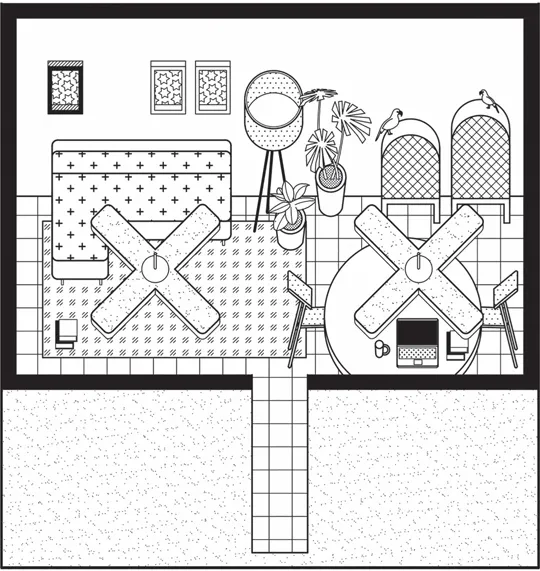
Figure 1.1 Regner Ramos’s workspace. San Juan, Puerto Rico.
Source: Drawing by Regner Ramos.
That night, despite Anoma Lía’s tweets, her usually jam-packed drag show wasn’t jam-packed.
Fragment 2: Twitter on 11/19/19
Twitter User 1
This is a call to the queer community, boycott vidy’s for being transphobic!!!!
53 Retweets101 Likes
I can’t believe that less than a week ago, Vidy’s celebrated an event for and by trans people and yesterday they did that #boycott #cancelled
6 Retweets23 Likes
Twitter User 2
fuck rainbow capitalism
fuck Vidy’s
5 Retweets20 Likes
Twitter User 3
This doesn’t tell me anything. Why did they kick you out? What happened?
0 Retweets0 Likes
Twitter User 4
Instead of asking what happened, let’s ask how we can support you
5 Retweets10 Likes
I repeat: If I go to Vidy’s, it’s to fight. I don’t want to talk or type anymore. This ended a long time ago.
1 Retweet7 Likes
Twitter User 5
I literally just found out about this via Twitter and I’m supposed to perform in today’s show. I’m feeling discombobulated not gonna lie
0 Retweets1 Like
Twitter User 6
To everyone asking about what happened last night, thanks for worrying. No, I am not okay. And I’d appreciate immensely that you stop talking to me about this for now.
2 Retweets39 Likes
[Translated from Spanish to English, and usernames have been redacted]
Fragment 3: Vidy’s Facebook post
November 19 at 4:28 PM
vidy’s statement 1
Last night we had a situation in our establishment with a person from the LGBTTQ+ community. In advance, we apologize to all parties involved because we work for our establishment to be inclusive, safe, and accessible to the public that has supported us for more than 30 years in Río Piedras.
El Vidy’s will never allow disrespect or situations that affect the safety of the LGBTTQ+ community in our business nor our public in general. We are a space for everyone so they can enjoy, without fear of who they are, but respecting our diversity.
Currently we give a space for the development of events of the LGBTTQ+ community because we recognize their talent and wish that they continue educating and visibilizing in our spaces. All events have been done with respect, for the benefit of all parties that worked towards this.
We regret the events that happened and work to be better every day. If you have any complaints or recommendations, we welcome communications to [email protected] or through our social networks. Our commitment is to provide the best service and always be in tune with the times. We aspire to a better society and that we work from our spaces and with our employees. History has shown how disastrous discrimination and harassment are, even from our spaces on Avenida Universidad, so we will work to avoid repeating it.
[Translated from Spanish to English]
Fragment 4: Laureano and Rendell
In this chapter, I discuss queer spatial practices in San Juan, Puerto Rico while accounting for the important role that social media plays in the capital’s queer culture and the way urban spaces are queered. Whereas much attention within global queer media studies today has been paid to ‘hook-up’ or dating apps such as Grindr, Scruff, and Tinder (Shield 2018; Badal et al. 2018; Whitfield et al. 2017; Mackee 2016; Goedel and Duncan 2015), I argue that in the case of the Caribbean island of Puerto Rico, the inclusion of a wider set of digital, social networks is key to understanding queer culture and its relation to the spatial politics of the island. Mitigating spatial and geographic limitations—such as a lack of places to gather, a huge suburban sprawl, a dependency on the automobile due to poor public transportation, and an increase in migration to the US mainland, particularly after the impact of Hurricane María in 2017 (a category five storm which left the island in a state of national emergency, with millions of dollars in damages to infrastructure, a total blackout, and thousands dead)—social networks such as MSN Messenger, Facebook, Tumblr, Instagram, and Twitter have played an important role in the development of our queer community and urban life throughout the past two decades.
The chapter unfolds by means of various voices, speaking through different ‘essays’ or fragments. Some of these voices include 19 (out of 37) individuals who I interviewed during 2018–2019 (most of them have been translated from Spanish to English specifically for this book). These people—who all either lived, worked, studied, or hung out in San Juan at the time—identified with a diverse range of non-normative genders and orientations. In addition, I include other voices extracted from conversations brought forth publicly on the internet, as well as my own accounts. The multiple voices presented through seven fragments gives this chapter its distinctive structure.
As part of my research method, I have adopted this fragmented mode of textual production, drawing on two key texts that, in different ways, have informed my thinking and style of writing: Jane Rendell’s Site-Writing: The Architecture of Art Criticism (2010) and Javier E. Laureano’s San Juan Gay: Conquista de un espacio urbano de 1948 a 1991 (2016). Because Rendell’s might be better known and internationally circulated, I would like to take the space here to unpack the contribution that Laureano’s book has made to Puerto Rican queer history, and how my work builds on his intervention; something that I have marked in the title of this very chapter, “San Juan Queer”.
In 2016, historian Javier E. Laureano published San Juan Gay. To date, this book is the only historical documentation of the San Juan LGBTQ+ community’s relation to the city’s spaces. Other studies related to the LGBTQ community have focused on other aspects of the queer Puerto Rican experience such as migration, literature, homophobia, and masculinity (Asencio 2011; La Fountain-Stokes 2019; Acevedo, Agosto Rosario, and Negrón 2007; Toro-Alfonso 2007; Ramírez, García-Toro, and Luis Solano-Castillo 2003; Ramírez 1999; Torres 1998). Laureano’s thorough archival research traced the spaces and events that molded gay culture during the second half of the twentieth century. According to his research, there are two major factors that have contributed to the fragmentation and loss of a history of queer architecture and spaces in Puerto Rico today, both of which are linked to the criminalization of homosexuality in the island’s recent history. The first factor is the high volume of LGBTQ Puerto Ricans who migrated to the US mainland. These migrants typically left the island looking to live their lives in cities with less stigma (such as New York), marginalization (particularly during the 1970s and 1980s) and with greater career opportunities (something which has been even more evident after the passing of Hurricane María). The ensuing queer Puerto Rican diaspora introduces a major hurdle in the attempt to recover an urban history of queerness in the island: historical documents, archives, and other material have migrated alongside their owners, dispersed throughout the US and other parts of the world.
The second major factor that contributed to the loss of a spatial history of queerness was the high death toll among the island’s LGBTQ community during the AIDS crisis (1980s and 1990s). The virus mercilessly and violently eradicated approximately 63% of those infected: 4,336 people. Laureano writes that the arrival of the virus to the island coincided with the exact moment when the Puerto Rican queer community was consolidating itself within San Juan’s urban morphology: a moment when the island’s queer culture was at its historical peak in terms of visibility within the public sphere.
The resulting fragmentation of information and documentation leads Laureano to conclude San Juan Gay with an acknowledgment that his work is not enough, making a call for further research into the Puerto Rican LGBTQ community while particularly suggesting that an urgent project we need is the construction of a digital “queer archive”. Laureano writes:
The queer archive is not homogenous or definite, it constitutes a type of subjectivity that escapes normalization and docility. This type of memory is rhizomatic, meaning it is multiple, there is no single queer archive but rather a multitude of them. However, it is necessary to address them, preserve them, safeguard their traces so that we can recover their histories as an act of justice.
(Laureano, 339)
Following this, I maintain the fractured nature of my research material, upholding that each of the seven fragments in the chapter communicates with the others through multiple configurations of prepositions—texts that engage against each other, through each other, but also with, across, under, besides, during, and towards each other. This attraction towards prepositions is something I directly borrow from architect and feminist theorist Jane Rendell in her book Site-Writing: The Architecture of Art Criticism. Rendell is interested in acknowledging the body and subjectivity of the critic when critiquing/theorizing on a piece of art or a site or a space. She considers what happens when a critic no longer writes about a piece, but rather changes that preposition to produce something new. For Rendell, where the body is in relation to the work matters:
A shift in preposition allows a different dynamic of power to be articulated where, for example, the terms of domination and subjugation indicated by ‘over’ and ‘under’ can be replaced by the equivalence suggested by ‘to’ and ‘with’. In an early attempt to define the intentions of site-writing, my own impulse was to ‘write’ rather than ‘write about’ architecture, aiming to shift the relation between the critic and her object of study from one of mastery—the object under critique—or distance—writing about an object—to one of equivalence and analogy—writing as the object. The use of analogy—the desire to inven...
Table of contents
Cover
Half Title
Series
Title
Copyright
Dedication
Contents
List of figures
Note on contributors
Acknowledgments
Introduction
1 San Juan queer: mobile apps, urban spaces, and LGBTQ identities
2 A Kindr Grindr: moderating race(ism) in techno-spaces of desire
3 Learning to become an extremophile: trans symbiosis and survival in Berlin
4 Fluid territories: intersectional subjectivities through hereditary and digital spaces
5 Queer infrastructures: LGBTQ+ networks and urban governance in global London
6 Digital dogma: relating the manifestations of religion online to the practices and experiences of Arab MSMs
7 The carceral feminism of SESTA-FOSTA: reproducing spaces of exclusion from IRL to URL
8 Queering the Map: on designing digital queer space
9 Transformismo: a spatial, cultural, and racial intervention in Chicago’s queer and Latinx communities
10 Communicating ‘race’ in a digitized gay China
11 The Kenwood Ladies’ Bathing Pond: instrumentalizing spatial imaginaries in the ‘Trans Debate’ in Britain
12 Hear, Here: preserving and sharing the history of queer stories in La Crosse, Wisconsin
Index
Trusted by 375,005 students
Access to over 1.5 million titles for a fair monthly price.
Study more efficiently using our study tools.
Frequently asked questions
Yes, you can cancel anytime from the Subscription tab in your account settings on the Perlego website. Your subscription will stay active until the end of your current billing period. Learn how to cancel your subscription
No, books cannot be downloaded as external files, such as PDFs, for use outside of Perlego. However, you can download books within the Perlego app for offline reading on mobile or tablet. Learn how to download books offline
Perlego offers two plans: Essential and Complete
Essential is ideal for learners and professionals who enjoy exploring a wide range of subjects. Access the Essential Library with 800,000+ trusted titles and best-sellers across business, personal growth, and the humanities. Includes unlimited reading time and Standard Read Aloud voice.
Complete: Perfect for advanced learners and researchers needing full, unrestricted access. Unlock 1.5M+ books across hundreds of subjects, including academic and specialized titles. The Complete Plan also includes advanced features like Premium Read Aloud and Research Assistant.
Both plans are available with monthly, semester, or annual billing cycles.
We are an online textbook subscription service, where you can get access to an entire online library for less than the price of a single book per month. With over 1.5 million books across 990+ topics, we’ve got you covered! Learn about our mission
Look out for the read-aloud symbol on your next book to see if you can listen to it. The read-aloud tool reads text aloud for you, highlighting the text as it is being read. You can pause it, speed it up and slow it down. Learn more about Read Aloud
Yes! You can use the Perlego app on both iOS and Android devices to read anytime, anywhere — even offline. Perfect for commutes or when you’re on the go. Please note we cannot support devices running on iOS 13 and Android 7 or earlier. Learn more about using the app
Yes, you can access Queer Sites in Global Contexts by Regner Ramos, Sharif Mowlabocus, Regner Ramos,Sharif Mowlabocus in PDF and/or ePUB format, as well as other popular books in Social Sciences & Sociology. We have over 1.5 million books available in our catalogue for you to explore.