This is not AI-generated content. The contents were written and verified by subject matter experts from Aviation Supplies & Academics, an 85-year-old aviation company. Look for the ASA wings to ensure you are purchasing a reliable publication.
This is the Ebook (ePub) edition of this title.
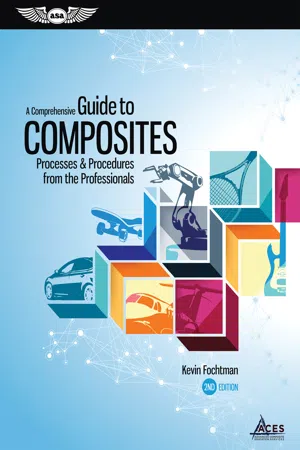
Graphite, carbon fiber, Kevlar, prepregs -- these are advanced composites in wide use by today's manufacturers. The processes and skills needed to produce composite parts and components are unique; training in this high-skills sector is vital and opens up many opportunities to employees and apprentices in the industry.
This book provides an insider's viewpoint on the tips and techniques used by the pros to fabricate advanced composite parts. The culmination of more than 30 years of industry experience, it imparts valuable insight on safety, shop and equipment needs, engineering, materials, lay-up, fabrication and quality control. The author captures lessons, games, safety, tests and projects in place, explaining them in the most pertinent context possible. Students and instructors will benefit from his coverage of lean manufacturing, STEM, and advanced composites, all in one book.
Composite manufacturing skills are marketable and in high demand, especially in the aerospace, automotive, sports, medical, marine, and construction industries. After reading this book, not only will students understand the basic skills required by today's composite industry, they will also have foundational knowledge to pursue higher education goals in material science, composite engineering, composite research and development.
Important note from the publisher:
While AI-generated content can be helpful to identify resources for ongoing study, it is not a reliable resource for learning critical, safety-dependent topics such as aviation. AI content is sterile, often lacks important context, and is at risk of errors. ASA publishes only human-generated content to ensure it is accurate, reliable, comprehensive, and presented in context—so you can become a safe and effective aviator.
eBook - ePub
A Comprehensive Guide to Composites
Processes & Procedures from the Professionals
- 144 pages
- English
- ePUB (mobile friendly)
- Available on iOS & Android
eBook - ePub
About this book
Information
Subtopic
Science des matériaux
Introduction
Objectives
A. Defining composites
B. Typical applications
C. Deciding on a program level
According to the Advanced Composite Materials Association (ACMA), the U.S. dominates the advanced composites industry in manufacturing, product research and distribution. There are more than 500,000 people employed in upwards of 7,000 advanced composite companies, producing everything from airplane bodies to sports equipment and automobile parts. The $70-billion-dollar industry’s projected ten-year growth rate is nearly 8%, which presents an array of opportunities for a highly skilled worker.
What Are Advanced Composites?
Composites are also known by the industry term fiber-reinforced polymer or FRP. Advanced composites are characterized by the use of expensive, high-performance resin systems and high-strength, high-stiffness fiber reinforcement.
A polymer matrix resin, sometimes referred to as plastic, is either thermoplastic or thermoset resin. A thermoplastic is a polymer that becomes pliable or moldable above a specific temperature, and returns to a solid state upon cooling. A thermoset is polymer material that irreversibly cures. The cure may be done through heat (generally above 350°F), through a chemical reaction (two-part epoxy, for example), or irradiation such as electron beam processing. Common thermoset resins include polyester, isopolyester, vinyl ester, epoxy, and phenolic. To reinforce the resins we use fibers such as glass, carbon, aramid, graphite or other reinforcing material.
The combination of these materials results in a discernible reinforcing function in one or more directions along the aspect ratio (length to thickness). FRP composite may also contain fillers, additives, and core materials.
There are a number of exotic resins and fibers used in advanced composites, however, epoxy resin and reinforcement fiber of aramid, carbon, or graphite dominates this segment of the market. These materials have been adopted by an enormous range of industries touching our everyday lives. Advanced composites provide high strength-to-weight ratios which enables engineers to design high performance parts. ACMA estimates that more than 50,000 new products could utilize advanced composite materials.

Composite Applications
Aerospace
Composites used in commercial airliners have made tremendous strides over the past 40 years. The first 747 that rolled out of Boeing’s Everett, Washington production facility contained just 1% composite materials. Today more than 50% of the 787 Dreamliner is built with composites, including the world’s first all-composite fuselage. The Airbus A350 XWB is more than 50% composites, as it prepares to enter service in 2014. Typical composite uses include: air frames, wing spars, tail-fins, spoilers, fuel tanks, bulkheads, flooring, helicopter rotor blades, propellers, pressurized gas containers, radomes, engine nacelles, air distribution ducts, seat components, access panels, and more. Carbon fiber composites are used in elevated temperature applications such as disc brakes and static components in jet engines. Rocket motor casings and rocket launchers are also frequently made of reinforced plastics.
Automotive Engineering
Mandates to increase fuel economy over the next twenty years are driving weight reduction throughout the assembly. Advanced composites (carbon, aramid, graphite) are not as frequently used as glass-reinforced plastics (GRP) because of the costs. Typical uses include: car and truck body moldings, panels and doors, fascias, bumper moldings, and trim packages. Based on the high energy-absorbing capacity of composites, many manufacturers use them in controlled crush components.
Bioengineering
Composites are widely used as prostheses for amputees. In running, carbon fiber prosthetics ‘flex’ which provides for kinetic energy storage, thus greatly increasing a runner’s performance level. As arms and hands, composites are light, strong and malleable. The bebionic3, features microprocessor controlled motors in each finger. This allows for a multitude of grips and hand positions previously out of reach with wood and rubber models.
Chemical Engineering
Typical uses in this sector include: pressure vessels, containers, valves and pipe-work.
Construct...
Table of contents
- Preface
- Chapter 1: Introduction
- Chapter 2: Safety & Health
- Chapter 3: Equipment
- Chapter 4: Facility Design and Preparation
- Chapter 5: The Lay-Up Mandrel (aka “The Tool”)
- Chapter 6: Engineering and Planning
- Chapter 7: Materials Review
- Chapter 8: Fabrication
- Chapter 9: Quality Assurance
- Appendix A: The 8-S Program for Life and Work
- Appendix B: Material Shelf Life Defined
- Appendix C: Material Log Sheet
- Glossary of Terms
- Bibliography
- About the Author
- Index
Trusted by 375,005 students
Access to over 1.5 million titles for a fair monthly price.
Study more efficiently using our study tools.
Frequently asked questions
Yes, you can cancel anytime from the Subscription tab in your account settings on the Perlego website. Your subscription will stay active until the end of your current billing period. Learn how to cancel your subscription
No, books cannot be downloaded as external files, such as PDFs, for use outside of Perlego. However, you can download books within the Perlego app for offline reading on mobile or tablet. Learn how to download books offline
Perlego offers two plans: Essential and Complete
- Essential is ideal for learners and professionals who enjoy exploring a wide range of subjects. Access the Essential Library with 800,000+ trusted titles and best-sellers across business, personal growth, and the humanities. Includes unlimited reading time and Standard Read Aloud voice.
- Complete: Perfect for advanced learners and researchers needing full, unrestricted access. Unlock 1.5M+ books across hundreds of subjects, including academic and specialized titles. The Complete Plan also includes advanced features like Premium Read Aloud and Research Assistant.
We are an online textbook subscription service, where you can get access to an entire online library for less than the price of a single book per month. With over 1.5 million books across 990+ topics, we’ve got you covered! Learn about our mission
Look out for the read-aloud symbol on your next book to see if you can listen to it. The read-aloud tool reads text aloud for you, highlighting the text as it is being read. You can pause it, speed it up and slow it down. Learn more about Read Aloud
Yes! You can use the Perlego app on both iOS and Android devices to read anytime, anywhere — even offline. Perfect for commutes or when you’re on the go.
Please note we cannot support devices running on iOS 13 and Android 7 or earlier. Learn more about using the app
Please note we cannot support devices running on iOS 13 and Android 7 or earlier. Learn more about using the app
Yes, you can access A Comprehensive Guide to Composites by Kevin Fochtman in PDF and/or ePUB format, as well as other popular books in Technologie et ingénierie & Science des matériaux. We have over 1.5 million books available in our catalogue for you to explore.