Jim Griffith and Bill Easum draw from decades of personal experience in planting new churches and consulting with supervisors and planters in new church starts. They have condensed their vast experiences down to ten points that account for the great majority of failures among church planters. For each point, the authors provide examples of the particular mistake and ways to avoid it. They speak in special sections to coaches and supervisors, showing them how to work with church planters to avoid the mistakes. The ten mistakes point in most cases to plans made on the basis of past experiences or unrealistic models that do not fit either the particular church planter or the mission field where the church is planned. the church planter must take the initiative to do God's work as directed by the Holy Spirit, not copy a religious superstar's methods or approach the works as defined by outside sources.
- 128 pages
- English
- ePUB (mobile friendly)
- Available on iOS & Android
eBook - ePub
Ten Most Common Mistakes Made by New Church Starts
About this book
Information
Topic
Theology & ReligionSubtopic
Christian Church1
Neglecting the Great
Commandment in Pursuit of the
Great Commission
“Yet I hold this against you: You have forsaken your first love.”
REVELATION 2:4
Donald Grey Barnhouse, the great Presbyterian preacher, talks about the time he was visiting out of town and a pastor friend invited him to tag along to a wedding reception. Of course, Barnhouse knew no one, but he enjoyed watching the people dance and celebrate the festive occasion. As the party progressed, he noticed an elegantly dressed woman sitting all alone, unnoticed by the partygoers. Barnhouse inquired of his friend, “Who is that woman?” His friend replied, “Why, she’s the bride.”
This story illustrates the number one mistake planters make—in their zeal to pursue the Great Commission, they ignore the One for whom they’re planting the church—God.
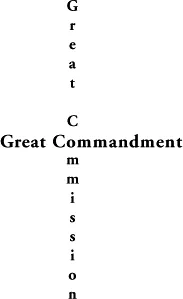
We’ve seldom met a planter who started out to put church planting before God. Most planters quickly identify God’s call as the reason for their planting a church. The problem is church planting can become so all-consuming. It seduces planters into thinking that by putting it before all else they are doing God’s will, but nothing should come before our love for God. The Great Commandment is first and foremost in the heart of any person who says they are a follower of God and a disciple of Jesus Christ. Replacing the Greatest with the Great, makes “God work” an obsession of the most damaging kind.
Most church planters are zealous about evangelism and committed to helping fulfill the Great Commission.1 Nothing wrong with that. However, we’ve found too many pastors are doing the right thing for the wrong reason. In their pursuit of the Great Commission many have made a fatal mistake—they have neglected the Greatest Commandment.2 A subtle, but deadly shift occurs first in the minds and then in the hearts of the planters—the thrill of church planting and reaching people and building a new faith community takes precedence over the personal responsibility to grow spiritually. Church planting becomes their obsession, blinding them to the reasons God called them in the first place.
The Great Commission minus the Great Commandment reduces evangelism to a vocation, a challenge, or a duty. However, the deep motivator for people who take evangelism seriously is an overwhelming love of God. The Great Commission is the inevitable outflow of a heart filled with a love for God. The impetus for planting a church has to be a desire for people to experience this love, not simply to carry out some mandate from the past.
However, too many planters are seduced into trusting their own gifts and competencies. We’ve known many planters who could plant a good church with God no more than marginally involved. What troubles us is very few planters seem concerned about this lack of the spiritual dimension. More often their motivation is to “prove someone wrong,” try a new method, dispense with some traditions, or be their own boss.
Church planting is a spiritual enterprise that can only be effectively accomplished by deeply spiritual people. Obsession with putting people in seats certainly has more appeal than setting aside time to cultivate one’s love for God, but that must be done.
Rather than rely on the program du jour, effective and faithful planters lead from a heart overflowing with a love for God. They embody this love in all their conversations. Their goal is not to get people to come to church; their goal is to introduce people to the love of God. The goal is not to tell people how bad they are, but to tell how good God’s love is.
Whenever we get with colleagues, we ask them if they’ve ever had a church recruit their services by saying, “We’re concerned that our people don’t seem to love God very much. Would you consider working with us, so that we can develop ways to increase their capacity to love?” In all our years of coaching, we’ve never received this kind of inquiry, nor have any of our colleagues. Instead the calls are always about how to get more people in the pew, or get troublemakers out of their church, or how to raise money.
Are you a church planter trying to love God, or a lover of God trying to plant a church?
Don’t get us wrong, without people your vision will perish. But without a tender heart for God, there’s no place for the vision to reside.
So, church planter, why are you so focused on planting a church? Be careful how you answer.
MISTAKE NUMBER ONE: In pursuit of the Great Commission, church planters neglect the Great(est) Commandment.
So, let us ask you a question. Are you a church planter trying to love God, or a lover of God trying to plant a church? The distinction is crucial. If you are a church planter trying to love God, God will not share glory or power with you, because God must always come first. You must be a lover of God trying to plant a church because the Great Commandment always trumps the Great Commission. We plant churches because our love for God is so strong we can’t do anything else.
You can’t put loving God to the side while you plant a church—no matter how much you want to change the world. If your heart for God doesn’t grow, your ministry will subside and you’ll find yourself spiritually shriveling up, void of any spiritual power, and that spells doom for your plant.
The Fix: Avoiding the Mistake
Planter, have you forgotten your first love, the “Bride”? If so, stop in your tracks and return to your first love. Do it now! Set aside everything and get focused once again on the Greatest Commandment.
Take a moment to focus on this word from God:
“To the angel of the church in Ephesus write: These are the words of him who holds the seven stars in his right hand and walks among the seven golden lampstands: I know your deeds, your hard work and your perseverance. I know that you cannot tolerate wicked men, that you have tested those who claim to be apostles but are not, and have found them false. You have persevered and have endured hardships for my name, and have not grown weary. Yet I hold this against you: You have forsaken your first love.” (Rev. 2:1–4).
It doesn’t matter how hard you work or how passionate you are about planting a church; if you forget the power behind the plant—the “Bride”—you’re doomed to shrivel up and die on the vine.
Great Commandment
One more thing about the Greatest Commandment—it tells us to love others as God has loved us. These others include your family. Don’t make the mistake of so many planters and ruin your marriage over planting a church. No church is worth that.
So keep the Great Commandment first and foremost in your heart. Let that be the fountain from which springs all of your passion for everything in life, including church planting. Keeping this focus will serve you well in all that you attempt in life.


A cousin to this mistake occurs in the form of “team meetings,” which involve countless hours rehearsing the vision, values, and mission statement, not to mention all the logistical discussions. The “business” of the church trumps God every time. I’ve (Jim) attended launch team meetings that began on high notes of worship, prayer, teaching from the Bible, all of which are centered on the church plant, not on God. Then, after a short break, the “real” discussion starts—has someone found a nursery coordinator, how’s the purchase of sound equipment going, or a review of the final three logo choices. You get the picture.
This mixing of God and details around the plant models the very pattern most planters are fleeing and everything they loathed about their former churches.
What’s the solution? Separate these meetings. If you’re meeting for spiritual interaction with God, then do so—and retire to the kitchen for refreshments. Meet individually with those persons responsible for various tasks in the new start. You do not need to bring people together regularly to “report” what’s happening. If you do, that group will become your first church board, although unofficially.
Moving On
The persistent failure of many church planters to understand and develop the spiritual dimension, both personal and corporate, of planting a church leads us to the second biggest mistake church planters make—failure to take seriously the various forms of opposition that inevitably accompany the work of God and God’s people. To that mistake we must now turn.
1. “Go into the world and make disciples” (Mt. 28:19–20, author’s paraphrase).
2. “Jesus said, ‘The first in importance is, “Listen, Israel: The Lord your God is one; so love the Lord God with all your passion and prayer and intelligence and energy.” And here is the second: “Love others as well as you love yourself.” There is no other commandment that ranks with these’” (Mk. 12:29–31, The Message).
2
Failing to Take Opposition Seriously
For our struggle is not against flesh and blood, but against the rulers, against the authorities, against the powers of this dark world and against the spiritual forces of evil in the heavenly realms… Pray also for me, that whenever I open my mouth, words may be given me so that I will fearlessly make known the mystery of the gospel, for which I am an ambassador in chains. Pray that I may declare it fearlessly, as I should.
EPHESIANS 6:12, 19–20
Harry launched his plant with a really good feeling. Everything had gone more smoothly than he had dreamed. The launch was successful, the crowd was turning into a community, and all seemed right with the world. Then it happened. Without warning, and from the least likely places: some of his launch team became upset that he wasn’t spending enough time with them; several neighboring pastors began complaining to Harry’s supervisor that he was encroaching on their territory and stealing their people; and his supervisor began what felt like a grand inquisition into Harry’s methods.
As if that wasn’t enough, the city stopped allowing the church to place a sign in front of the school advertising their presence on Sunday. Harry’s spouse came down with depression over all of th...
Table of contents
- Cover
- Title Page
- Copyright
- Contents
- Introduction
- Chapter 1 - Neglecting the Great Commandment in Pursuit of the Great Commission
- Chapter 2 - Failing to Take Opposition Seriously
- Chapter 3 - A Love Affair with One’s Fantasy Statement Blinds the Planter to the Mission Field
- Chapter 4 - Premature Launch
- Chapter 5 - Evangelism Ceases after the Launch
- Chapter 6 - No Plan for the Other Six Days of the Week
- Chapter 7 - Fear of Talking about Money until It Is Too Late
- Chapter 8 - Failure of the Church to Act Its Age and Its Size
- Chapter 9 - Formalizing Leadership Too Soon
- Chapter 10 - Using the “Superstar” Model as the: Paradigm for All Church Plants
- Appendix: Taking a Public Offering
Trusted by 375,005 students
Access to over 1.5 million titles for a fair monthly price.
Study more efficiently using our study tools.
Frequently asked questions
Yes, you can cancel anytime from the Subscription tab in your account settings on the Perlego website. Your subscription will stay active until the end of your current billing period. Learn how to cancel your subscription
No, books cannot be downloaded as external files, such as PDFs, for use outside of Perlego. However, you can download books within the Perlego app for offline reading on mobile or tablet. Learn how to download books offline
Perlego offers two plans: Essential and Complete
- Essential is ideal for learners and professionals who enjoy exploring a wide range of subjects. Access the Essential Library with 800,000+ trusted titles and best-sellers across business, personal growth, and the humanities. Includes unlimited reading time and Standard Read Aloud voice.
- Complete: Perfect for advanced learners and researchers needing full, unrestricted access. Unlock 1.5M+ books across hundreds of subjects, including academic and specialized titles. The Complete Plan also includes advanced features like Premium Read Aloud and Research Assistant.
We are an online textbook subscription service, where you can get access to an entire online library for less than the price of a single book per month. With over 1.5 million books across 990+ topics, we’ve got you covered! Learn about our mission
Look out for the read-aloud symbol on your next book to see if you can listen to it. The read-aloud tool reads text aloud for you, highlighting the text as it is being read. You can pause it, speed it up and slow it down. Learn more about Read Aloud
Yes! You can use the Perlego app on both iOS and Android devices to read anytime, anywhere — even offline. Perfect for commutes or when you’re on the go.
Please note we cannot support devices running on iOS 13 and Android 7 or earlier. Learn more about using the app
Please note we cannot support devices running on iOS 13 and Android 7 or earlier. Learn more about using the app
Yes, you can access Ten Most Common Mistakes Made by New Church Starts by James Griffith,William M Easum in PDF and/or ePUB format, as well as other popular books in Theology & Religion & Christian Church. We have over 1.5 million books available in our catalogue for you to explore.