The data in this book are new or updated, and will serve also as Origin of Life and evolutionary studies. Endospores of bacteria have a long history of use as model organisms in astrobiology, including survival in extreme environments and interplanetary transfer of life. Numerous other bacteria as well as archaea, lichens, fungi, algae and tiny animals (tardigrades, or water bears) are now being investigated for their tolerance to extreme conditions in simulated or real space environments. Experimental results from exposure studies on the International Space Station and space probes for up to 1.5 years are presented and discussed. Suggestions for extaterrestrial energy sources are also indicated.
Audience
Researchers and graduate students in microbiology, biochemistry, molecular biology and astrobiology, as well as anyone interested in the search for extraterrestrial life and its technical preparations.
Part I EXTREMOPHILES IN ENVIRONMENTS ON EARTH WITH SIMILARITY TO SPACE CONDITIONS
1 Volcanic Steam Vents: Life at Low pH and High Temperature
Richard L. Weiss Bizzoco* and Scott T. Kelley
Department of Biology, San Diego State University, San Diego, California, USA
Abstract
Following meteoric recharge, fundamental components of volcanic magma (heat, gases and ions) are carried by rising steam from the subsurface through porous and fractured passageways until the heated steam exits at the surface in caves and vents. Deposits accumulate as steam condenses on cooler cave ceilings and vent walls, leaving evaporites, precipitates, sublimates, and particulates in solid form along with vapor condensates. Over time these become available in sufficient quantities in matrix material to support growth of microorganisms. This study describes and characterizes some of the chemistry of steam vent habitats, the means developed to sample steam and steam deposits aseptically, using a steam condenser and a simple sample collection device. We describe and evaluate controls producing contamination-free steam and steam deposit samples for analysis. The chemistry of different types of vents studied so far includes nonsulfur, sulfur and iron. Recent iron vent and salt cave studies will be considered. These steam bathed sites harbor both known and unknown organisms, typically but not exclusively, Archaea, that have been grown or are present in quantities sufficient to identify by cloning, and then isolate and describe some of their physical features as well as the means used for enrichment and isolation. We report two recent new isolates from an extreme non-sulfur cave and an iron vent (~pH 3; 85.5 °C) and describe revised equipment used to capture steam samples from low pH high-temperature cave/vent habitats. Overall, we report on steam cave/vent habitats, sampling, enrichment, isolation and identification, as well as structural features of isolated organisms found at low pH and near maximum temperatures for these high-altitude geothermal habitats. Our understanding of the features of life in one of the most extreme and abundant habitats that provide the limits of existence will help produce a model for life beyond Earth’s extreme boundaries.
A prominent feature of many, if not most geothermal fields is the presence of abundant fumaroles (i.e., steam vents). These are especially visible early in the day when the cool air condenses the rising water vapor into smoke-like clouds. These geothermal steam vents differ chemically from each other and can be grouped into nonsulfur, sulfur and iron fumaroles [1.1]. A number of different chemical processes cause steam deposits to form and give individual vents their main chemical identities. Fumaroles can issue a greater or lesser volume of steam depending on the meteoric water supply, temperature, size, and type of vent. In turn, steam deposits are caused by condensation of steam on cooler cave or vent walls or surfaces. This allows their collection by sampling of steam cave or vent surfaces at the point of contact between steam and cave surface and yields distinctive chemical-microbiological samples. These samples result from one of the following processes: 1) evaporation of soluble ions leaving deposits of salts or evaporites; 2) oxidation of soluble Fe(II) ions to insoluble precipitates such as iron oxides, hydroxides, or oxyhydroxides; 3) gases like H2S rise with steam, becoming less soluble and form into solid sublimates that are oxidized into sulfur deposits; 4) steam and particulates travel over cave surfaces leading to adhesion or entrapment within the surface matrix; and 5) ammonia forms as vapors rising with steam [1.11] [1.13] and concentrates at the steam deposit site [1.1] comparable to the way H2S acts in acidic systems.
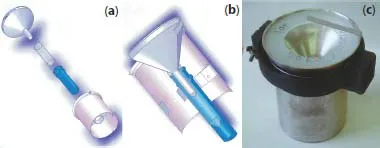
In this study we describe the use of a portable steam collector designed for sterile microbiological sampling to capture volcanic steam and microbial steam vent life forms. Steam exits fumaroles in a continuous flow or in bursts that are both hot and diffuse. This often makes collecting a sufficient quantity of steam vapors for microbiological analysis a challenging prospect. Our collector uses a difference in temperature to condense steam, resulting in hot water guided into a sterile polypropylene collection tube (Figure 1.1). The condenser captures up to 2–3 mL min-1 from vents above 90 °C, making on-site collection a practical procedure. Once we collected steam water samples, we examined the condensed water samples with DNA staining (using DAPI) for microbial life and also established cultures to grow the steam vent microorganisms from locations in Hawai’i, California, New Mexico, Wyoming and Russia. By determining the number of organisms in condensed water samples and the steam flow rate, we were able to estimate the overall fumarole dispersion, as steam vapors exited different types of fumaroles. We concentrated our efforts on the Archaea, a group of organisms known to live at pH and temperature extremes. In some extreme fumaroles, we found these to be the only organisms present. Finally, we sampled both steam and steam cave/vent deposits and found that the deposit matrix formed at the steam-cave surface contact site served as a unique concentrating device to entrap nutrients critical for the survival of specific steam vent organisms. Hawai’i has so far presented the most chemically diverse types of steam vents, making this an ideal site for examining extremophiles and Archaea as a model for life beyond Earth’s boundaries. Other collection sites provide unique steam cave/vent features that increase our understanding of fumarolic microbial life.
Figure 1.1 Steam condenser: (a) Collector body is a stainless cylinder, 1 or 2 liters with overlying funnel condenser and silicone plugged guide rod. Central collection tube holder lies near cylinder bottom. (b) Cutaway diagram showing interior of condenser parts. (c) Condenser has a fitted splash shield to prevent water loss and contamination. Mounting feature (black) allows extension pole or tripod attachment. Operation: Ascending steam contacts underside of cooler cone funnel, transfers heat to water reservoir above, steam condenses to water that drains down funnel to guide rod, and into 50 mL sterile screw cap collection tube. Following collection, sterile tube is capped. (Image credit: the authors).
1.2 Steam Cave and Vent Sites
Samples of steam were collected from fumaroles in four permanently protected geothermal areas, Lassen Volcanic National Park, Hawai’i Volcanoes National Park, Valles Caldera National Preserve, and Solfatara Crater, Italy (Table 1.1). Our Hawai’i Volcanoes National Park sites are coded, as part of our collection agreement with the park. These sites have a wide and interesting variety of chemical steam caves and vents not seen in other geothermal areas. Our choice of Hawai’i as a site with an active volcano proved to be interesting. In many ways, its basaltic lava flows resemble those of our nearby planet Mars, both chemically and physically providing a match for using Earth’s extremophile life as a model for life on other planets. Mars is one of ...
Table of contents
Cover
Table of Contents
Title page
Copyright
Preface
Part I: Extremophiles in Environments on Earth with Similarity to Space Conditions
Part II: Extremophiles in Space (International Space Station, Others) and Simulated Space Environments
Part III: Reviews of Extremophiles on Earth and in Space
Part IV: Theory and Hypotheses
Index
Trusted by 375,005 students
Access to over 1.5 million titles for a fair monthly price.
Study more efficiently using our study tools.
Frequently asked questions
Yes, you can cancel anytime from the Subscription tab in your account settings on the Perlego website. Your subscription will stay active until the end of your current billing period. Learn how to cancel your subscription
No, books cannot be downloaded as external files, such as PDFs, for use outside of Perlego. However, you can download books within the Perlego app for offline reading on mobile or tablet. Learn how to download books offline
Perlego offers two plans: Essential and Complete
Essential is ideal for learners and professionals who enjoy exploring a wide range of subjects. Access the Essential Library with 800,000+ trusted titles and best-sellers across business, personal growth, and the humanities. Includes unlimited reading time and Standard Read Aloud voice.
Complete: Perfect for advanced learners and researchers needing full, unrestricted access. Unlock 1.5M+ books across hundreds of subjects, including academic and specialized titles. The Complete Plan also includes advanced features like Premium Read Aloud and Research Assistant.
Both plans are available with monthly, semester, or annual billing cycles.
We are an online textbook subscription service, where you can get access to an entire online library for less than the price of a single book per month. With over 1.5 million books across 990+ topics, we’ve got you covered! Learn about our mission
Look out for the read-aloud symbol on your next book to see if you can listen to it. The read-aloud tool reads text aloud for you, highlighting the text as it is being read. You can pause it, speed it up and slow it down. Learn more about Read Aloud
Yes! You can use the Perlego app on both iOS and Android devices to read anytime, anywhere — even offline. Perfect for commutes or when you’re on the go. Please note we cannot support devices running on iOS 13 and Android 7 or earlier. Learn more about using the app
Yes, you can access Extremophiles as Astrobiological Models by Joseph Seckbach, Helga Stan-Lotter, Joseph Seckbach,Helga Stan-Lotter in PDF and/or ePUB format, as well as other popular books in Physical Sciences & Astronomy & Astrophysics. We have over 1.5 million books available in our catalogue for you to explore.