![]()
R. E. Lee and
July 1 at Gettysburg
ALAN T. NOLAN
Although President Jefferson Davis approved of the Army of Northern Virginia’s moving into Maryland and Pennsylvania in 1863, the Gettysburg campaign was General Robert E. Lee’s idea. In 1914, Douglas Southall Freeman wrote that Lee’s “army … had been wrecked at Gettysburg.”1 This catastrophic consequence was the result of leadership failures on the part of the army commander. The first of these was strategic; the second involved a series of errors in the execution of the campaign.
In regard to strategy, it is apparent that the drama of Gettysburg and the celebrated controversies associated with the battle have obscured the primary question about the campaign: Should it have been undertaken; should Lee have been in Pennsylvania in 1863? When questioning Lee’s campaigns and battles, one is frequently confronted with the assertion that he had no alternative. Accordingly, before addressing the question of the wisdom of Lee’s raid into Pennsylvania, one must consider whether he had an alternative.
On the eve of the campaign, during the period following Chancellorsville, Lee’s army remained near Fredericksburg on the Rappahannock facing Joseph Hooker’s Army of the Potomac, located on the north side of that river. In this situation, Lee had at least three possible options: to attack Hooker across the river, which surely would have been problematical, to assume the defensive as he had at Fredericksburg in December 1862 and was to do again in 1864; or to undertake a raid into the North. The most likely of these choices was surely the middle course—to assume the defensive and force the Army of the Potomac to come after him. Lee apologists, committed to the “no alternative” thesis, would exorcise this option. The analysis of Colonel Charles Marshall, Lee’s aide-de-camp and military secretary, is illustrative. In an effort to justify the campaign, Marshall carefully constructed the no alternative argument. He identified the same three choices for Lee set forth above. Rejecting the choice of Lee’s attacking across the river, he eliminated the defensive option by the naked assertion that had Lee stood on the defensive south of the river he “was bound to assume … the enemy would abandon his effort to dislodge him from his position at Fredericksburg, and would move his army to Richmond by water.” This, Marshall insisted, would have required Lee to retreat to defend Richmond. Based on this assumption, Marshall eliminated the defensive option and, as if by magic, concluded that there was no alternative to the Gettysburg raid. That the Federals would not have moved against Lee but would, instead, have proceeded directly to Richmond by water is simply Marshall’s hypothesis. In fact, the evidence since the 1862 withdrawal from the Peninsula pointed to the North’s commitment to the overland route.2
The Southern army’s need for food is the premise of another no alternative justification for Lee’s moving into Maryland and Pennsylvania. The South’s supply problems were severe, as Robert K. Krick has graphically stated.3 Collecting supplies and living off the Northern country was surely a motive for the campaign. But the Army of Northern Virginia was sustained in Virginia from July 1863 until April 1865, so it was not necessary to go North for food and forage. If supplying the army had really been the motive for the campaign, a raid by small, mobile forces rather than the entire army would have had considerably more promise and less risk.
Since there was an alternative, we may return to the primary question: Should Lee have undertaken the campaign at all? This question cannot be meaningfully considered in the abstract. It must be considered within the context of the larger question of the appropriate grand strategy of the war from the standpoint of the Confederacy. In this larger respect, the concern is not military strategy in the sense of a campaign or battle, that is, operational strategy. Rather, it is grand strategy, that is, to paraphrase Carl von Clausewitz, the art of employing military forces to attain the objects of war, to support the national policy of the government that raises the military forces. In evaluating a general’s performance, the only significant inquiry is whether the general’s actions related positively or negatively to the war objective and national policy of his government.
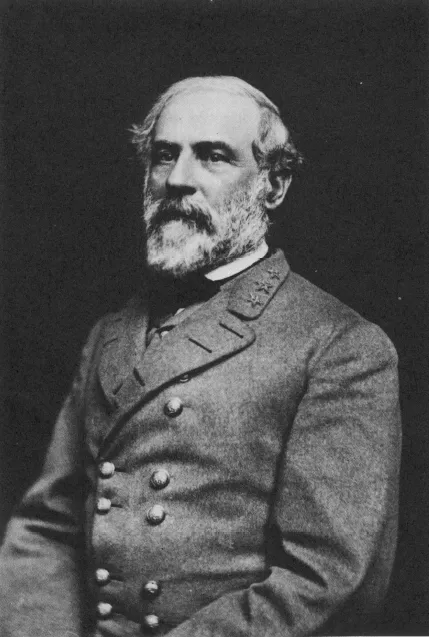
General Robert E. Lee.
(Courtesy of the Library of Congress)
The statements of two Confederate leaders describe quite different theories of the South’s grand strategy to win the war: E. Porter Alexander, chief of ordnance of the Army of Northern Virginia and later chief of artillery of Longstreet’s First Corps, has described the South’s appropriate grand strategy in this way:
When the South entered upon war with a power so immensely her superior in men & money, & all the wealth of modern resources in machinery and transportation appliances by land & sea, she could entertain but one single hope of final success. That was, that the desperation of her resistance would finally exact from her adversary such a price in blood & treasure as to exhaust the enthusiasm of its population for the objects of the war. We could not hope to conquer her. Our one chance was to wear her out.4
This fairly describes a defensive grand stategy—to wear the North out instead of trying to defeat the North militarily.
The second view was Lee’s. It may be found in two letters to President Davis. The first, written en route to Gettysburg, is dated June 25, 1863, at Williamsport, Maryland. Lee states: “It seems to me that we cannot afford to keep our troops awaiting possible movements of the enemy, but that our true policy is, as far as we can, so to employ our own forces as to give occupation to his at points of our selection.” He further argues that “our concentration at any point compels that of the enemy.” It is important that this letter was concerned with Confederate military forces on a wide range of fronts, including Virginia, North Carolina, and Kentucky. Since it contemplates drawing Federal armies to Confederate points of concentration to “give occupation” to the Federals, the letter is a prescription for military confrontation. It is therefore a statement of an offensive grand strategy, whether the confrontation at the “point of concentration” was to take the form of the tactical offensive or defensive on the part of the South. The second letter to Davis is dated July 6, 1864, shortly after the siege of Petersburg began. Lee wrote: “If we can defeat or drive the armies of the enemy from the field, we shall have peace. All our efforts and energies should be devoted to that object.”5
This, then, was Lee’s view of the way, as Clausewitz defined grand strategy, for the Confederacy “to attain the objects of [the] war.” The South was to pursue the military defeat of the North. Lee’s offensive grand strategic sense is reiterated again and again in his dispatches to Davis, the War Department, and his fellow general officers. These dispatches, in the Official Records and The Wartime Papers of R. E. Lee, bristle with offensive rhetoric and planning: “striking a blow,” “driving the enemy,” “crushing the enemy.”6
Any doubt that Lee was committed to the offensive as the South’s appropriate grand strategy is presumably eliminated when one considers the most obvious source for identifying his grand strategic thinking, the campaigns and battles of the Army of Northern Virginia. Consistent with the grand strategy that he said he believed in and repeatedly planned and advocated, Lee from the beginning embraced the offensive. Appointed to command the Army of Northern Virginia on June 1, 1862, he turned at once to the offensive, beginning with major engagements on the Peninsula—Mechanicsville, Gaines’s Mill, Frayser’s Farm, and Malvern Hill. Following on the heels of the Seven Days, the Second Bull Run campaign was strategically offensive in an operational sense although, except for Longstreet’s counterattack on August 30, it may be classified as defensive from a tactical standpoint. At Antietam Lee stood on the defensive, but the Maryland campaign was strategically offensive; his moving into Maryland assured a major battle in that state. At Chancellorsville, he chose not to retreat when confronted by the Federal pincer movement. Instead, he repeatedly attacked, and the Federals retreated back across the river.
The point is not that each of these campaigns and battles represented an error by Lee. Driving the Federals away from Richmond in 1862, for example, may have been required to maintain Southern morale and to avoid the practical consequences of losing the capital. The point is that the offensive pattern is plain. Lee believed that the South’s grand strategic role was offensive.
Lee’s grand strategy of the offensive, to defeat the North militarily as distinguished from prolonging the contest until the North gave it up, created a profound problem. It was not feasible and, indeed, was counterproductive to the Confederacy’s “objects of war.” Curiously, that Lee’s attack grand strategy was misplaced is suggested by his own awareness of factors that argued against it. The primary reason the attack grand strategy was counterproductive was numbers, and Lee was sensitive to the South’s manpower disadvantage and its implications. A letter of January 10, 1863, to Secretary of War James A. Seddon, between his victory at Fredericksburg and Ambrose E. Burnside’s abortive Mud March, reflects this awareness. “I have the honor to represent to you the absolute necessity that exists … to increase our armies, if we desire to oppose effectual resistance to the vast numbers that the enemy is now precipitating upon us,” Lee wrote. “The great increase of the enemy’s forces will augment the disparity of numbers to such a degree that victory, if attained, can only be achieved by a terrible expenditure of the most precious blood of the country.”7
Further recognition of the numbers problem appears in Lee’s letter of June 10, 1863, to Davis, after Chancellorsville and at the outset of the Gettysburg campaign:
While making the most we can of the means of resistance we possess… it is nevertheless the part of wisdom to carefully measure and husband our strength, and not to expect from it more than in the ordinary course of affairs it is capable of accomplishing. We should not therefore conceal from ourselves that our resources in men are constantly diminishing, and the disproportion in this respect between us and our enemies, if they continue united in their effort to subjugate us, is steadily augmenting. The decrease of the aggregate of this army as disclosed by the returns affords an illustration of this fact. Its effective strength varies from time to time, but the falling off in its aggregate shows that its ranks are growing weaker and that its losses are not supplied by recruits. (Emphasis added)8
The Official Records are full of Lee’s analyses of his strength problems. These communications predict that unless his army was reinforced, “the consequences may be disastrous” and include such statements as “I cannot see how we are to escape the natural military consequences of the enemy’s numerical superiority.”9
Consciousness of his numerical disadvantage, of the ever-increasing Federal disproportion, did not mute Lee’s commitment to the grand strategic offensive. Nor did that grand strategy permit his army to “husband our strength.” During the Seven Days’ battles on the Peninsula, George B. McClellan lost approximately 9,796 killed and wounded, 10.7 percent; Lee’s casualties were 19,739 men, 20.7 percent of his army. Although Federal casualties in killed and wounded at Second Bull Run exceeded Lee’s by approximately 1,000 men, the Army of Northern Virginia lost in excess of 9,000, almost 19 percent as compared to 13.3 percent for the Federals. In spite of McClellan’s ineptitude, Lee lost almost 12,000 men, 22.6 percent, at Antietam, immediately following losses in excess of 1,800 at South Mountain on September 14. McClellan’s Antietam casualties were 15.5 percent. At Chancellorsville, Lee lost almost 11,000 of 57,000 effectives, in excess of 18 percent, a much higher proportion than Joseph Hooker’s 11.4 percent.10
These statistics show the serious attrition of Lee’s limited numbers. In addition, Lee’s losses were mostly irreplaceable, as he was aware. Finally, his losses also seriously affected his army’s leadership. “The Confederates’ ability to operate as they moved northward was affected by the loss of much mid-level command,” Robert K. Krick has written. “The heart of the Confederate Army was starting to feel this difficulty for the first time just before Gettysburg. To the tremendous losses of the successful but costly campaign in the summer of 1862 … were added the victims of the dreadful bloodshed at Chancellorsville” (emphasis added).11 Clearly, the Federals’ increasingly disproportionate strength was the result of Northern reinforcements, but it was also exacerbated by Lee’s heavy, disproportionate, and irreplaceable losses. Had Lee taken the defensive, the increasing Federal manpower advantage would have been slowed.
It is appropriate to contrast the alternative grand strategy of the defensive. In 1986, historians Richard E. Beringer, Herman Hattaway, Archer Jones, and William N. Still, Jr., noted that “no Confederate army lost a major engagement because of the lack of arms, munitions, or other essential supplies.” These authors then summarized the case as follows:
By remarkable and effective efforts the agrarian South did exploit and create an industrial base that proved adequate, with the aid of imports, to maintain suitably equipped forces in the field. Since the Confederate armies suffered no crippling deficiencies in weapons or supply, their principal handicap would be their numerical inferiority. But to offset this lack, Confederates, fighting the first major war in which both sides armed themselves with rifles, had the advantage of a temporary but very significant surge in the power of the tactical defensive. In addition, the difficulties of supply in a very large and relatively thinly settled region proved a powerful aid to strengthening the strategic defensive. Other things being equal, if Confederate military leadership were competent and the Union did not display Napoleonic genius, the tactical and strategic power of the defense could offset northern numerical superiority and presumably give the Confederacy a measure of military victory adequate to maintain its independence.12
British observers sensed the feasibility of the grand strategy of the defensive as the war began. Harking back to their own experience in America, they did not see how the South could be conquered. The War of Independence analogy is not perfect, but it is illustrative. The military historian Colonel George A. Bruce has pointed out that George Washington “had a correct insight into the minds of his own people and that of the enemy, the strength of resolution of each to endure heavy burdens, looking forward with certainty to the time when the public sentiment of England, led by Chatham and Burke, would be ready to acknowledge the Colonies as an independent nation. With these views he carried on the war for seven years, all the way from Boston to Yorktown, on a generally defensive plan, the only one pointing to the final goal of independence”13 (emphasis added). The Americans, on the grand strategic defensive, lost many battles and retreated many times, but they kept forces in the field to avoid being ultimately defeated, and they won because the British decided that the struggle was either hop...