![]()
CHAPTER 1
Household War
IN FEBRUARY OF 1863, Union Colonel William Penick led a patrol of seventyfive men on a sixteen-mile trek through wintry weather from the town of Independence, Missouri, to a rebel neighborhood near Blue Springs. Decades after the war, William H. Gregg told the story of that day’s events. At the home of Colonel John Saunders, the Union patrol split into two groups: one went into the house to get their dinner, and the other rode over to Jeptha Crawford’s home to do the same. Gregg recounted that “Mrs. Saunders and her daughter prepared dinner for the half stopping there, the [Colonel] furnished feed for their horses, all went well until dinner was over … when [Colonel] Saunders was placed under guard[,] the house burned, the women not allowed a bonnet or shawl.” The course of events was the same at the Crawford home. According to Gregg, when the Union patrol reunited “they dismounted Crawford and Saunders and shot them to death.”1
In defense of these Union troops, this attack was neither random nor the culmination of pent-up rage unleashed on innocent victims. Instead, Penick’s men were merely responding to what they knew to be true: as Southern sympathizers, the Crawford and Saunders families supported the guerrilla war effort. In August of 1863, Union brigadier general Thomas Ewing, who was the commander of the District of the Border, observed that “about twothirds of the families on the occupied farms of that region are of kin to the guerrillas, and are actively and heartily engaged in feeding, clothing, and sustaining them. The presence of these families is the cause of the presence there of the guerrillas.” Ewing concluded that “they will, therefore, continue guerrilla war as long as they remain, and will stay as long as possible if their families remain.” Ewing was articulating the principal problem confronting all Union officers in Missouri. Though they would just as soon make war on other men in a “civilized” manner, their orderly battlefields were beset by the households of the enemy. More to the point, it was these households from which the guerrillas like Gregg and his cohort originated and from which they were supplied; it was from the guerrilla household that the entire war in Missouri emanated.2
Leaving home to make their war without really leaving gave young men like Gregg a decidedly unique vision of warfare. Though they received emotional farewells from their fathers and womenfolk at the thresholds of their houses, they did not go far. Unlike the millions of men in the North and South who marched hundreds of miles from home, most guerrillas began the war in their own neighborhoods. With the attacks on their homes, they were already aware that in this war their houses and their battlefields shared the same space. By staying out in the brush, close to their homes, families, and slaves, the guerrillas actively embraced this spatial dynamic, even helping to create it. Fighting within this uniquely structured system of war led the guerrillas to interpret warfare in an altogether different way than did a soldier, whose family and slaves were far from the battlefield on which they fought and died. The same forces that had informed guerrilla identity and outlook before the war remained in place. Explosions of powder, houses aflame, the charred ruins of barns, and the spilled blood of kin would only increase the intensity of these forces on the guerrillas’ character. Over the course of the war, the guerrillas became ever more attached to their households, even working to create new households where their old ones had been destroyed. Within the context of their war, it was the household more than any other force that shaped the masculine identity of the guerrilla.
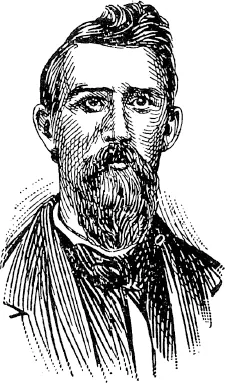
William H. Gregg was described by John Newman Edwards as a “grim Saul.” This portrait would seem to confirm that description, as he seems serious and humorless compared to some of his more flamboyant counterparts. (William E. Connelley, Quantrill and the Border Wars)
Indeed, the household offers the best perspective from which to study the men who actively engaged in this informal brand of warfare. The guerrilla war effort was not dictated by a centralized government or a bureaucratically organized and hierarchal army. Rather, the strategy, tactics, and logistics of guerrilla warfare came about as the result of the roles, relations, and identities that were established within the antebellum household. As the war raged on for years, the challenges brought against the rebel household required its structure to bend and flex into a configuration that best facilitated the war. However, the household was never broken as the primary framework through which the guerrillas and their supporters understood themselves and their war effort. For Gregg, his fellow guerrillas, and their supporters this was a war of the household and one that would ultimately be waged against enemy households.3
Before examining the household at war, we must first understand its antebellum structure. A great deal of work has been done on the Southern household during the antebellum period, with the majority of it looking at women, both white and black. Scholars of women and gender have reestablished the household as the center of the Southern world and the primary unit of production. The Southern household was ordered along lines of gender and race, explaining why white and black women were divided by the color line. The so-called “mistress” sided with her husband as they shared both class and race privilege; she operated as his lieutenant in the running of the household. Meanwhile, black women found themselves on the subjugated side of vertical gender, race, and class relations, residing at the mudsill of the household hierarchy and vulnerable to everyone in the household, especially, but not exclusively, the white men who sat at the top.4
Although they were typically smaller, the households that would support the men in the brush shared the same basic structure as the plantation households. The Gregg family was a representative example of a rebel household. Inside this household there were several white women, four slaves, and a few white men. Jacob Gregg, the head of household and William’s father, was born in Tennessee and carried his proslavery beliefs with him to Missouri, where he relied upon enslaved men and women to accumulate nearly $15,000 in real and personal estate. He had two sons in addition to William, Christopher and Jacob. These young white men were positioned below their father in the household order, but as their father aged, he most likely gave them a larger amount of responsibility. In the hierarchy of the household these men were above all other members, with the possible exception of their mother.5
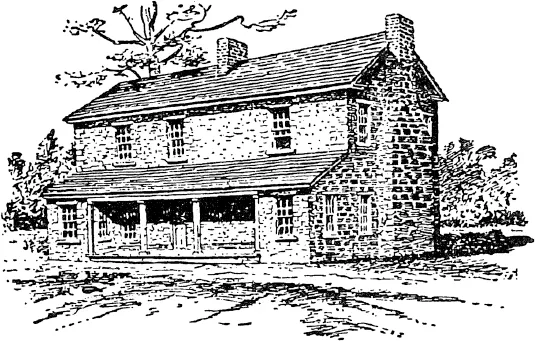
Although Morgan Walker was wealthier than most of the men whose sons became guerrillas and whose households supported the guerrilla war effort, his house gives us an idea of what the physical representation of the Southern household looked like during the war. It was outward from homes like this that the guerrilla war emanated. (William E. Connelley, Quantrill and the Border Wars)
The social location of Gregg and his brothers within the household—dependent white men—offered a great deal of potential power that was realized when the war came to Jackson County. Within his household, young men like William Gregg and his brothers had a vested interest in holding together both the household and the hierarchy of society. At twenty-two years of age in 1860, Gregg was on the cusp of owning his own land and slaves. He and the other men who went out into the brush stood to lose the most from the destruction of this system and the most to gain from its successful defense.6
Long before they would leave home to wage their war, William Gregg and the hundreds of other guerrillas understood their manhood not simply as an outgrowth of their position in the household but as a product of their labor. Gregg, a farmer, shared the most common profession among the young men who would become guerrillas. More than four-fifths of the guerrillas were farmers. These men understood agriculture in a way that allowed them to bring along a successful crop and manage a farm, infusing them with a sense of self-worth. The actual labor necessary to farm had other benefits that many professions did not. Most notably, working outdoors helped to create solid bodies for these men; it was the best peacetime training for nineteenth-century combat. Men like Gregg worked outdoors by themselves and alongside their white kin and slaves from sunup to sundown. They often worked consecutive days in the field for weeks and even months at a time. They knew how to use their bodies to move the earth and handle animals; they thought of themselves as masters of their environment. Furthermore, their knowledge of the environment became intuitive, especially their familiarity with their immediate surroundings: the fields, woods, prairies, hills, bluffs, creeks, and rivers around their homes. When they eventually traded their oxen for horses, plow straps for reins, and shovels for revolvers, they did so knowing that they had the physical and mental strength to handle the rigors of war.7
Social position and labor were important pieces of manhood, but a sense of mastery was perhaps the greatest source of power for nineteenth-century men. Although men like William Gregg hoped to be masters of many things—land, tools, animals, women, children, and, most important, themselves—their relationship with slaves offered the most tangible example of mastery for Southern white men. As Gregg worked in his fields, he would have been toiling alongside slaves, most likely the two young black men, owned by his father, who were fourteen and nineteen in 1860. Two black women, who were fifty years old and thirty years old in 1860, would have spent their time in the house or close to it. It would not have been uncommon for women, especially black women, to join the men in the fields during the planting and harvesting seasons. Gregg’s character as a slaveholder is unknown, but there were two expectations of white male slave owners that can help us understand the relationship between the guerrillas and slavery as well as their understanding of race. In the first place, whites expected that the enslaved persons behave as the subjected persons (or property) that the white community thought of them as. Second, should any of the four African Americans in bondage on the Gregg farm resist their position, it was the expectation that white men nudge, push, whip, beat, or use whatever means necessary to restore them to their “proper” place within the order of the household.8
Slavery came under siege even before the war. Though the labor system on which the slaveholding section of the country was built had been in existence for nearly two hundred years, it was a fragile thing, and the rickety institution became unstable when a third party entered the mix. This happened along the western border of Missouri in the form of the abolitionist presence in the Kansas territory on the other side of the border. African Americans often saw freedom in the form of the jayhawkers, who rode onto slaveholding farms and pulled slaves up onto wagons that took them to Kansas. James Lane, James Montgomery, John Brown, and Charles Jennison led bands of politically and morally compelled men who were willing to fight to the hilt until the institution of slavery bled out.9
This war against the Southern household was also waged from within by those who were actively trying to break from its control and begin their own households. Whether jayhawkers assisted them or not, it took action on the part of African Americans to push against the forces at play in their subjugation. When they ran away, or hopped on the back of a stolen wagon, they were actively reversing the same currents of power that held them in slavery. Though the firsthand sources on this flight to freedom are limited, the presence of black men and women in Kansas at this time illustrated the phenomenon. Furthermore, freemen and -women would fight for their new free households against their old ones. A great number of black men from Jackson County and the surrounding environs who now saw themselves as heads of households would form the First Kansas Colored Infantry, the very first black unit raised in the war. The First Kansas would go on to fight against the armies of slavery for the remainder of the war.10
Even though slavery was indeed at the base of their motives, white men in both the North and South collapsed slavery into highly gendered motivations. Men were fighting to protect their respective gender systems. One system of gender was framed by slavery, while the other was not. So, while white men from Southern places like Little Dixie set out to hold on to their property in slaves (or the property of their friends and family), they also interpreted the destruction of slavery as the destruction of much more. Pulling out the slaves from the foundation of their households would disrupt the entire structure of the unit and alter their relationships with others in the household forever, especially relationships with their women.11
The Southern community on Missouri’s western border was threatened in immediate, direct, and tangible ways. Jayhawkers not only liberated enslaved people but robbed their victims of other goods and they murdered slaveholders. Even when a distinction between jayhawkers and Union troopers could no longer be drawn, similar events continued to take place. The Northern war agenda, which was relatively moderate elsewhere in the early stages of the war, was radicalized by the direct influence of Kansas abolitionists. As a result, Union troopers in Jackson County were not only trying to identify and pacify rebels, they tended to act much as the jayhawkers had before the war. One observation of the effects of this increasingly radical occupation early on in the war came from William Gregg, who remembered, “I counted thirteen houses burning at one time on the 28th day of January 1862. This burning was done by [the jayhawker] Jennison’s men, although government officials said Jennison was not a U.S. officer and had no authority, yet he carried the U.S. flag.”12
With such devastation in mind, it is easy to see why guerrillas, as well as their supporters, conflated these attacks on the peculiar institution with assaults on other members of the household. Lizzie Hook recalled some years after the war that “[she] had never known a sorrow or a care until one day a company of Federal soldiers came to our home with wagons in which they loaded the negroes and their belongings.… We children were broken hearted and cried ourselves nearly to death.” While this was a rather romantic view of slavery, it was evident that the liberation of enslaved black men and women resonated with every member of the white family. In the same recollection, Hook also remembered an especially terrifying violation felt deeply by her own family, her future husband, and her in-laws. She recalled that “Captain Gregg’s mother wore her watch and jewelry concealed in the breast of her clothing, but alas, they finally discovered the watch chain around her neck. They tore her dress open, robbed her, almost choking her to death in trying to release the chain.”13
Young men left home to answer what they interpreted as challenges to their collective manhood: outsiders coming into their homes, taking family property, and assaulting their women. William Gregg recalled the day when he left his mother, father, sisters, and brothers to join a band of other young men who were out in the brush doing what men should do: protecting their families and their property. Whether or not Gregg wished to acknowledge it, his cohort was also out there fighting to protect their place at the top of society. He remembered fondly that on Christmas Day 1861 “James A. Hendricks, John W. Koger and myself joined Quantrill’s command then consisting, all told, of eight men, we three swelling his force to eleven. We found Quantrill at Mrs. Samuel Crumps place, on Independence and Blue Springs road, and this was the nucleus to the greatest guerrilla band the world ever produced.”14
Youth was one of defining features of “the greatest guerrilla band the world ever produced.” By and large they were sons, brothers, and husbands; they were not fathers. In an 1862 report to...