A truly remarkable book about the Blessed Mother and one of the best Catholic books we know. Based on Our Lady's feast days, it shows her various roles in our religious life, from our Redemption to our own personal salvation. Shows why Our Lord let Mary suffer and not know everything about His plans, and why Our Lady achieved such pre-eminence among all Angels and Saints. Gives a complete view of the Catholic way of life and just what it takes to save our souls. Impr. 53 pgs,
- 224 pages
- English
- ePUB (mobile friendly)
- Available on iOS & Android
eBook - ePub
The Mother of God and Her Glorious Feasts
About this book
Information
Topic
Theology & ReligionSubtopic
Christian DenominationsCHAPTER 1
The Immaculate Conception
DECEMBER 8
MANY years elapsed from the Fall of our first parents until the Redeemer promised to Adam appeared visibly in the world, and it may seem strange that God delayed so long in fulfilling His promise to send the Messias who was to restore all that was lost by the Fall. We see in this delay the manifestation of divine wisdom, which always prepares the world and the individual soul for the graces and blessings to be given to mankind. The Redeemer was to give back to the human race all that it had lost by the sin of our first parents. In reality, the Redemption has not only restored to us all we lost, but it has been so copious that we have gained far more than ever we lost, and indeed the Fall of Adam and Eve has been a great blessing for us. It is a blessing because Christ has suffered so much that it is now quite easy to reach a great degree of glory for eternity, and the very evils or temporal afflictions caused by the Fall of our first parents can now be used to increase our merit and so increase our glory for Heaven.
Millions are now enjoying the Beatific Vision of God and are filled with unspeakable happiness simply because they bore patiently, by the aid of grace, the few little sufferings of this life for a few short years. In this way we have reason to rejoice because of the goodness of Jesus, who gained so many graces for us by His sufferings and death. The delay in the coming of the Messias did not mean that those who lived before His arrival had no means of salvation. They certainly had far fewer graces than we now have, because we are members of the True Church and we have Our Lord in the Blessed Eucharist for our spiritual food or for the preservation and for the increase of grace in our souls, but still those who lived before Christ received graces in view of the merits of the Passion and Death of Our Lord.
We must go deeper than all this to find the real cause of the thousands of years of delay in the fulfillment of the promise made to Adam and Eve. In reality, it took all those years to prepare for the visible presence of the Saviour in the world. As the Redemption was to take place by suffering and as our nature was to be raised up, it was necessary that a body should be prepared in order to be capable of suffering and in order to raise up our nature to its position before the Fall. Our first parents fell from their supernatural state, and to be raised up to that state again, it was necessary that this same nature should make good what it had destroyed. It had lost Sanctifying Grace, which means a participation in the Divine Nature, and only One possessing divine nature could again elevate this nature once more. Hence the necessity of God becoming man, or of what is known as the God-Man, now called Christ. The Second Divine Person of the Blessed Trinity took up a human nature, and by suffering He restored to mankind far more than ever we lost by the Fall of Adam and Eve. In reality, the Fall of our first parents gave the opportunity for the appearance of the God-Man, or Christ, through whom so many have reached great heights of glory. We need not spend much time worrying over the Fall of Adam and Eve because it has turned out in the goodness of God to be a great blessing for us.
The Fall of our first parents merely meant that they lost the supernatural state which is called the state of grace. This state of grace raises up our nature and makes us God-like or capable of enjoying the vision of God. It makes us partakers of the Divine Nature. Our natures have to be specially raised up by grace in order to be able to enjoy God for eternity. We may compare this with a blind man in this world. He cannot see the beauties of nature, nor can he enjoy those sights produced by art for the temporal happiness of the human race. The beauty of mountain, stream and lake has no meaning for him. In much the same way, our souls must be enlightened and receive the supernatural gifts in order to enjoy the beauties of Heaven or to be able to look on the eternal beauty of God.
Adam and Eve had lost this state of grace, and as they could not transmit to others what they did not possess themselves, so their children and descendants, as they appeared in this world, were also without this supernatural state, or without Sanctifying Grace. Who was then to be the Messias, or how could any child of Adam ever be able to redeem the world? How was he to be raised up from the fallen state? As the years passed on, the children of Adam realized the loss they sustained by the Fall, and hence arose numerous sighs and prayers from many holy souls for the coming of the Messias. At length God chooses one man, called Abraham, and sets him apart from the rest of the world. He asks Abraham to offer up sacrifices and promises that from his seed the Messias will appear. The prayers and sacrifices of Abraham were all intended to fit him to be the forefather of the Messias. From the time of Moses, God specified more and more the individual people and tribe and family from whom the Messias was to spring, and all the ceremonies and sacrifices of the Jews were a preparation for the Messias.
The prayers and sufferings of all the prophets and saints of the Old Law were all intended to gain grace to fit the world and to prepare one of the children of Adam to be the Mother of the Redeemer. At length, after thousands of years and after much prayer and suffering, both the world is prepared for the appearance of Christ and a woman is found at last worthy to be His Mother. It took all those prayers and sacrifices to obtain sufficient grace to prepare one soul to be the Mother of Christ. This is what is meant by the Immaculate Conception. Original Sin merely means the loss of grace. The Immaculate Conception means the restoration of grace once more to the human race. It does not mean that the prayers of the patriarchs earned the grace of the Immaculate Conception. This was brought about by all the prayers and sufferings of the saints of the Old Law, which were united to the future sufferings of Christ, and in this way this state of grace was restored once more to one child, who was the daughter of Joachim and Ann and of the tribe of David and a descendant of Abraham. Her name was called Mary, and she was after all those years found ready to be the Mother of the Redeemer, who was to restore not only what we lost by the Fall of Adam and Eve but in reality to give us graces and blessings by His sufferings, which are capable of raising us to the highest union with God.
The Immaculate Conception, then, was the long looked-for event in the history of the world, and from this we may really trace all the good things we have received through the sufferings and death of Christ. The Immaculate Conception means that, from the first moment of her existence, Mary was filled with Sanctifying Grace and was free from the supernatural effects of Original Sin. She was still liable to suffering, but this was really the means of her cooperation in the redemption of the world. We can understand now why Mary prefers this title to all other titles. It is a beautiful title to be called Mother of God, and Comforter of the Afflicted, or Queen of Heaven. But the foundation of all these titles is her Immaculate Conception, or the possession of God's grace. We can perhaps see now why Mary is honored so much and why she is associated with her Divine Son in all works for the salvation of souls. This explains really the power of her intercession. The efficacy of prayer depends upon the amount of grace we possess in our souls. Sanctifying grace raises us up and makes us partakers of the Divine Nature. Mary was elevated higher than all the saints put together, and hence her prayers are more powerful than those of all the saints combined. The more grace we have in our souls the more right we have to ask, and almost to demand, graces from God, because God has so raised us up as to make us like Himself and to give us much of His own power This also explains the saying of the saints that all graces are given through Mary. She represents the human race, and those who will now make full use of the sufferings of Christ can appeal to Mary for grace because she has the right to be heard when she prays.
The Immaculate Conception also means that Mary was free from concupiscence or from the inclination to go to excess in the use of the faculties of nature. This freedom from concupiscence arose from the fullness of grace with which her soul was adorned. Some of the saints before their deaths also possessed practically this freedom from concupiscence because of the purity of their souls, or because of the amount of grace they had acquired by prayer and by the performance of supernatural good works. The lessons to be drawn from the reflections on the Immaculate Conception are very many, but they may all be reduced to an appreciation of the value of God's grace. We can become in some degree like unto Mary Immaculate by the preservation of the purity of our souls and by using every possible means to increase the state of Sanctifying Grace in our souls. One of the best means of doing so is to have a great devotion to Mary Immaculate and to guard above all things the angelic virtue of purity. Those who consecrate the purity of their souls to the Immaculate Virgin and offer the three Hail Marys morning and night in honor of the Immaculate Conception of Mary are making the best possible provision for the preservation of their purity. Like Mary we ought to aim at the possession of Sanctifying Grace and we should increase the state of graces in our souls by prayer, by receiving Holy Communion frequently and by the performance of works of self-denial.
O purest of creatures, sweet Mother, sweet Maid,
The one spotless womb wherein Jesus was laid,
Dark night hath come down on us, Mother, and we
Look out for thy shining, sweet Star of the Sea.
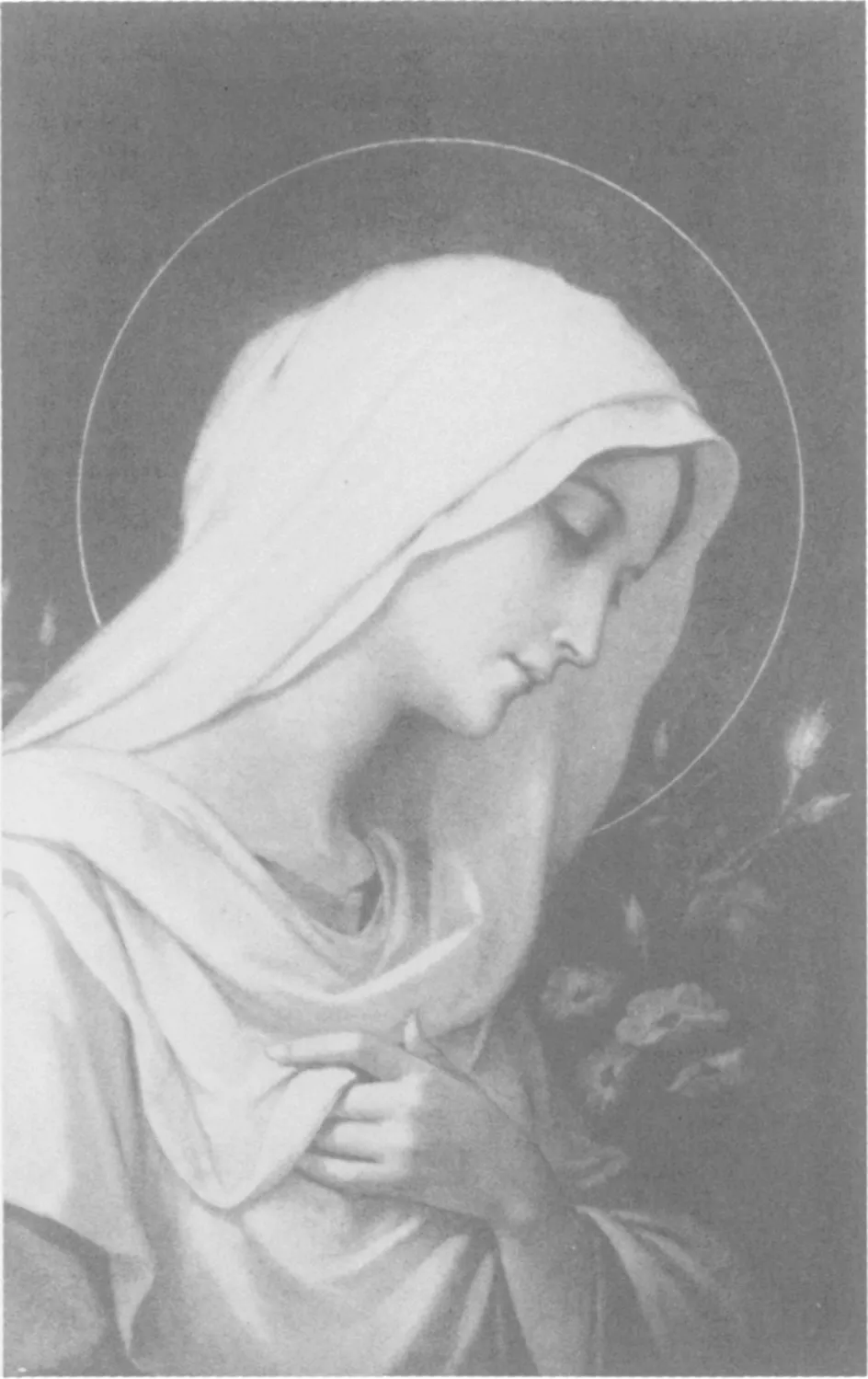
THE IMMACULATE CONCEPTION
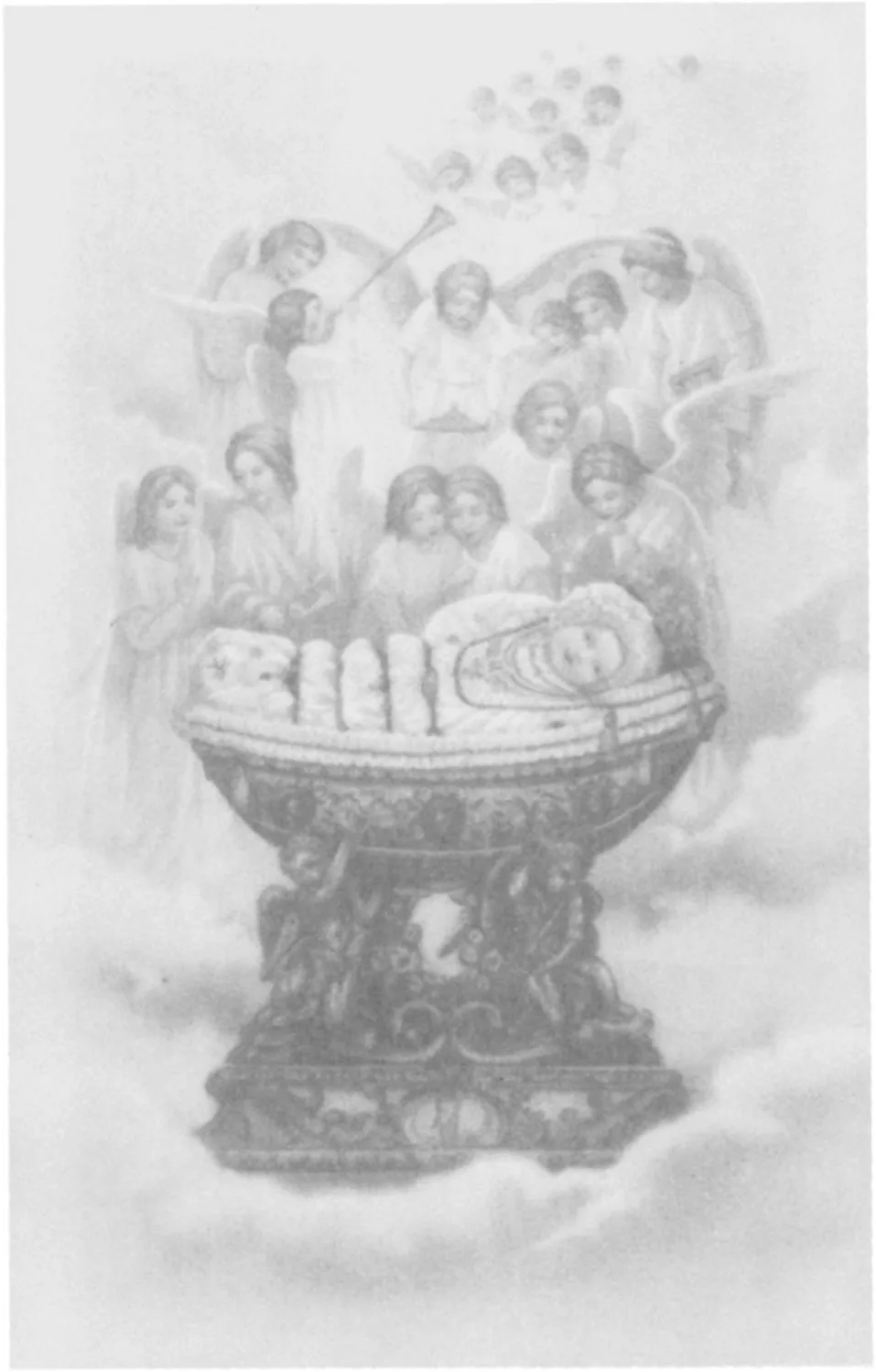
THE NATIVITY OF MARY
CHAPTER II
The Nativity of Mary
SEPTEMBER 8
ALTHOUGH we observe the holy season of Christmas as a time of joy on account of the birth of the Redeemer, yet the Feast of the Annunciation is really a more important and fundamental feast. Christmas was the visible appearance of Jesus, but the mystery of the Incarnation was really accomplished when the angel announced the glad tidings to Mary that she was to become the Mother of the Redeemer: "And the Word was made flesh and dwelt among us." It is somewhat different in the case of Our Lady, and we find that the feast of her Immaculate Conception now receives greater manifestations of joy and gladness than the feast of her Nativity. Before the birth of Jesus, the world had never witnessed such a day as the birth of Mary. As this child appears in the world on the 8th of September, the devils may not realize that their long-foretold defeat has arrived and that at last the woman has appeared who is destined to crush the head of the enemy of mankind.
The birth of Mary, like that of Jesus, was not marked by worldly wealth or grandeur. It was even more hidden than the birth of Jesus because Jesus was announced to the shepherds by the ministry of angels, but we hear of no such manifestation in the case of Mary. It is very probable that her parents, Joachim and Ann, were not blessed with worldly wealth because we never notice any great event for the salvation of souls built upon worldly grandeur or worldly power Mary had wealth beyond that of all the kings of the world or all the strength of empires. In the eyes of God worldly wealth and power are of little consequence. The power of great empires and great kingdoms will be of little value on the Last Day, and it will be found that all worldly grandeur and power were only hindrances to the acquisition of grace. We notice that God never blesses His dearest and chosen friends with abundance of worldly goods because this would only cause them to set their hearts on this world and on its glories and pleasures. We may conclude that Mary was not born amidst the luxury of wealth and power, but she possessed treasures far beyond anything that this world could ever possess. Many patriarchs and kings had come into this world before the birth of Mary, and many great events had taken place, but this was the day for which the prophets sighed and for which the patriarchs prayed for hundreds of years. This baby girl possesses within herself riches and blessings which far surpass that of the angels in Heaven. From the first moment of her conception she was free from the stain of Original Sin. This simply means that her soul was adorned with God's grace in view of her future merits and her future dignity of being the Mother of Jesus.
We may justly reflect on this child on the day of her birth. Her soul has been endowed with gifts and graces never before heard of since the dawn of creation. The soul of Eve before the Fall was certainly adorned with grace, but the beauty of the soul of Mary was as much superior to that of Eve as the sun surpasses the moon in splendor. The perfect understanding of Mary's intellect from her infancy was the delight of the Blessed Trinity and the wonder of the angels. Her acts of homage and adoration were so frequent that the state of grace in her soul was constantly being increased so that every moment of her existence she was becoming nearer and nearer to God. We have no reason to be astonished now at her power in Heaven once we realize that her state of grace was being increased every moment by her interior life.
The feast of the Nativity of Mary brings to our minds the importance and the value of the interior life of grace. Mary was the greatest of God's creatures, and yet her birth was marked by no external manifestation of power. This hidden life of Mary was intended in the designs of Providence to teach to all future ages that what really matters in the sight of God is the interior life, or the life of grace in the soul. External honors and dignities are of no consequence in the sight of God unless the soul is closely united to God by the constant increase of Sanctifying Grace. Mary is really the model of all interior souls. These are the only souls in whom God takes special delight. Mary possessed all the charms and beauties with which nature could endow her. Her intellect was bright, deep, and beautiful, and she was specially enlightened by the Holy Ghost. She possessed a charm of personality by her maidenly dignity and her modesty of look and by the beauty of her countenance, which reflected as in a mirror the interior beauty of her soul. But all these qualities were not the cause of her greatness. The state of Sanctifying Grace in her soul was so great that she might almost be said to have had a faint knowledge of the Beatific Vision, even before she took her flight to God. The great lesson to be learned from the birth of Our Lady without any external grandeur is the importance of the possession of God's grace. The Immaculate Conception meant that the soul of Mary was filled with grace from the first moment of her existence.
Some may be inclined to say that we can learn very little from the graces possessed by Mary because her Immaculate Conception raises her above all others. It is true that the Immaculate Conception places Mary above all others, even including the angels, but we must remember that in Baptism our souls are cleansed from Original Sin and we are endowed with Sanctifying Grace. We must not expect that even after Baptism our souls are equal in grace to that of Mary, even before her birth, but yet we possess the foundation of the interior life of Sanctifying Grace upon which we can build the superstructure of holiness. The cause of the loss of souls and the want of holiness is the want of appreciation of the value of Sanctifying Grace. The parents of Mary in every way cooperated with the designs of God in increasing the grace of this child of election.
What a pity that so many Christian parents, while they give some show of reverence for the gifts of the True Faith, yet by their conduct act as if grace and sin were of little consequence and that this world with its passing wealth and honors were the only thing that really mattered. We will notice parents sometimes who bew...
Table of contents
- Cover Page
- Copyright Page
- Dedication Page
- CONTENTS
- Publisher's Preface
- Author's Preface
- A Prayer-Poem
- Chapter I The Immaculate Conception
- Chapter II The Nativity of Mary
- Chapter III The Presentation of Mary in the Temple
- Chapter IV The Annunciation. The Beautiful Intellect of Mary
- Chapter V The First Christmas Night
- Chapter VI The Prophecy of Holy Simeon
- Chapter VII The Flight into Egypt
- Chapter VIII The Three Days' Loss
- Chapter IX Mary during the Hidden Life
- Chapter X The Departure of Jesus from Nazareth
- Chapter XI The Meeting with Jesus Carrying His Cross
- Chapter XII Mary Stands beneath the Cross of Jesus
- Chapter XIII The Taking Down from the Cross
- Chapter XIV The Burial of Jesus
- Chapter XV Our Lady of Lourdes
- Chapter XVI The Month of Mary
- Chapter XVII Our Lady of the Blessed Sacrament
- Chapter XVIII Our Lady Help of Christians
- Chapter XIX Our Lady of Mount Carmel
- Chapter XX The Month of the Rosary
- Chapter XXI Our Lady of La Salette
- Chapter XXII The Blue Scapular of the Immaculate Conception
- Chapter XXIII Our Lady of Good Counsel
- Chapter XXIV The Immaculate Heart of Mary
- Chapter XXV The Assumption of the Blessed Virgin
- Appendix—The Little Rosary of the Seven Dolors
Trusted by 375,005 students
Access to over 1.5 million titles for a fair monthly price.
Study more efficiently using our study tools.
Frequently asked questions
Yes, you can cancel anytime from the Subscription tab in your account settings on the Perlego website. Your subscription will stay active until the end of your current billing period. Learn how to cancel your subscription
No, books cannot be downloaded as external files, such as PDFs, for use outside of Perlego. However, you can download books within the Perlego app for offline reading on mobile or tablet. Learn how to download books offline
Perlego offers two plans: Essential and Complete
- Essential is ideal for learners and professionals who enjoy exploring a wide range of subjects. Access the Essential Library with 800,000+ trusted titles and best-sellers across business, personal growth, and the humanities. Includes unlimited reading time and Standard Read Aloud voice.
- Complete: Perfect for advanced learners and researchers needing full, unrestricted access. Unlock 1.5M+ books across hundreds of subjects, including academic and specialized titles. The Complete Plan also includes advanced features like Premium Read Aloud and Research Assistant.
We are an online textbook subscription service, where you can get access to an entire online library for less than the price of a single book per month. With over 1.5 million books across 990+ topics, we’ve got you covered! Learn about our mission
Look out for the read-aloud symbol on your next book to see if you can listen to it. The read-aloud tool reads text aloud for you, highlighting the text as it is being read. You can pause it, speed it up and slow it down. Learn more about Read Aloud
Yes! You can use the Perlego app on both iOS and Android devices to read anytime, anywhere — even offline. Perfect for commutes or when you’re on the go.
Please note we cannot support devices running on iOS 13 and Android 7 or earlier. Learn more about using the app
Please note we cannot support devices running on iOS 13 and Android 7 or earlier. Learn more about using the app
Yes, you can access The Mother of God and Her Glorious Feasts by Rev. Fr. H. O'Laverty in PDF and/or ePUB format, as well as other popular books in Theology & Religion & Christian Denominations. We have over 1.5 million books available in our catalogue for you to explore.