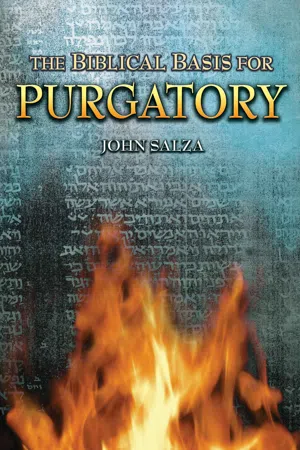
Jesus taught us about it, and for centuries the Church has faithfully defined and defended it. Protestants deny it even exists, while many Catholics fundamentally misunderstand it. It is Purgatory: that place of purifying penance where souls saved by Christ are made perfect and acceptable to spend life eternal in heaven. In The Biblical Basis For Purgatory, author and apologist John Salza (Why Catholics Cannot Be Masons) offers the definitive scriptural explanation of this distinctively Catholic doctrine. Building on the teachings of Christ and St. Paul, he shows how the existence of a place of temporal punishment after death is not only a logical extension of what we know about the reality of sin and God's justice, but is also a supreme expression of God's love and mercy. Although Purgatory is a place of mercy, its pains are real, and they are severe. This book does more than defend and explain Purgatory it provides a solid plan, drawn from the Church s perennial wisdom for conquering our sins by God s grace, while still on earth.
- 240 pages
- English
- ePUB (mobile friendly)
- Available on iOS & Android
eBook - ePub
The Biblical Basis for Purgatory
About this book
Information
Topic
Theology & ReligionSubtopic
Biblical CommentaryPURGATORY
AN INTRODUCTION
What Purgatory Is
About heaven, Scripture says, “nothing unclean shall enter it, nor anyone who practices abomination or falsehood, but only those who are written in the Lamb’s book of life” (Rev 21:27). The word for “unclean” (from the Greek, koinon) refers to a spiritual contamination that must be cleansed before we can enter into God’s presence. Habakkuk also says, “Thou who art of purer eyes than to behold evil and canst not look on wrong” (1:13). Because God is “holy, holy, holy,” He will allow nothing to enter His dwelling place with the slightest spot or blemish (cf. Rev 4:8).
The word “purgatory” comes from the Latin purgare which means to purge, purify, or make clean.15 The Church teaches that it is a place or condition of temporal punishment for departed souls who are destined for heaven but not completely purified from sin. Through this purgative process, spiritual contamination is removed and soul is made wholly pleasing to God so it can live forever with Him in heaven. The Church often refers to the souls in purgatory as the Holy Souls, the Poor Souls, or the Suffering Souls.
Purgatory is demanded by God’s justice. When we sin, we incur before God the liability of guilt and the liability of punishment. God forgives the guilt of sin through His mercy, but punishes the sinner by His justice.16 If God’s justice demands that sin be punished, it follows that one who dies with contrition for his sins but before satisfying the full punishment for them will suffer the remaining punishment in the afterlife.
Protestants often point out that the word “purgatory” is not in the Bible. On this basis, they conclude that purgatory is a false doctrine. This approach exhibits the common fallacy among Protestants, that something must be explicit in the Bible for it to be true.17 Yet the Bible never teaches such a thing. Instead, Scripture commands us to follow both the written and unwritten traditions that Christ and the apostles handed on to us through the Church.18 Nevertheless, as we will see, not only is the doctrine of purgatory part of the unwritten apostolic tradition (which we will see in the chapter on the Fathers), it is also expressly taught in Scrip-ture. Therefore, to believe in the Bible means we must also believe in purgatory
Protestants also reject purgatory on the basis that Christ has made complete satisfaction for our sins. While this sounds like a pious thing to believe, it’s misleading.
It is true that the sacrifice of Jesus Christ was more than sufficient to atone for all punishment (temporal and eternal) due to sin. The Passion of Christ was a superabundant work of satisfaction for the sins of the whole world. Christ gave the Father more than was necessary to compensate for our sins. As the Apostle John says, “And he is the propitiation for our sins: and not for ours only, but also for those of the whole world.”19 Both Catholics and Protestants agree on this elementary point.
However, although Christ alone has made satisfaction for the eternal punishment for sin, He specifically requires us to participate in making satisfaction for the temporal punishments for our sin. Temporal punishments refer to the personal, social, ecclesial, and cosmic effects that our sins cause, which must be remedied by virtue of God’s divine justice. We participate with Christ by enduring the trials and sufferings of this life, as well as through acts of penance.
This is why Paul says, “Now I rejoice in my sufferings for your sake, and in my flesh I complete what is lacking in Christ’s afflictions for the sake of his body, that is, the church” (Col 1:24). If Christ made complete atonement for our sins, then how can Paul say that there is something “lacking” in His sufferings? There cannot be, insofar as the remission of the eternal punishment is concerned. Only a being with eternal power could atone for eternal punishment, and that is exactly what Christ did for us. It necessarily follows, then, that what is “lacking in Christ’s afflictions” refers to the debt of temporal punishment that we must suffer, in justice, for our sins. According to Paul, we are able to “complete” or satisfy this punishment that God imposes when our own sufferings are joined to those of Christ. As we will see, God requires this suffering because it restores the sinner to the equality of justice and allows the sinner to achieve the holiness that is required for heaven (cf. Heb 12:10).
Because making satisfaction for our debt of punishment is difficult, Scripture warns us to fear the consequences of forgiven sin: “Be not without fear about sin forgiven.”20 Of course, if there were no consequences to forgiven sin, there would be nothing to fear. If we do make sufficient satisfaction in this life for our many sins and die in a state of grace, we will go straight to heaven. However, if in this life we don’t “complete” what is “lacking in Christ’s afflictions” for our sins, we will do so in the next, which is purgatory. As Paul says regarding God’s judgment, “It is a fearful thing to fall into the hands of the living God” (Heb 10:31).
The Church’s Teaching on Purgatory
Before we analyze the scriptures, let’s see what the Church says about purgatory. In the Catechism of the Catholic Church we read:
All who die in God’s grace and friendship, but still imperfectly purified, are indeed assured of their eternal salvation; but after death they undergo purification, so as to achieve the holiness necessary to enter the joy of heaven. The Church gives the name purgatory to this final purification of the elect, which is entirely different from the punishment of the damned. The Church formulated her doctrine of faith on purgatory especially at the Councils of Florence and Trent.
Based on the teaching of Scripture and the Church Fathers, the Council of Florence (1439) defined purgatory as follows:
It is likewise defined, that, if those truly penitent have departed in the love of God, before they have made satisfaction by worthy fruits of penance for sins of commission and omission, the souls of these are cleansed after death by purgatorial punishments . . .22
The Council of Trent (1563) declared:
Since the Catholic Church, instructed by the Holy Spirit, in conformity with the sacred writings and the ancient tradition of the Fathers in sacred councils, and very recently in this ecumenical Synod, has taught that there is a purgatory, and that the souls detained there are assisted by the suffrages of the faithful and especially by the acceptable sacrifice of the altar, the holy Synod commands the bishops that they insist that the sound doctrine of purgatory, which has been transmitted by the holy Fathers and the holy Councils, be believed by the faithful of Christ, be maintained, taught, and everywhere preached.23
Trent continued:
If anyone shall say that after the reception of the grace of justification, to every penitent sinner the guilt is so remitted and the penalty of eternal punishment so blotted out that no penalty of temporal punishment remains to be discharged either in this world or in the world to come in purgatory before the entrance to the kingdom of heaven can be opened: let him be anathema.24
For the Heaven-Bound
Based on these definitions, we can summarize the Church’s teaching on purgatory as follows: First, purgatory is for persons who die in God’s grace, without mortal sins on their souls, and are thus destined for heaven. Mortal sins involve grave matter and the sinner’s knowledge and full consent.25 These sins are called “mortal” (that is, deadly) because they expel grace from the soul, precluding it from obtaining union with God, the source of all life.
In his first epistle, the Apostle John is said to make a distinction between mortal and non-mortal (or “venial”) sins. He writes: “There is sin which is mortal. I do not say that one is to pray for that. All wrongdoing is sin, but there is sin which is not mortal” (1 Jn 5:16-17). Those who die with their mortal sins having been forgiven, or having committed venial sins only, are assured of their place in heaven (although they may have to go to purgatory for final purification).
Thus, purgatory is not for persons who died with unforgiven mortal sin. These souls knowingly chose sin over God during their lives and failed to repent of their sins before death. These are the souls of the reprobate who “will be tormented day and night for ever and ever” (Rev 20:10). Because those in purgatory are guaranteed of their place in heaven, purgatory is a temporary, transitional state between death and eternal life with God.
For Purification and Satisfaction
Secondly, as we have seen, purgatory is a process of purification from sin and of making satisfaction for the debt of punishment due to sin. Even though they have repented of their sins, the Holy Souls still owe God reparation for the damage their sins have caused in accordance with God’s standard of justice and equity. Purgatory expiates the temporal punishment due to these sins through the fires of God’s divine justice and love.
We will see this clearly when we examine 1 Corinthians 3:15. In this passage, Paul explains how one must pass “through fire” after death before receiving salvation. This process of expiation inflicts the punishment due for the forgiven sins and roots out the defects that moved the soul to sin in the first place. Through this process, the soul achieves the requisite holiness that God requires for it to be suitable for heaven (cf. Heb 12:14). We will also examine the biblical passages that teach about making satisfaction to God for the temporal punishments due for our sins, as well as examples of this process found in Scripture.
Relief from Suffrages
A third key Catholic belief about purgatory is that the souls there can have their sufferings lessened, and even be delivered from their torments completely, by the suffrages of those on earth. Suffrages are acts of penance performed by the faithful, such as prayer, fasting and almsgiving. As we will further see in the last chapter, because those in purgatory are members of the one Body of Christ, they can be assisted by other members of the Body on earth.27 The Apostles’ Creed refers to this spiritual relationship as the Communion of Saints, which is an article of faith.
Although God requires from the members of the Body satisfaction for their sins, He doesn’t necessarily require it from the member who owes it. God is so merciful that He accepts satisfaction for sin from any member He chooses. As we have seen, this is why Paul can say, “I rejoice in my sufferings for your sake, and in my flesh I complete what is lacking in Christ’s afflictions for the sake of his body, that is, the church” (Col 1:24).
By saying that his sufferings are for “your sake” and for “the sake of the body, the church,” Paul reveals that one member’s suffrages are able to help another member and make up for “what is lacking” in his own suffrages. In other words, God allows one member to merit satisfaction for another member’s sins, just as He allowed Christ to atone for the eternal punishment for our sins.
.
What Purgatory Is Not
The foregoing information helps us understand what purgatory is. But it also helps us understand what purgatory is not. This is equally important, because many people have mistaken ideas about purgatory. For example, some people think that purgatory is a place where people get a “second chance” after death to accept God and be saved. Others think that purgatory is an alternative destination for people who are “too good” for hell but “not good enough” for heaven. Some also think that purgatory is a place where the soul works for heaven and gains additional merits from God. These views are erroneous.
Not a “Second Chance”
We are given only one opportunity to respond to God’s grace in Christ and accept His mercy—and that is during our earthly lives. This is our only chance to “work out our own salvation with fear and trembling” (Phil 2:12). Once we die, the condition of our souls is fixed and our fate sealed. As Paul says in his letter to the Hebrews, men “die once, and after that comes judgment” (Heb 9:27). Purgatory does not give someone a “second chance” to accept Jesus Christ after he dies.
After He judges us, Christ will no longer “deal with our sins.” That is, Christ will no longer give us an opportunity to repent of them and He will no longer forgive them. Once the soul leaves the body in death, the time for clemency and forgiveness has passed. God judges the soul according to the objective state of its condition at the moment of death.
The Church calls Christ’s judgment of the soul immediately after death the Particular Judgment. This is the individual judgment that God renders for each and every soul. Paul refers to this judgment when he says, “For we must all appear before the judgment seat of Christ, so that each one may receive good or evil, according to what he has done in the body.”28
This judgment is to be distinguished from the General Judgment, which will occur at the end of the world when Christ separates the sheep from the goats.29 At the General Judgment, Christ will simply proclaim publicly each person’s Particular Judgment: those who were judged favorably will have their bodies resurrected to eternal life, and those who were judged evil will have theirs resurrected to eternal condemnation.30
It is a dreadful thought to think about appearing before the judgment seat of the Lord Jesus Christ to render an account of our sins. The sheer enormity of our many sins, both of commission and omission, should inspire in us a holy fear of God who will hold us accountable for each and every one of them. As Jesus said, “do not fear those who kill the body but cannot kill the soul; rather fear him who can destroy both soul and body in hell.”31
Not an “Alternative Destination”
Purgatory is not a “middle state” between the place of the saved and the place of the damned. Jesus revealed in Scripture that there are only two ultimate destinations for those who were able to choose good or evil during their lives. Those who loved God and their neighbors as themselves will “inherit the kingdom prepared for [them] from the foundation of the world” (Mt 25:34). Those who did evil will be thrown “into the eternal fire prepared for the devil and his angels” (Mt 25:41).
Paul reiterates Jesus’ teaching: “For he will render to every man according to his works: for those who by patience in well-doing seek for glory and honor and immortality, he will give eternal life; but for those who are factious and do not obey the truth, but obey wickedness, there will be wrath and fury.”32 For those who were given an opportunity to obey God and keep His commandments, Jesus says there will be either “eternal life” or “eternal punishment” (Mt 25:46). Thus purgatory cannot be a third place, that is, an alternative to heaven and hell.
What about Limbo?
The Church throughout the centuries has taught about a third possible destination after death called limbo. Limbo is said to be the eternal resting place for those who die unbaptized but without grievous sin (for example, unbaptized babies). This teaching came about because Scripture is clear that “nothing unclean” shall enter heaven,33 and all men (through no fault of their own) are born into this world unclean: “Therefore as sin came into the world through one man and death through sin, and so death spread to all men because all men sinned” (Rom 5:12). As we will further see later in the book, this sin which we have all inherited from Adam is called original sin. According to Scripture and Tradition, baptism washes away original sin, thereby removing this obstacle to heaven. Jesus taught th...
Table of contents
- Cover
- Title
- Copyright
- Contents
- Preface
- 1. Purgatory —An Introduction
- 2. Satisfaction for Sin
- 3. Proof from Scripture and the Fathers
- 4. How to Avoid Purgatory
- Appendix: Prayers for the Souls in Purgatory
- About the Author
Trusted by 375,005 students
Access to over 1.5 million titles for a fair monthly price.
Study more efficiently using our study tools.
Frequently asked questions
Yes, you can cancel anytime from the Subscription tab in your account settings on the Perlego website. Your subscription will stay active until the end of your current billing period. Learn how to cancel your subscription
No, books cannot be downloaded as external files, such as PDFs, for use outside of Perlego. However, you can download books within the Perlego app for offline reading on mobile or tablet. Learn how to download books offline
We are an online textbook subscription service, where you can get access to an entire online library for less than the price of a single book per month. With over 1.5 million books across 990+ topics, we’ve got you covered! Learn about our mission
Look out for the read-aloud symbol on your next book to see if you can listen to it. The read-aloud tool reads text aloud for you, highlighting the text as it is being read. You can pause it, speed it up and slow it down. Learn more about Read Aloud
Yes! You can use the Perlego app on both iOS and Android devices to read anytime, anywhere — even offline. Perfect for commutes or when you’re on the go.
Please note we cannot support devices running on iOS 13 and Android 7 or earlier. Learn more about using the app
Please note we cannot support devices running on iOS 13 and Android 7 or earlier. Learn more about using the app
Yes, you can access The Biblical Basis for Purgatory by John Salza in PDF and/or ePUB format, as well as other popular books in Theology & Religion & Biblical Commentary. We have over 1.5 million books available in our catalogue for you to explore.