Whether it comes by air, by land, or by water, pollution has long plagued the American city. And for just as long, the question of how to deal with urban wastes has taxed the minds of scientists, engineers, and public officials - and the pocketbooks of ordinary citizens. For more than twenty years, Joel A. Tarr has written about the issues of urban pollution. In this collection of his essays, Professor Tarr surveys what technology has done to, and for, the environment of the American city since 1850. In studies ranging from the horse to the railroad, from infrastructure development to industrial and domestic pollution, from the Hudson River to the smokestacks of Pittsburgh, his constant theme is the tension between the production of wastes and the attempts to dispose of them or control them with minimal costs. The Search for the Ultimate Sink: Urban Pollution in Historical Perspective stands alone in its scholarly depth and scope. These essays explore not only the technical solutions to waste disposal, but also the policy issues involved in the trade-offs among public health, environmental quality, and the difficulties and costs of pollution control, and all this against the broader background of changes in civic and professional values. Any reader concerned with the interactive history of technology, the environment, and the American city will find in The Search for the Ultimate Sink an informative and compelling account of pollution problems from the past and a serious guide to urban policies for the future.
- 419 pages
- English
- ePUB (mobile friendly)
- Available on iOS & Android
eBook - ePub
About this book
Information
Subtopic
Civil EngineeringPART I
Crossing Environmental
Boundaries
Environmental boundaries are often regarded as fixed, whether in terms of the separation of air, land, and water, as the targets of regulatory activity, or even as divisions within the field of environmental history itself. In an attempt to cross these boundaries, the three articles in this section illustrate different themes in the history of the environment. These themes include consideration of how technological fixes for one environmental problem have often produced difficulties in other domains; the nature and scale of regional environmental change; and the reform belief that environmental enhancement would improve human behavior.
While the United States has often prided itself on the reduction of one pollution stream or another, the “solution” itself has frequently generated another set of difficulties. Thus, environmental problem solving—usually involving technological development, policy, and implementation—often produced unpredicted or unanticipated negative effects in other domains or locations. Environmental issues are largely holistic and interrelated, and seldom does the contamination of one media, such as water, avoid having an effect on the other media, air and land.
Over time, the forces of urbanization and industrialization, spurred on by a free-wheeling market economy, caused sweeping changes in the environment, altering the uses of land and polluting air, soil, and water. These trends can clearly be seen in the history of metropolitan areas such as New York City and its hinterland, as they were transformed by agriculture, urbanization, and industrialization from the eighteenth through the late twentieth century. Since the 1920s, but more actively since the 1960s, governments on different levels have used regulations, court orders, cooperative agreements, and technological innovations with some success to reduce environmental degradation. Legislative loopholes and new products, however, have often thwarted these efforts. In addition, advances in science and analytical instrumentation have made it possible to identify new environmental and health threats. By examining the environmental history of an urban region such as New York, it is possible to grasp the immense changes we have made in nature and to confront the limited extent to which we have successfully dealt with society’s wastes in the past.
Behind the various campaigns, programs, and pieces of legislation intended to improve the environment have rested sets of beliefs with far-reaching implications. Some reformers have opposed pollution because of its very wastefulness, while others have insisted that nature be restored for its own sake. Still others have believed that human behavior was linked to the quality of the environment and have urged environmental improvement as a means of obtaining a more civic-minded citizenry. Many Progressive Era reformers held these beliefs, and the Pittsburgh Survey—the first major social survey of a large American industrial city, conducted in 1908–9—reflected the belief that environmental quality and human behavior were tightly linked and that improving both the natural and the built environments would result in a greater sense of civic devotion and social order. The Survey writers were naive in their beliefs both about environmental determinism and the ease of accomplishing change, but the power and persistence of their assumptions for today’s world cannot be dismissed.
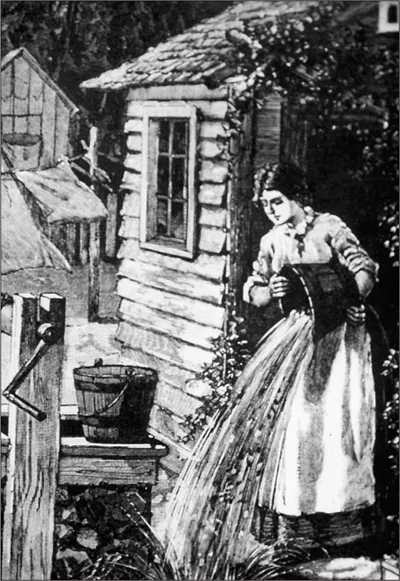
Photo I.1. “Sowing for Diptheria” was the caption on this 1881 etching. Source: Harper’s Weekly, 1881.
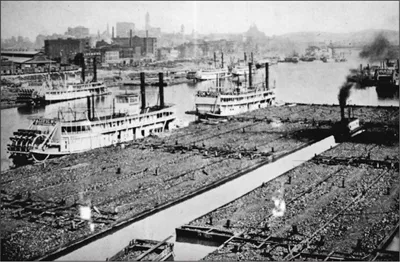
Photo. I.2. “Natural Beauty vs. Industrial Odds.” A view down the Monongahela River towards the Pittsburgh Point, 1911. Source: Paul Underwood Kellogg (ed.), The Pittsburgh District: Civic Frontage, The Pittsburgh Survey (New York: Survey Associates, 1914).
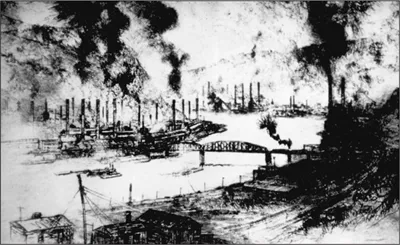
Photo I.3. “The Valley of Work,” by Otto Kubler. Source: Pittsburgh Record, 1928.
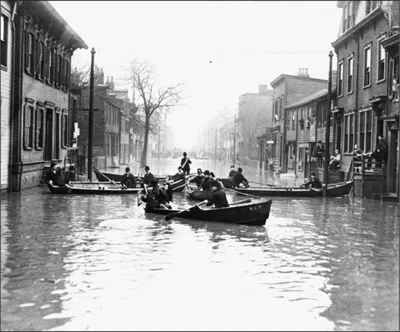
Photo I.4. “Flooding in Pittsburgh, 1907.” This picture was taken on Pittsburgh’s North Side, formerly part of the City of Allegheny. Source: Carnegie Library of Pittsburgh.
CHAPTER I
The Search for the
Ultimate Sink
Urban Air, Land, and Water Pollution
in Historical Perspective
Introduction
Some years ago, the noted sanitary engineer Abel Wolman wrote an influential essay entitled “The Metabolism of Cities.” In the article Wolman described the metabolic requirements of the city as consisting of all the materials and commodities required to sustain the life processes of the city’s inhabitants. The metabolic cycle, he said, was not completed “until the wastes and residues of daily life had been removed and disposed of with a minimum of nuisance and hazard.”1 Wolman’s model of the city as a metabolic entity has historical as well as contemporary relevance. The processes by which pollutants have been generated have altered over time, but so have the definitions of what pollution actually is. The meaning of the terms “nuisance” and “hazard” are time and culture specific, and their definitions depend on many elements both within the urban container and the larger society.
Urban pollution, therefore, at any time, can be understood as the product of the interaction among technology, scientific knowledge, human culture and values, and the environment. Environmental policy and control technology are further elements that must be added to the model, for at various times they have both reduced and exacerbated pollution problems or resulted in their transfer to different locales or media. The purpose of this paper is to examine three cases of urban air, land, and water pollution in order to explore the interactions among the above variables. More specifically, it will examine three larger and overarching themes or questions:
1. How solutions for one pollution problem often generated new pollution problems in different localities or in different media2. How both values and scientific knowledge were involved with society’s perceptions of the environment and influenced policy to deal with pollution problems3. How our perceptions of risk and hazard in regard to the urban environment affected our willingness to support policy to deal with these pollution problems (agenda setting)
The cases that will be examined are not necessarily unknown to students of environmental history, but I hope to focus on elements within each that will advance our understanding of the interactive nature of the problems of the urban environment.
The Water: Supply, Waste Disposal, and Pollution
The problems of supplying an adequate and potable supply of water to urban inhabitants and disposing of both human wastes and wastewater are the first situations where American society—in this case, cities—attempted to deal with pollution using a technological solution or fix. These questions of supply and disposal are interrelated, and the solution to one often played a significant role in creating health and sanitary difficulties for other cities. Changing values in regard to the public health and water use have also been important in the society’s attempt to deal with these problems over time and have generated new policy initiatives. The search for solutions to the problems of waste disposal and water pollution clearly illustrates the difficulty in finding a sink for wastes without causing further damage to the environment in other locales.
The water supply and human waste and wastewater disposal systems utilized in most cities during the eighteenth and the nineteenth centuries were characterized by a local focus. Water supplies were obtained from local sources such as wells and pumps drawing on groundwater, from nearby ponds and streams, and from rainwater cisterns. Used water (wastewater) and human wastes were usually disposed of in cesspools and privy vaults, although occasionally they were thrown out on the street or in vacant lots. Cesspools and privy vaults were essentially holes in the ground, sometimes lined, from which wastes often leached (deliberately and accidentally) into the surrounding soil. The land thus became the primary sink for both wastewater and for human wastes. In some cities, human wastes were occasionally collected from privy vaults by scavengers (night soil men) or by farmers. These wastes were often recycled on the land as fertilizer or dumped in land depots or nearby waterways. Before the 1850s no city had sewers for human-waste removal, and it was not until after 1880 that most municipalities constructed sewerage systems. Those sewers that existed were largely for stormwater collection, and in some cities ordinances forbade citizens to deposit wastes in them.2
This system of local water supply and waste collection could operate without excessive nuisance or sanitary hazard when city populations were small and densities low, but as urban population and density increased in the late eighteenth and early nineteenth century, it became increasingly ineffective. The first part of the system to break down was the water supply. Various studies of city water supplies and public health in the first decades of the nineteenth century document both the growing pollution of the local ponds and wells that served the population of cities such as Boston, New York, and Philadelphia and the problems that developed from inadequate supply. Cleaner and more copious water supplies were needed for normal household functions such as drinking and washing, for fire fighting in crowded urban neighborhoods, for industrial purposes, and for flushing the streets at times of epidemics. Closely associated with the necessity for cleaner water supplies were concerns over the health effects of polluted water and dirty streets and a growing realization that there was a relationship between clean water and freedom from epidemic disease.3
Philadelphia was the first city to respond to the inadequacy of local water supplies; it constructed the Fairmount Water Works in 1802 to bring potable water into the city from the Schuylkill River. Cities such as New York, Boston, Detroit, and Cincinnati followed Philadelphia’s lead, and by 1860 the sixteen largest cities in the nation had waterworks, with a total of 136 systems in the country; by 1880, this number had increased to 598.4
As piped-in water became available, the more affluent urban households installed water-using fixtures. In 1848, for instance, Boston opened the Cochituate Aqueduct, and by 1853 31,750 water-using fixtures of various types were in operation; by 1863 the number had increased to 81,726, of which over 13,000 were water closets. The availability of a constant household supply of water caused a rapid expansion in the number of users and in the volume of use. Chicago, for instance, went from 33 gallons per capita per day in 1856 to 144 in 1882; Cleveland increased from 8 gallons per capita per day in 1857 to 55 in 1872; and Detroit went from 55 gallons per capita per day in 1856 to 149 in 1882. These figures include industrial and other nonhousehold uses, but they are still symbolic of a great increase in water consumption over a relatively short period of time as demand interacted with supply.5
But while hundreds of cities and towns installed waterworks in the first three-quarters of the nineteenth century, no city simultaneously constructed a sewer system to remove the water. In most cities with piped-in water, wastewater was initially diverted into existing cesspools or occasionally into stormwater sewers or street gutters. The introduction of large volumes of water into a cesspool system designed to accommodate much smaller amounts unbalanced the system and caused serious flooding and disposal problems. This situation was exacerbated by the widespread adoption of the water closet, which greatly increased the problems of nuisance and sanitary hazard in wastewater disposal by adding “black” water to “grey.” Cesspool overflows caused the soil to become saturated, led to cellars that were “flooded with stagnant and offensive fluids,” and made cleaning “nearly futile.”6
Public health officials, especially if they believed in the anticontagionist “filth theory” of disease, viewed overflowing cesspools with water-closet connections as a particularly dangerous threat to a healthful environment. As late as 1894 the secretary of the Pennsylvania State Board of Health, Benjamin Lee, complained that householders persisted in installing water closets in towns without sewers and connecting them to “leaching” cesspools. “Copious water supplies,” warned Lee, “constitute a means of distributing fecal pollution over immense areas and no water closet should ever be allowed to be constructed until provision has been made for the disposition of its effluent in such a manner that it shall not constitute a nuisance prejudicial to the public health.”7
The health and sanitary problems caused in cities by running water...
Table of contents
- Cover
- Title
- Copyright
- Dedication
- Contents
- Illustrations
- Series Preface
- Acknowledgments
- Foreword by Martin V. Melosi
- Introduction
- Part I. Crossing Environmental Boundaries
- Part II. Water Pollution
- Part III. Smoke Pollution
- Part IV. Land, Transport, and Environment
- Part V. Industrial Wastes as Hazards
- Name Index
- Place Index
Trusted by 375,005 students
Access to over 1.5 million titles for a fair monthly price.
Study more efficiently using our study tools.
Frequently asked questions
Yes, you can cancel anytime from the Subscription tab in your account settings on the Perlego website. Your subscription will stay active until the end of your current billing period. Learn how to cancel your subscription
No, books cannot be downloaded as external files, such as PDFs, for use outside of Perlego. However, you can download books within the Perlego app for offline reading on mobile or tablet. Learn how to download books offline
Perlego offers two plans: Essential and Complete
- Essential is ideal for learners and professionals who enjoy exploring a wide range of subjects. Access the Essential Library with 800,000+ trusted titles and best-sellers across business, personal growth, and the humanities. Includes unlimited reading time and Standard Read Aloud voice.
- Complete: Perfect for advanced learners and researchers needing full, unrestricted access. Unlock 1.5M+ books across hundreds of subjects, including academic and specialized titles. The Complete Plan also includes advanced features like Premium Read Aloud and Research Assistant.
We are an online textbook subscription service, where you can get access to an entire online library for less than the price of a single book per month. With over 1.5 million books across 990+ topics, we’ve got you covered! Learn about our mission
Look out for the read-aloud symbol on your next book to see if you can listen to it. The read-aloud tool reads text aloud for you, highlighting the text as it is being read. You can pause it, speed it up and slow it down. Learn more about Read Aloud
Yes! You can use the Perlego app on both iOS and Android devices to read anytime, anywhere — even offline. Perfect for commutes or when you’re on the go.
Please note we cannot support devices running on iOS 13 and Android 7 or earlier. Learn more about using the app
Please note we cannot support devices running on iOS 13 and Android 7 or earlier. Learn more about using the app
Yes, you can access The Search for the Ultimate Sink by Joel A. Tarr in PDF and/or ePUB format, as well as other popular books in Technology & Engineering & Civil Engineering. We have over 1.5 million books available in our catalogue for you to explore.