eBook - ePub
Available until 23 Apr |Learn more
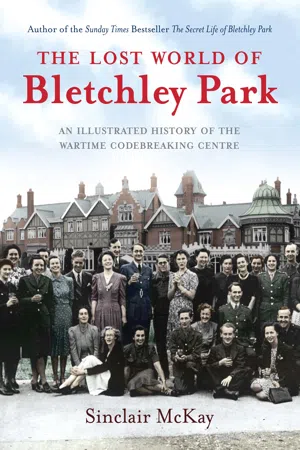
The Lost World of Bletchley Park
The Illustrated History of the Wartime Codebreaking Centre
This book is available to read until 23rd April, 2026
- 192 pages
- English
- ePUB (mobile friendly)
- Available on iOS & Android
eBook - ePub
Available until 23 Apr |Learn more
The Lost World of Bletchley Park
The Illustrated History of the Wartime Codebreaking Centre
About this book
The huge success of Sinclair’s The Secret Life of Bletchley Park – a quarter of a million copies sold to date – has been symptomatic of a similarly dramatic increase in visitors to Bletchley Park itself, the Victorian mansion in Buckinghamshire now open as an engrossing museum of wartime codebreaking. Aurum is publishing the first comprehensive illustrated history of this remarkable place, from its prewar heyday as a country estate under the Liberal MP Sir Herbert Leon, through its wartime requisition with the addition of the famous huts within the grounds, from the place where modern computing was invented and the German Enigma code was cracked, to its post-war dereliction and then rescue towards the end of the twentieth century as a museum whose visitor numbers have more than doubled in the last five years. Featuring over 200 photographs, some previously unseen, and text by Sinclair McKay, this will be an essential purchase for everyone interested in the place where codebreaking helped to win the war.
Frequently asked questions
Yes, you can cancel anytime from the Subscription tab in your account settings on the Perlego website. Your subscription will stay active until the end of your current billing period. Learn how to cancel your subscription.
No, books cannot be downloaded as external files, such as PDFs, for use outside of Perlego. However, you can download books within the Perlego app for offline reading on mobile or tablet. Learn more here.
Perlego offers two plans: Essential and Complete
- Essential is ideal for learners and professionals who enjoy exploring a wide range of subjects. Access the Essential Library with 800,000+ trusted titles and best-sellers across business, personal growth, and the humanities. Includes unlimited reading time and Standard Read Aloud voice.
- Complete: Perfect for advanced learners and researchers needing full, unrestricted access. Unlock 1.4M+ books across hundreds of subjects, including academic and specialized titles. The Complete Plan also includes advanced features like Premium Read Aloud and Research Assistant.
We are an online textbook subscription service, where you can get access to an entire online library for less than the price of a single book per month. With over 1 million books across 1000+ topics, we’ve got you covered! Learn more here.
Look out for the read-aloud symbol on your next book to see if you can listen to it. The read-aloud tool reads text aloud for you, highlighting the text as it is being read. You can pause it, speed it up and slow it down. Learn more here.
Yes! You can use the Perlego app on both iOS or Android devices to read anytime, anywhere — even offline. Perfect for commutes or when you’re on the go.
Please note we cannot support devices running on iOS 13 and Android 7 or earlier. Learn more about using the app.
Please note we cannot support devices running on iOS 13 and Android 7 or earlier. Learn more about using the app.
Yes, you can access The Lost World of Bletchley Park by Sinclair McKay in PDF and/or ePUB format, as well as other popular books in History & British History. We have over one million books available in our catalogue for you to explore.
Information
Chapter One

THE HOUSE AND GROUNDS

Bletchley Park had a beautiful cricket pitch, plus an elegant pavilion that mirrored the architecture of the main house. It was sold before the war; the pitch was later used by Bletchley Grammar School.
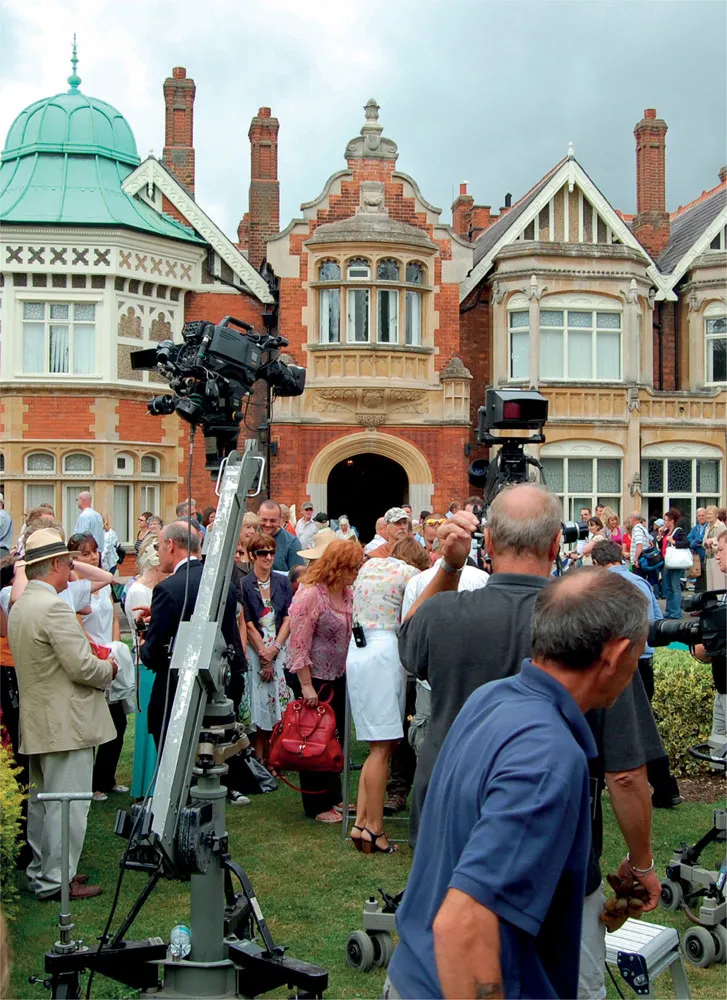
When the popular BBC television series Antiques Roadshow filmed editions at Bletchley, the crowds and the queues were prodigious.
A few years ago, the television series Antiques Roadshow featured a couple of editions filmed in front of the mansion of Bletchley Park. Were it not for the illustrious wartime history of the house, it is extremely unlikely that it would have done so. Indeed, it is questionable whether the house would have been there at all, or whether it would have been cheerfully demolished with little in the way of aesthetic regret. The house itself does have a few admirers; but its many detractors over the years have had the better lines. However, the house and the site are actually fascinating in their own right, and the estate is a beguiling snapshot of a moment of social history.
It is thought that some sort of house – though obviously not the present one – has stood on the site of Bletchley Park since the medieval period. Ownership of the land seesawed between various families, and various houses were built and then came down. Especially notable was an 18th-century Palladian effort erected by the antiquarian Browne Willis. By this stage, the land around had been imparked, then turned back to purely agricultural use, and then imparked again. It is possible, though we will never know, that the Browne Willis incarnation of the property was the most aesthetically pleasing by a very long way. But ownership switched again and in 1805 that house was demolished and practically nothing remains in terms of records.
Throughout much of the 19th century, the site was most probably occupied by a farmhouse, lived in by a Mr Coleman. But the mansion that we see today was most probably started (again, the records are not conclusively clear) by Samuel Seckham, a businessman, surveyor and architect. This was at some point in the 1870s, when the little village of Bletchley would have been greatly expanded, thanks to the railway and the works that came with it. The locale could never really have been described as a prime beauty spot.

Sir Herbert Leon’s mansion was originally larger, and more architecturally unified, with a west wing that was pulled down before the war.
As well as designing this new house, at first an unassuming construction of red brick and black slate, Seckham also remodelled the gardens and the fields around, landscaping them with lakes, and also avenues of trees that would help to muffle the clanking and shrill whistle screams from the railway lines, which some have suggested he found wearing. There were also lines of limes and elms, but not long after the house was built, he decided to sell up and move elsewhere in the county. Owing to its favourable proximity to London, he probably knew that he would have no difficulty finding a buyer. The grounds and the property were then bought by Sir Herbert Leon in 1883, and it was he who decided to add to Seckham’s original.
Sir Herbert was a successful stockbroker who went on to become very active in politics; first sitting on Buckinghamshire council and then, in 1891, getting himself elected as Liberal MP for Buckingham. David Lloyd George was a frequent visitor to the house. Sir Herbert was then defeated in 1895, but his energies found other outlets, and he helped with an organisation called the Rationalist Free Press. With Bletchley Park, he took what was rather an ordinary Victorian house and, whatever one might think of the end result, it was certainly less ordinary afterwards. His builders used the same kind of brick and slate but Sir Herbert had much grander plans involving a ballroom, a library, an extensive still-house for cold storage of dairy products, a proper suite for his wife Lady Fanny, and quarters for servants.

Historic maps depict the evolution both of the estate, and of the town. Note the ‘clay pitt’ – Bletchley later acquired extensive brickworks.


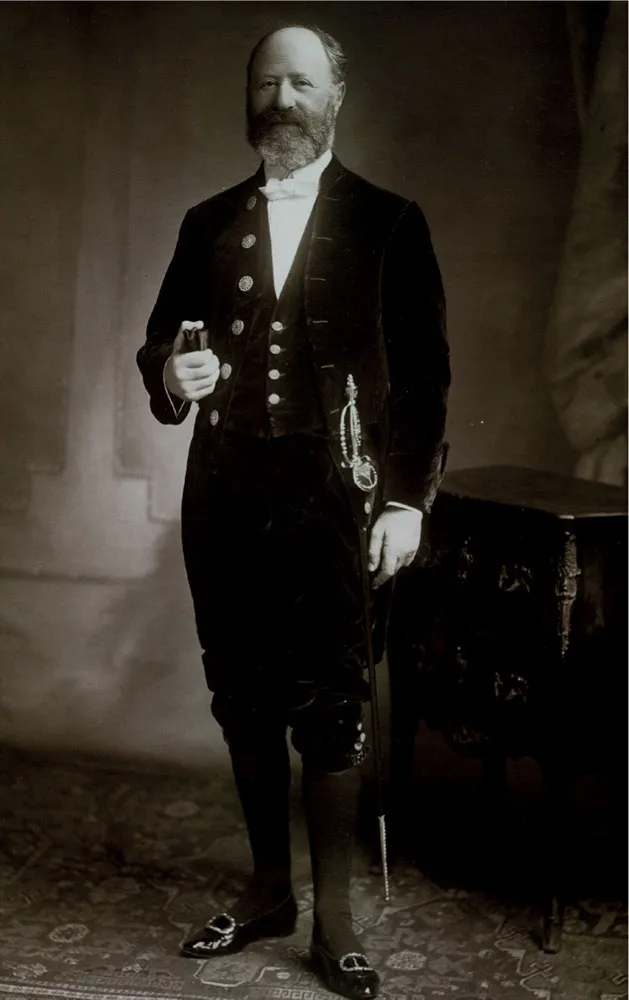
Sir Herbert Leon: parliamentarian, wealthy stockbroker and enthusiastic squire, who played an energetic role in the life of the local community.
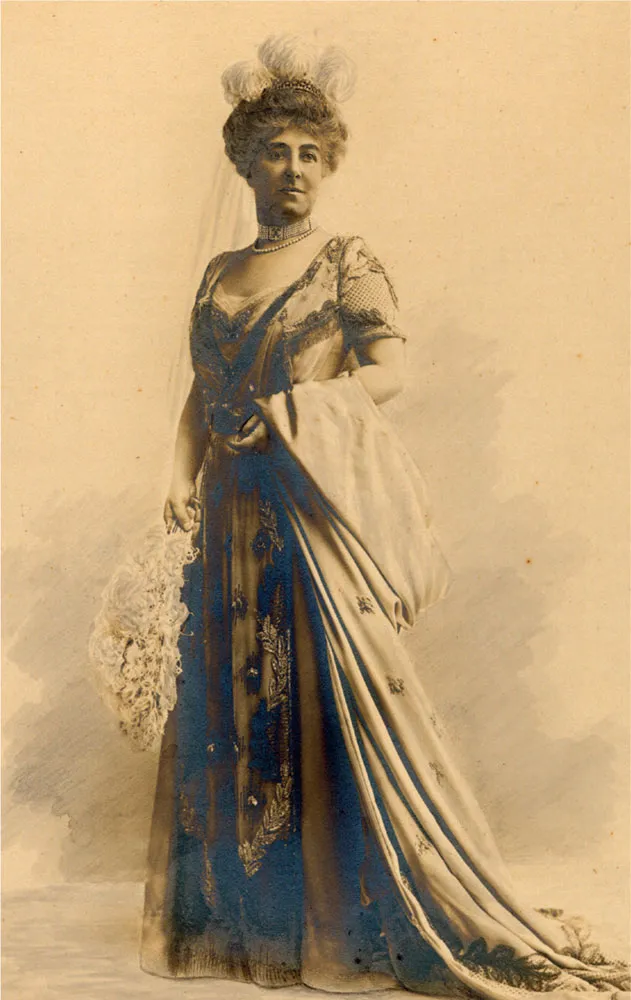
Lady Fanny Leon, who presided over the estate’s busy social diary: the grand balls, the hunts, the whirl of weekend parties. She also involved herself with the local council and nursing association.
These days, the eye is drawn to the copper cupola which seems rather awkwardly jammed on to one side of the house’s roof. Sir Herbert’s taste was eclectic, and is reflected in the contemporary dark wooden panelling, the occasional outbreaks of stained glass and the ornately plastered ballroom ceiling which the Hon. Sarah Baring said made her think of ‘drooping bosoms’. Apologists for the structure say that any prejudice against it is a manifestation of anti-Victorian sentiment, a dislike for the pre-modern, and that its merits will be seen properly in time. Whether that is the case or not, the Bletchley Park Trust is doing a terrific job in restoring it to its original glory.
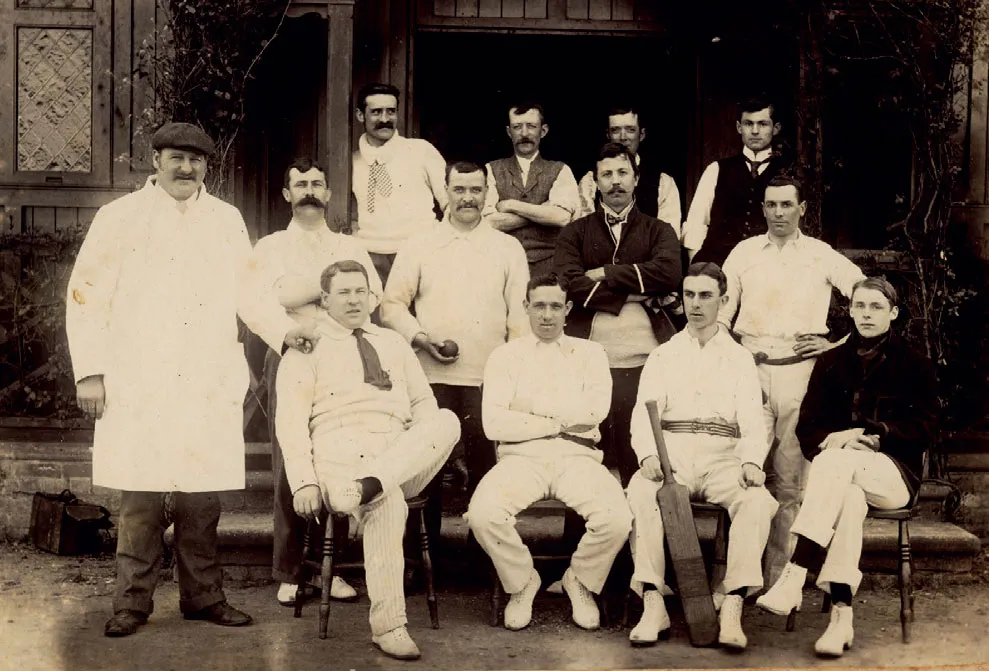
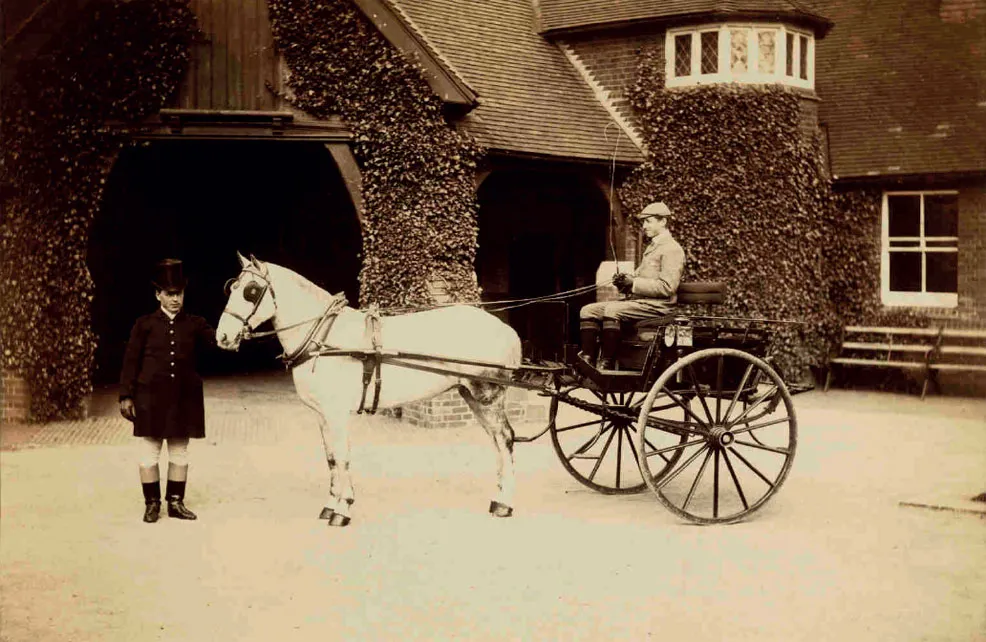
FROM LEFT TO RIGHT The estate cricket team; the rather splendid horse and trap, ready to convey guests and luggage from the station.

Making the most of some scarce time off, the household staff gather together in their smartest array.

An Edwardian picture postcard, hand-coloured. Note the tower at the rear of the house: it had been pulled down by the time the codebreakers arrived.

The estate’s gardeners assembled. Their work ranged from tending rare orchids in the hot-houses to cultivating the kitchen gardens – which were later to contribute much needed fresh produce to the codebreakers’ canteen.
This was more than just a family home; this was a house built for entertainment, and for weekend parties. The addition of extensive stables to the side were there for those who wanted to ride out into the countryside; equally, the yew tree maze and the lawns flanking the lake were there for more sedate promenades. The lake itself was supposed to have dated back hundreds of years, when it was in use as a medieval fishpond. In its new life, it became the home of noisy geese. In later years, some of Bletchley’s younger female recruits recalled being harassed by the geese as they attempted to take coffee by the water. These water features also resulted in an abundance of frogs, which were recalled with a shudder by one young Wren who dreaded the walk back through the estate at the end of a shift at midnight, in the blackout, and inadvertently treading on frogs in the darkness.

Lady Leon rode out with the Whaddon Hunt; and the sheer numbers of Bletchley Park’s stable staff illustrate the importance of hunting to the estate.
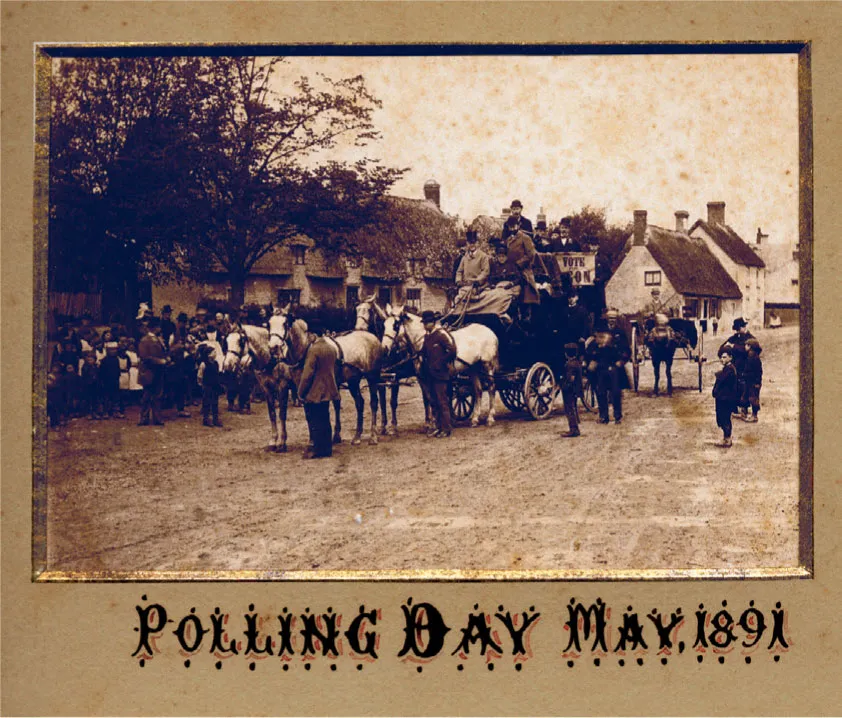
A memento of the 1891 election in which Sir Herbert became Bletchley’s local member of parliament. This was at a time when the vote was very restricted – how many in this picture would have been entitled to cast a ballot?

The estate’s agricultural fairs were always popular, both with farmers, and with visitors from around the county. Firework displays were also a draw.

Quite apart from the gardens and stables, Sir Herbert and Lady Fanny employed large numbers of domestic staff for the house. The work was constant, but the Park was regarded as ...
Table of contents
- Cover
- Title Page
- Contents
- Introduction
- 1 The House and Grounds
- 2 Conversion to Codebreaking Factory
- 3 The Cryptologists
- 4 The Girls, the Pearls and the Musical Sergeants
- 5 The Machines that Changed the Future
- 6 Off-Duty Hours and the Pressure Valves
- 7 Bletchley the Wartime Town
- 8 The Worldwide Listeners
- 9 Bletchley Park’s Famous Faces
- 10 Broken Codes and the Course of History
- 11 What the Codebreakers did Next
- 12 Bletchley After the War
- 13 Rescue and Renovation
- 14 Royals, Dignitaries – and James Bond
- Acknowledgements
- Copyright