1
SOCIETY
“ Justice in the life and conduct of the State is possible only as first it resides in the hearts and souls of the citizens.”
PLATO, THE REPUBLIC (c. 380 BCE)
INTRODUCTION
Societies come in all shapes and sizes. There are small, exclusive clubs like the Society of Cartographers, and larger bodies like American society, with membership in the millions. Societies are composed of people bound by spoken and unspoken rules, each exhibiting its own trends and characteristics. And despite philosophers’ occasional ambitions to transcend society and engage in metaphysical musings, they are always embedded within it. Even when they’re not engaged in political or ethical philosophy, their most abstract theories are products of sociocultural contexts. So it is with society that this book begins.
Moral, social, and political philosophers ask questions about what it means for humans to live well, together. They are concerned with the values that we prioritize in our communities, and the principles that guide individual or collective actions. Moral philosophy asks how we should treat each other, and how such treatment might be justified. Social and political philosophers ask how we should live in communities, and which principles should guide our collective action and decision-making. Such questioning is especially important today, living as we do under the governance of nation-states and intergovernmental organizations whose political authority is backed by the force of law and the power of the police or military.
Doing right, being good
Thinking about society, we might begin by considering ethics and morality. Two questions are key for Euro-American moral philosophy: What makes an action right or wrong, and what does it mean to be a good person? Here we consider three theories that have had profound influence on these issues. Utilitarianism holds that the rightness of an action depends on its ability to maximize the best consequences for the greatest number of people. Deontology holds that an action is right if it adheres to specific moral laws. Virtue ethics examines which qualities make a person virtuous. These positions are not mutually exclusive. Rather, they prioritize different ways of justifying moral action. Utilitarians acknowledge the importance of rules and virtues, but believe they’re explained and justified by consequences. Deontologists can hold that consequences have moral significance, but that they’re not sufficient to justify action that breaks moral rules. Virtue ethicists can value both consequences and rules, insofar as they bear on what kind of people we are and what sorts of habits we have.
We also consider questions central to what philosophers call “meta-ethics.” We step back from uncritical usage of words like “good,” “bad,” “right,” and “wrong” to examine where these concepts come from, and what we mean when we use them. Do moral values really exist, or are they something that humans impose on reality? When we make moral claims, are we making claims that could be objectively true, or merely expressing our feelings or cultural conditioning?
Social thought, political reality
Moving beyond questions of ethics to questions of society, these topics reveal how, in the West at least, social and political philosophers are particularly interested in what justifies political authority over free moral persons. What is the nature of justice, and what would principles for a just society look like? Ought we to value political traditions? Is private property ever justified, and what does it mean, as an institution, both for the formation of “civil society” and our intuitive sense that if we own nothing else, we at least own our own bodies?
This chapter also includes topics that have received less attention, but are no less important to social and political philosophy. What does it mean to try and “queer” society? Why does thinking about disability matter for understanding society? And what role do the violent histories of Europe in the non-European world play in generating political systems that claim to be built for the good of all, but which, nevertheless, seem to be built only for the good of some at the expense of others?
Unlike the seemingly high-minded metaphysical debates that deal with the existence of unicorns or the nature of time, the discussions in this chapter are firmly rooted in the puzzles and problems of everyday life. As a cursory glance through the news headlines will show you, humans do not always coexist peacefully or pleasantly. As such, these entries sometimes discuss disturbing subject matters. Philosophers often try to examine such things as violence, murder, and slavery dispassionately. We think this is both ill-advised and unachievable—these topics are, for many, lived and irresolvably charged issues, rather than merely abstract “thought experiments.” The following pages mention murder, theft, colonialism, imperialism, sexism, racism, eugenics, genocide, and enslavement. Please bear this in mind as you read on.
TIMELINE
THE POLIS
The word “politics” derives from politikos, the Greek word for “pertaining to the polis.” The polis can be translated roughly as “city-state.” In the fifth century BCE, Greece consists of a number of small, cohesive city-states, like Athens and Sparta; political philosophy focuses on how these states are organized.
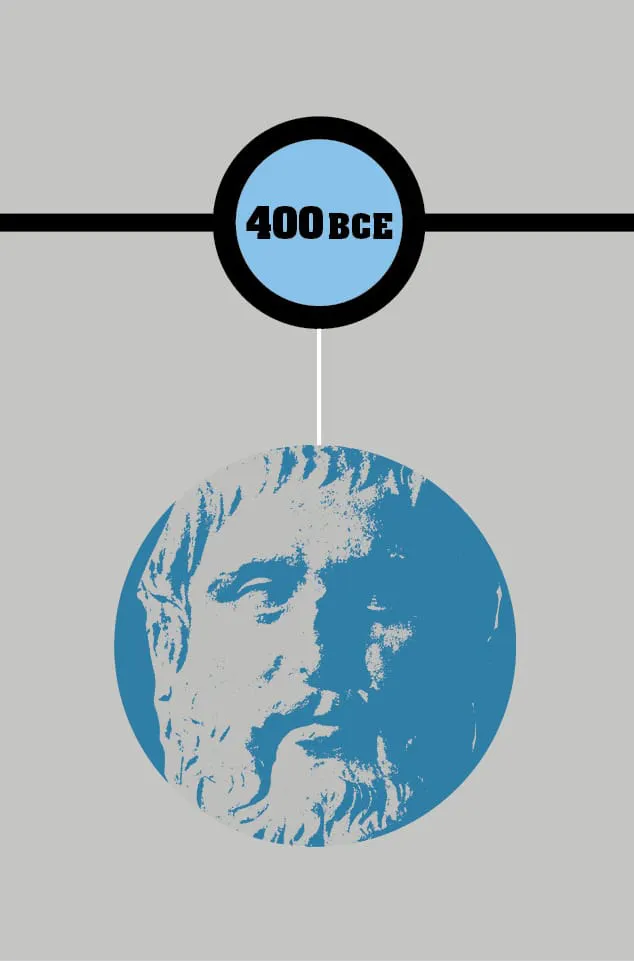
PLATO
Set against the backdrop of the Peloponnesian War, Platonic philosophy is geared as much toward sociopolitical concerns as metaphysical musings. Plato is critical of democracy (which he says gives power to untrained thinkers), and advocates aristocratic modes of ruling (by “philosopher kings”). He disseminates his views through the Athenian Academy.
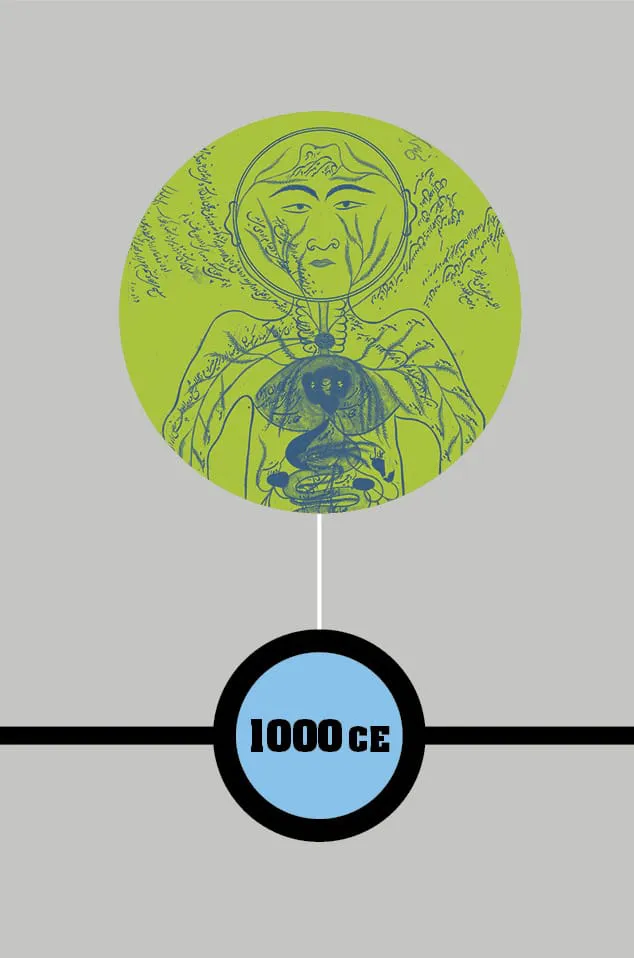
ISLAMIC GOLDEN AGE
During this period, philosophical work is seen to be inextricably tied to political theory (and often scientific research). Thinkers like Ibn Sina (Avicenna) work as physicians, metaphysicians, and political counselors. Ibn Sina’s monumental treatise The Cure (1027) covers topics ranging from theoretical physics ...