eBook - ePub
En Plein Air: Acrylic
Expert techniques and simple step-by-step projects for creating dynamic landscapes in the open air with acrylic
- 128 pages
- English
- ePUB (mobile friendly)
- Available on iOS & Android
eBook - ePub
En Plein Air: Acrylic
Expert techniques and simple step-by-step projects for creating dynamic landscapes in the open air with acrylic
About this book
Learn the core concepts of painting on location with En Plein Air: Acrylic, the definitive resource for experiencing the peace and rewards of painting with acrylics in the open air.
En Plein Air: Acrylic introduces beginning artists and fine-art lovers alike to the core concepts of painting on location. This hardworking guide features everything you'll need to get started, including expert tips on what to pack and how to maximize your time outdoors. You'll also learn how to choose a subject once you're on-site and then interpret it for a complex and pleasing composition.
Painting on location in the open air is a unique challenge, but with En Plein Air: Acrylic, you will learn to deal with the challenges of shadows and natural light and hone your skills in a fun, refreshing way. Perfect for artists looking to grow beyond the studio, this one-stop guide is an excellent resource for expanding upon the peace and joy that comes with painting.
En Plein Air: Acrylic introduces beginning artists and fine-art lovers alike to the core concepts of painting on location. This hardworking guide features everything you'll need to get started, including expert tips on what to pack and how to maximize your time outdoors. You'll also learn how to choose a subject once you're on-site and then interpret it for a complex and pleasing composition.
Painting on location in the open air is a unique challenge, but with En Plein Air: Acrylic, you will learn to deal with the challenges of shadows and natural light and hone your skills in a fun, refreshing way. Perfect for artists looking to grow beyond the studio, this one-stop guide is an excellent resource for expanding upon the peace and joy that comes with painting.
Trusted by 375,005 students
Access to over 1 million titles for a fair monthly price.
Study more efficiently using our study tools.
Information
Working with Acrylic

Color Theory
Acquaint yourself with the ideas and terms of color theory, which involve everything from color relationships to perceived color temperature and color psychology. In the following pages, we will touch on the basics as they relate to painting.
Color Wheel
The color wheel, pictured to the right, is the most useful tool for understanding color relationships. Where the colors lie relative to one another can help you group harmonious colors and pair contrasting colors to communicate mood or emphasize your message. The wheel can also help you mix colors efficiently. Below are the most important terms related to the wheel.

Primary colors are red, blue, and yellow. With these you can mix almost any other color; however, none of the primaries can be mixed from other colors. Secondary colors include green, orange, and violet. These colors can be mixed using two of the primaries. (Blue and yellow make green, red and yellow make orange, and blue and red make violet.) A tertiary color is a primary mixed with a near secondary, such as red with violet to create red-violet.
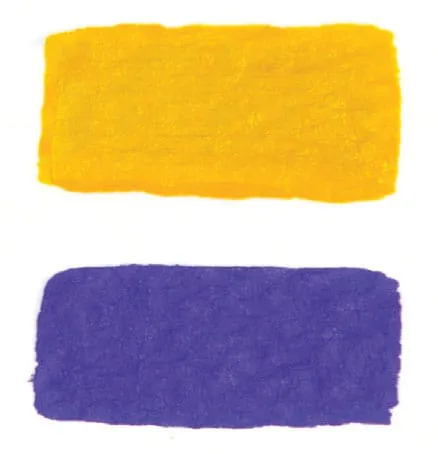
COMPLEMENTARY COLORS are those situated opposite each other on the wheel, such as purple and yellow. Complements provide maximum color contrast.
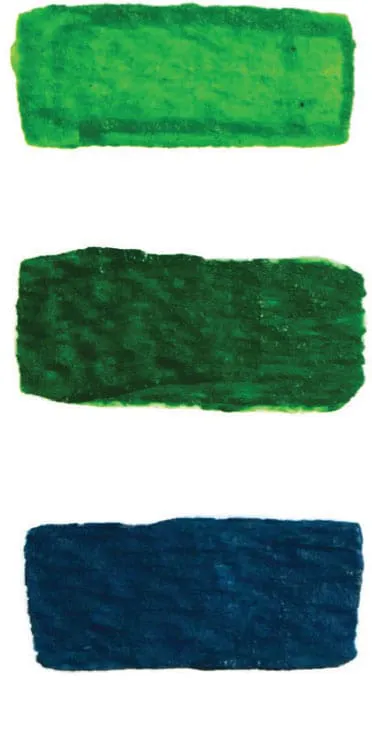
ANALOGOUS COLORS are groups of colors adjacent to one another on the color wheel, such as blue-green, green, and yellow-green. When used together, they create a sense of harmony.

A hue is a color in its purest form (A), a color plus white is a tint (B), a color plus gray is a tone (C), and a color plus black is a shade (D).

A single color family, such as blue, encompasses a range of hues—from yellow-leaning to red-leaning.
Color & Value
Within each hue, you can achieve a range of values—from dark shades to light tints. However, each hue has a value relative to others on the color wheel. For example, yellow is the lightest color and violet is the darkest. To see this clearly, view the color wheel in grayscale (a photograph or scan of a color wheel that has been changed using computer-editing software). It is also very helpful to create a grayscale chart of all the paints in your palette so you know how their values relate to one another.

Value Relativity
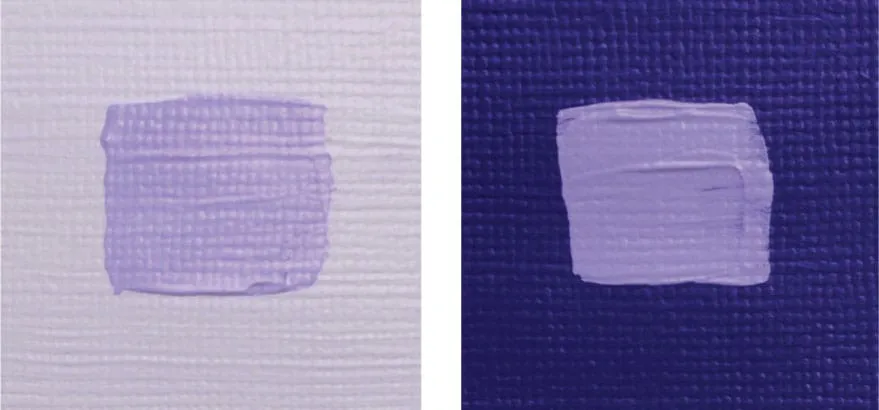
Values are perceived relative to others in the same scene. A color may appear dark against a white surface or light tint, but the same color may appear light against a dark surface. Above are middle-value strokes of purple over light and dark backgrounds. The same value can appear very different depending on its surroundings.
Color Temperature
Color temperature refers to the feeling one gets when viewing a color or set of colors. Generally, yellows, oranges, and reds are considered warm, whereas greens, blues, and purples are considered cool. When used within a work of art, warm colors seem to advance toward the viewer, and cool colors appear to recede into the distance. This dynamic is important to remember when suggesting depth or creating an area of focus. For more about color temperature, turn to here.
Types of Acrylic
Acrylic is a unique medium with unparalleled versatility. While it has its own look and feel, it also beautifully mimics other media, such as watercolor, oil, and even pastel. Acrylic paint dries quickly like watercolor but is as permanent as oil and as vibrant as pastel. You can thin acrylic paint with water to create luminous washes, or you can use it straight from the tube to build up thick layers. And because acrylics are water-based, cleanup is simple with soap and water.

Acrylic paint, which ...
Table of contents
- Cover
- Title Page
- Contents
- Introduction
- Materials & Supplies
- Substrates
- Working with Acrylic
- The Palette
- Basic Color Use
- Planning a Painting
- Different Approaches to Painting
- About the Author
- Copyright
Frequently asked questions
Yes, you can cancel anytime from the Subscription tab in your account settings on the Perlego website. Your subscription will stay active until the end of your current billing period. Learn how to cancel your subscription
No, books cannot be downloaded as external files, such as PDFs, for use outside of Perlego. However, you can download books within the Perlego app for offline reading on mobile or tablet. Learn how to download books offline
Perlego offers two plans: Essential and Complete
- Essential is ideal for learners and professionals who enjoy exploring a wide range of subjects. Access the Essential Library with 800,000+ trusted titles and best-sellers across business, personal growth, and the humanities. Includes unlimited reading time and Standard Read Aloud voice.
- Complete: Perfect for advanced learners and researchers needing full, unrestricted access. Unlock 1.4M+ books across hundreds of subjects, including academic and specialized titles. The Complete Plan also includes advanced features like Premium Read Aloud and Research Assistant.
We are an online textbook subscription service, where you can get access to an entire online library for less than the price of a single book per month. With over 1 million books across 990+ topics, we’ve got you covered! Learn about our mission
Look out for the read-aloud symbol on your next book to see if you can listen to it. The read-aloud tool reads text aloud for you, highlighting the text as it is being read. You can pause it, speed it up and slow it down. Learn more about Read Aloud
Yes! You can use the Perlego app on both iOS and Android devices to read anytime, anywhere — even offline. Perfect for commutes or when you’re on the go.
Please note we cannot support devices running on iOS 13 and Android 7 or earlier. Learn more about using the app
Please note we cannot support devices running on iOS 13 and Android 7 or earlier. Learn more about using the app
Yes, you can access En Plein Air: Acrylic by Mark Mehaffey in PDF and/or ePUB format, as well as other popular books in Art & Art General. We have over one million books available in our catalogue for you to explore.