WATERCOLOR
The very first medium that I learned was watercolor, and it remains the one I go to most often. Perhaps it is the desire to be immersed in a rainbow of color, subtly enhancing my drawings when the subject calls for it. There is nothing like watercolor for adding dreamy washes of color to your drawings. You can use it as a simple background behind a pen and ink or graphite drawing, or as a precise form of drawing all its own, with a finely pointed brush that can rival the sharpest pencil.
Welcome to the beautiful and expressive medium of watercolor.
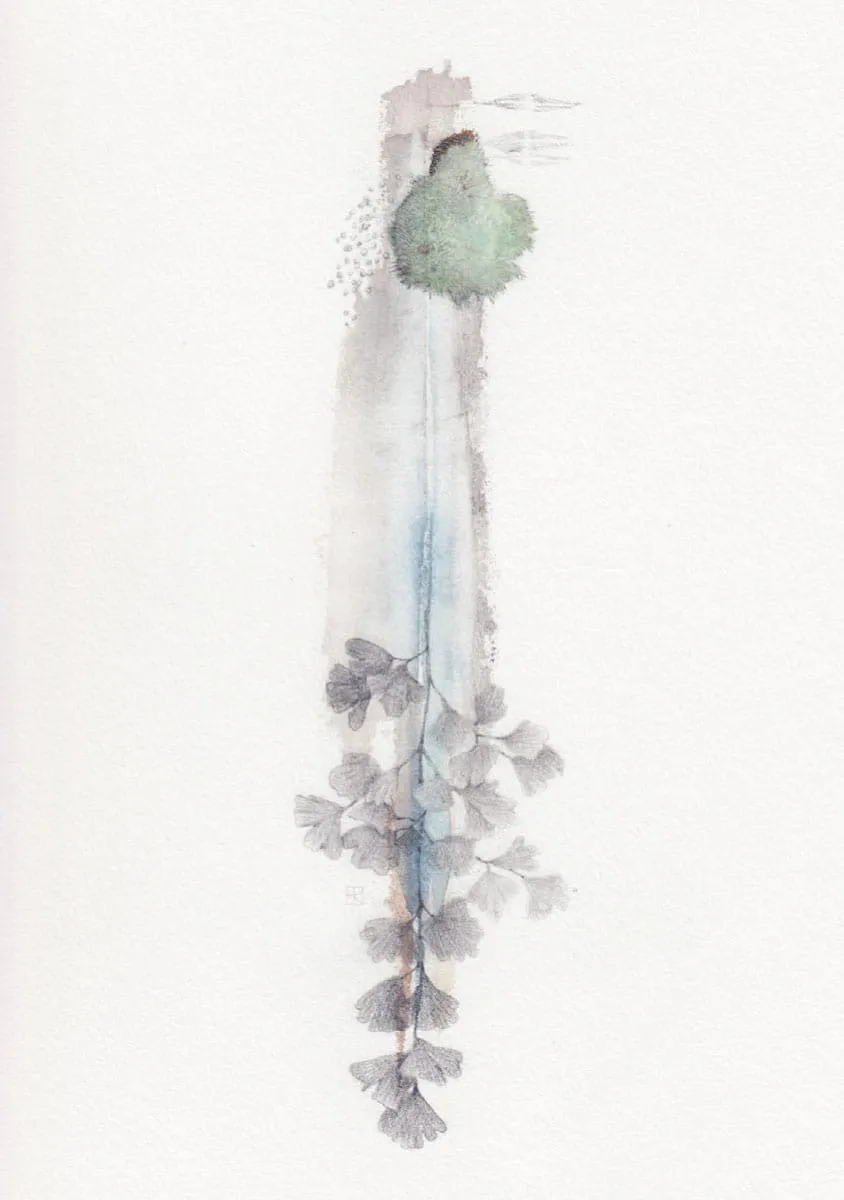
Pine, graphite on watercolor
Drawing in Watercolor
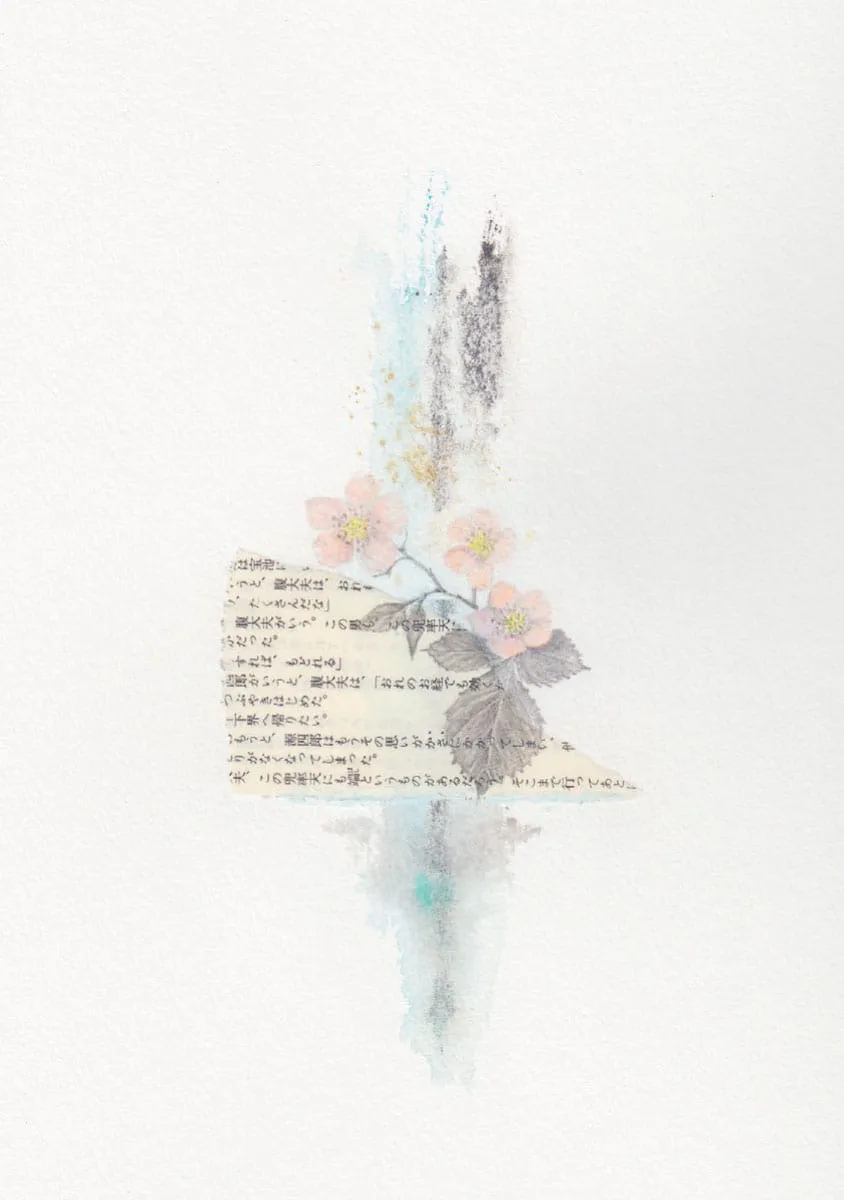
Sonata 1, mixed media
You might be surprised to find watercolor described as a drawing medium because you’ve thought of watercolor as a looser, more expressive medium than graphite, charcoal, and ink. But think of botanical illustrators who use watercolor to create their refined and realistic portrayals of plants. They’re painting and they’re also drawing with watercolors. We can use this versatile medium to enhance our realistic drawings in graphite and ink, lending dreamy background washes of color that bring a refreshing expressiveness to our subjects. This chapter is not an in-depth look at watercolor techniques for realism; rather, it offers several useful techniques to help you bring some color to your realistic mixed-media drawings.
To prepare for adding color to our portfolio of mediums, we’ll need to discover the tools and materials that are essential for watercolors.
Tools and Materials
I want to emphasize the importance of quality over quantity in tools, no matter what medium we choose. Watercolor is a vast medium and there are thousands of possibilities that confront you when you purchase supplies. For our purposes, we will keep it simple: the best quality paints you can afford in a handful of colors that you truly love, artist-grade paper that allows for wet washes while holding up to drawing techniques for both graphite and ink, and one or two excellent brushes that will serve you well.
WATERCOLOR PAINTS
If you already have a selection of watercolor paints, whatever you have will work just fine. If you are looking to purchase some, here are some things to consider:
• Pans versus tubes: Both work very well, but there are advantages to each of them. Choose whichever suits you better. Pans are very convenient, usually less expensive, and are great for on-the-go sketching. However, it is more difficult to create large mixtures of wash colors from a tiny pan. Tubes can be a bit more of an investment, but they last a very long time and can be squeezed into empty watercolor pans to create your own travel set. They are also much easier to use for mixing larger amounts of paint for washes.
No matter which paints you choose, make sure they are artist grade and not student grade. Artist-grade paints have a much higher percentage of pure pigment and very little binder. Student-grade paints are often dye-based and much weaker in strength since they have a larger percentage of binder. This decreases their costs, but it also decreases their brilliance and intensity. The special properties of pure pigments can make a difference in the look of your washes.
• Color selection: For the projects in this book, we’ll choose colors that appeal to us, as well as basic colors such as the split primaries, which can be mixed to create the entire spectrum of the color wheel. A six-color split primary palette is all you really need to create almost any color you can dream of. It consists of both a warm and cool version of the three primaries: red, yellow, and blue. Artist-grade watercolors are identified with both a common name, such as French Ultramarine, and also a pigment number, such as PB29. While different paint manufacturers may have creative names for their colors, the pigment numbers are a sure bet that you getting the right pigment. I always shop by pigment number. Here is a list of pigments that work well for a split primary palette, identified by both their common name and pigment number.
• Warm Blue: French Ultramarine (PB29)
• Cool Blue: Phthalocyanine Blue Green Shade (PB15:3)
• Cool Yellow: Hansa Yellow Light (PY3)
• Warm Yellow: Indian Yellow (PY108) or Hansa Yellow Deep (PY65)
• Warm Red: Transparent Pyrrol Orange (PO71) or Pyrrol Scarlet (PR255)
• Cool Red: Quinacridone Rose (PV19) or Permanent Rose (PV19) PV19 can also be more violet or magenta in hue, so look for either of the names above to be sure you are getting the correct version.
While a split primary palette is ideal, the projects we will cover in this book can be created with any basic watercolor set. If you want to purchase a set, buy one with twelve basic pigments in the best quality possible.
I would also like to mention handcrafted gemstone and mineral paints, which can be wonderful complements as a background for graphite and ink work. These paints are unique in their coloration and textural qualities and are quite beautiful in simple background washes. There are many artisans creating these handcrafted watercolors. I’ve included a list of my favorites in the Resources section at the end of this book.
WATERCOLOR PAPER
Here again, we enter a realm of myriad possibilities. I recommend keeping it simple and using a 100%...