Where is all the money? How does a country go bust? Should I get paid in Bitcoin?
Wherever you go, whatever you do, however you live your life, money plays a role.
Getting it, keeping it and making more out of it has been one of man’s major preoccupations for the past five thousand years. From buying a sandwich to earning a wage, going on holiday to playing the lottery, how money and economics governs our world is fascinating. And it’s just about to get more curious; the arrival of modern banking, crowd funding, investments at the touch of a smartphone and virtual currencies means, for many of us, it is even more complex.
Stewart Cowley distils these complexities in this essential guide to modern-day money and our relationship with it. Along the way we discover how the statistics that govern our world are based on guesswork, why stock markets are like a wandering drunken man, what you need to live like a millionaire and why cooking has made man the dominant species on the planet.
Man vs Money shows you how understanding a little more economics can improve your life.
- 224 pages
- English
- ePUB (mobile friendly)
- Available on iOS & Android
eBook - ePub
About this book
Information



Man is in adversarial conflict with money everywhere he looks. For as long as humans have attempted to create large-scale organised societies, money and economics have been central to the attempt to create a long-lasting and stable world. But despite man’s best endeavours, no economic theory has delivered anything close to a satisfactory system. And yet we keep on trying. It is the epitome of Albert Einstein’s definition of madness: repeating the same behaviour over and over again and expecting a different result.
Wading through the competing ideas is equally bewildering. But to understand where we are today, you have to understand something of where we have come from. If you want to visualise it, you might characterise this as an enormous fight between a dog, a cat, some characters from Winnie-the-Pooh and a bearded guy.
Strikingly, all the people these characters represent have attempted to codify society through economics. They are highly intelligent and articulate and have the sole intention of making the world more understandable and ultimately better. But who were they and, given where we are today, what can we learn from them in the twenty-first century? First of all we have to have a look at who and what they thought ...
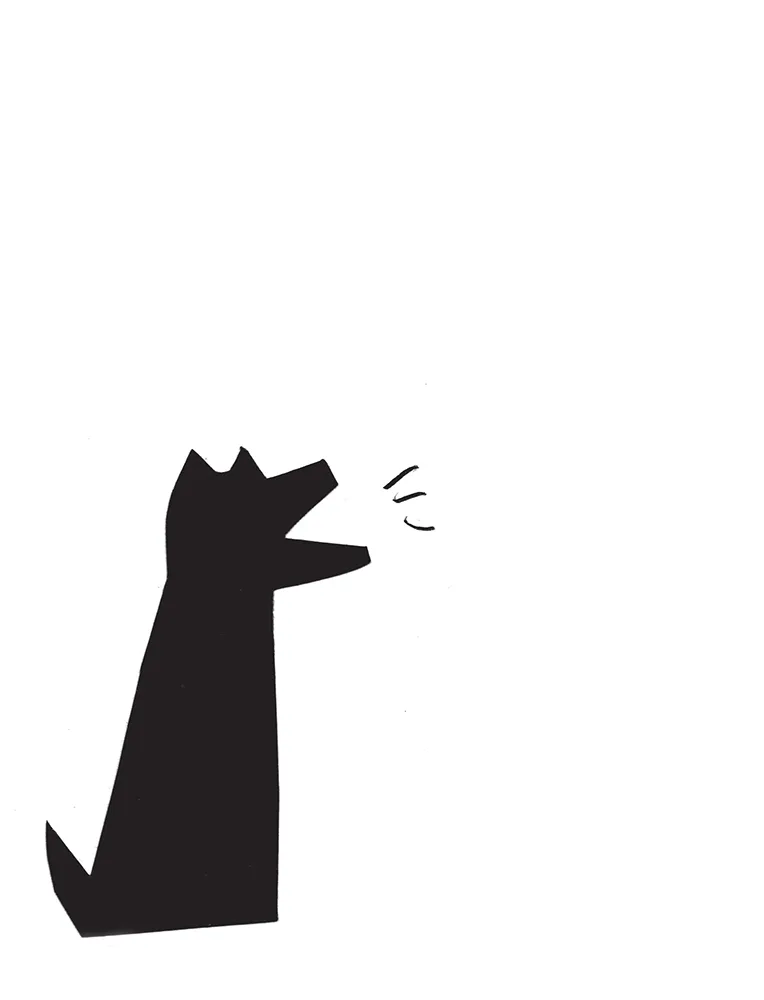
The Dog – classical economics
Toby, our Cairn terrier, displays many of the characteristics of a classical economist:
• He doesn’t like being told what to do: he’s the same breed as the chaos-causing Toto in The Wizard of Oz. It’s easy to sympathise with Miss Almira Gulch/the Wicked Witch of the West at times.
• The only acknowledgement he has of authority is that it is necessary for providing some basic things: opening packets of food and providing the transport to his walk each day.
• He thinks there is a mysterious unseen force, or ‘hidden hand’, keeping things in order. At 4.30 p.m. each day he will be sitting by his bowl, alternately staring at you and the bowl. ‘Where is it?’ is the clear internal question tripping across his brain. He is, frankly, bewildered as to why it isn’t there but he does know, if he waits long enough, that order will be restored: food will appear.
Long before Toby came into this world Adam Smith published The Wealth of Nations in 1776 and came to pretty much the same conclusions. It marked the beginning of classical economics. Smith realised the world was moving on from rummaging in the soil for turnips and towards a bright and shiny industrial age. Just accumulating gold wasn’t enough to define wealth and the general good. What you needed was trade – if two parties exchanged goods at a profit then everyone was a winner, wealth increased and the general good prospered.
There was one big proviso, however – governments had to get out of the way of the wealth creators and let them get on with it with a minimum of meddling. The only role governments had was in providing very basic requirements such as education and these things should be paid for by those most able to pay taxes.
Adam Smith and others at the time introduced the idea that ‘the market knows best’. They believed there was a self-correcting mechanism in society, the hidden hand, restoring order if things got out of line. Importantly, in one stroke Smith articulated the idea of supply and demand in a voice that is familiar today:
When the quantity of any commodity which is brought to market falls short of the effectual demand, all those who are willing to pay ... cannot be supplied with the quantity which they want ... Some of them will be willing to give more. A competition will begin among them, and the market price will rise ... When the quantity brought to market exceeds the effectual demand, it cannot be all sold to those who are willing to pay the whole value of the rent, wages and profit, which must be paid in order to bring it thither ... The market price will sink ...
From that, the classicists brought into life the relationship between growth, inflation and employment in a simple set of observable truths. The hidden hand restored order if you waited long enough. It’s a very appealing way of thinking and describing the world that has resonated for nearly three hundred years now. For it really to work, and work smoothly and efficiently, you couldn’t have pesky governments or organised labour getting in the way. So if you had regulations or unions, for instance, this could slow the firing/hiring process, which should be avoided at all costs.
The other thing about the early classicists is that they had a connection with nature. They saw the functioning of the economy as that of sentient beings allocating scarce resources, which led them to have a regard for the environment. This is in stark contrast to what comes later.

The Cat – neoclassical economics
We also have a cat, called Archie. I suspect Archie is a neoclassical economist. Archie is essentially amoral in as much as he does everything for his own pleasure, cares little for the consequences of his actions on the environment and expects others to do pretty much everything for him and anticipate his every need. All this is done in near-silence. The only time you know you have got something wrong is when he ‘sings the song of his people’ or bites you.
Neoclassical economics also works like Archie. It is driven by a single motive: to maximise self-serving profit. It sees companies as empty vessels: stuff goes in at a cost and stuff comes out at a price to be sold. What happens inside the black box is of no interest to cat-like neoclassicists: the governance, practices, values of the institution are a mere sideshow compared to the idea that everybody is a rational business person there to make money: they see an opportunity and they go for it. This is a basic tenet of neoclassical economics and one of its weaknesses – everybody is rational despite all the evidence to the contrary.
Importantly, neoclassicists believe everybody has perfect information and companies are ‘price-takers’ rather than ‘price-setters’. In other words, Mr Market knows best and if the world of supply and demand is out of shape, an economy will adjust very quickly to bring it back in line because out there exists an optimal equilibrium point towards which all things gravitate. That is if the world is allowed to operate efficiently with few barriers. This is the point on which both Toby and Archie would agree, and they both despise ‘Big Government’.
In this group we really should include Friedrich August von Hayek if only because he and his fellow members of the Austrian School represent the far end of the neoclassical spectrum. Hayek looks a lot like the neoclassical thinkers but with one small difference – he couldn’t care less about how it is working. For him even the neoclassical profit motive isn’t high on the agenda. He also thought we really shouldn’t meddle with society because the God of Unintended Consequences would pop up somewhere, somehow, in a way we couldn’t predict. Anything you did merely set up the next problem. Best to leave it to natural forces and Darwinian natural selection. Hayek wouldn’t be your first choice for a two-man assault on Everest if you were expecting trouble.
Tigger and Eeyore – John Maynard Keynes
John Maynard Keynes’ economic sensibilities were forged in the First World War and its aftermath, the 1919 Versailles Peace Conference, where the fate of the newly defeated Germany was decided. Keynes was committed to the strong helping the weak: it made practical sense for economically powerful nations to come to the aid of those less fortunate. For this reason alone he saw great dangers in making Germany groan under the weight of heavy debt repayments rather than helping it rebuild its shattered economy. His words fell on deaf ears. After the Big Three (America, France and...
Table of contents
- Cover
- Title Page
- Contents
- Introduction
- 1 Economics: Is economics a fight between a dog, a cat, Winnie-the-Pooh and a bearded guy?
- 2 Statistics: Do pandas calculate economic statistics?
- 3 Compound Interest: Should I buy a house using a credit card?
- 4 Bonds: Is the biggest threat to your wealth your safest investment?
- 5 Banks: Breakfast doesn’t count ...
- 6 The Markets: Should I give up my day job and play the markets for a living?
- 7 Virtual Money: Should I get paid in bitcoin?
- 8 Government Finances: How can a country go bust?
- 9 Millions: Who wants to be a millionaire?
- 10 Quantitative Easing: Are you a member of Generation QE?
- 11 Derivatives: Where is all the money?
- 12 Money: What is the secret of our success?
- Afterword
- Notes
- Acknowledgements
- Index
- Copyright Page
Trusted by 375,005 students
Access to over 1.5 million titles for a fair monthly price.
Study more efficiently using our study tools.
Frequently asked questions
Yes, you can cancel anytime from the Subscription tab in your account settings on the Perlego website. Your subscription will stay active until the end of your current billing period. Learn how to cancel your subscription
No, books cannot be downloaded as external files, such as PDFs, for use outside of Perlego. However, you can download books within the Perlego app for offline reading on mobile or tablet. Learn how to download books offline
We are an online textbook subscription service, where you can get access to an entire online library for less than the price of a single book per month. With over 1.5 million books across 990+ topics, we’ve got you covered! Learn about our mission
Look out for the read-aloud symbol on your next book to see if you can listen to it. The read-aloud tool reads text aloud for you, highlighting the text as it is being read. You can pause it, speed it up and slow it down. Learn more about Read Aloud
Yes! You can use the Perlego app on both iOS and Android devices to read anytime, anywhere — even offline. Perfect for commutes or when you’re on the go.
Please note we cannot support devices running on iOS 13 and Android 7 or earlier. Learn more about using the app
Please note we cannot support devices running on iOS 13 and Android 7 or earlier. Learn more about using the app
Yes, you can access Man vs Money by Stewart Cowley in PDF and/or ePUB format, as well as other popular books in Economics & Economic Theory. We have over 1.5 million books available in our catalogue for you to explore.