- 112 pages
- English
- ePUB (mobile friendly)
- Available on iOS & Android
eBook - ePub
About this book
In Pocket Art: Figure Drawing, the second book in the new Pocket Art series (be sure to check out the first book on portraits!), learn to draw figures on the go with the quick visual exercises in this compact book.
The lively, graphic approach of this guide will have you drawing figures right away. Look and learn with step-by-step illustrations and expert tips provided by London-based fashion and portrait artist Miss Led, a.k.a. Joanna Henly.
Following an introduction including a look at career directions for figure artists and an overview of tools, materials, and techniques, your lessons begin with the basics ofaccurately rendering body proportions, body types, and body parts. After you gain some experience drawing basic figures, you'll move on to adding expression—a person's style and personality, proclamation and identity—to your work. Then you'll finish up by heading out and about, practicing street sketching and movement. A gallery of drawings in the back provides a quick reference for inspiration and to reinforce what you've learned.
This quick, visual guide is a must-have for figure drawing artists of all levels.
The lively, graphic approach of this guide will have you drawing figures right away. Look and learn with step-by-step illustrations and expert tips provided by London-based fashion and portrait artist Miss Led, a.k.a. Joanna Henly.
Following an introduction including a look at career directions for figure artists and an overview of tools, materials, and techniques, your lessons begin with the basics ofaccurately rendering body proportions, body types, and body parts. After you gain some experience drawing basic figures, you'll move on to adding expression—a person's style and personality, proclamation and identity—to your work. Then you'll finish up by heading out and about, practicing street sketching and movement. A gallery of drawings in the back provides a quick reference for inspiration and to reinforce what you've learned.
This quick, visual guide is a must-have for figure drawing artists of all levels.
Frequently asked questions
Yes, you can cancel anytime from the Subscription tab in your account settings on the Perlego website. Your subscription will stay active until the end of your current billing period. Learn how to cancel your subscription.
No, books cannot be downloaded as external files, such as PDFs, for use outside of Perlego. However, you can download books within the Perlego app for offline reading on mobile or tablet. Learn more here.
Perlego offers two plans: Essential and Complete
- Essential is ideal for learners and professionals who enjoy exploring a wide range of subjects. Access the Essential Library with 800,000+ trusted titles and best-sellers across business, personal growth, and the humanities. Includes unlimited reading time and Standard Read Aloud voice.
- Complete: Perfect for advanced learners and researchers needing full, unrestricted access. Unlock 1.4M+ books across hundreds of subjects, including academic and specialized titles. The Complete Plan also includes advanced features like Premium Read Aloud and Research Assistant.
We are an online textbook subscription service, where you can get access to an entire online library for less than the price of a single book per month. With over 1 million books across 1000+ topics, we’ve got you covered! Learn more here.
Look out for the read-aloud symbol on your next book to see if you can listen to it. The read-aloud tool reads text aloud for you, highlighting the text as it is being read. You can pause it, speed it up and slow it down. Learn more here.
Yes! You can use the Perlego app on both iOS or Android devices to read anytime, anywhere — even offline. Perfect for commutes or when you’re on the go.
Please note we cannot support devices running on iOS 13 and Android 7 or earlier. Learn more about using the app.
Yes, you can access Pocket Art: Figure Drawing by Joanna Henly in PDF and/or ePUB format, as well as other popular books in Arte & Arte general. We have over one million books available in our catalogue for you to explore.
Information
PART ONE: THE BODY

BODY PROPORTIONS
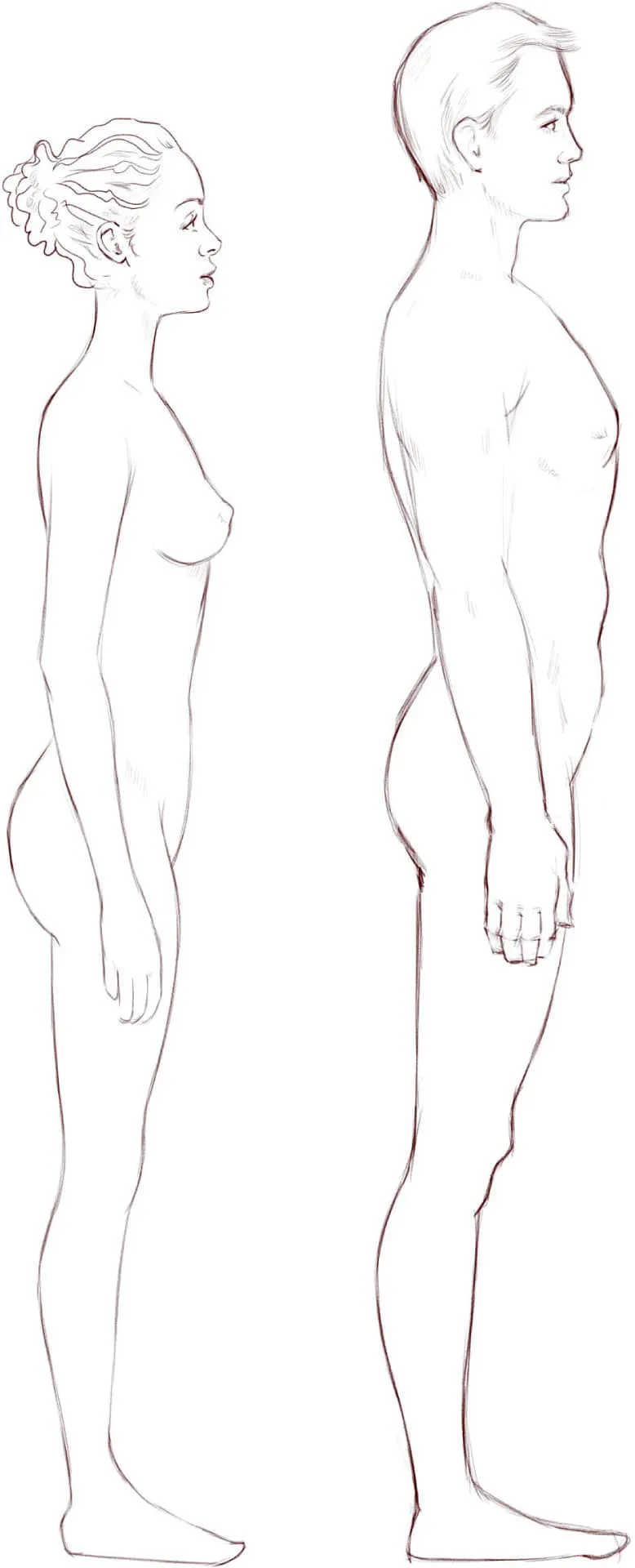
We’ve started to talk about using the head as a basic unit of measurement for the body—and it’s as good as any measurement for a rough guide. Bodies are very different, one to the next, so this is an approximation that will help you judge and estimate the relationship between body parts.


Observe both the male and female figure in profile to see the average difference in body frame.
BODY TYPES
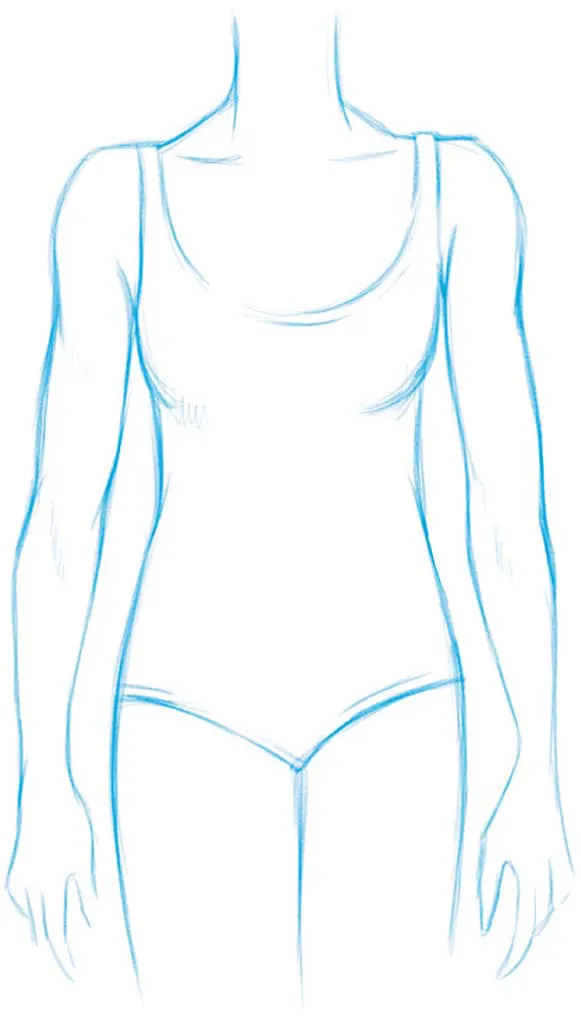
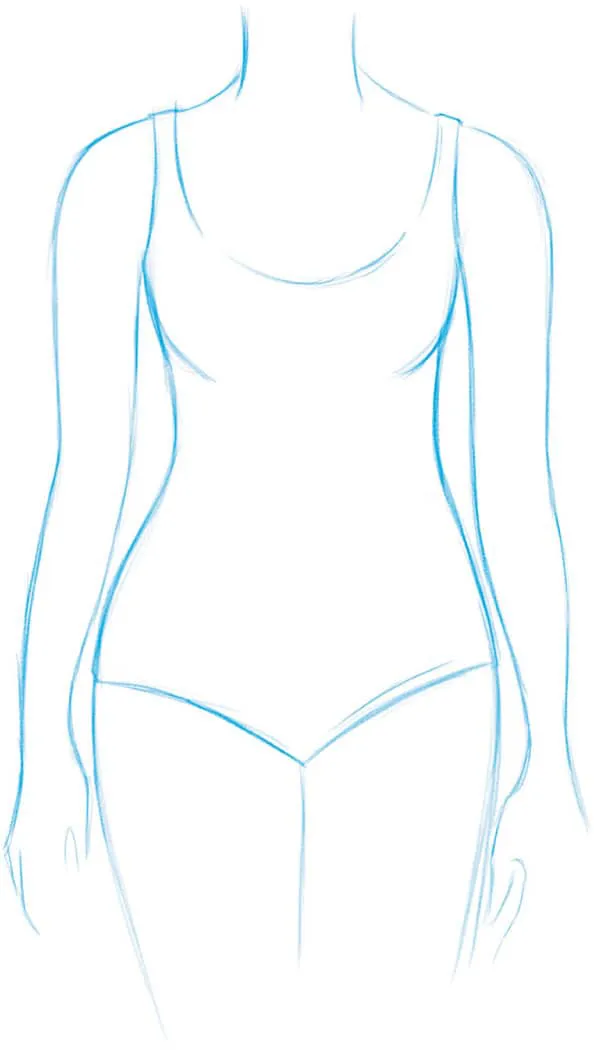
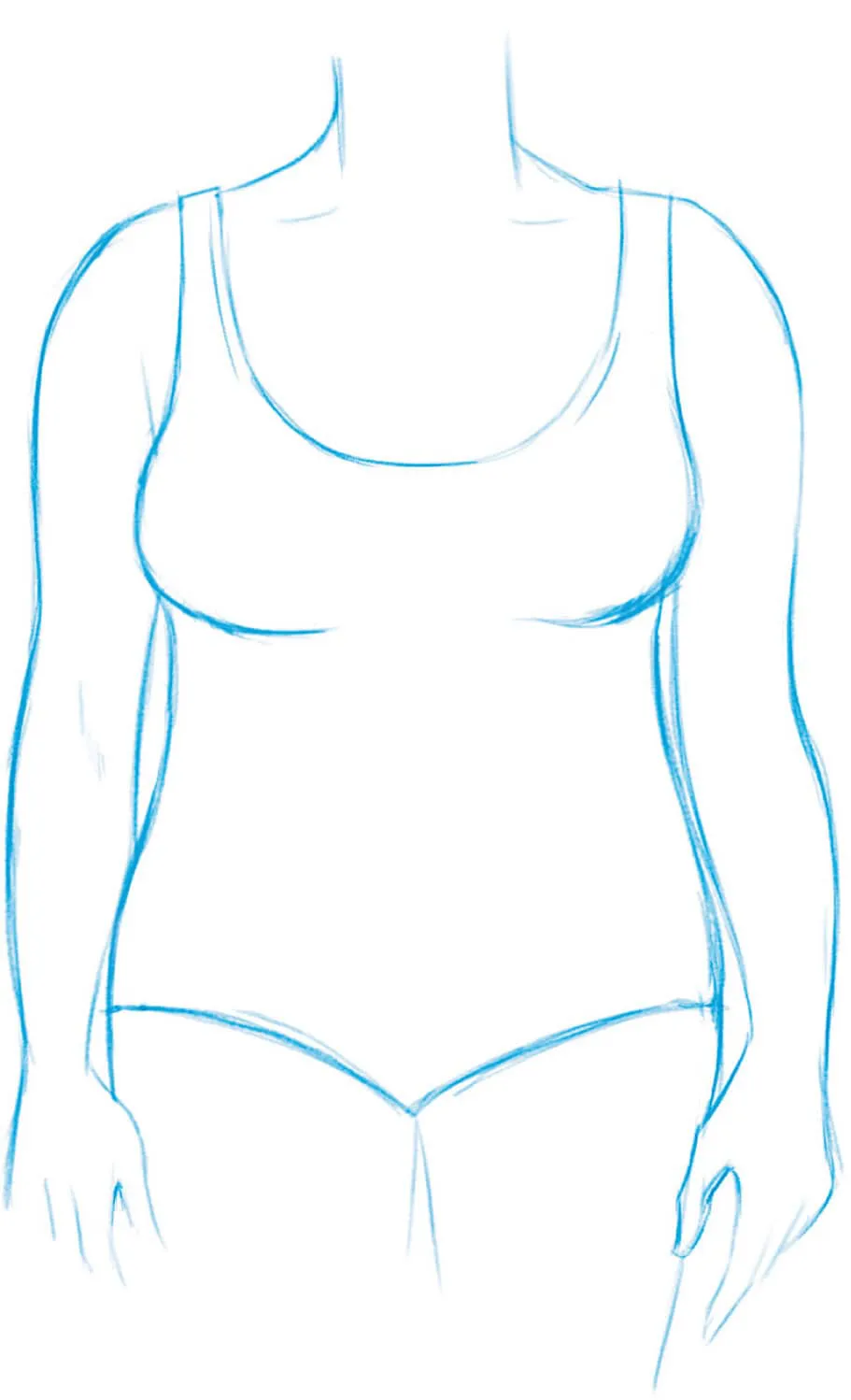
All bodies are beautiful. We’re built with wonderful variations in stature and form. Here are a few drawings I created for a fashion website that helps consumers buy the correct garments for their body shape.

Female body shapes: slim, athletic, and curvy


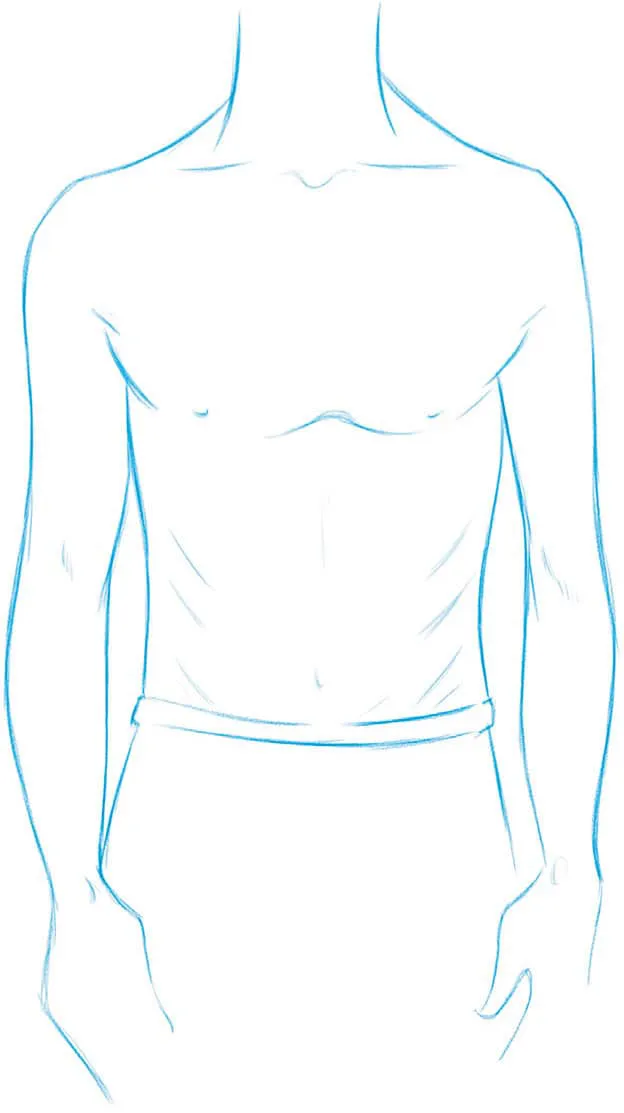
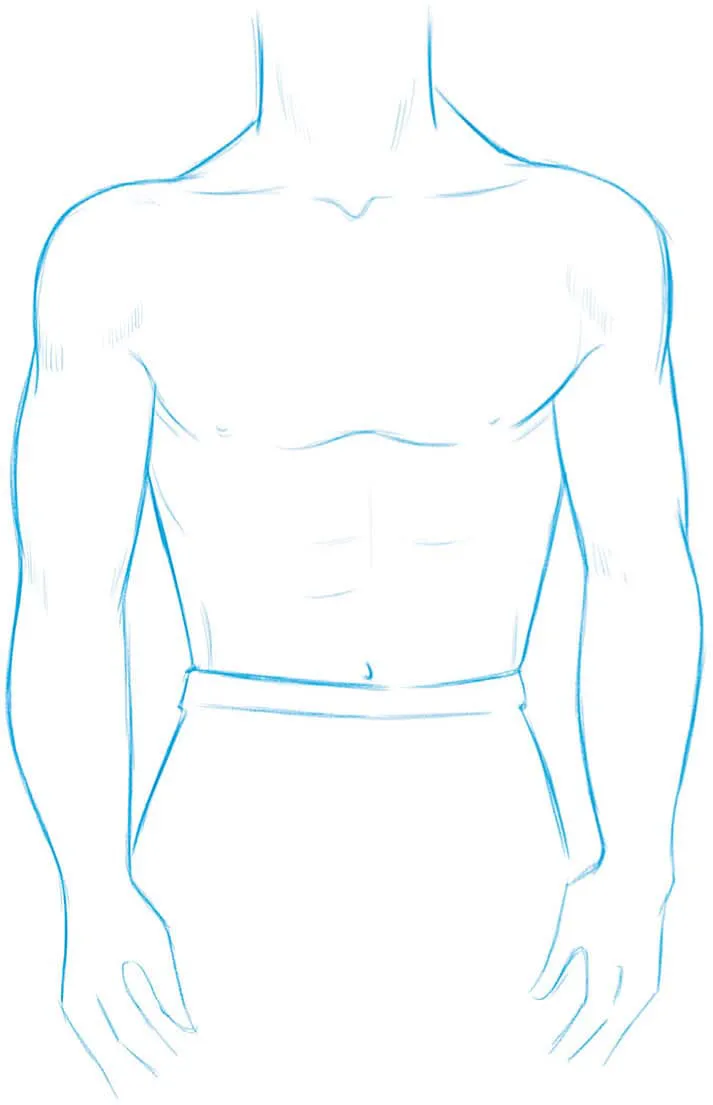
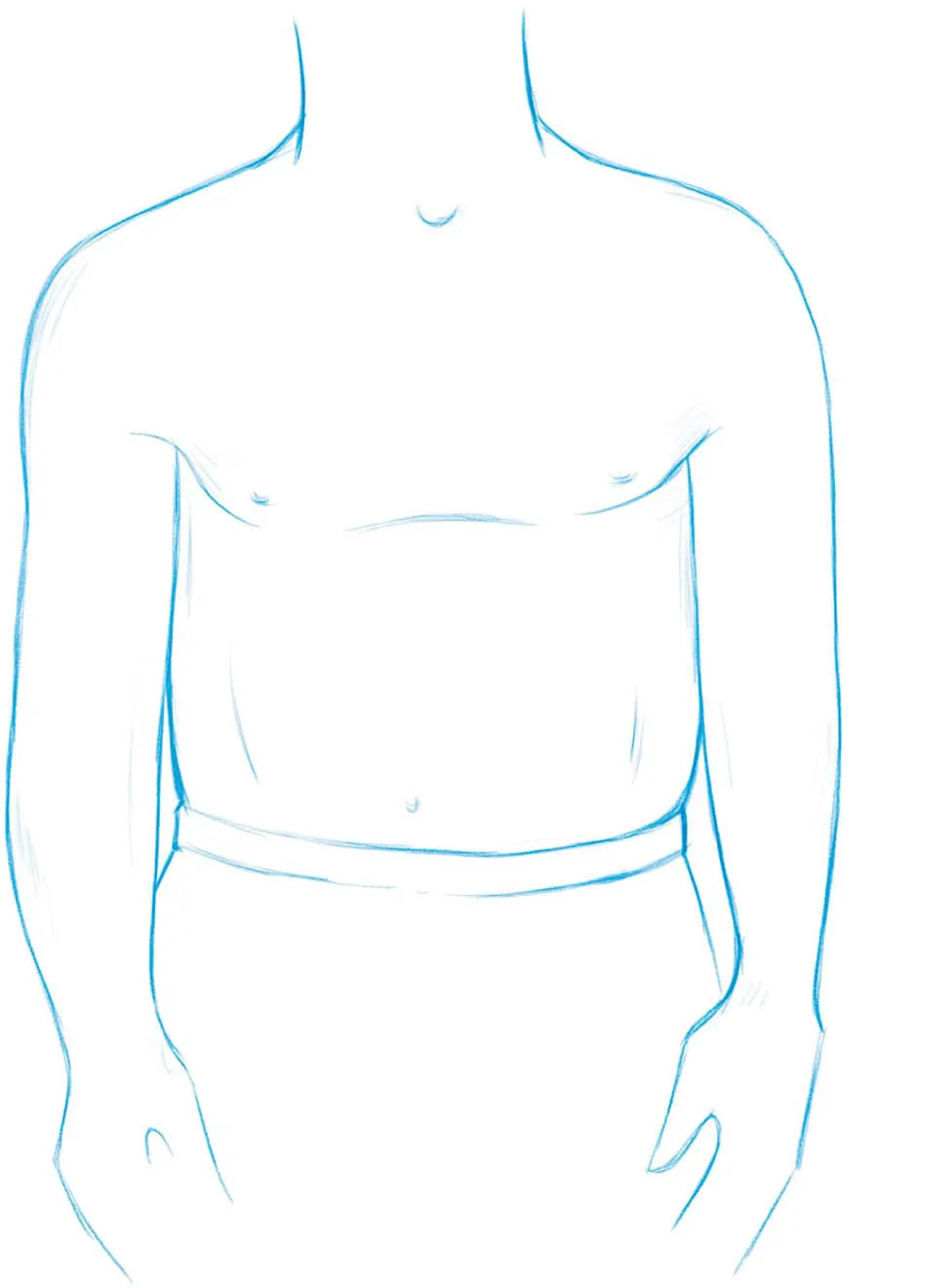
Male body shapes: slim, athletic, and thickset


Into Bloom, personal project

Work for Clinique’s makeup line; a frame from a commissioned animation
BODY PARTS
THE ARMS AND TORSO
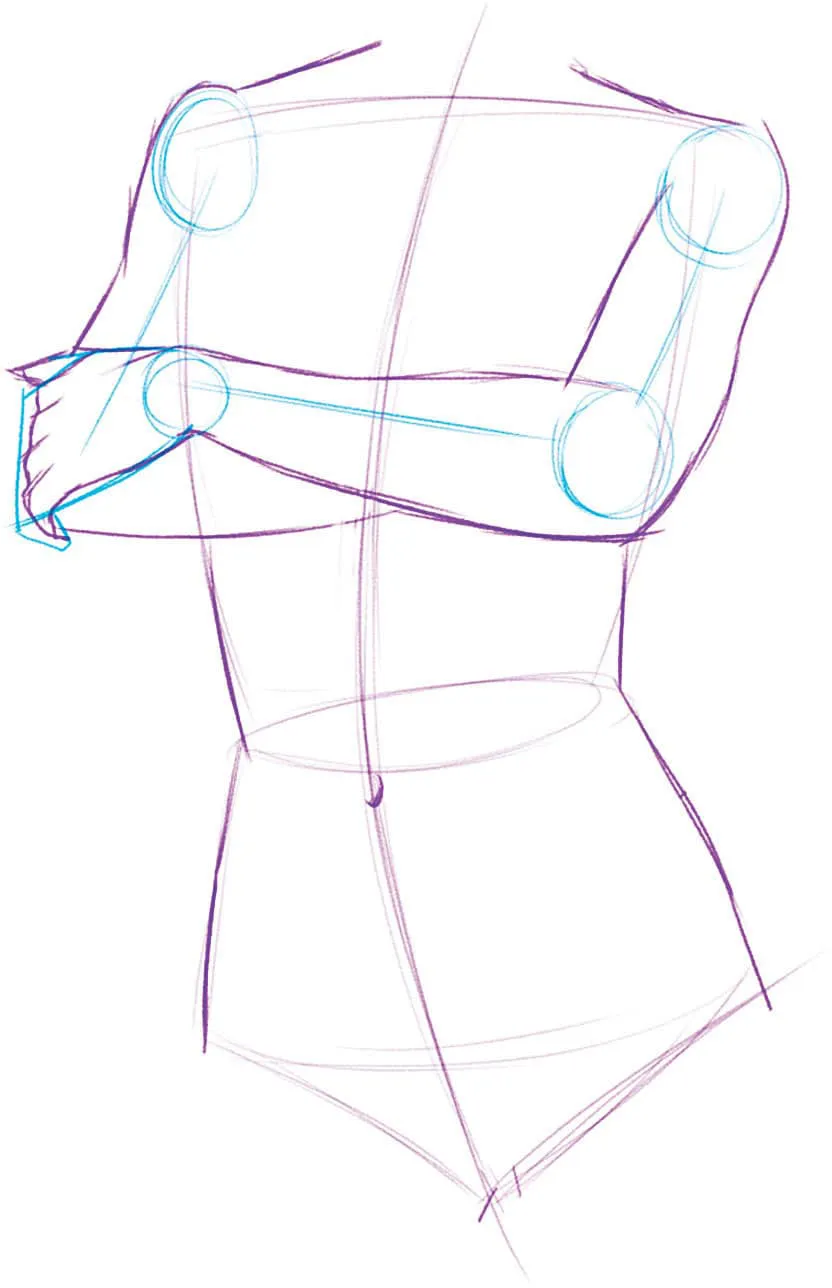
These images show you the arms in relation to the torso and spine. Look where I have added circles that show the joins of the arms and legs. Using a rhombus shape for both the body above the waist and for the body below, you can see that the elbow joints are placed approximately along the line where they connect (the waist line). Observe also how the top of the leg’s lines run from the waist line and the bottom of the rhombus.


Moving forward, you can now start adding the form to the limbs and begin to shape the body. Use pinched triangular shapes from the waist down and softer shapes on the arm guidelines.
THE LEGS
Now, you should be familiar with the lines and shapes used to create the basic form of the body.
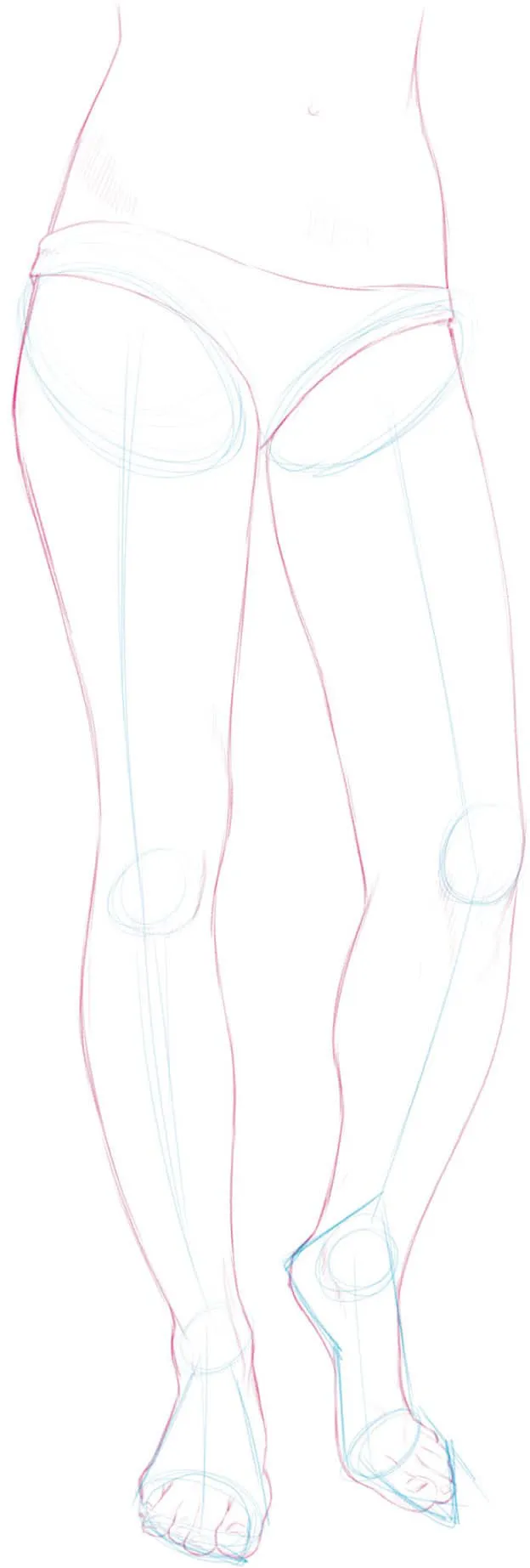
Here is a great example of the female legs in a relaxed standing position. See the difference in the foot where there is more and less weight: On the flat foot, you can see how the toes are more fanlike, whereas the lifted, lighter foot is at an angle to the leg, which lengthens the toes and almost makes them more triangular. Use angled lines on your reference to see this more clearly if you wish.

Note the oval shape that marks the lower stomach before the hips. This is where I started the drawing. After you have the oval, you can create the lines for the legs. Notice how the length between the top oval, from the pelvic bone to the knee joint, matches the length from the knee to the ankle joint.
The top of the thighs can also begin as oval shapes: See the lovely conical forms that help guide the form of the thighs. These then turn up, a little smaller this time, to shape the calves. Use ovals to mark the joints of the knees, ankles, and even the toes. Try using tracing paper over magazin...
Table of contents
- Cover
- Title Page
- Contents
- Introduction
- Part One: The Body
- Part Two: Expression
- Part Three: Out and About
- Part Four: Media Gallery
- Acknowledgments
- About the Author
- Copyright