This book is intended for electric utility managers, directors, and power system planners, regulators, and policy makers interested in the steps needed to realize the value of a modern power delivery system. This book describes the elements needed in planning and implementing a "Smart Grid" by outlining how the electricity delivery system can be modernized so it monitors, protects, and automatically optimizes the operation of its interconnected elements—from the central and distributed generator through the high-voltage network and distribution system, to energy storage installations and to end-use consumers and their thermostats, electric vehicles, appliances, and other household devices. This comprehensive guide highlights emerging concepts of cyber and physical security, resiliency, and the newest architecture—"The Integrated Grid." You'll gain an understanding of how a two-way flow of electricity and information can be used to create an automated, widely distributed energy delivery network.
- 522 pages
- English
- ePUB (mobile friendly)
- Available on iOS & Android
eBook - ePub
Smart Grid Planning and Implementation
About this book
Information
Chapter 1
What is the Smart Grid?
WHAT IS THE SMART GRID?
The Smart Grid as defined here is based upon the descriptions found in the Energy Independence and Security Act of 2007. The term “Smart Grid” refers to a modernization of the electricity delivery system so it monitors, protects and automatically optimizes the operation of its interconnected elements—from the central and distributed generator through the high-voltage network and distribution system, to industrial users and building automation systems, to energy storage installations and to end-use consumers and their thermostats, electric vehicles, appliances and other household devices.
The Smart Grid will be characterized by a two-way flow of electricity and information to create an automated, widely distributed energy delivery network. It incorporates into the grid the benefits of distributed computing and communications to deliver real-time information and enable the near-instantaneous balance of supply and demand at the device level.
SMART GRID CHARACTERISTICS: DRIVERS AND OPPORTUNITIES
The definition of the smart grid builds on the work done by Electric Power Research Institute (EPRI), in EPRI’s Intelligrid Program, (http://intelligrid.epri.com), in the Modern Grid Initiative (MGI) (NETI 2007), and in the GridWise Architectural Council (GWAC) (https://gridwise.org). These considerable efforts have developed and articulated the vision statements, architectural principles, barriers, benefits, technologies and applications, policies, and frameworks that help define what the Smart Grid is.
Smart Grid Benefits
Smart Grid benefits can be categorized into 5 types:
• Power reliability and power quality. The Smart Grid provides a reliable power supply with fewer and briefer outages, “cleaner” power, and self-healing power systems, through the use of digital information, automated control, and autonomous systems.
• Safety and cyber security benefits. The Smart Grid continuously monitors itself to detect unsafe or insecure situations that could detract from its high reliability and safe operation. Higher cyber security is built in to all systems and operations including physical plant monitoring, cyber security, and privacy protection of all users and customers.
• Energy efficiency benefits. The Smart Grid is more efficient, providing reduced total energy use, reduced peak demand, reduced energy losses, and the ability to induce end-user use reduction instead of new generation in power system operations.
• Environmental and conservation benefits. The Smart Grid is “green.” It helps reduce greenhouse gases (GHG) and other pollutants by reducing generation from inefficient energy sources, supports renewable energy sources, and enables the replacement of gasoline-powered vehicles with plug-in electric vehicles.
• Direct financial benefits. The Smart Grid offers direct economic benefits. Operations costs are reduced or avoided. Customers have pricing choices and access to energy information. Entrepreneurs accelerate technology introduction into the generation, distribution, storage, and coordination of energy.
Stakeholder Benefits
The benefits from the Smart Grid can be categorized by the three primary stakeholder groups:
• Consumers. Consumers can balance their energy consumption with the real time supply of energy. Variable pricing will provide consumer incentives to install their own infrastructure that supports the Smart Grid. Smart grid information infrastructure will support additional services not available today.
• Utilities. Utilities can provide more reliable energy, particularly during challenging emergency conditions, while managing their costs more effectively through efficiency and information.
• Society. Society benefits from more reliable power for governmental services, businesses, and consumers sensitive to power outage. Renewable energy, increased efficiencies, and PHEV support will reduce environmental costs, including carbon footprint.
A benefit to any one of these stakeholders can in turn benefit the others. Those benefits that reduce costs for utilities lower prices, or prevent price increases, to customers. Lower costs and decreased infrastructure requirements ameliorate social justice concerns around energy to society. Reduced costs increase economic activity which benefits society. Societal benefits of the Smart Grid can be indirect and hard to quantify, but cannot be overlooked.
Other stakeholders also benefit from the Smart Grid. Regulators can benefit from the transparency and audit-ability of Smart Grid information. Vendors and integrators benefit from business and product opportunities around Smart Grid components and systems.
Modern Grid Initiative (MGI) Smart Grid Characteristics
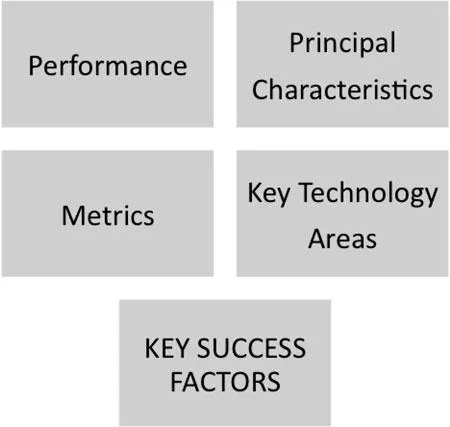
Smart Grid characteristics are prominent attributes, behaviors, or features that help distinguish the grid as “smart.” The MGI developed a list of seven behaviors that define the Smart Grid. Those working in each area of the Smart Grid can evaluate their work by reference to these behaviors. These behaviors match those defined by similar initiatives and workgroups.
The behaviors of the Smart Grid as defined by MGI are:
• Enable Active Participation by Consumers. The Smart Grid motivates and includes customers, who are an integral part of the electric power system. The smart grid consumer is informed, modifying the way they use and purchase electricity. They have choices, incentives, and disincentives to modify their purchasing patterns and behavior. These choices help drive new technologies and markets.
• Accommodate All Generation and Storage Options. The Smart Grid accommodates all generation and storage options. It supports large, centralized power plants as well as Distributed Energy Re sources (DER). DER may include system aggregators with an array of generation systems or a farmer with a windmill and some solar panels. The Smart Grid supports all generation options. The same is true of storage, and as storage technologies mature, they will be an integral part of the overall Smart Grid solution set.
• Enable New Products, Services, and Markets. The Smart Grid enables a market system that provides cost-benefit tradeoffs to consumers by creating opportunities to bid for competing services. As much as possible, regulators, aggregators and operators, and consumers can modify the rules of business to create opportunity against market conditions. A flexible, rugged market infrastructure exists to ensure continuous electric service and reliability, while also providing profit or cost reduction opportunities for market participants. Innovative products and services provide 3rd party vendors opportunities to create market penetration opportunities and consumers with choices and clever tools for managing their electricity costs and usage.
• Provide Power Quality for the Digital Economy. The Smart Grid provides reliable power that is relatively interruption-free. The power is “clean” and disturbances are minimal. Our global competitiveness demands relatively fault-free operation of the digital devices that power the productivity of our 21st century economy.
• Optimize Asset Utilization and Operate Efficiently. The Smart Grid optimizes assets and operates efficiently. It applies current technologies to ensure the best use of assets. Assets operate and integrate well with other assets to maximize operational efficiency and reduce costs. Routine maintenance and self-health regulating abilities allow assets to operate longer with less human interaction.
• Anticipate and Respond to System Disturbances (Self-heal). The Smart Grid independently identifies and reacts to system disturbances and performs mitigation efforts to correct them. It incorporates an engineering design that enables problems to be isolated, analyzed, and restored with little or no human interaction. It performs continuous predictive analysis to detect existing and future problems and initiate corrective actions. It will react quickly to electricity losses and optimize restoration exercises.
• Operate Resiliently to Attack and Natural Disaster. The Smart Grid resists attacks on both the physical infrastructure (substations, poles, transformers, etc.) and the cyber-structure (markets, systems, software, communications). Sensors, cameras, automated switches, and intelligence are built into the infrastructure to observe, react, and alert when threats are recognized within the system. The system is resilient and incorporates self-healing technologies to resist and react to natural disasters. Constant monitoring and self-testing are conducted against the system to mitigate malware and hackers.
SMART GRID CHALLENGES
The Smart Grid poses many procedural and technical challenges as we migrate from the current grid with its one-way power flows from central generation to dispersed loads, toward a new grid with two-way power flows, two-way and peer to peer customer interactions, and distributed generation. These challenges cannot be taken lightly—the Smart Grid will entail a fundamentally different paradigm for energy generation, delivery, and use.
Procedural Challenges
The procedural challenges to the migration to a smart grid are enormous, and all need to be met as the Smart Grid evolves:
• Broad Set of Stakeholders. The Smart Grid will affect every person and every business in the United States. Although not every person will participate directly in the development of the Smart Grid, the need to understand and address the requirements of all these stakeholders will require significant efforts.
• Complexity of the Smart Grid. The Smart Grid is a vastly complex machine, with some parts racing at the speed of light. Some aspects of the Smart Grid will be sensitive to human response and interaction, while others need instantaneous, automated responses. The smart grid will be driven by forces ranging from financial pressures to environmental requirements.
• Transition to Smart Grid. The transition to the Smart Grid will be lengthy. It is impossible (and unwise) to advocate that all the existing equipment and systems to be ripped out and replaced at once. The smart grid supports gradual transition and long coexistence of diverse technologies, not only as we transition from the legacy systems and equipment of today, but as we move to those of tomorrow. We must design to avoid unnecessary expenses and unwarr...
Table of contents
- Cover
- Half Title
- Title Page
- Copyright Page
- Table of Contents
- Chapter 1 What is the Smart Grid?
- Chapter 2 Smart Grid Technologies
- Chapter 3 Smart Grid Roadmaps
- Chapter 4 The Smart Grid as an Integrated Grid
- Chapter 5 Lessons Learned from the World’s Smart Grid Demonstrations
- Chapter 6 Enhancing Smart Grid Resiliency
- Chapter 7 A Grid Operating System to Facilitate the Smart Grid
- Chapter 8 The Grid As a Terrorist Target
- Chapter 9 Assuring Cyber Security
- Chapter 10 The Benefits and Cost of the Smart Grid
- Chapter 11 Factors Effecting the Demand for Electricity From the Smart Grid
- Index
Trusted by 375,005 students
Access to over 1.5 million titles for a fair monthly price.
Study more efficiently using our study tools.
Frequently asked questions
Yes, you can cancel anytime from the Subscription tab in your account settings on the Perlego website. Your subscription will stay active until the end of your current billing period. Learn how to cancel your subscription
No, books cannot be downloaded as external files, such as PDFs, for use outside of Perlego. However, you can download books within the Perlego app for offline reading on mobile or tablet. Learn how to download books offline
Perlego offers two plans: Essential and Complete
- Essential is ideal for learners and professionals who enjoy exploring a wide range of subjects. Access the Essential Library with 800,000+ trusted titles and best-sellers across business, personal growth, and the humanities. Includes unlimited reading time and Standard Read Aloud voice.
- Complete: Perfect for advanced learners and researchers needing full, unrestricted access. Unlock 1.5M+ books across hundreds of subjects, including academic and specialized titles. The Complete Plan also includes advanced features like Premium Read Aloud and Research Assistant.
We are an online textbook subscription service, where you can get access to an entire online library for less than the price of a single book per month. With over 1.5 million books across 990+ topics, we’ve got you covered! Learn about our mission
Look out for the read-aloud symbol on your next book to see if you can listen to it. The read-aloud tool reads text aloud for you, highlighting the text as it is being read. You can pause it, speed it up and slow it down. Learn more about Read Aloud
Yes! You can use the Perlego app on both iOS and Android devices to read anytime, anywhere — even offline. Perfect for commutes or when you’re on the go.
Please note we cannot support devices running on iOS 13 and Android 7 or earlier. Learn more about using the app
Please note we cannot support devices running on iOS 13 and Android 7 or earlier. Learn more about using the app
Yes, you can access Smart Grid Planning and Implementation by P.E. Gellings in PDF and/or ePUB format, as well as other popular books in Business & Management. We have over 1.5 million books available in our catalogue for you to explore.