Benjamín Valentín presents a substantive yet accessible introduction to the three central doctrines of Christian theology: God, humanity, and Christ. In an engaging style, Valentín offers an overview of each of these doctrines, delving into its tradition within the Christian community throughout history, from the writing of Scripture forward. He further explores what contemporary life tells us about this doctrine and how that compares to traditional understandings and then determines how we can reconstruct this doctrine in light of our new assessment of it. Each chapter concludes with suggested readings for further study. Throughout, Valentín highlights the diversity of Christian thought, bringing together past tradition and contemporary questions to arrive at a new understanding of what these important doctrines can mean for us today.
eBook - ePub
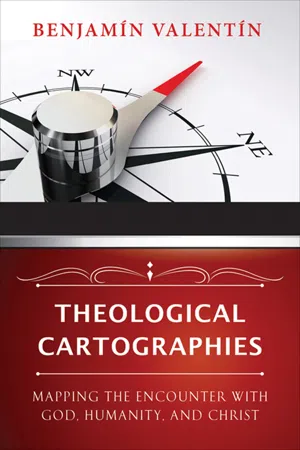
Theological Cartographies
Mapping the Encounter with God, Humanity, and Christ
- 264 pages
- English
- ePUB (mobile friendly)
- Available on iOS & Android
eBook - ePub
About this book
Information
Topic
Theology & ReligionSubtopic
Christian Theology1
“That Than Which Nothing Greater Can Be Conceived”
The Making and Remaking of the Christian Doctrine of God
Whatever this word God points toward is greater than our understanding and greater than everything we think we mean. God transcends our understanding of what that word God means. That should be the source of deep religious humility on our part.
—Diana Eck1
All that we say about God is an approximation, a model for expressing our perplexed grasp of the mystery that envelops us.
—Ivone Gebara2
INTRODUCTION
It seems that human beings have long been moved to wonder about the possibility of a transcendent reality. Some believe that the history of religion reveals that human beings have always been inquisitive in this way, that human pondering of the transcendent or divine has always been a fact of life. Others are not so sure that this capacity or penchant has always been a feature of human life. They surmise that the human mind’s aptitude for ecstasy, for concepts that transcend it, arose only later, along with cognitive and linguistic evolution. But whether the “arresting characteristic of the human mind to be able to conceive concepts that go beyond it”3 has always been a fact of life or not, what is clear is that at some point in our history, we humans began to display this apparently peculiar inquisitiveness about transcendence and/or divinity. At some point, sometime long ago, something deep within our human psyche began to prompt us to conjure up the existence of a greater power or reality at once within us and beyond us, a greater something or other that includes us yet also transcends us. Quite possibly, as the great historian of religion Rudolf Otto suggests, this penchant arose and continues to spring up today out of the recognition of the great mystery that engulfs our lives, but it may also emerge as a result of our fundamental need for meaning and orientation in life.4
The different religions that we humans have created and the different great traditions of faith we embrace refer to this transcendent reality or greater power in varying ways. Some call it Ultimate Reality, Allah, Brahma, Buddha, the Far Shore, Mother Nature, the Higher Power, as well as other names, and some may deny that this transcendence can or should be described by name at all. Just the same, it is clear that the different religions of the world not only give distinct expression to but also distinct content to the transcendent. Hence there are many different expressions for and ways of thinking about transcendence. Indeed, we should not assume that the same transcendent reality underlies all of these distinct conceptions. In Christianity and in the English-speaking world, however, the word most commonly used to think about, to speak about, and to give content to the idea of a greater power or transcendent reality is “God.”
I dare say that in our usual day-to-day experience, perhaps especially in the Western parts of the world, we may hear much mentioning of God, much talk about God—whether it is done by religious persons or nonreligious persons. Many of us often use the term “God,” all the while probably and unreflectively holding on to some understanding of what that word means or points to. However, deliberate or careful attention to what this word “God” means, what it refers to, how its meaning emerged and developed over time, and how it functions in our religious thought and practice—all this is not something we commonly do ourselves. In my own experience, I have found that practicing Christians do not often take time to ponder questions regarding the shape and content of their convictions, especially when it comes to their belief in God. Many actually have only the sketchiest idea of what they mean when they use the term “God,” and few are aware of what Christianity has actually said about God. Even Christian theologians themselves often fall short when it comes to giving full attention to the meanings and functions of the word “God” and to examining how these have emerged, developed, and multiplied over time within Christianity. More often than not, they take one or another more or less traditional understanding of God so much for granted that they simply operate under its suppositions and therefore end up ignoring the implications of the complex nature of God-talk.
This situation is unfortunate, I believe, because deliberate reflection on the meanings and functions of the term God, and consideration of the way in which these have emerged and developed over time, could be a worthwhile activity. Such an exercise could aid us in clarifying what we really mean when we use the word God, and what it might mean to believe in God. It could also lead us to want to become better aware of the understandings of God present in our inherited or accepted religious traditions. Deliberate reflection on the meanings and functions of the word God can potentially also lead to an increase in understanding of those of other faiths and even of those who share our faith but yet hold differing views about God. “How so?” you may ask. Well, it could lead to the realization that there are in fact many ways of thinking about God and to the recognition that this is so because the reality we refer to as “God” is ultimately a mystery. In these and potentially other ways, all may benefit from reflection on the meanings and functions of the term “God.” However, I think it is especially important that those who see themselves as religious scholars and educators, or as religious leaders and ministers, devote some attention to what is meant when the word “God” is employed: exploring the manner in which ways of thinking about God have functioned in our past and present, and the manner in which such ways of thinking about God developed over time.
One thing I am quite sure of is that if we granted ourselves more time and freedom to reflect on the history, meanings, and functions of this word “God,” we would come to realize how enormously weighty and perplexingly complex it is. I think we might come to realize that “God” is simultaneously the most important and yet the most elusive and therefore the most persistently questioned of all religious symbols, postulates, or convictions, perhaps especially in our late modern Western cultural context. The importance of the word, symbol, or idea of God is apparent when we consider that it functions for us as an impersonal absolute, providing us all at once with an ultimate point of reference; as a central object of religious existence (of devotion, belief, worship, prayer, and contemplation or meditation); as a vision of the human and humane (of what is good, just, loving, and righteous); and as a relativizing point of reference in terms of which all of our human values, meanings, concepts, decisions, aspirations, activities, practices, and institutions can be called into question, assessed, and reconstructed. As theologian Gordon Kaufman puts it, “By means of the symbol or word ‘God,’ humans hold together before their minds—in a complex of powerfully evocative images and concepts—those values and meanings, criteria and norms, which they believe will orient them in the world and motivate them to address their most pressing problems, while simultaneously alerting them to the questionableness and necessary tentativeness of all their this-worldly commitments.”5 Beyond this, the word or symbol “God” also functions as a kind of proper name, particularly for those who have embraced or been influenced by the great monotheistic religions (Judaism, Christianity, and Islam). “God” is the name often used to refer to that reality (whatever it might be) or to the “supreme or holy being” that not only brings into existence but also sustains and intends to bring everything that exists to its ultimate fulfillment. In more personal terms, God is understood and believed to be “the creator of the world and of all that is in it, the protector and savior who provides for creaturely wants and who sustains women and men undergoing evils of all sorts.”6
As if these intricate meanings and implications were not enough, it is also true that the term “God” encompasses an amazing variety of convictions and views regarding that to which it is taken to refer. They range from personalistic ideas of a supreme being or entity who can intervene in the affairs of the world to nonpersonal ideas of an “absolute reality” or “ultimate force” with more limited influence on life and the natural forces of the universe. There are those who conceive of God as eternal and immutable (unchanging) and those who conceive of God as temporal and/or in constant change. Some see God’s relation to the world as one that is so intimate as to be indistinguishable from the world (i.e., God is everything and everything is God—a position known as pantheism). Others strongly emphasize a distinction and separation between God and the world (i.e., God is an otherworldly reality or being that created the universe as something separate from God’s self yet comes to involvement with it by virtue of God’s creative conservation of each part of the universe and by virtue of God’s interested engagement with human history through revelation, special miraculous events, and incarnation—a position known either as conventional Western theism or supernatural theism). Then there are persons who view God and the world as dynamically interacting so that they in some ways transcend each other and yet in other respects are inwrought with each other (i.e., God dwells within and interrelates with the world yet is also more than and beyond the world—a position known either as panentheism or dialectical theism).
Besides this great variety of views regarding the character of the reality that the term “God” is taken to refer to, there is equal diversity as to what it means to believe in God. Some say belief in God requires belief in the existence of a supreme being; others take it to require the adoption of certain affective states, dispositions, or attitudes; and yet others understand it as the entrance into a specific form of religious life, with its own language and style of ritual activity.
As I am sure we can already agree, this word “God” is one that is truly remarkable and involved: it at once offers us a center for consciousness, for religious devotion, and for humane service. And it is a term, symbol, or idea connected to many distinct convictions. Thus there is good reason to call it the most important of religious symbols, postulates, and/or doctrines. Nevertheless, “of all concepts in modern cultural life—and in varying degrees for ‘believers’ and ‘doubters’ alike—the idea of God remains the most elusive, the most frequently challenged, the most persistently criticized and negated of all important convictions.”7 Many questions are at times asked about both the referent for the word “God”—that is, about the supposed reality to which the word points or refers—and about the import and use of the word “God” itself. Is there a God? If so, can such a God be experienced, known, or spoken of? And if yes, then is such experience testable, such knowledge verifiable, and such speech meaningful? Or can it be, as some have alleged, that all alleged experience of God is ultimately illusory (e.g., Sigmund Freud); that all seeming knowledge of God is but a mere projection of our human needs and wishes (e.g., Ludwig Feuerbach); that all speech about God is in fact empty and meritless (e.g., strict humanists and atheists)?8 Besides these fundamental queries, other questions can be posed and ought to draw our consideration, at least from time to time. For instance, are some ways of thinking about and talking about God today more responsible than others? Might it be that some of the individuals and groups who use the word “God” actually abuse or misuse it? And if so, what psychological, spiritual, and sociocultural consequences does this have? Is it appropriate at all to speak of “proper” and “improper” uses of this word? And if so, how can we determine this? What are the foundational tenets or features of the Christian understanding of God? What are the origins of these, and how have they developed over time? What problems or questions have been raised in regard to the predominant or conventional Christian understanding of God, and what attempts have been made to reconstruct or reconfigure Christian faith in God? These questions call attention to important issues and concerns that should be much more freely considered and discussed.
In the pages that follow, I will make an effort to give a basic explanation of how the fundamental or prevalent Christian conception of God has emerged, evolved, and been questioned and reconfigured, from biblical times to the present day. I will also seek to give at least a cursory response to some of the fundamental questions just mentioned. Admittedly, all I can do here is simply to introduce the bare outlines of the evolution of the Christian doctrine of God. The aim of this chapter is not, therefore, to grasp or to give answer to all of the implications involved in the discussion of such a complex topic, but rather to lay the foundation for a basic understanding of some of the prominent lines of development, insights, and conceptual tensions that underlie the Christian doctrine of God.
I will proceed in the following way. First, I will briefly explore the nature of language about God, highlighting its symbolic, metaphorical, and analogical character. Second, I will survey three prominent and important strands or trajectories in the history of the Christian conception of God, accounting for the Hebrew origins of, the Greek philosophical influence on, and the unique Trinitarian markings of this understanding. And third, I will discuss three kinds of problems or prominent lines of criticism expressed in more recent time regarding traditional Christian understandings of God while giving a glimpse of some ways in which various contemporary Christian theologians and traditions of thought have sought to respond to these by reconstructing or reconfiguring Christian God-talk. It is my hope that this brief tour will serv...
Table of contents
- Cover Page
- Halftitle
- Title
- Copyright
- Dedication
- Contents
- Acknowledgments
- Introduction
- 1 “That Than Which Nothing Greater Can Be Conceived”: The Making and Remaking of the Christian Doctrine of God
- 2 Deciphering the Riddle of the Human Condition: A Survey of the Insights and Efforts of Christian Theological Anthropology
- 3 God and the Potential of Life as Seen in and through Jesus: A Summary of Christology
- Index of Subjects and Authors
Trusted by 375,005 students
Access to over 1.5 million titles for a fair monthly price.
Study more efficiently using our study tools.
Frequently asked questions
Yes, you can cancel anytime from the Subscription tab in your account settings on the Perlego website. Your subscription will stay active until the end of your current billing period. Learn how to cancel your subscription
No, books cannot be downloaded as external files, such as PDFs, for use outside of Perlego. However, you can download books within the Perlego app for offline reading on mobile or tablet. Learn how to download books offline
Perlego offers two plans: Essential and Complete
- Essential is ideal for learners and professionals who enjoy exploring a wide range of subjects. Access the Essential Library with 800,000+ trusted titles and best-sellers across business, personal growth, and the humanities. Includes unlimited reading time and Standard Read Aloud voice.
- Complete: Perfect for advanced learners and researchers needing full, unrestricted access. Unlock 1.5M+ books across hundreds of subjects, including academic and specialized titles. The Complete Plan also includes advanced features like Premium Read Aloud and Research Assistant.
We are an online textbook subscription service, where you can get access to an entire online library for less than the price of a single book per month. With over 1.5 million books across 990+ topics, we’ve got you covered! Learn about our mission
Look out for the read-aloud symbol on your next book to see if you can listen to it. The read-aloud tool reads text aloud for you, highlighting the text as it is being read. You can pause it, speed it up and slow it down. Learn more about Read Aloud
Yes! You can use the Perlego app on both iOS and Android devices to read anytime, anywhere — even offline. Perfect for commutes or when you’re on the go.
Please note we cannot support devices running on iOS 13 and Android 7 or earlier. Learn more about using the app
Please note we cannot support devices running on iOS 13 and Android 7 or earlier. Learn more about using the app
Yes, you can access Theological Cartographies by Benjamin Valentin in PDF and/or ePUB format, as well as other popular books in Theology & Religion & Christian Theology. We have over 1.5 million books available in our catalogue for you to explore.