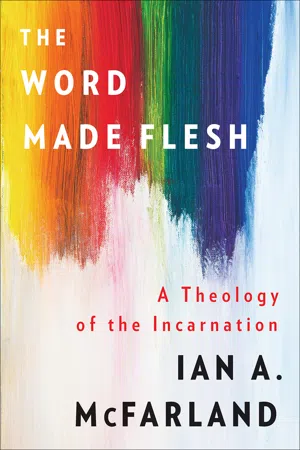
Most theologians believe that in the human life of Jesus of Nazareth, we encounter God. Yet how the divine and human come together in the life of Jesus still remains a question needing exploring. The Council of Chalcedon sought to answer the question by speaking of one and the same Son, our Lord Jesus Christ, the same perfect in divinity and also perfect in humanity, the same truly God and truly a human being. But ever since Chalcedon, the theological conversation on Christology has implicitly put Christs divinity and humanity in competition. While ancient (and not-so-ancient) Christologies from above focus on Christs divinity at the expense of his humanity, modern Christologies from below subsume his divinity into his humanity. What is needed, says Ian A. McFarland, is a Chalcedonianism without reserve, which not only affirms the humanity and divinity of Christ but also treats them as equal in theological significance. To do so, he draws on the ancient christological language that points to Christs nature, on the one hand, and his hypostasis, or personhood, on the other. And with this, McFarland begins one of the most creative and groundbreaking theological explorations into the mystery of the incarnation undertaken in recent memory.
- English
- ePUB (mobile friendly)
- Available on iOS & Android
eBook - ePub
About this book
Information
Topic
Teologia e religioneSubtopic
Teologia cristianaPART 1
The Great Divide
For my thoughts are not your thoughts,
nor are your ways my ways, says the LORD.
For as the heavens are higher than the earth,
so are my ways higher than your ways
and my thoughts than your thoughts.
—Isaiah 55:8–9
1
The Life of the Creator
Christians confess that all we see has been brought into being by God and that God is not brought into being by anything. For this reason they call God “Creator.” But how does one begin to talk about this Creator God? In general, we talk about things because we encounter them in our experience: we bang our toes on rocks, we spy a shell on the beach, the rain drenches us. But the New Testament is very clear that we don’t encounter God in that way: “No one has ever seen God” (John 1:18; 1 John 4:12).1 At one level, this claim accords well with the traditional Christian conviction that God is utterly transcendent with respect to the created order. For if, as the claim of transcendence entails, God is not one thing among other things, then the fact that no one has ever seen God is not a matter of happenstance, but intrinsic to God’s very nature. Put simply, a god we could see would not be God. As Augustine famously put it, “So what are we to say, brothers, about God? For if you have fully grasped what you want to say, it isn’t God. If you have been able to comprehend it, you have comprehended something else instead of God. If you think you have been able to comprehend, your thoughts have deceived you. So he isn’t this, if this is what you have understood; but if he is this, then you haven’t understood it.”2 Considered further, however, such assertions seem to undermine the possibility of any talk about divinity at all, since if God can’t be seen (with “seeing” standing in for every form of human perception), then God can’t be known—and then even the claim that God is transcendent seems open to question. Indeed, if God is so radically inaccessible to us as to be beyond the very possibility of human perception, it’s not clear how the word “God” could enter human language in the first place.
And yet it clearly has. It is a notable fact, upon which Christian missionaries from the earliest times to the present have capitalized, that every language seems to have a term that Christians have been able to appropriate to refer to the God they proclaim. And most Christians have interpreted this as evidence for the claim that God can be known in spite of the divine invisibility—not directly, to be sure, but by inference from what can be seen. For example, it seems that in light of the radical contingency of the entities that make up our world (whether with respect to their origin, development, or end), we are inevitably led to reflect on the overarching context that frames our experience of reality as a whole—and it is at that point that God-talk emerges.3 From this perspective, “God” is an orienting point for reflection on the ontological horizon of human experience and can therefore be said to “appear” in the world at the limits of human thinking. Even here, however, “God” seems to function only as a verbal token that marks where our empirical resources for speaking about the world run dry, thus not signaling the kind of direct apprehension of an object that would allow specification of what (let alone who) God is.
THE PROBLEM WITH GOD-TALK
The inherently content-less character of the concept of “God” that emerges from reflection on its “natural” place in human speech seems to provide no ground for ascribing any positive predicates to God. Because “God” is not an object of immediate experience, but only a marker for where our experience comes up short, once the semantic space that “God” occupies has been identified, there is no experiential basis for going on from there to fill in its content. In short, if God is transcendent, then the claim that God is invisible follows quite naturally, as do various other forms of “negative” (or “apophatic”) predication that speak of God in terms of what God is not. Thomas Aquinas, for example, argued that although reflection on the limits of human experience justified the inference that God exists, the “existence” thereby demonstrated is so peculiar that it allows no conclusions to be drawn about how God exists. Instead, he insisted, the most we can do is to show how the categories we normally use to describe existents do not apply to God.4 In short, locating the semantic space occupied by “God” does not generate theological data; instead, it only returns us to the claim that God cannot be said to exist or to be known in the way that other entities exist and are known—as some thing that can be distinguished from other things. And this brings us back to the question of whether it is possible for God to be known at all, or whether, as thinkers from Xenophanes to Freud have supposed, all talk about God is finally just a projection of human wishes and prejudices into the void that we face when we confront the limits of experience.
In light of such considerations, how does the invisible God, the one “whom no one has ever seen or can see” (1 Tim. 6:16; cf. 1 John 4:20), come to be known as real and not just posited as a hypothesis or a piece of wish-fulfillment? Here, too, Scripture is clear: “It is God the only Son, who is in the bosom of the Father, who has made him known” (John 1:18 alt.). God can be known by us because God makes God’s self known through the Son or (as named a few verses earlier in John’s Gospel) the Word, who was not only “with God” from the beginning as the one who rests in the Father’s bosom, but who “was God” (John 1:1). Exactly what it means to say that this happens—the coherence of the claim that this Word “became flesh and lived among us” (John 1:14) —will be the subject of part 2 of this book. The central point to be secured now is that the God whom we know through the Word is known only as God chooses to make God’s self known to us in this way. This God is not an object we can identify and investigate on our own by any observation of or inference from the worldly processes, however carefully managed.
Importantly, adherence to this principle does not rule out the possibility of true knowledge of God apart from explicit reference to Jesus. After all, there is plenty of talk about God in the Bible before Jesus appears on the scene, and Christians (after some initial disagreement and with a few lingering exceptions along the way) have held firmly to the conviction that the Old Testament is no less God’s word than the New. Moreover, it is clearly a central concern of the authors of the books of the New Testament to show that the God whose reign Jesus proclaims is not in every respect a heretofore “unknown God” (cf. Acts 17:23), but precisely the God of Abraham, Isaac, Jacob, Moses, David, and Israel’s prophets (see, e.g., Matt. 2:5; 26:24, 31; Luke 22:37; 24:44; John 2:17; 12:14–15; Acts 13:33; 24:14; Rom. 9:33; 11:26; 1 Cor. 1:19, 31; Gal. 3:13; Heb. 10:5–7). Yet therefrom it does not follow that knowledge of this God is altogether independent of Jesus. Forasmuch as it is true that Jesus’ divinity is inseparable from his witness to the God of Israel, so too is it the case that the knowledge of Israel’s God is theologically indispensable for Christians because it is just this God whom Jesus reveals. In other words, because the God who is revealed in Jesus—the God who cannot be seen and so can only be made known definitively by the Son, who has seen him (John 3:11, 32)—is the God who elected Israel, truthful witness to Jesus’ God cannot be given without using the language of Zion. Because Jesus is the revelation of this God, we need to know God’s ways with Israel in order to understand fully who Jesus is, even as the knowledge of God that comes from Jesus, in turn, gives definitive form to our understanding of the God of Israel (see, e.g., Rom. 11:25–32; 1 Cor. 10:1–4).5 These two points are inseparable: incarnation is misunderstood if it is not understood as the incarnation of the God of the Jews, and the identity of the God of the Jews is not fully understood apart from the incarnation.6
But what exactly can we say about the God who is known in this way? Clearly, if true knowledge of God comes through Jesus—whose life, in terms of both its immediate content and its broader Israelite context, is communicated in Scripture—then the words we use to talk about God must be grounded in the terms the biblical authors use to talk about God. And in this context it is significant that one of those things Scripture says about God is precisely that God cannot be seen. Of course, many things in the world—air, protons, physical forces like gravity and electromagnetism—also cannot be seen by the human eye, but they can be detected by other means: air can be felt, contained, and weighed; and even infinitesimal subatomic particles can be measured by their effects. But God, according to Scripture, is not subject to investigation in this way: if no one has ever seen God, this is not merely a matter of accident, nor a matter of our needing to use senses other than vision, but because God is only knowable as God is made known through the Son. So when Christians say that God is invisible, they mean that God is not detectible by us in any way whatsoever: cloud chambers and compass needles allow us to track the paths of protons and magnetic lines of force, but no apparatus we can construct allows us to track God.7
And yet Scripture proclaims not only that we can and do come to know God, but also that among the things we come to know is precisely that God is invisible. And, crucially, the biblical basis for this claim is not generalized reflection on the limits of human experience, but precisely God’s own act of self-disclosure:
Then the LORD spoke to you out of the fire. You heard the sound of words but saw no form; there was only a voice. . . . Since you saw no form when the LORD spoke to you at Horeb out of the fire, take care and watch yourselves closely, so that you do not act corruptly by making an idol for yourselves, in the form of any figure. (Deut. 4:12, 15–16)
In short, Christians claim that God is invisible because God has shown God’s self to be invisible—self-contradictory though such a claim may seem. This showing culminates in Jesus: yet his being “the image of the invisible God” (Col. 1:15; cf. John 12:45; 14:9) does not cancel divine invisibility but confirms it, since it is precisely God’s definitive self-disclosure in Jesus that gives rise to the claim that “no one has ever seen God.” Thus, within a properly Christian theological perspective, divine invisibility is not to be understood as a conclusion derived from a lack of knowledge of God, but rather as the immediate content of God’s own direct act of self-disclosure.8 That is, God’s invisibility is not inferred but seen, albeit indirectly, in the sense that when God makes God’s self available to creaturely perception—whether in the call of Abraham, the burning bush, or the incarnation—God is never encountered as an object. Even in the case of Jesus, what is heard, seen, looked at, and touched (1 John 1:1) is never the divine nature itself, which always exceeds the creaturely medium through which it becomes known. In every encounter with the creature, God remains subject, so that although God thereby comes to be known objectively, the knower’s absolute dependence on God’s initiative in the process means that the God so known can never be objectified. To do so would be to identify the divine nature with a phenomenal reality in a way that betrays the character of revelation as precisely the making known of the God “whom no one has ever seen or can see.”
In this way, the biblical account of God reaffirms the fundamentally negative or apophatic observation with which our exploration of the word “God” began: our incapacity to say anything about how God exists. As such, it points to a much broader array of predicates that similarly highlight the impossibility of treating God as one object alongside others, and thus in any way at our disposal. Many of these (e.g., infinite, immense, immaterial, immortal, unchangeable, impassible, uncircumscribable) take the same morphologically negative form as “invisible.” Others carry negative force, even if lacking a negative prefix, in denying that God is relative to any other entity (aseity), that God is in any sense composite (simplicity), or that God is contained in time (eternity). Whatever their verbal form, all such predicates point to the conviction that God cannot be treated as one item alongside others because God transcends the conceptual categories we use to distinguish one entity from another by ascribing to it certain qualities (“black,” “round,” “metallic”) instead of others (“yellow,” “oblong,” “organic”). To say that God is transcendent, in other words, is to affirm that God does not fall under any category. As medieval theologians quipped, Deus non est in genere, “God is not a kind of anything.”
Indeed, if God cannot be categorized, then it seems to follow that the only way to speak of God accurately is to speak of God negatively, using words like “invisible” to deny that the kinds of predicates (e.g., color, size) we generally use to differentiate items from one another can be applied to God. To be sure, the rhetorical effect of these terms can sometimes betray that intent, so that (e.g.) the attributes of unchangeability and impassibility have been understood to imply that God is static, inert, and indifferent with respect to the world in a manner that hardly accords with the Bible’s characterization of God as “a devouring fire, a jealous God” (Deut. 4:24; cf. Exod. 34:14; Josh. 24:19; Ezek. 39:25). Rightly understood, however, the point of such attributes is not to define God by contrast with worldly realities, for that effectively reintroduces a scheme in which God is treated as one object among others (viz., x as opposed to y). But divine transcendence means that God isn’t rightly understood as either like or unlike other entities in the sense of being characterized by some attributes rather than others: as big rather than small, black rather than white, here rather than there, or, most generally, this rather than that. Instead, the point of using negative predicates of God is to signal that God’s distinctiveness is not properly expressed in terms of contrast with other entities.9 To make this point clear, the fifteenth-century theologian Nicholas of Cusa referred to God as Non aliud, “Not Other,” not meaning to promote a pantheism in which God is identified with the world of nondivine being (i.e., as if “Not Other” were equivalent to “The Same”), but rather to suggest that the “difference” between God and the world has no ready analogue in our everyday experience.10 God is “Not Other,” insofar as “other” is a term used to designate one item among others in a series. In this sense, “Not Other”—itself, of course, a form of negative predication—highlights the role that all apophatic predicates play in keeping Christian talk about God faithful to Scripture’s witness to divine transcendence.
And yet as important as these negative predicates are, their theological role is inherently formal. They discipline Christian speech about God so that at every point it ...
Table of contents
- Cover
- Half Title
- Title Page
- Copyright
- Contents
- Preface
- Abbreviations
- Introduction: A Chalcedonianism without Reserve
- Part 1. The Great Divide
- Part 2. The Bridge
- Part 3. The Crossing
- Conclusion: “As Is the Word, so Is God”
- Bibliography
- Scripture Index
- Subject Index
- Excerpt from From Nothing: A Theology of Creation, by Ian A. McFarland
Trusted by 375,005 students
Access to over 1.5 million titles for a fair monthly price.
Study more efficiently using our study tools.
Frequently asked questions
Yes, you can cancel anytime from the Subscription tab in your account settings on the Perlego website. Your subscription will stay active until the end of your current billing period. Learn how to cancel your subscription
No, books cannot be downloaded as external files, such as PDFs, for use outside of Perlego. However, you can download books within the Perlego app for offline reading on mobile or tablet. Learn how to download books offline
Perlego offers two plans: Essential and Complete
- Essential is ideal for learners and professionals who enjoy exploring a wide range of subjects. Access the Essential Library with 800,000+ trusted titles and best-sellers across business, personal growth, and the humanities. Includes unlimited reading time and Standard Read Aloud voice.
- Complete: Perfect for advanced learners and researchers needing full, unrestricted access. Unlock 1.5M+ books across hundreds of subjects, including academic and specialized titles. The Complete Plan also includes advanced features like Premium Read Aloud and Research Assistant.
We are an online textbook subscription service, where you can get access to an entire online library for less than the price of a single book per month. With over 1.5 million books across 990+ topics, we’ve got you covered! Learn about our mission
Look out for the read-aloud symbol on your next book to see if you can listen to it. The read-aloud tool reads text aloud for you, highlighting the text as it is being read. You can pause it, speed it up and slow it down. Learn more about Read Aloud
Yes! You can use the Perlego app on both iOS and Android devices to read anytime, anywhere — even offline. Perfect for commutes or when you’re on the go.
Please note we cannot support devices running on iOS 13 and Android 7 or earlier. Learn more about using the app
Please note we cannot support devices running on iOS 13 and Android 7 or earlier. Learn more about using the app
Yes, you can access The Word Made Flesh by Ian A. McFarland in PDF and/or ePUB format, as well as other popular books in Teologia e religione & Teologia cristiana. We have over 1.5 million books available in our catalogue for you to explore.