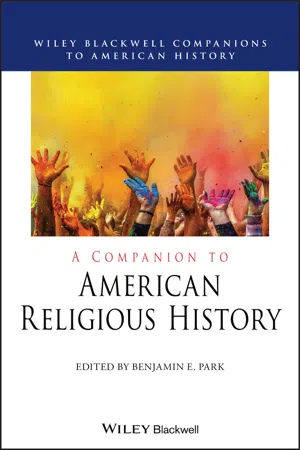
Every year in early spring, millions of Hindus across the globe gather to celebrate the end of winter and the blossoming of life. The day‐and‐a‐half event, filled with distinct ceremonies, includes a series of rituals and prayers, yet it is best known for the festival of colors, the Rangwali Holi, in which participants smear themselves and each other with bright powder while accompanied by vibrant music. Large crowds dance, sing, and march as they spread their joyful colors and voices throughout the festival grounds and surrounding streets. And while the Holi Festival originated in India, it has spread outside of Asia and into many nations in the western hemisphere, including places where Hinduism makes up a small percentage of the population.
One of the largest Holi festivals takes place in Washington DC, where thousands of young Americans — most of whom are white, Christian, and know very little about Hinduism — gather at the Hare Krishna Temple to participate in this global Hindu celebration. While ignorant of the theological origins of the event, and not too interested in the rites that accompany the festival, they are mostly concerned with the joyous celebration. Social media accounts, newspaper editorials, and magazine features are then filled with these high school‐ and college‐aged kids doused in vibrant colors and hailing the beauty of life.
That thousands of young, white, and Christian Americans could participate in an annual Hindu festival near the nation’s capital would have seemed bizarre only a century earlier. In 1893, for instance, many prominent religious and political leaders worried that the Asian religions that were being featured at that year’s Parliament of World Religions might corrupt the country’s youth, and therefore did their best to ban “heretical” practices like yoga and belly dancing — let alone ornate ceremonies with thousands of attendees. For a nation still controlled by a Protestant majority that acted as a quasi‐religious establishment, such measures could still be practiced.
But in the twenty‐first century, the Holi Festival in DC captures many of the central elements of American religion: its embedded nature within the national culture, its diversity of sacred expression, as well as the porous nature of its spiritual boundaries. Previously marginalized practices that were seen as threatening are now embraced as a joyous embodiment of diverse cooperation. But to understand how this came to be, we must examine the many trajectories that culminated in the modern American religious marketplace.
* * *
Wherever one looks in modern America, they are confronted with the pervasive influence of religion. Most politicians are sworn in on the Bible, Qur’an, or Tanakh; “In God We Trust” is found on national currency; the Pledge of Allegiance beseeches the name of deity; and athletes frequently offer thanks to a higher power after their athletic achievements. This influence is even found in popular culture. In 2017, for instance, one of the most popular new songs was Kesha’s “Praying” (drawing on the ritual of invocation), and one of the new hit television series was NBC’s “The Good Place” (exploring competing ideas of the afterlife). Whether on the campaign trail, stage, athletic fields, or in shopping centers, then, religious ideas and language have become ubiquitous within American culture. Yet beyond this veneer of a shared culture is a complicated and evolving web of diverse expressions and conflicting values.
It has always been such. The earliest peoples who inhabited the land that eventually became America, thousands of Indigenous tribes with as many belief systems as languages, viewed society in a way that blended the material and spiritual; for many of them, there was little difference. Later, European settlers were as interested in spreading their religion as they were in colonizing land and building capital; to these newcomers, their particular form of Christianity was synonymous with civilized progress. And among those that were then expected to build these new societies were enslaved African laborers transported against their will; yet even these communities, many of whom were forced to leave their religious cultures behind, succeeded in developing spiritual practices that provided meaning to their lives and resistance to their oppressors. The North American colonies were founded upon these varied experiences.
By the time the United States was formed as an official polity, the landscape was littered with different — and often competing — religious cultures, so much so that it was impossible to identify and install a national, established religion. What resulted was therefore a spiritual marketplace that allowed all denominations — or at least those not deemed as a threat — to contend for converts under a broad, if not always consistent, umbrella of religious freedom. The vibrancy of this democratic experiment invited new innovations and radical interventions, as traditional churches now battled with upstart sects for the young nation’s attention. Then, as the country evolved into an empire, religions were both martialed as part of that imperial pursuit as well as deployed to oppose those very aims; simultaneously, marginalized groups drew on religion in their efforts to oppose racial, economic, and gender oppression, and claim what they believed were constitutional, God‐given, rights. In the twenty‐first century, though religious affiliation has slightly decreased, the United States still polls much more religious than her European peers, in large part because of the traditions that built the country in the first place.
The story of America, then, can only be understood when taking into account the deep and divergent influences of religion. A Companion to American Religious History, designed as a primer for students of American history in general, exposes readers to the significance, variety, and malleability of the nation’s religious past. The most recent generation of scholarship has produced a plethora of exciting and revisionist interpretations in the field, and this volume condenses and explains them for a new generation of students.
This Companion is unique, then, in its attempt to prove religion’s centrality to broader historical narratives and themes. It is not just a story of religion in America, but a story of how religion shaped American history. It prioritizes chronological periods and larger contextual issues in order to introduce students of America’s past to religion’s role in the stories and events that already populate textbooks. The volume is a bridge between the robust field of American religion and the wider community — and especially the numerous classrooms — of American history writ large.
In a nation still struggling to define the parameters of pluralism, A Companion to American Religious History provides both a historical genealogy for the country’s various religious traditions as well as meaning for its many cultural expressions.
* * *
This volume does not offer a comprehensive story, nor does it cover every single significant episode. Instead, it offers poignant case studies of distinct moments, movements, or themes that demonstrate the potency of America’s religious past. Each chapter takes a theoretically small story and gleans much broader lessons, often framed through the lived experiences of those involved. These microhistories and thematic overviews are meant to give students of American history an entry point for understanding the legacies of the nation’s religious traditions, as well as prompt further reflection and discussion related to the inchoate roles that belief and action have played in American culture.
Though a number of lessons could be prioritized, and while many chapters move in different directions and draw from divergent discourses, three themes hold this volume together. First, that religion has been central to American history, and that one cannot understand broader historical moments without investigating the religious actors and ideas that played a significant role. Whether it be European colonization, the American Revolution, slavery, territorial politics, imperialism, Gilded Age capitalism, the Civil Rights movement, or modern‐day television, religion shaped how many citizens understood and challenged the world around them. Therefore, much of this volume is structured to augment courses focused on American history more broadly, proving religion’s significance to the larger story.
A primary reason that religion is often downplayed in synthetic historical works is the cultural chasm between America’s predominantly religious culture and the increasingly secular nature of the academy. Historians are hesitant to provide ammunition to cultural warriors hell‐bent on proving the United States as a “Christian nation,” and are instead mostly interested in deciphering the real motivations — social, cultural, economic, or political — beyond the religious rhetoric. Yet granting the depth of religious influence in America’s past does not validate arguments for religious significance in the present; indeed, a better understanding of the variety, not just the gravity, of religious history often undercuts the type of cultural arguments that typically make academics blanche.
Second, chapters in this volume highlight the diversity of the nation’s religious past. Though universalistic symbols and the common language of a “Christian Nation” seem to imply religious homogeneity, and while many Christians have envisioned a nation held together by shared beliefs, the reality is that America’s story is filled with a vast array of different voices and distinct practices. At no point was there a shared creed, and all attempts for a joint identity were the result of an anxiety derived from entrenched pluralism. Individual case studies in this collection therefore highlight these diverse expressions, whether the variety is found in race, class, denomination, geography, or gender. Indeed, this volume eschews the typical discourse of an American religion in favor of American religion s .
Among the many forms of religious diversity this collection highlights are a sustained focus on Black and Indigenous religions. When it comes to African American religiosity, an explosion of recent scholarship has demonstrated its depth and variety, yet broader synthetic studies have still marginalized non‐white experiences to the peripheries of the story, or, at the most, separated them into distinct frameworks. This volume, by contrast, attempts to integrate Black religious movements and ideas into mainstream trajectories of American life, ranging from the non‐Christian religious practices of the enslaved, the Black prophetic tradition found among abolitionists, or the use of religion during the post‐emancipation period to secure constitutional liberties. In every section of this volume, readers will be exposed to how Black religion was central to understanding its particular era.
These historiographic issues are even more complicated with Indigenous religions. Since traditional stories of America’s religious past have been framed by white Protestant interests, the spirituality of Native Americans have typically been ignored or dismissed altogether. A theology of invisibility concerning Indigenous religiosity, not too dissimilar from the manifest destiny doctrine that dispossessed Native tribes, has erased a crucial part of the nation’s story. Yet the variety and centrality of Indigenous religious practices and ideas can no longer be avoided. Whether it be the Wampanoag who challenged the Puritan’s Godly settlement, the Lenape who tested the boundaries of Pennsylvania’s inclusive vision, the Delaware who opposed Western expansion, the Haudenosaunees who appropriated their own form of spirituality, the Pueblo who pushed back against evolving federal policies, or the Mohawk who carved out a portion of Pentecostalism, every section in this volume contains at least one substantive example of Native American religiosity. This collection therefore aims to add to the reparation project of reintegrating these voices into America’s past.
The third and final theme of this volume is the malleability that came with religious interaction. No religious tradition ever existed in a vacuum, but rather acted within a context of competing views and beliefs. This is especially true of the denominations and communities that have squeezed into America’s boundaries as cultural contact and exchange became a consistent feature of American culture. Very few chapters in this volume examine one religion in isolation. Rather, most focus on how different communities reacted to their surrounding society, including other denominations and racial groups. Students will recognize that American religion was an evolving tradition with porous boundaries and interdependent trajectories. Only by highlighting the broader forest can the significance of each tree become clear.
* * *
A Companion to American Religious History is separated into five parts, each framed around a chronological period. Every section is based on the diversity of expressions within its own era. The first part, “Colonialism,” briefly examines three different colonial projects that preceded the American Revolution. First, Richard Boles unpacks a typical New England town to show that religious diversity and contestation were always present, even in what was supposed to be a Puritan hamlet. Moving south, Rachel Wheeler exhibits how multiple communities — Moravian and Native — intersected within confined spaces. Both of these chapters give particular attention to the Indigenous tribes who were dispossessed by these religious colonization attempts. And finally, the section concludes with Jason Young’s examination of enslaved religiosity throughout the colonial period.
The imperial crisis that rocked the North American continent during the late‐eighteenth century and the creation of a new American nation each spurred novel and contested directions in religious life. Part Two, “Establishment,” focuses on how new traditions were both established and disestablished during the American Revolution, as well as appropriated during the few decades that immediately followed. While nearly everyone in the formerly British colonies were forced to choose a side in the conflict, few faced such daunting choices as the clergy. Peter Walker’s chapter zeroes in on the loyalist ministers who tried to stay faithful to the English crown, drawing upon a rich martyrdom legacy to do so; conversely, Christopher Jones’s chapter follows a radical clergyman and his Methodist flock, including a number of free black believers, as they navigated numerous boundaries — both denominational and geographic — during an age of Atlantic rebellions. But what about the newly United States’ creation of religious liberty that followed the political conflict? Sarah Barringer Gordon’s study of the origins of disestablishment in Virginia reveals that one of the nation’s most cherished ideals — religious freedom — was surprisingly tethered to one of its most controversial: a resurgence of pro‐slavery arguments. But more than just political frameworks, Jon Sensbach’s microhistory of one African‐born man named Abraham unpacks the lived realities of enslavement and conversion. And finally, Lori Daggar’s examination of the Delaware Tribe’s witch hunt, and Jennifer Dorsey’s chapter on the Shakers, demonstrate that the tensions of disestablishment and innovation crossed ...