
Biobased Composites
eBook - ePub

Biobased Composites

Processing, Characterization, Properties, and Applications

  1. English
  2. ePUB (mobile friendly)
  3. Available on iOS & Android
eBook - ePub

About this book

Explore the world of biocomposites with this one-stop resource edited by four international leaders in the field

Bio-basedComposites: Characterization, Properties, and Applications delivers a comprehensive treatment of all known characterization methods, properties, and industry applications ofbio-basedcomposites materials.This unique, one-stop resource covers all major developments in the field from the last decade of research into this environmentally beneficial area.

The internationally recognized editors have selected resources that represent advances in the mechanical, thermal, tribological, and water sorption properties of bio-based composites, and cover new areas of research in physico-chemical analysis, flame retardancy, failure mechanisms, lifecycle assessment, and modeling of bio-based composites.

The low weight, low cost, excellent thermal recyclability, and biodegradability of bio-based composites make them ideal candidates toreplace engineered plastic products derived from fossil fuel. This book provides its readers with the knowledge they'll require to understand a new class of materials increasingly being used in the automotive and packaging industries, aerospace, the military, and construction. It also includes:

  • An extended discussion of the environmental impact of bio-based composites using a lice cycle methodology
  • A review of forecasts of natural fiber reinforced polymeric composites and its degradability concerns
  • An analysis of the physical and mechanical properties of a bio-based composite with sisal powder
  • A comprehensive treatment of the mechanical, thermal, tribological, and dielectric properties of bio-based composites
  • A review of processing methods for the manufacture of bio-based composites

Perfect for materials scientists in private industry, government laboratories, or engaged in academic research, Bio-BasedComposites will also earn a place in the libraries of industrial and manufacturing engineers who seek a better understanding of the beneficial industrial applications of biocomposites in industries ranging from automobiles to packaging.
Tools to learn more effectively

Saving Books

Saving Books

Keyword Search

Keyword Search

Annotating Text

Annotating Text

Listen to it instead

Listen to it instead

Information

1
Introduction to Biobased Composites

Faris M. AL‐Oqla
Department of Mechanical Engineering, The Hashemite University, Zarqa 13133, Jordan

1.1 Introduction

Tons of industrial wastes are dumped daily in every region of the world, making the recycling of these wastes a very critical environmental concern. For environmental‐friendly industries, materials from renewable resources should be used to replace conventional materials. Hence, the sustainability will be ensured, and cheaper as well as ecological alternative products will compete with the current products from nonrenewable resources [1–3].
Biobased composite materials and green products are increasingly substituting the traditional materials and products in a wide range of applications for sustainable industries, though massive efforts are still essential to better exploit such biomaterials as well as to expand their applications [4–6]. Moreover, the necessity to advance their potentials for consistent and reliable performance is still demanding [7]. To achieve these goals, founding a well‐organized and robust evaluation and selection system for the composite constituents is the most important step [8, 9]. In such techniques, several preferred fibers as well as polymer assets including mechanical, physical, economic, and environmental, have to be revealed in parallel and assessed to determine the best type of fibers for a certain application [9–11]. Further, proper capabilities and performance of new materials including the biobased ones, would enhance their industrial applications.
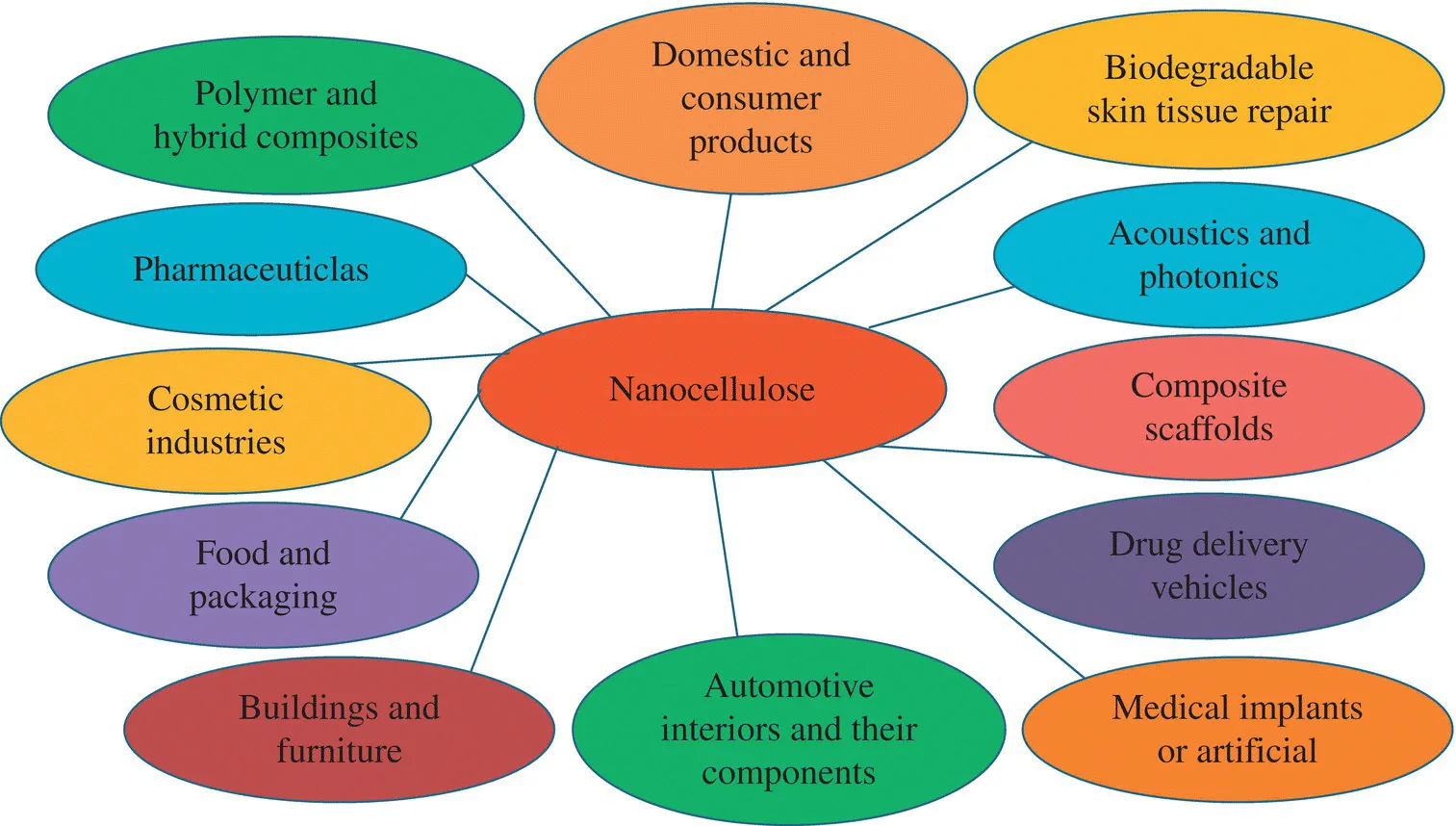
The weather, on the other hand, is also reaching more extremes in both hot and cold conditions and negatively affecting the available resources and the environment. Ice formation is sharply decaying over the past years due to climate changes. It is believed that the fast‐increasing manner of temperature over years due to global warming leads to shorter winters, breaking the natural balance in climate resulting in the destruction of available resources. The rising of sea level due to melting of ice is also a serious problem that can lead to catastrophic disasters on the sea‐neighbor lands, which would negatively affect the environment. Natural fibers are considered renewable resources and can be recycled from many industrial process wastes. These natural fibers are obtained from plant sources, such as hemp, or from animal sources [12, 13]. Natural fibers of plant sources comprise cellulose, hemicellulose, and lignin; natural fibers of animal sources consist of mainly proteins. Natural fibers can be utilized in various sizes from macro‐ to nanoscale fibers. For instance, the nanocellulose fibers can be utilized in a wide range of applications as indicated in Figure 1.1.
Schematic illustration of nanocellulose applications.
Figure 1.1 Nanocellulose applications.
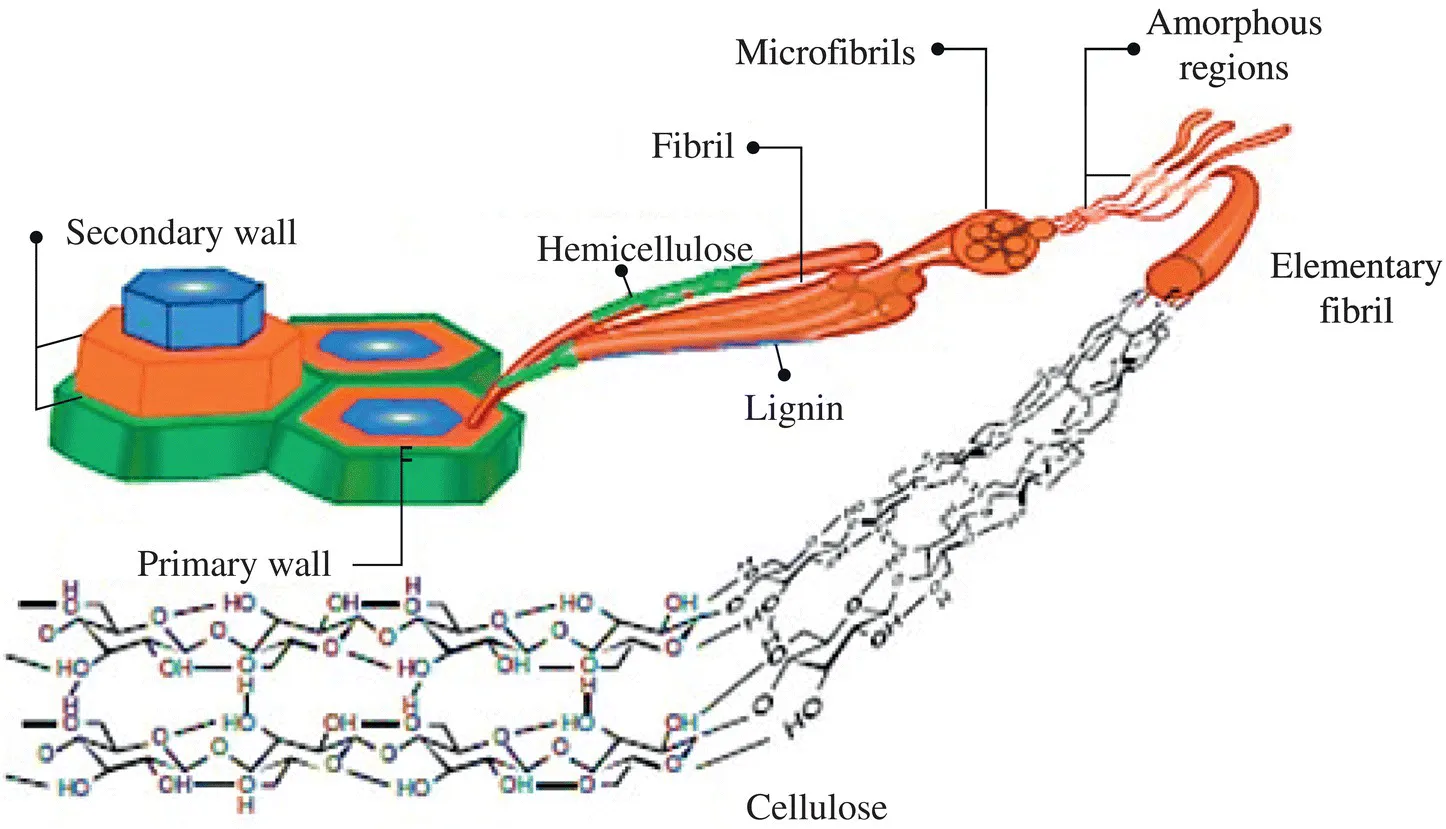
Schematic illustration for the structure of cellulose extracted from plants.
Figure 1.2 Illustration for the structure of cellulose extracted from plants.
Figure 1.2 illustrates the structure of cellulose extracted from plants as a 3D illustration showing the plant cross‐sectional walls, hemicellulose, lignin, fibril, microfibrils, the amorphous region, and cellulose.
In general, the natural fibers are used in polymer composites as reinforcement [14–17]. Hence, the properties of these composites will directly be influenced by the type of fibers used, their aspect ratio (length/width), their extraction processes, and their interaction with the matrix material [18–20].

1.2 Biodegradable Materials

Biodegradable materials are increasingly demanded to replace the conventional materials. Thermoplastic starch, for instance, is obtained from corn, potatoes, or other cereals. It mainly consists of amylose and amylopectin. As thermoplastic starch has highly sensitivity toward hydrolysis, and due to its low mechanical performance, it is usually used as a matrix for composites and not as a reinforcement. However, the starch phase is blended with polyesters to produce very interesting biodegradable products [21–23]. Examples of such products are commercially available in many fields such as the food packaging industry and in the manu...

Table of contents

  1. Cover
  2. Table of Contents
  3. Title Page
  4. Copyright Page
  5. List of Contributors
  6. Preface
  7. 1 Introduction to Biobased Composites
  8. 2 Processing Methods for Manufacture of Biobased Composites
  9. 3 Physicochemical Analysis of Biobased Composites
  10. 4 Characterization of Biobased Composites
  11. 5 Mechanical, Thermal, Tribological, and Dielectric Properties of Biobased Composites
  12. 6 Flame Retardancy of Biobased Composites
  13. 7 Failure Mechanisms of Biobased Composites
  14. 8 Recent Advances and Technologies of Biobased Composites
  15. 9 Biocomposites for Energy Storage
  16. 10 Analysis of the Physical and Mechanical Properties of A Biobased Composite with Sisal Powder
  17. 11 Physico‐Mechanical Properties of Biobased Composites
  18. 12 Synthesis and Utilization of Biodegradable Polymers
  19. 13 Forecasts of Natural Fiber Reinforced Polymeric Composites and Its Degradability Concerns – A Review
  20. 14 Biofibers and Biopolymers for Biocomposites – in the Eyes of Spectroscopy
  21. 15 Environmental Impact Study on Biobased Composites Using Lifecycle Methodology
  22. Index
  23. End User License Agreement

Frequently asked questions

Yes, you can cancel anytime from the Subscription tab in your account settings on the Perlego website. Your subscription will stay active until the end of your current billing period. Learn how to cancel your subscription
No, books cannot be downloaded as external files, such as PDFs, for use outside of Perlego. However, you can download books within the Perlego app for offline reading on mobile or tablet. Learn how to download books offline
Perlego offers two plans: Essential and Complete
  • Essential is ideal for learners and professionals who enjoy exploring a wide range of subjects. Access the Essential Library with 800,000+ trusted titles and best-sellers across business, personal growth, and the humanities. Includes unlimited reading time and Standard Read Aloud voice.
  • Complete: Perfect for advanced learners and researchers needing full, unrestricted access. Unlock 1.4M+ books across hundreds of subjects, including academic and specialized titles. The Complete Plan also includes advanced features like Premium Read Aloud and Research Assistant.
Both plans are available with monthly, semester, or annual billing cycles.
We are an online textbook subscription service, where you can get access to an entire online library for less than the price of a single book per month. With over 1 million books across 990+ topics, we’ve got you covered! Learn about our mission
Look out for the read-aloud symbol on your next book to see if you can listen to it. The read-aloud tool reads text aloud for you, highlighting the text as it is being read. You can pause it, speed it up and slow it down. Learn more about Read Aloud
Yes! You can use the Perlego app on both iOS and Android devices to read anytime, anywhere — even offline. Perfect for commutes or when you’re on the go.
Please note we cannot support devices running on iOS 13 and Android 7 or earlier. Learn more about using the app
Yes, you can access Biobased Composites by Anish Khan, Sanjay Mavinkere Rangappa, Suchart Siengchin, Abdullah M. Asiri, Anish Khan,Sanjay Mavinkere Rangappa,Suchart Siengchin,Abdullah M. Asiri in PDF and/or ePUB format, as well as other popular books in Technology & Engineering & Materials Science. We have over one million books available in our catalogue for you to explore.