If historical culture is the specific and particular ways that a society engages with its past, this book aims to situate the professional practice of public history, now emerging across the world, within that framework. It links the increasingly varied practices of memory and history-making such as genealogy, podcasting, re-enactment, family histories, memoir writing, film-making and facebook histories with the work that professional historians do, both in and out of the academy.
Making Histories asks questions about the role of the expert and notions of authority within a landscape that is increasingly concerned with connection to the past and authenticity.
The book is divided into four parts:
1. Resistance, Rights, Authority
2. Memory, Memorialization, Commemoration
3. Performance, Transmission, Reception
4. Family, Private, Self
The four sections outline major themes emerging in public history across the world in the 21st century which are all underpinned by the impact of new media on historical practice and our central argument for the volume which advocates a more capacious definition of what constitutes 'public history'.
Chapter 1 The Urgency for a Queer Public History in Highly Conservative Societies: A Brazillian Exhibition
AndreFreixo
BenitoSchmidt
LeticiaBauer
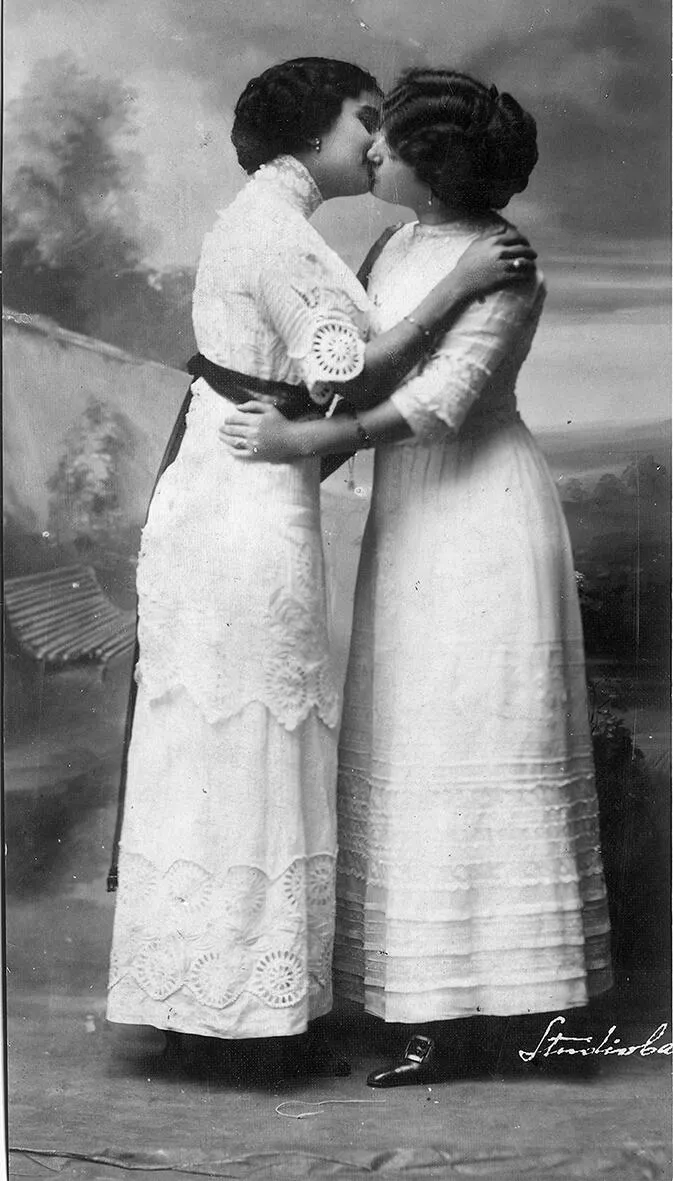
On 11 June 2016, an attack at the Pulse nightclub, in Orlando (USA), caused 49 fatalities and 53 injured victims. As a response, the Porto Alegre ‘Joaquim Felizardo’ Museum, in the Rio Grande do Sul (Brazil) state capital city posted on its Facebook page the photo below, possibly taken at the end of the nineteenth century by the renowned photographer Virgílio Calegari:
Fig. 1.1: “Our post … ” photograph by V. Calegari.
The picture was accompanied by this text: “Our post … published today pays homage to the entire LGBT population and stands against any and all homophobic violence. … Respect shall prevail over prejudice, discrimination, and exclusion”.1
In the context of a highly LGBTQ+phobic society like the Brazilian, the image and the text acquire more powerful meanings of resistance and fight against conservatism and prejudice. Such a statement may shock those who think of Brazil as a paradise of sexual freedom. But according to the survey conducted by the Bahia Gay Group, between January and October 2018 there were 347 homicides with an LGBTQ+phobic motivation. For 2017, data indicate 445 homicides; in 2016 there were 343 deaths.2
The number of shares and the intensity of comments on the museum’s post indicated that this was a theme that should be addressed by the institution. After much discussion between the team, activists belonging to the LGBTQ+ movement and scholars from various fields of knowledge, the exhibition A City Viewed From its Margins, held between November and December 2016 was created. The ambiguity between acceptance and rejection was expressed through comments on a note on the inauguration of the exhibition published in one of the most popular newspapers of Rio Grande do Sul. On the one hand, there were complimentary comments, pointing out the urgent need for an exhibition on the theme; on the other hand, various threats and offenses were also sent, characterising the exhibition as rubbish, horror, disgust, and preaching “anti-family values”.3
This chapter addresses the exhibition as a public history proposal, evidencing its role as a space of resistance to conservative and authoritarian thought. Initially, we situate this exhibition in a broader context of concern with the preservation and dissemination of the history and memory of individuals who deviate from heteronormativity. Next, we introduce the museum and the exhibition, analysing its repercussions in local society. We end up interconnecting the case of this exhibition to a broader discussion on the ethics of remembrance in nostalgic and conservative societies like that of Brazil.
The Domino Effect: LGBTQ+ Remembrance Spaces
The LGBTQ+ movement has been concerned since its early days with the preservation of material traces of its struggles, so that past cases of violence and conflict may encourage present militants to take action.4 One of the pioneers in gay rights struggles, the German physician and sexologist Magnus Hirschfeld (1868–1935), already expressed this concern. In 1919, when he created the Institute of Sex Research in Berlin he provided the entity with a library, an archive and an interdisciplinary museum
highlighting the diversity of sexual identities, customs, and behaviors in societies around the world. Although the Museum was not devoted solely to displays about what we would now call LGBT people, it gave pride of place to homosexuality and to transgender identities, making them the subject of representation, learning, and discussion in the setting of a museum for the first time.
(Koskovich 2014, 62)
The institution was destroyed by the Nazis. But it served as inspiration for later initiatives in other countries, especially after the emergence of the modern gay movement from the late 1960s. Gerard Koskovich, one of the creators of the GLBT Historical Society in 1985 in San Francisco, USA, claimed the continuity of these experiences in these words: “[W]e certainly were aware that our work served in part to repair the loss of Hirschfeld’s archives” (Koskovich 2014, 62).
Recently, the first rather consistent initiative to preserve the traces of LGBTQ+ history also took place in Berlin, with the opening, in 1985, of the Schwules Museum (Gay Museum). Initially focused on male homosexuals and located on the second floor of a gay nightclub, the museum progressively expanded its interest to other sexual identities, such as lesbian, bisexual and transgender people. Moving to a larger venue in 2013 it started receiving public funds for its maintenance.
Thus, we notice a domino effect in the remembrance initiatives concerning LGBTQ+ individuals: the Schwules was inspired by Hirschfeld’s Institute and, in turn, motivated the founding of a San Francisco counterpart. Fundamentally, such initiatives seek to give visibility to individuals who hardly have their experiences appreciated by official narratives or academic histories, constituting subterranean or marginal recollections against those framed by hegemonic narratives about national, regional, and local past eras.5
The domino effect also affected Latin America. The opening of the Transvestite Museum of Peru, in 2003, is deeply interconnected to the life history of its creator, Giuseppe Campuzano. When introducing the institution he evokes “historical contexts as different as pre-Hispanic Peru and the framework proposed by Magnus Hirschfeld during the Weimar Republic” (Campuzano nd, para. 3). Back in the USA context, the LGBT National Museum, to be inaugurated in 2019, has been designed as one of the world’s greatest references to the theme.6
In addition to these specific museums, initiatives to preserve traces of LGBTQ+ experiences in the form of archives,7 oral history projects,8 and even a queer museology – which seeks to explore subtexts on sexual ambiguity in existing museum collections – have proliferated.9
In Brazil, the LGBTQ+ movement began to articulate itself in the late 1970s, in the political re-democratisation context. One of the first manifestations of this articulation was the creation of the newspaper Lampião da Esquina (1978–1981). In an article published in 1980, this newspaper highlighted its concern to preserve gay memory:
For some years now, the Brazilian press has given a certain emphasis to the Homosexual Issue. Essays, interviews, stories, reports, and short stories have been frequently published in newspapers and magazines from the country’s north to south. In order to avoid that all this material could be forgotten in time and space, the newspaper Lampião decided to organize a Memory of everything that has been published on homosexuality and the so-called minorities. To this end, we ask readers to send us clippings (original or xerox copies) of this material, indicating the source and date of publication.
(“Memória guei” 1980, 11)
In recent years, despite the aforementioned violence prevalent in Brazil against sexual dissidents, several initiatives focusing on LGBTQ+ history have emerged, among which we highlight the creation, in 2012, of the Museum of Diversity, in São Paulo and, the following year, the release of Revista Memória LGBT.10
Therefore, spaces to preserve and display LGBTQ+ memory and history have emerged, interconnected to the fight for the rights of sexual dissidents and aiming to give visibility to these individuals in historical narratives and collective memory. Thus, the exhibition A City Viewed From its Margins is inserted in a wider cultural context that gets either in the constitution of spaces proper to LGBTQ+ memory or in the entrance of the latter “in scenarios where, usually, it is not considered welcome”(Baptista 2014, 181).
A Museum that Talks: The Making of a LGBTQ+ Exhibition
The ‘Joaquim Felizardo’ Museum was created in 1979 and it is linked to the Porto Alegre City Hall. This is a municipal historical museum, founded upon the mobilisation of a group of intellectuals living in the city concerned to gather and preserve objects and photographs related to the history of the Rio Grande do Sul state capital city. Since 2015, its team has taken as a starting point the definition of the institution by means of three complementary views on the city: the museum as a space for observation, listening, and speaking about Porto Alegre in various times. So, it started planning its exhibitions based on questions established through dialogue with the audience, such as:
Which history of Porto Alegre is represented in its collection and exhibitions?
Does it cover the diversity of the city’s inhabitants?
Traditionally, the museum experience is rooted in the arbitrariness of choices. In short, this is what we can define as verticalities in a set of power lines that crosses the heritage field. In Brazil, we can identify verticality in the power of state bodies to formalise the recognition, preservation, and communication of certain cultural assets as a heritage for future generations. The horizontalities, in turn, might be articulated through two possible meanings: the horizon as a perspective, or a possibility; and horizontality as the means to a work based in sharing recollections and histories.
Out of the key engagements that characterise Public History, according to Ricardo Santhiago,11 two are particularly pertinent to work in museums: the history made for the audience and the history made with the audience. Added to this is the fact that museum collections have been progressively used as instruments of identity affirmation, if not as evidence in disputes with the most varied motivations. The exhibition A City Viewed From its Margins was one of the results of collaborative action between various institutions and groups. The purpose was to take into account the diversity of sexual identities, gender expressions, and sexual orientations. This exhibition recalls the history of people and organisations that have taken leading roles in...
Table of contents
Title Page
Copyright
Contents
Making Histories, Making Memories in Difficult Times
Part I: Resistance, Rights, Authority
Part II: Public Memory and Commemoration
Part III: Performance, Transmission, Reception
Part IV: Family/Self
Index
Trusted by 375,005 students
Access to over 1.5 million titles for a fair monthly price.
Study more efficiently using our study tools.
Frequently asked questions
Yes, you can cancel anytime from the Subscription tab in your account settings on the Perlego website. Your subscription will stay active until the end of your current billing period. Learn how to cancel your subscription
No, books cannot be downloaded as external files, such as PDFs, for use outside of Perlego. However, you can download books within the Perlego app for offline reading on mobile or tablet. Learn how to download books offline
Perlego offers two plans: Essential and Complete
Essential is ideal for learners and professionals who enjoy exploring a wide range of subjects. Access the Essential Library with 800,000+ trusted titles and best-sellers across business, personal growth, and the humanities. Includes unlimited reading time and Standard Read Aloud voice.
Complete: Perfect for advanced learners and researchers needing full, unrestricted access. Unlock 1.5M+ books across hundreds of subjects, including academic and specialized titles. The Complete Plan also includes advanced features like Premium Read Aloud and Research Assistant.
Both plans are available with monthly, semester, or annual billing cycles.
We are an online textbook subscription service, where you can get access to an entire online library for less than the price of a single book per month. With over 1.5 million books across 990+ topics, we’ve got you covered! Learn about our mission
Look out for the read-aloud symbol on your next book to see if you can listen to it. The read-aloud tool reads text aloud for you, highlighting the text as it is being read. You can pause it, speed it up and slow it down. Learn more about Read Aloud
Yes! You can use the Perlego app on both iOS and Android devices to read anytime, anywhere — even offline. Perfect for commutes or when you’re on the go. Please note we cannot support devices running on iOS 13 and Android 7 or earlier. Learn more about using the app
Yes, you can access Making Histories by Paul Ashton, Tanya Evans, Paula Hamilton, Paul Ashton,Tanya Evans,Paula Hamilton in PDF and/or ePUB format, as well as other popular books in Education & Teaching History. We have over 1.5 million books available in our catalogue for you to explore.