The editors and authors, with backgrounds in academia and industry, tie together recent and established technologies for the upcoming change to sustainable industrial chemistry. The extensive worldwide activities towards that goal are exemplified with a series of green processes. Some of these processes are already commercially applied (squalene to squalane, hydraulic fluids from vegetable oils, biosourced polycarbonates), others are ready for a large scale implementation (glycerol to acrylic acid, biosourced acrylonitrile and levulinic acid, polyamides from fatty nitriles-esters hydrogenation, butadiene from bioethanol) or are being developed (cyclic carbonates from epoxides, selective pyrolysis of biomass). This book is an indispensable source for the researchers and professionals who work for a greener chemical industry. The chapters have been arranged to guide students through the design of new processes for more sustainable chemistry, using case studies as examples.
eBook - ePub
Industrial Green Chemistry
- 297 pages
- English
- ePUB (mobile friendly)
- Available on iOS & Android
eBook - ePub
Industrial Green Chemistry
About this book
Information
1 Conversion of glycerol to acrylic acid
Mohammad Jaber Darabi Mahboub
Arkema Inc., King of Prussia, USA
Gregory S. Patience
École Polytechnique de Montréal, Montréal, Canada
Abstract
Acrylic acid (AA) is an extraordinary compound and serves as a monomer for adhesives and sealants, plastic additives, surface coatings and paint, absorbents in diapers and personal care products and water treatment. Annual worldwide production surpassed 5 million tons, valued of 12 $ billion, and is growing at a rate close to 5% per year. Propylene’s partial oxidation to AA is the predominant process as there is no real competitive alternative. In this gas-phase process, oxygen partially oxidizes propylene to acrolein above 300 °C, which in turn is oxidized in tandem to AA, where propylene is derived from petroleum. Society and government motivate industry and academia to develop innovative technologies to reduce the environmental footprint related to AA synthesis. A biobased feedstock is a compelling alternative to propylene to approach a carbon-neutral AA process. Glycerol, a coproduct from biodiesel from vegetable oil and animal fat, dehydrates to acrolein at 300 °C, is one such biofeedstock. However, crude glycerol contains salts of fatty acids (FA), methanol, as well as various nonglyceric organic matter that adds distillation costs. Consequently, many companies choose to combust it for its fuel value, while a few convert it to methanol or epichlorohydrin rather than refining, while larger companies react it to methanol. BioMCN produce methanol from glycerol, and Solvay and others produce epichlorhydride (ref). Furthermore (excluding AA), currently, there is insufficient market for glycerol that makes this product worthless for industry, therefore, its prices dropped from $0.43 kg−1 in 2003 to $0.18 kg−1 and $0.02 kg−1 for refined and crude glycerol, respectively, in 2010 [1]. Here, we discuss commercial or potential processes to produce AA.
1.1 Introduction
Acrylic acid (AA) is a specialty chemical (monomer) for cosmetic materials, absorbents, plastics, rubbers and adhesives [2]. Propylene (derived from fossil fuel) is the predominant feedstock; however, greenhouse gas emissions due to hydrocarbon combustion has alarmed society and government [3, 4, 5, 6]. This preoccupation has motivated industry to substitute current technology with processes that are carbon neutral. Renewable biofeedstocks such as glycerol – a coproduct of the transesterification of vegetable oil and biodiesel derived from vegetable oil or animal fat – is an attractive alternative with the following features [7, 8, 9, 10, 11]:
- low cost
- commercial capacity (due to increased biodiesel production) and
- worldwide availability
Glycerol dehydration, oxidehydration and partial oxidation processes produce value-added chemicals starting with a low-cost feedstock [12, 13, 14]. Catalysts dehydrate it to acrolein in both the liquid and the gas phase [6, 15]. Catalyst operating in the gas phase deactivate due to coke while conversion remains unacceptably low in liquid-phase chemistry to warrant commercialization [7, 12, 16, 17, 18]. In this chapter, we present industrial-scale processes to AA and emerging technology related to glycerol as a feedstock.
1.2 Glycerol and its applications
Fossil fuels are inexpensive feedstocks and dominate the market for most chemical processes, but they produce greenhouse gases (CO2). Governments encourage academia and industry to identify technology to replace petroleum with renewable resources [19, 20]. Lignocellulosics, vegetable oils, fats and other types of biomass are potential feedstocks.
Methanol transesterifies vegetable oil and animal fat triglycerides to FA esters (biodiesel) and glycerol as a coproduct – 0.10 g/g (Figure 1.1) [21, 22]. Biodiesel capacity will increase from 22.7 million tons in 2012 to 36.9 million tons in 2020 (Figure 1.2) [4, 19].
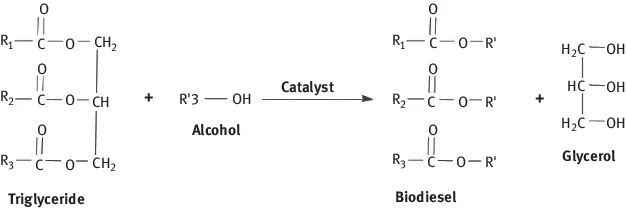
Figure 1.1: Overall transesterification reaction scheme [21, 22].
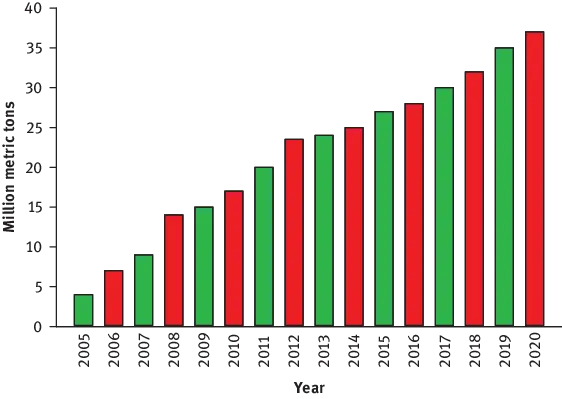
Figure 1.2: Annual production of biodiesel [19].
The ever-increasing biodiesel production has flooded the market with glycerol. Consequently, its price has dropped because of ove...
Table of contents
- Title Page
- Copyright
- Contents
- 1 Conversion of glycerol to acrylic acid
- 2 Alternative routes to more sustainable acrylonitrile: biosourced acrylonitrile
- 3 Biobased levulinic acid production
- 4 Fatty nitrile esters hydrogenation for biosourced polyamide polymers
- 5 Ni-free hydrogenation of natural products for the personal care industry: case study, squalene hydrogenation
- 6 High-performance hydraulic fluids from vegetable oils
- 7 Biomass valorization: bioethanol upgrading to butadiene
- 8 Biosourced polycarbonates
- 9 Organic cyclic carbonates synthesis under mild conditions
- 10 Biomass selective pyrolysis, bio-oil separation and products development: challenges and opportunities for green chemistry
- Index
Trusted by 375,005 students
Access to over 1.5 million titles for a fair monthly price.
Study more efficiently using our study tools.
Frequently asked questions
Yes, you can cancel anytime from the Subscription tab in your account settings on the Perlego website. Your subscription will stay active until the end of your current billing period. Learn how to cancel your subscription
No, books cannot be downloaded as external files, such as PDFs, for use outside of Perlego. However, you can download books within the Perlego app for offline reading on mobile or tablet. Learn how to download books offline
Perlego offers two plans: Essential and Complete
- Essential is ideal for learners and professionals who enjoy exploring a wide range of subjects. Access the Essential Library with 800,000+ trusted titles and best-sellers across business, personal growth, and the humanities. Includes unlimited reading time and Standard Read Aloud voice.
- Complete: Perfect for advanced learners and researchers needing full, unrestricted access. Unlock 1.5M+ books across hundreds of subjects, including academic and specialized titles. The Complete Plan also includes advanced features like Premium Read Aloud and Research Assistant.
We are an online textbook subscription service, where you can get access to an entire online library for less than the price of a single book per month. With over 1.5 million books across 990+ topics, we’ve got you covered! Learn about our mission
Look out for the read-aloud symbol on your next book to see if you can listen to it. The read-aloud tool reads text aloud for you, highlighting the text as it is being read. You can pause it, speed it up and slow it down. Learn more about Read Aloud
Yes! You can use the Perlego app on both iOS and Android devices to read anytime, anywhere — even offline. Perfect for commutes or when you’re on the go.
Please note we cannot support devices running on iOS 13 and Android 7 or earlier. Learn more about using the app
Please note we cannot support devices running on iOS 13 and Android 7 or earlier. Learn more about using the app
Yes, you can access Industrial Green Chemistry by Serge Kaliaguine, Jean-Luc Dubois, Serge Kaliaguine,Jean-Luc Dubois in PDF and/or ePUB format, as well as other popular books in Technology & Engineering & Environmental Science. We have over 1.5 million books available in our catalogue for you to explore.