More-Than-Human Literacies in Early Childhood draws on a long-term ethnographic research into the role of place, materiality and the body in the literacies of young children aged 12-36 months. It builds a picture of how children participate in, or become caught up in, literacies and language in the contexts of their everyday lives.
Throughout the book, recognised understandings of young children are decentred in favour of experiential knowing of parents and communities, body-place knowing and ordinary affects. Abigail Hackett argues that young children's literacies are always more-than-human, involving sounds, gestures and movements between humans and nonhuman places and things. By paying close attention to the more-than-human nature of these literacies, which rely on bodies, places, animals, humans, objects and atmospheres for their ongoingness, a case is made for the decentring of young children.
The book will be of particular interest to researchers looking at feminist-new materialism, posthumanism, affect theory, and critical literacy in early childhood settings.
- 224 pages
- English
- ePUB (mobile friendly)
- Available on iOS & Android
eBook - ePub
More-Than-Human Literacies in Early Childhood
About this book
Information
Part One
Starting with Community and Place
1
More-Than-Human Literacies in Community Spaces of Early Childhood
At singing time, H picks a dead piece of leaf off the floor and pops it in his mouth, lightning fast. She1 sees it sitting on his bottom lip and, like a reflex, stretches her hand to grab it away. For a split second, she feels the softness of his bottom lip, a strange kind of inappropriate intimacy for a small boy she has just met. She wipes his saliva on her trousers as the group begins the nursery rhyme singing.
[Children and families] live in a universe that has not been accurately described. The right words have not been coined. Using habitual vocabulary sends us straight down the same old much-trodden paths. But there are other paths to which these footpaths do not lead. There are whole stretches of motherhood that no one has explored.
Stadlen, 2005, p.12
This book is grounded in the community spaces of early childhood; community playgroups in particular, but also parks, streets, day care, a local museum, in small urban community in northern England. It attends to small moments, bodily experiences and sensations, things that can be known through the body and partially articulated in writing. These aspects of lived experience with babies and toddlers are rarely articulated and often hard to explain; as Stadlen (2005) writes above, it is a universe that often goes undescribed (Figure 1.1). Concerned with the experiences of being and being with very young children, experiences which are marked by both ordinariness and exceptionality, this book wonders; what we might learn about language and literacy practices in early childhood by starting with the everyday in communities.
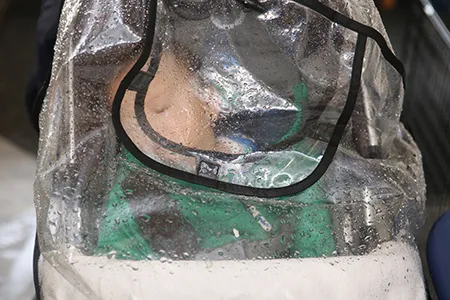
Figure 1.1 Pushchair at Playgroup. Photo credit: Steve Pool
This question is particularly pertinent at time of increasing global anxiety around young children, their families, their early experiences, the rate of their development and the implications for their future schooling and success. Intensifying interest in ‘the first 1000 days’ of young children’s lives leads to increasingly prescriptive, instructional and instrumental recommendations for parenting and pedagogy for children aged under three years (Figure 1.2). In such a context, academics (re)search for a model, a solution, to identify ‘what works’, and in doing so, it sometimes seems necessary to generalize, reduce, quantify and work with correlations (Jones et al., 2014). Yet, despite reams of ‘evidence-based’ parenting advice and policy interventions, parents don’t always seem to ‘do what they are told’. Something is lost in translation; parents, particularly from marginalized communities, seem to refuse to take the medicine, to follow the instructions, to act in ways that are ‘proven’ to most effectively socialize young children into a certain way of being.
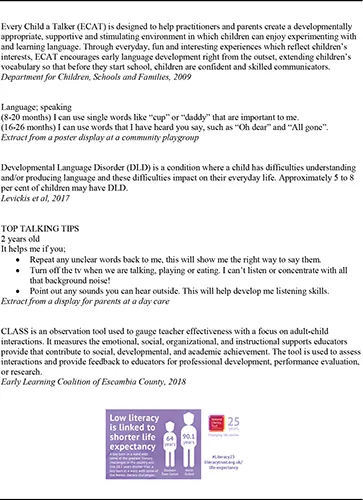
Figure 1.2 Children’s Literacy Practices as Neat, Rational and Generalizable
Generalized, rational, universalized ways of describing young children’s development, what toddlers are like, what they need, how things might unfold, whilst not wrong, somehow seem to miss something crucial. Perhaps reading these descriptions at a desk in my office, they seem plausible, reasonable. Then I return to playgroup, swing open the door, step over some items on the floor, into a particular kind of soundscape, smellscape, some place filled with hopes and anxieties, humour and extreme sleep deprivation. And then, those neat, reduced, demystified accounts no longer seem thinkable.
They miss how someone’s ordinary can endure or can sag deflated … how it can become a vague but compelling sense that something is happening, or harden into little mythic kernels.
Stewart, 2007, p.4
Stewart offers the notion of the ordinary as a way of interrogating how forces that make up systems are not already set, but rather they are alive, immanent and unpredictable. Thus, the ordinary is ‘a shifting assemblage of practices and practical knowledges, a scene of both liveness and exhaustion’ (p.1). By attending to ordinary affects, Stewart’s work traces how flows of energy and intensity between people, things and places ‘pick up densities and textures as they move through bodies, dreams, dramas and social worldings of all kinds’ (p.3).
Tracing how the ordinary is constituted by these affectual circuits and flows helps to understand the singularity, or specificity, of a particular moment, place and time. Where might ordinary affects go right now? What thoughts and feelings does the ordinary they make possible or impossible right here? Models of thinking that work at the level of large structures, seeking to abstract, generalize and simplify, are unable to recognize or begin to describe ordinary affects, and so miss something important about how and why people act, feel, react and make sense of their lives.
At once abstract and concrete, ordinary affects are more directly compelling than ideologies, as well as more fractious, multiplicitous, and unpredictable than symbolic meanings.
Stewart, 2007, p.3
The shadow of reason haunts the judgements made against both parents and children in communities. If research shows a correlation between x, y and z parenting practices and certain kinds of advantageous school outcomes, why don’t parents comply? Perhaps in order to make sense of this seeming mismatch, we firstly need a deeper acknowledgement that specific visions for how children should be socialized and recommendations for parenting practices are far from neutral or apolitical. Secondly, conceptualizations of being and being with young children require a consideration of the idiosyncronicities of lived experience, and particularly the way in which what unfolds in communities with young children transcends a rationale of logic and intent. Attending to ordinary affects offers the possibility of breaking away from the hegemony of the rational subject, the subject who says what they mean, means what they say, and would always act in their own best interests according to a reasoned logic. Parents who do not follow the prescribed instructions for how to interact with and stimulate their children ‘correctly’. Children who seem to refuse to compliantly play their role in processes of socializing them into being certain kinds of ‘literate subjects.’
Young children’s language and literacy competencies sit near the heart of anxiety about young children’s development, believed by many to evidence their ability to rationalize, problem solve, make abstract connections, empathize with others or hold their own views. Yet, young children’s literacy and language practices unfold amidst the smells, sounds, scattered toys, sticky fingers, anxieties, hopes and frustrations of everyday life of families in communities. These bodily and affective aspects of everyday life are frequently under-played or erased by universalizing and abstracting accounts of literacies. Re-conceptualizing early childhood literacies as more-than-human offers the opportunity to explore and acknowledge the materiality of language (MacLure, 2013a) and literacy practices, as they emerge from and between leaky, porous, unbounded human and non-human bodies.2
The lives of young children and their parents in these communities are ordinary. Not in the sense of being obvious or self-explanatory, but in the sense of being unpredictable, contradictory, specific, illogical, in the sense of meaning everything and nothing all at the same time (Stewart, 2007). Two parents with children of the same age living in the same community have both everything and nothing in common. This ordinariness is the starting point if we are to begin to understand young children’s literacy and language practices. Thus, this book begins with the singularity of place and community, aiming to attune to ordinariness and affective flows as a starting point for a different way of knowing. It does this by attending to, and remaining with, details and intensities of everyday decisions and experiences, even when they seem unhelpful, illusive, uncodifiable. In addition, it acknowledges the political and resistant nature of an insistence on this kind of describing (Rautio, 2013).
Universalizing Lines of Child Development
Gallacher (in press) describes how the metaphor of ‘milestones’ in child development offers fixed points of orientation, which ‘enable development to be assessed according to their timekeeping within the universal developmental plan’. Line drawings commonly used to illustrate developmental milestones, such as those in the ‘red book’ given to all new parents in the UK (Figure 1.3), offer a visual example of the kind of reducing, discarding and omitting that is necessary for a rationalized and universal account of child development.3 The kinds of children depicted in these images are individual, bounded, abstracted from their communities, separated from the more-than-human, free of emotion, performing various competencies such as stacking bricks or crawling, in their preoccupation with moving competently through their milestones.
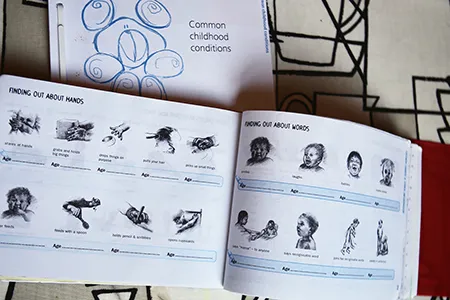
Figure 1.3 Developmental Milestones Visualized. Photo credit: Steve Pool
In the everyday, ordinary experience of parents, carers and practitioners who spend time with young children, there is much that seems to divert from, exceed and disrupt these universalized lines of development. Yet the integrity of these lines must be maintained. In order to compare, to chart a generalized line of progress, it is essential to discard that which is not deemed relevant to the comparison.
Complexity, the ‘thick of things’, is not only lost, it becomes fundamentally threatening as it undermines the imposing edifices constructed from comparative data.
Jones et al., 2014, p.64
There is a politics, then, to what must be overlooked or played down in order to maintain the integrity of the universalized, all encompassing, line of child development, and the policies and interventions that can accompany such a line. As Trafi-Prats (2019) points out, early intervention policies, in their intention to making parenting practices objective and auditable, explicitly aim to separate practices from the material conditions of parenting. The ordinary experiences of those who spend time with children, particularly women, particularly women in powerless positions, must often therefore be disregarded, in order to maintain the truth and power of the line.
A line becomes what you have a duty to follow. A line becomes a bond, a line as direction and directive; a line that leads you to where you must go, who you must become.
Ahmed, S. (21 May 2017), Snap! Retrieved from https://feministkilljoys.com/2017/05/21/snap/
Parents and carers have a different way of knowing their children (Hackett, 2017). They can be collaborators in research, providing context or extra information about the child. However, beyond this, they know in a different way; they know within their aching muscles, in their guts, from the inside (as Ingold [2013] would put it). This kind of (material, bodily, intuitive) knowing is far away from mastery (what parent ever feels like they have mastered the art of parenting?) and difficult to articulate in words. It is inchoate and powerfully affective. Perhaps it is a way of knowing that early childhood researchers could also attend to better; after all, parents or not, most researchers have had everyday, ordinary experiences of young children in some way, including memories of their own childhood (James, 1993; Lively, 1994). This kind of childhood research would attune to knowing from the gut, from a tiny funny incident or a powerful fear that the worst might happen, from a frustration, a victory, an arm ache from pushing a pushchair up a hill, from the smear of a child’s saliva on your sleeve. Is it possible to remain with this kind of knowing, and resist codifying the knowledge into something reducible, logical, easily explainable? Perhaps. Certainly, if we are to try, we first have to let go of our attachment to, our investment in, the truth of the universal line.
Community Places as a Way of Knowing
She takes to writing fieldnotes in a local café after group, rather than driving home first, and it seems to make the fieldnotes different. A voice, a description of a child, a well meant piece of guidance on child rearing, perhaps seems perfectly appropriate in the place it was written, then seems to be a different thing when it is transported into another place.
We urge readers and colleagues to reconsider place and its implications, not because it offers a generalizable theory or universal interpretation, but because generalizability and universality are impossibilities anyway, in no small part because place matters and place is always specific.
Tuck and McKenzie, 2015, p.21
Watts (2013) points out that Western social science research, even when attending to place, continues to consider knowledge and place as capable of being separated from each other. In Indigenous ontologies of place-thought as described by Watts (2013), Tuck and McKenzie (2015) and Todd (2016), amongst many others, knowing and place could never be separated; place should shape methodology, as well as being inseparable from what it is possible to think or to know. There is much then, for researchers interested in community and place-based ways of knowing early childhood, lives and literacies, to learn from Indigenous scholars of place-thought. The question of how to think with place, how to understand the materialized and spatialized nature of social inequity, and the relationship between humans and place, are always political questions; as Nxumalo and Cedillo (2017) write, ‘it is important to continually interrupt the benignity of place stories’ (p.101). One of the ways in which a commitment to the specificity of place and genealogy of ways of knowing is political lies in the question of what forms of knowledge become powerful. Somerville (2013) makes a distinction between two processes of coming to know through research; rational processes of logic and order and body/place knowing, a way of coming to know through the body, involving ‘a necessary unravelling of the self, of certainty and prior knowledge’ (p.27). This kind of knowing relies, writes Somerville, on a mutual entanglement between body and place and an investment in ways of knowing that emerge slowly and uncertainly, and can be difficult to pin down with words.
This rejection of the possibility of extracting knowledge from place (or of knowledge ever being abstract), acts as a powerful form of refusal (Tuck and Yang, 2014). Rather than offering a new, innovative way of articulating young children’s emergent language and literacy practices, for example, it points to the impossibility of ever doing so. Instead of a theory that can be generalized, we are left with slow, particular describing (as advocated by Tuck [2010] below), coupled with an awareness of the politics of how this kind of description rubs up against other, more powerful claims t...
Table of contents
- Cover
- Halftitle Page
- Title Page
- Contents
- List of Illustration
- Acknowledgements
- Series Editors’ Introduction
- Part I: Starting with Community and Place
- Part II: Re-conceptualizing Early Childhood Literacies as More-Than-Human
- Part III: Where Did We Get to?
- Notes
- References
- Index
- Imprint
Trusted by 375,005 students
Access to over 1.5 million titles for a fair monthly price.
Study more efficiently using our study tools.
Frequently asked questions
Yes, you can cancel anytime from the Subscription tab in your account settings on the Perlego website. Your subscription will stay active until the end of your current billing period. Learn how to cancel your subscription
No, books cannot be downloaded as external files, such as PDFs, for use outside of Perlego. However, you can download books within the Perlego app for offline reading on mobile or tablet. Learn how to download books offline
Perlego offers two plans: Essential and Complete
- Essential is ideal for learners and professionals who enjoy exploring a wide range of subjects. Access the Essential Library with 800,000+ trusted titles and best-sellers across business, personal growth, and the humanities. Includes unlimited reading time and Standard Read Aloud voice.
- Complete: Perfect for advanced learners and researchers needing full, unrestricted access. Unlock 1.5M+ books across hundreds of subjects, including academic and specialized titles. The Complete Plan also includes advanced features like Premium Read Aloud and Research Assistant.
We are an online textbook subscription service, where you can get access to an entire online library for less than the price of a single book per month. With over 1.5 million books across 990+ topics, we’ve got you covered! Learn about our mission
Look out for the read-aloud symbol on your next book to see if you can listen to it. The read-aloud tool reads text aloud for you, highlighting the text as it is being read. You can pause it, speed it up and slow it down. Learn more about Read Aloud
Yes! You can use the Perlego app on both iOS and Android devices to read anytime, anywhere — even offline. Perfect for commutes or when you’re on the go.
Please note we cannot support devices running on iOS 13 and Android 7 or earlier. Learn more about using the app
Please note we cannot support devices running on iOS 13 and Android 7 or earlier. Learn more about using the app
Yes, you can access More-Than-Human Literacies in Early Childhood by Abigail Hackett in PDF and/or ePUB format, as well as other popular books in Pedagogía & Educación infantil. We have over 1.5 million books available in our catalogue for you to explore.