Of all civilizations of the ancient Mediterranean, it is perhaps the Etruscans who hold the greatest allure. This is fundamentally because, unlike their Greek and Latin neighbours, the Etruscans left no textual sources to posterity. The only direct evidence for studying them and for understanding their culture is the archaeological, and to a much lesser extent, epigraphic record. The Etruscans must therefore be approached as if they were a prehistoric people; and the enormous wealth of Etruscan visual and material culture must speak for them. Yet they offer glimpses, in the record left by Greek and Roman authors, that they were literate and far from primordial: indeed, that their written histories were greatly admired by the Romans themselves.
Applying fresh archaeological discoveries and new insights, A Short History of the Etruscans engagingly conducts the reader through the birth, growth and demise of this fascinating and enigmatic ancient people, whose nemesis was the growing power of Rome. Exploring the 'discovery' of the Etruscans from the Renaissance onwards, Corinna Riva discusses the mysterious Etruscan language, which long remained wholly indecipherable; the Etruscan landscape; the 6th-century growth of Etruscan cities and Mediterranean trade. Close attention is also paid to religion and ritual; sanctuaries and monumental grave sites; and the fatal incorporation of Etruria into Rome's political orbit.
- 256 pages
- English
- ePUB (mobile friendly)
- Available on iOS & Android
eBook - ePub
A Short History of the Etruscans
About this book
Information
1
The Etruscans from the Middle Ages to the Late Twentieth Century
Introduction
Historians of antiquity who believe in weighing the claims of archaeology against the claims of literary tradition can be dismissed as too naive members of their profession. The real task of the historian is to analyze all the data he has and to try to account for all of them. But the process of analyzing data is never an individual performance. It is invariably, though in varying degrees, a collective enterprise of scholars of different countries, different academic traditions, different generations – indeed, different centuries. Especially in the study of Classical antiquity, we cannot lightly ignore the fact that the texts we study, the inscriptions we read, the monuments we see, have for the most part been known to previous generations of scholars and in some cases have been studied uninterruptedly since antiquity. The editions we use, the meanings we attribute to the texts, the identification and the description of ancient monuments, are the result of the work of centuries. Any new interpreter must be aware of past interpreters: he [or she] who is not aware of past interpreters will still be influenced by them, but uncritically, because, after all, awareness is the foundation of criticism. The historian must therefore be able to account not only for all the data he possesses but also for all the interpretations he is aware of.
(Momigliano, 1975, pp. 196–7)
Thus, Arnaldo Momigliano, the late Italian ancient historian, acutely reflected on the relationship between archaeology and the ancient literary tradition. Although Momigliano was writing about the origins of the Roman Republic, this observation seems to be particularly pertinent for Etruscan archaeology, a discipline that sometimes sits awkwardly within studies of classical antiquity because of the lack of a direct literary tradition which characterizes Greek and Roman antiquity and, at the same time, the wealth of a material record that is comparable to that of its neighbouring Greek and Roman archaeology. In reality, archaeology more broadly has made enormous advances since Momigliano wrote; thanks to these, Etruscan archaeology nowadays is couched within Mediterranean archaeology, where Etruria can be examined through a whole suit of archaeological methods that encourage the scholar to focus on material culture in all its facets, the challenges of how to interpret it and the opportunities for overcoming these challenges. This is, in fact, the field of enquiry within which this short history of the Etruscans will be approached. Yet, Momigliano has still much food for thought to offer, largely for two reasons. First, like its Greek and Roman counterparts, Etruscan antiquity has been written about, interpreted and studied for several centuries. Some scholars argue that interest in Etruscan history began, in fact, in antiquity, most notably with the Greek historian Dionysius of Halicarnassus, active in Rome in the first century BCE and author of a book on the history of Rome, Roman Antiquities, and his near-contemporary Livy whose monumental history of Rome, Ab Urbe Condita, stretched to the author’s own times (Bonfante, 1986, pp. 18–46). Both books dealt with the origins of the city and its neighbours, and therefore with Etruscan cities and their relationship with Rome. Other scholars, as I wish to do here, prefer to distinguish an ancient literary and historical tradition from later documents, beginning in the early modern period when we see evidence of an awareness, by humanist historians, poets and writers, of a rupture with the ancient past (Hankins, 1991) and the growth of what has been called ‘a spirit of historical criticism’ (Quint, 1985).
Over the centuries, the Etruscans have been subjected to a myriad of theories in relation to their origins, their place within both historical narratives of Italy as a nation and beyond, and localized narratives of those regions in which they flourished. Above all, it is the relationship of the Etruscans with Rome that has always proven critical in the construction of those very narratives. Several of these theories, born within the antiquarian tradition of early modern Europe, were discredited by subsequent scientific scholarship for being erroneous antiquarian findings or, in the most sensational cases, discredited by their contemporaries for being fantasies deriving from skilled forgeries. Indeed, the lack of a direct literary tradition coupled with the survival of ancient monuments is arguably accountable for making Etruscology particularly susceptible to fantasies and forgeries since antiquity (Rowland, 2005). But as I shall show, a succinct glance at these theories, interpretations, even fantasies, on the Etruscans through the centuries encourages us to look closely at the use or, in worst cases, manipulation of a people’s history for political advantage and ideological ends. This is particularly so when that history is constructed primarily through material traces and only indirectly through near-contemporary or much later literary and historical traditions.
The second aspect of note in Momigliano’s words is the very relationship between archaeology and the literary tradition. For centuries, Greek and Roman ancient written sources have directed our appreciation of the Etruscans and our own interpretations of the material remains they have left behind. Only recently have we come to acknowledge that a deeper understanding of their civilization comes from scrutinizing closely the tension between what Greek and Roman authors had to say about the Etruscans and our own interpretations of those authors on the one hand, and of the archaeological record on the other; to capture this tension is no easy feat and, as we shall see throughout this book, it often leads to a somewhat more speculative, but what I hope can be a more intellectually honest history. Ultimately, such a history is primarily, though not exclusively, archaeological if we recognize that our only direct source for reconstructing that history is material remains. However, this was not so in fourteenth- and fifteenth-century Florence where, early modern historians contend, the so-called Etruscan myth was born (Cipriani, 1980),1 that is to say, the cultural construction of an Etruscan past, which served ideological ends of those in power and hence able to construct that past. It is here and a couple of centuries earlier that I would like to commence. The aim for beginning here is twofold: to highlight the role that antiquity, and within it the Etruscans, played in the cultural politics and the political thought of those centuries, on the one hand, and, on the other, to ask how and to what extent that role was transformed and shaped by the cultural politics of later centuries down to the twentieth century.
The Etruscan myth: Florentine humanism and the Medici’s dynasty rise to power
In the fourteenth century, the Etruscans first caught the attention of contemporary historians who wrote of Etruscan historical figures known from Roman sources. Livy’s Ab Urbe Condita, for example, was the main source for our first early modern account, by Giovanni Villani, of the deeds of the Tuscan king Porsenna. His universal history, Nuova Cronica, however, linked the Tuscan past with Rome’s past, and does not contain the terms ‘Etruria’ and ‘Etruscans’ (Salvestrini, 2002; Schoonhoven, 2010). This is perhaps surprising if we consider Livy’s extensive reference to both. What one can infer from this is that, to Villani and his contemporaries, the ancient Roman past was critical to the shaping of Florence’s power, while Etruria had not yet entered their imagination as a historically and politically relevant entity. In particular, that power and Florence’s civic identity were enhanced by highlighting Rome’s republican legacy, with which Florence sought to legitimize its growing hegemony in Tuscany. The use of antiquity for shaping a Roman republican heritage must be viewed in relation to the novel interest in ancient literature, which forms the essence of humanism, and in relation to the development of political thought and literature from the end of the thirteenth century (Rubinstein, 2004). In fifteenth-century Florence, some of that political literature and the values it promoted such as virtue and liberty served as political propaganda and its values as a ‘civic myth’, created to legitimize the status quo of the Florentine political system of the time (Najemy, 2000).
Rome’s republican heritage, in fact, was a more strongly driving force in the definition of Florence’s ancient past in the late fourteenth century as attested by contemporary historical documents such as the official and private letters of Coluccio Salutati (1331–1406), then chancellor of the Florentine republic (Baldassarri, 2009). In these letters, Salutati also talked of the pre-Roman past of Italy alongside Florence’s Roman republican values in order to emphasize the freedom of Italic city states in pre-Roman times (Witt, 2000, p. 313). Leonardo Bruni of Arezzo (1370–1444), Salutati’s successor to the chancellorship, pursued this ideal of political freedom and republican values further: in his Historiae Florentini Populi Libri XII (1416–42), a history of Florence renowned among his contemporaries, he saw the origins of these ideals in the independent Etruscan city states and their government run by Lucumones, the cities’ magistrates (Bruni, 2001, Volume 1, Introduction). As the Etruscans entered Florence’s republican ideology and were conveniently moulded to its ‘civic myth’, so did they attract the attention of those humanists responsible for forging the myth, and stimulated their curiosity in their literary activities. Interestingly, the championing of republicanism left the Etruscans largely indistinct and on equal footing with their other fellow ancients. Only with Cosimo I, as we shall see, were they explicitly singled out and turned into a local heritage.
What fuelled the growing interest in Etruscan civilization was also its archaeological discovery that gained momentum in the fifteenth century, inspiring artists and architects. Prominent figures of Florence’s artistic and cultural world became familiar with the Etruscan legacy, largely known from Vitruvius and Pliny the Elder, in ancient sculpture, painting and architecture, and sought to inject it into their work (Chastel, 1961, pp. 32–69; Cipriani, 1980, pp. 19–21). Less was known about Etruscan artefacts and architectural structures, which began to be investigated. A renowned example is the discovery, made at the turn of the century, in 1507, of the Castellina Tumulus in the Chianti hills, a tomb talked about in letters and documents of the time (Bocci Pacini and Bartoloni, 2003). The growing central role that antiquarian discoveries played into the Etruscan revival of the fifteenth century mirrors the equally growing antiquarian interest elsewhere in Italy, which led to the creation of private collections of ancient artefacts.
If, however, ancient art was familiar because of its presence in the urban landscape, especially in Rome, although as yet unrecognizable to the untrained fifteenth-century eye, Etruscan remains were all the more difficult to understand because of the lack of a local ancient literary tradition (Chastel, 1961, pp. 32–7). However, those remains provided a new heritage to study and from which to extract suitable pride. Indeed, because of the lack of an Etruscan literary tradition, Florentine humanists’ understanding of Etruscan civilization was driven more by ancient writers than by material culture. A prime example of this are the writings of Leon Battista Alberti, the famous Florentine architect and theorist. Alberti’s sensitivity to ancient architecture, shaped by Vitruvius, led him to use the concept of the temple Etruscorum more (in the Etruscan manner) – as he described in his own treatise – in his design of the church of Sant’Andrea, begun in the mid-1470s in Mantova, the city that was known to have Etruscan origins. Vitruvius’ influence did not drive Alberti’s choice in architectural form or design, but in spatial proportions: as the ratio between the length and width of the Vitruvian Etruscan temple had to be six to five, the plan of Sant’Andrea’s main nave followed these prescribed proportions. This, along with the lack of remains of Etruscan temples known at the time, may explain Alberti’s misreading of the original Vitruvian plan, a single set of cellae (inner temple chambers) facing a portico. In fact, the overall design of Sant’Andrea was inspired by the biblical temple of Solomon and the Basilica of Maxentius in Rome, which, he thought, displayed the features of Etruscan temples (Tavernor, 1998, pp. 176–8). Yet, while Roman ancient architecture is behind much of the church’s design, it remains rather suggestive of the value that this most famous architect placed on an autochthonous expression of antiquity that he chose the Etruscan manner as he saw it for what was a most important architectural project towards the end of his professional career. And it was architecture which, to Alberti and his contemporaries, the Etruscans excelled at. Most emblematic of these ancient skills was the labyrinth and tomb of Porsenna, described by Pliny in great detail, and illustrated by the famous Sangallo architects (Borsi, 1985) (Figure 1.1).
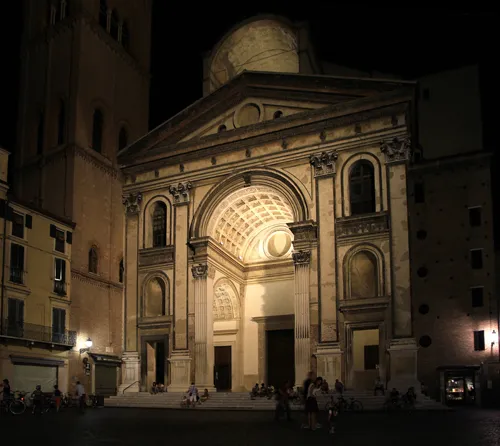
Figure 1.1 The church of Sant’Andrea, Mantova, photograph by Bjoern Eisbaer (CC BY-SA 3.0), from Wikimedia Commons.
At the same time, one has to wonder what exactly the quality of being autochthonous meant to Alberti. At that time, after all, artists and architects adopted the classical form and the antique not because of their desire to study it, understand it and apply it philologically, b...
Table of contents
- Cover
- Half-Title
- Series
- Dedication
- Title
- Contents
- List of figures
- Preface
- Acknowledgements
- Chapter 1 The Etruscans from the Middle Ages to the Late Twentieth Century
- Chapter 2 Beginnings: Moving Settlements and Emerging Hierarchies
- Chapter 3 Etruscan Urbanization: Towns and New Networks
- Chapter 4 The Etruscan Non-polis: Urban Growth in the Archaic Period
- Chapter 5 Beyond Tyrrhenian Etruria: Human Mobility in a Changing Society
- Chapter 6 Etruria and Rome
- Epilogue: From Globalization to New Questions
- Glossary
- Notes
- Select bibliography
- References
- Index
- Copyright
Trusted by 375,005 students
Access to over 1.5 million titles for a fair monthly price.
Study more efficiently using our study tools.
Frequently asked questions
Yes, you can cancel anytime from the Subscription tab in your account settings on the Perlego website. Your subscription will stay active until the end of your current billing period. Learn how to cancel your subscription
No, books cannot be downloaded as external files, such as PDFs, for use outside of Perlego. However, you can download books within the Perlego app for offline reading on mobile or tablet. Learn how to download books offline
Perlego offers two plans: Essential and Complete
- Essential is ideal for learners and professionals who enjoy exploring a wide range of subjects. Access the Essential Library with 800,000+ trusted titles and best-sellers across business, personal growth, and the humanities. Includes unlimited reading time and Standard Read Aloud voice.
- Complete: Perfect for advanced learners and researchers needing full, unrestricted access. Unlock 1.5M+ books across hundreds of subjects, including academic and specialized titles. The Complete Plan also includes advanced features like Premium Read Aloud and Research Assistant.
We are an online textbook subscription service, where you can get access to an entire online library for less than the price of a single book per month. With over 1.5 million books across 990+ topics, we’ve got you covered! Learn about our mission
Look out for the read-aloud symbol on your next book to see if you can listen to it. The read-aloud tool reads text aloud for you, highlighting the text as it is being read. You can pause it, speed it up and slow it down. Learn more about Read Aloud
Yes! You can use the Perlego app on both iOS and Android devices to read anytime, anywhere — even offline. Perfect for commutes or when you’re on the go.
Please note we cannot support devices running on iOS 13 and Android 7 or earlier. Learn more about using the app
Please note we cannot support devices running on iOS 13 and Android 7 or earlier. Learn more about using the app
Yes, you can access A Short History of the Etruscans by Corinna Riva in PDF and/or ePUB format, as well as other popular books in History & Ancient History. We have over 1.5 million books available in our catalogue for you to explore.